
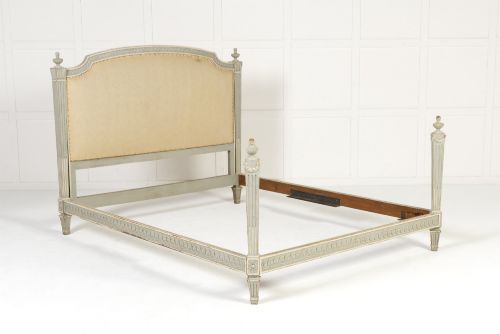
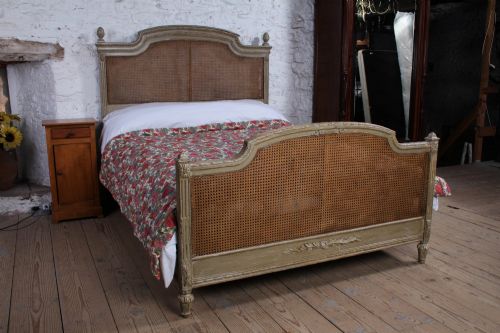


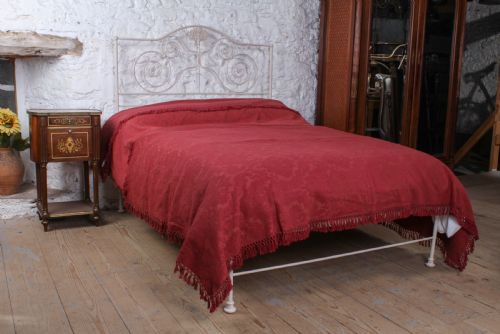


French Painted Double Bed
A french painted double bed brings continental elegance to a bedroom, offering distinct character through historic painted finishes and classic styling.
French Painted Double Bed
A french painted double bed combines practical sleeping quarters with decorative historic charm, appearing across various regional and formal designs. These bedframes emerge in multiple aesthetic traditions, from provincial country furniture to more ornate urban expressions.
The pieces on this page span several distinct periods, including nineteenth century examples alongside pieces from the early twentieth century and Regency era. Common forms encompass standard double beds, bed frames, and bedsteads finished with painted surfaces.
Stylistic influences range widely, covering Louis XVI style, Louis XV style, French provincial, French country, and French empire designs. Buyers encounter both simple wooden frames and more elaborate constructions incorporating caning, upholstery, or metal elements.
Factors of Quality
Quality rests significantly on the integrity of the surface finish, distinguishing original paint effects and period patination from later redecoration. Finer examples retain harmonious proportions and crisp carving details within the wood.
The sophistication of the stylistic execution marks the distinction between standard provincial pieces and high status items influenced by royal court aesthetics. Integrated details like parcel gilding, brass mounts, and fine caning elevate the workmanship.
Listings feature pieces spanning the nineteenth century, Regency era, and the 1900s to 1920s, constructed from painted wood, beech, iron, and brass.
The French Painted Double Bed Glossary
- Caned
- Woven cane panelling utilised for headboards and footboards to provide lightweight rigidity and decorative texture. This technique appears frequently in Louis XVI style seating and bed designs.
- Parcel Gilt
- A decorative treatment where specific carved details or highlights are selectively covered in thin gold leaf. It creates a subtle contrast against the underlying painted surface.
- Side Irons
- Metal rails that connect the headboard and footboard to support the mattress base. These structural components are essential for assembling antique bedsteads.
- Louis XVI Style
- An aesthetic characterised by neoclassical straight lines, symmetry, and restrained classical ornamentation. Pieces often feature fluted columns and ribbon carvings.
- Bedstead
- A framework of a bed upon which mattresses and bedding are placed. Historic versions frequently utilise specialised iron or wooden connectors.
French Painted Double Bed: Frequently Asked Questions
How do I style a painted bed?
Pair the painted finish with simple neutral linens to let the historic colours and carved details remain the focal point of the bedroom. Complementary bedside tables or wardrobes help create a cohesive aesthetic.
Consider the existing room lighting and wall tones to ensure the specific shade of the bed frame, whether aged grey, cream, or darker paint, sits comfortably within the space.
How do I care for antique painted surfaces?
Maintain the finish by dusting gently with a soft, dry cloth rather than using modern chemical cleaning sprays. Avoid placing the bed in direct sunlight to protect historic paintwork and gilt highlights from fading.
Check the stability of joints and side irons periodically, tightening any fixings carefully to preserve the structural integrity of the frame.
Can I dismantle these beds for transport?
Most antique bed frames separate into distinct components, typically comprising a headboard, footboard, and side irons. This modular construction facilitates moving the piece between rooms or properties.
Take care when handling threaded bolts and wooden joints during assembly to avoid stressing the original painted timber.