

Neoclassical Decorative Urns
Neoclassical decorative urns bring classical proportion and refined antiquity into domestic interiors through bronze, marble and porcelain.
Neoclassical Decorative Urns
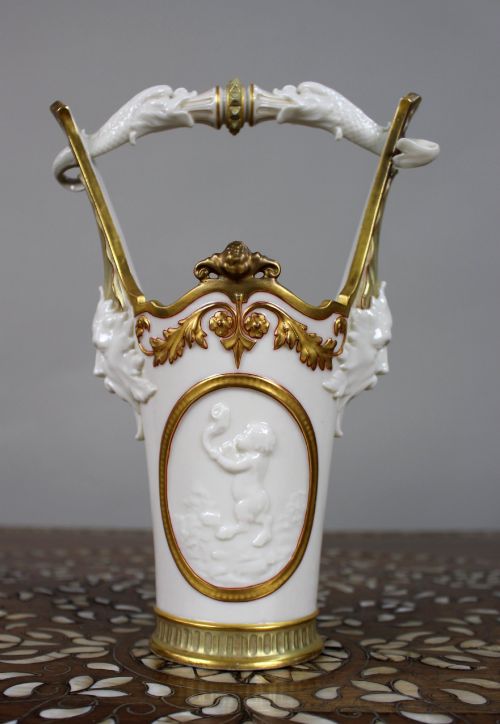
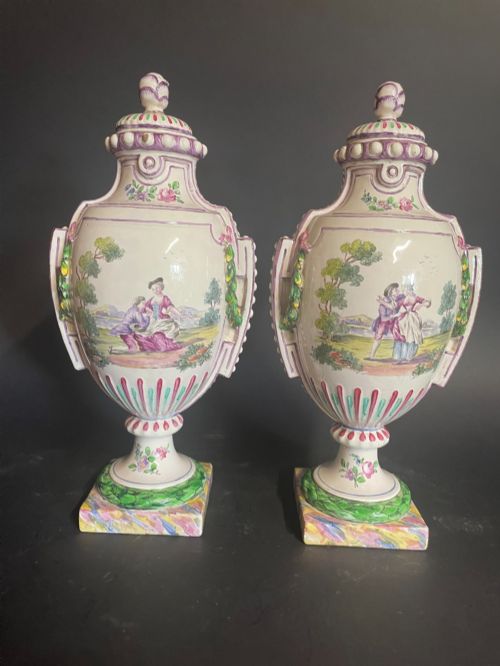
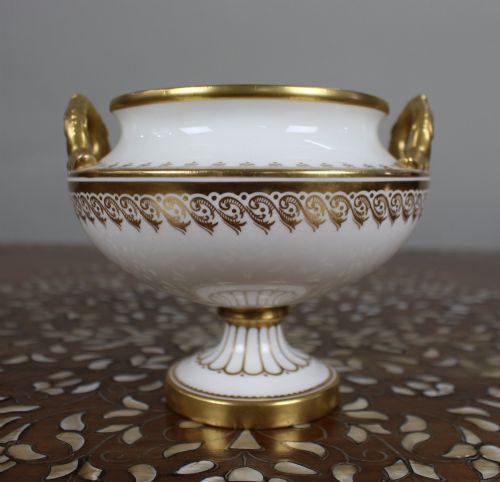
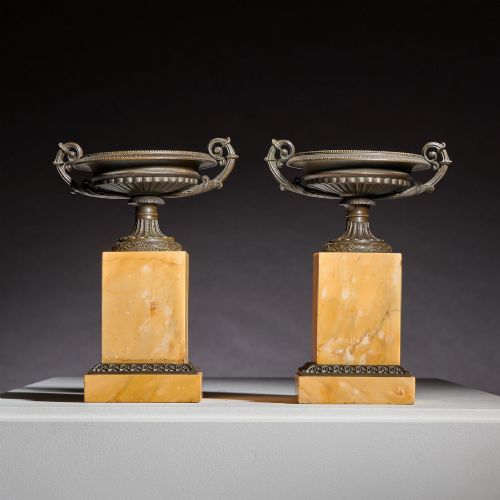
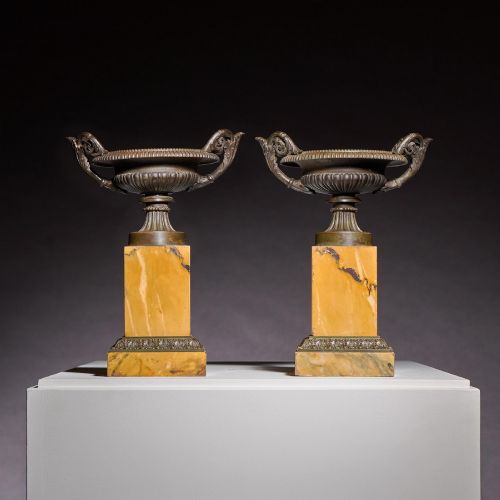
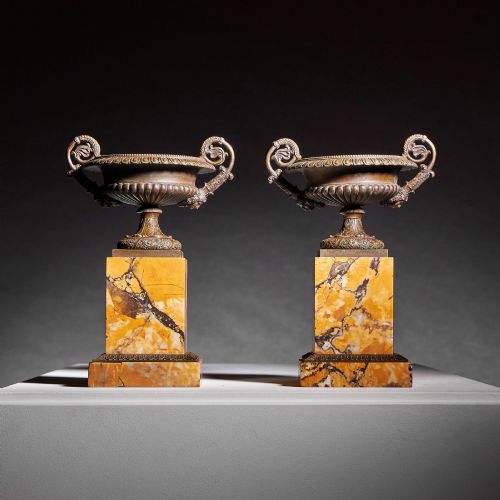
Neoclassical decorative urns take inspiration from ancient Greek and Roman forms, frequently rendered as decorative vessels, tazzas, and campana shapes designed for interior display. Buyers searching for neoclassical decorative urns will find nineteenth-century examples heavily influenced by the French Empire style, Grand Tour souvenirs, and Victorian revivals.
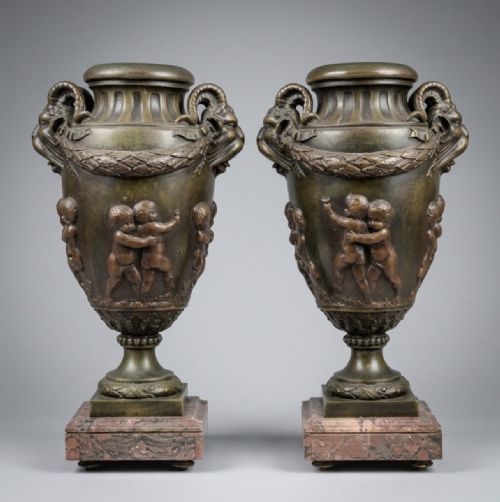
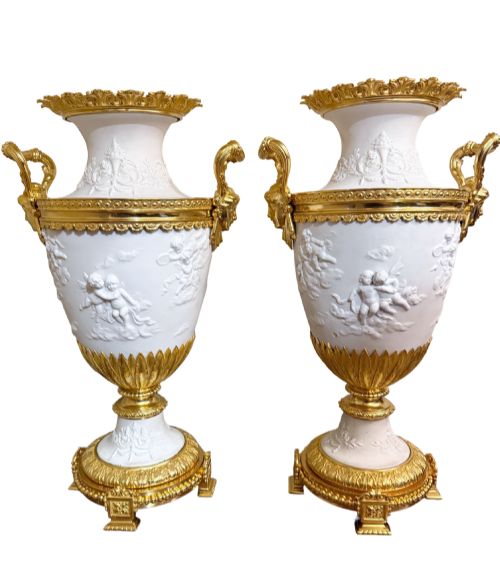
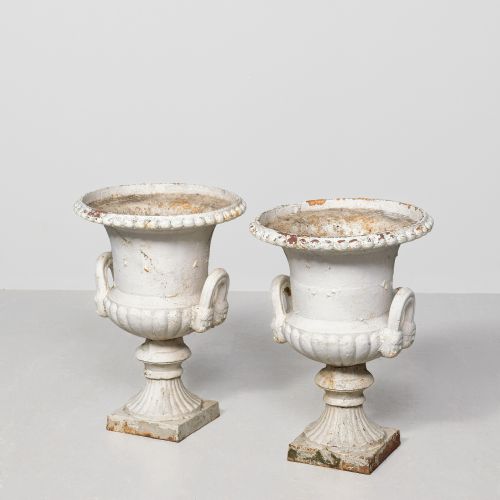
The selection here encompasses ornamental porcelain vases, cast iron garden urns, and bronze vessels mounted upon marble bases. Many pieces channel Louis XVI aesthetics, utilising classical motifs such as acanthus leaves, ram's head masks, and swags.
Materials and methods
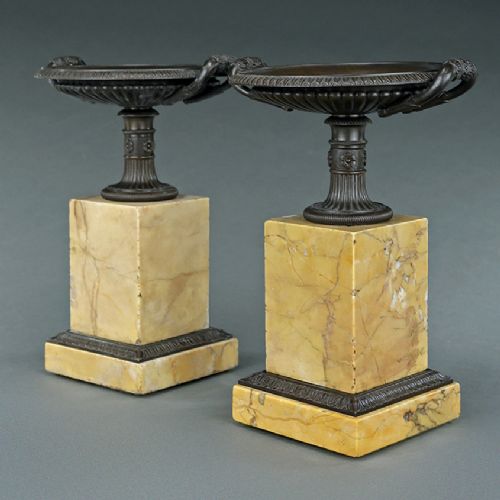
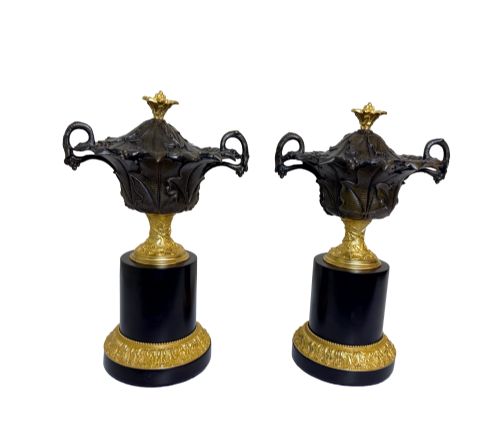
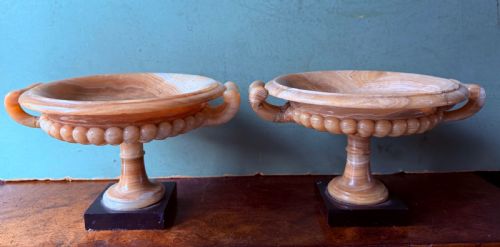
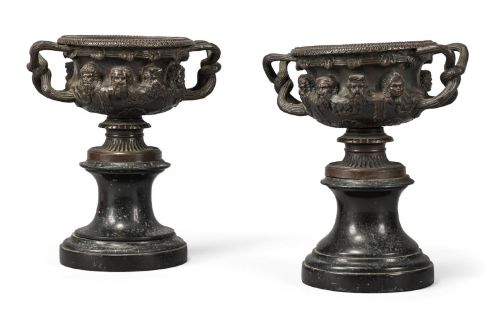
Foundry work combines cast bronze and ormolu with natural stone, pairing patinated metals with white marble, Siena marble, and alabaster blocks. Skilled artisans cast metal components before applying mercury gilt or patination to achieve surface depth.
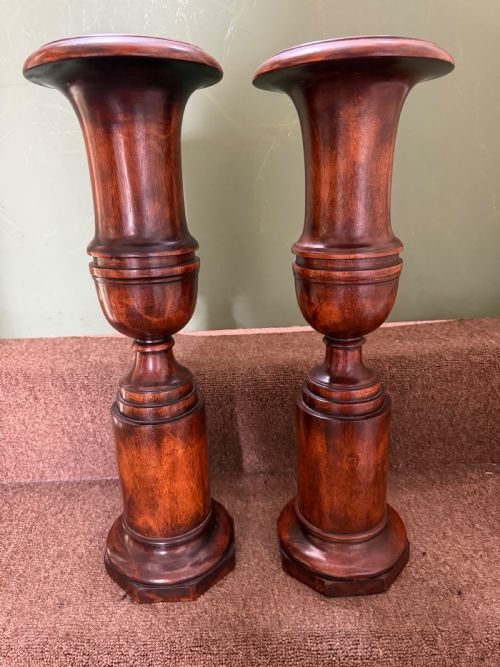
Ceramic forms utilise porcelain bodies, including Sevres and Dresden wares, decorated with hand-painted details or pate sur pate techniques. Carved wooden elements such as giltwood and turned walnut also appear, often paired with gesso or parcel-gilt finishes.
Listings feature nineteenth-century materials including gilt bronze, Siena marble, and hand-painted porcelain.
Distinctions in manufacture
Superior examples display crispness in the chasing of bronze and ormolu mounts, where foliage and classical masks retain sharp, defined edges rather than softened casting details. The integration between metalwork and stone bases indicates the level of craftsmanship, with premium pieces employing dense marbles and heavy cast elements.
Porcelain quality rests upon the fineness of the paste and the precision of the hand-applied gilding. Grand Tour souvenirs intended for affluent travellers often demonstrate exceptional sculptural reduction, mirroring famous antiquities with scholarly accuracy.
Royal Worcester·Sevres·Helena Wolfsohn
The Neoclassical Decorative Urns Glossary
- Ormolu
- Gilded bronze, produced by applying a mixture of gold and mercury to a bronze base and heating the object to vaporise the mercury. This technique creates a durable, golden surface characteristic of French decorative arts.
- Grand Tour
- A traditional trip through Europe undertaken by upper-class young men during the eighteenth and nineteenth centuries to study classical art and architecture. Souvenirs from these travels frequently included bronze reductions of ancient vases.
- Campana
- A bell-shaped garden or decorative urn originating from ancient Roman pottery forms. They typically feature flared rims and footed bases.
- Tazza
- A shallow saucer-like vessel mounted on a stem and foot, often used for display in bronze, marble, or porcelain. The form mimics classical drinking vessels adapted for decorative use.
- Pate sur pate
- A ceramic decorating technique where wet white slip is applied layer upon layer to a coloured clay body to create a low relief cameo effect. It requires great skill from the ceramic artist.
Neoclassical Decorative Urns: Frequently Asked Questions
What are neoclassical decorative urns made from?
These pieces incorporate a mixture of cast bronze, gilt bronze ormolu, and natural stones such as Siena marble and alabaster. Ceramic examples feature porcelain bodies from European factories.
Wooden elements like turned walnut and giltwood also appear, particularly in mirror frames and pedestals associated with the style.
Where did Grand Tour urns originate?
Grand Tour pieces were produced primarily in Italy and France during the nineteenth century to satisfy travellers collecting souvenirs of classical antiquities. Workshops in Rome, Florence, and Paris cast these miniature reductions after famous excavated sculptures.
Such objects allowed collectors to bring the aesthetic of ancient Rome and Greece into nineteenth-century drawing rooms.
How do you style them at home?
These vessels suit placement upon mantelpieces, sideboards, or dedicated marble columns as sculptural focal points. Pairs work well balanced on either side of a mirror or fireplace.
Smaller tazzas and urns fit neatly onto library bookshelves or display cabinets alongside other classical objects.
Are these pieces strictly decorative?
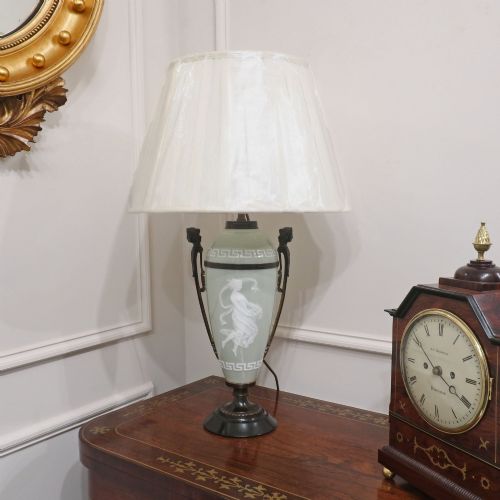
Most items function purely as ornamental objects rather than utilitarian vessels, designed to display craftsmanship and classical taste. Some nineteenth-century examples were later adapted into table lamps while retaining their classical urn form.
Garden variants made from cast iron served a practical purpose outdoors while maintaining the same neoclassical silhouette.