
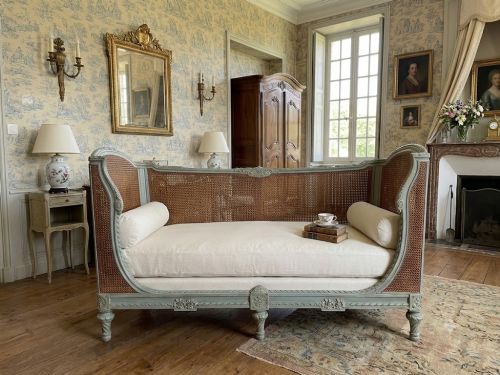


Neoclassical Carved Couch
These neoclassical carved couch examples offer balanced symmetry and classical restraint, bringing architectural lines and refined timber framing into a room.
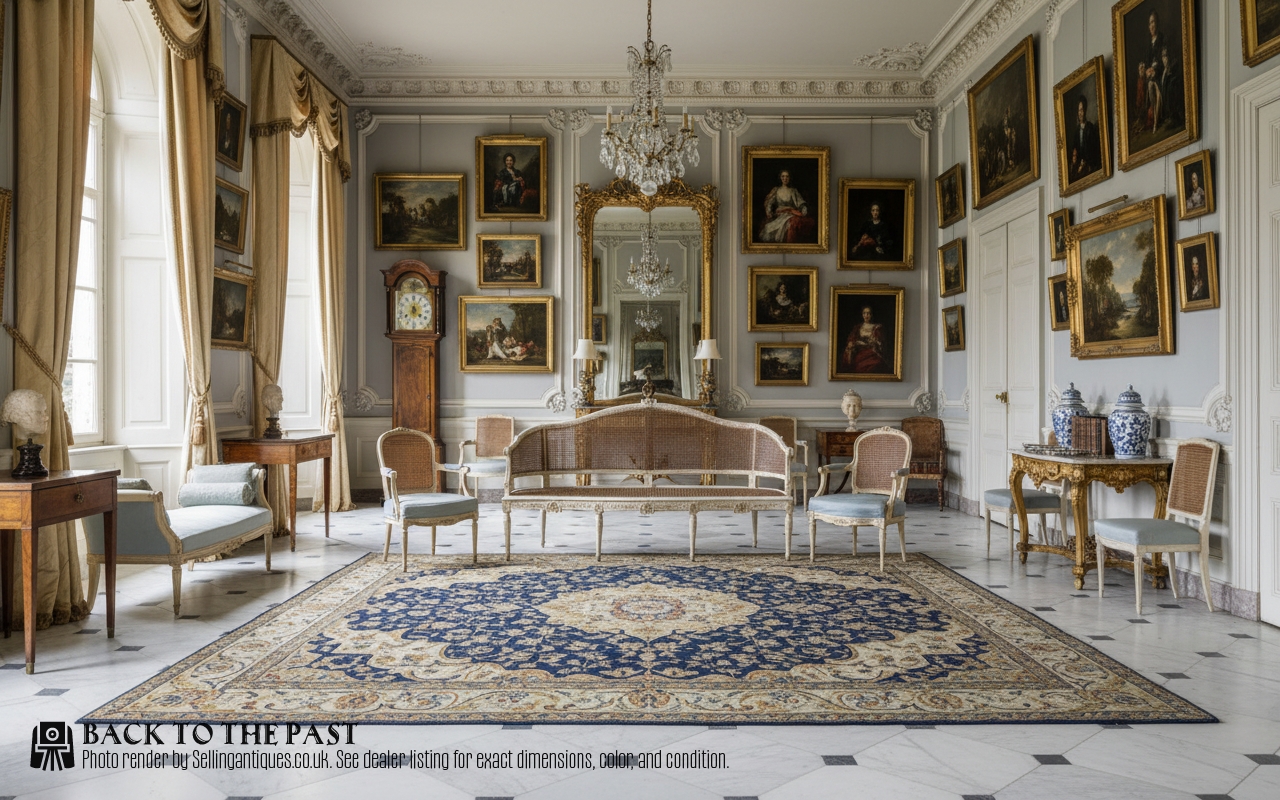
Neoclassical Carved Couch
A neoclassical carved couch brings together classical motifs and timber framing across various historical periods, including the eighteenth and nineteenth centuries. These pieces appear as sofas, settees, and daybeds, reflecting both British and continental European design traditions.
The most common examples on this page follow the Louis XVI style and George III or Hepplewhite manner, featuring rectilinear or serpentine frames. Swedish Gustavian pieces also appear, offering painted surfaces and restrained classical carving.
Makers shaped these seats for formal reception rooms, utilising mahogany, beech, birch, and giltwood to achieve architectural presence. Upholstery fabrics and cane panels complete the construction of these historical seating forms.
Materials and construction methods
Frames rely on solid timbers such as mahogany, beech, and birch, shaped through traditional joinery and hand carving. Giltwood examples receive a thin layer of gold leaf over prepared gesso surfaces.
Cane panels provide lightweight backrests or sides on specific daybed forms, woven tightly into timber frames. Upholstery fabrics, including linen, cover sprung or stuffed interiors beneath the show wood.
Materials recorded across the selection include solid mahogany, giltwood, birch, beech, cane, and various upholstery fabrics.
Distinctions in quality
The crispness of the hand carving separates fine examples from simpler production, particularly in the rendering of classical motifs such as fluting, paterae, and leaf tips. Timber selection also dictates grade, with dense mahogany and clean-grained birch holding sharper sculptural detail than softer secondary woods.
Proportion and architectural balance define the upper tier of these seating pieces. A well-resolved frame maintains harmonious lines between the crest rail, arm supports, and legs, whereas lesser pieces often show static or heavy proportions.
The Neoclassical Carved Couch Glossary
- Canapé corbeille
- A French settee or sofa featuring an enclosed, rounded backrest that curves smoothly into the arms. This form frequently appears in Louis XVI and revived nineteenth-century French seating.
- Giltwood
- Timber that has been gilded with a thin layer of gold leaf over a prepared base. It appears on formal European neoclassical frames designed for wealthy interiors.
- Gustavian
- The Swedish neoclassical style spanning the late eighteenth and early nineteenth centuries. It is characterised by lighter proportions, pale painted finishes, and restrained classical detailing.
- Hepplewhite manner
- A design style inspired by the publications of George Hepplewhite, known for elegant curves, shield backs, and tapered legs. Pieces in this manner reflect late eighteenth-century British taste.
- Serpentine sofa
- A seating form where the front rail curves in a continuous undulating line of alternating convex and concave sections. This shape demands precise carpentry during construction.
Neoclassical Carved Couch: Frequently Asked Questions
What is a neoclassical carved couch?
A neoclassical carved couch is a formal seating piece influenced by classical Greek and Roman design principles. These sofas and settee forms emerged strongly during the eighteenth century and returned in later revival periods.
They are characterised by straight lines, symmetrical ornamentation, and exposed timber frames with carved details such as fluting and rosettes.
How do I identify a Louis XVI style sofa?
Louis XVI style sofas are marked by a return to straight lines and geometric symmetry, contrasting with the curves of the preceding Rococo period. Look for fluted tapered legs, exposed wooden frames, and classical architectural motifs.
French examples often feature painted or giltwood finishes alongside cane panels or traditional upholstery.
What is Gustavian style?
Gustavian style represents the Swedish adaptation of French neoclassical design during the reign of King Gustav III. These pieces favour lighter colours, simplified classical carving, and pale painted surfaces.
They bring a sense of bright restraint and airiness to interior spaces compared to heavier continental furniture.
How do I care for antique timber frames?
Protect antique timber and giltwood frames by keeping them away from direct sunlight and fluctuating heat sources. Dust gently with a dry, soft cloth to prevent particulate buildup on carved surfaces.
Avoid using modern liquid polishes or silicone sprays, which can damage historic finishes over time.