


French Style Caned Settee
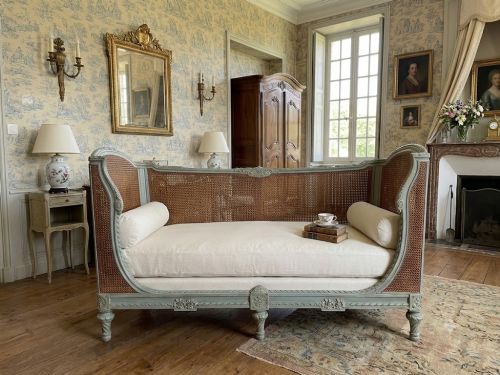
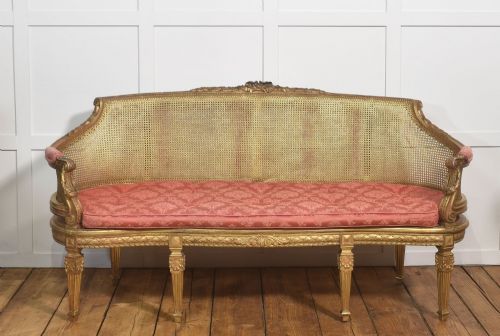
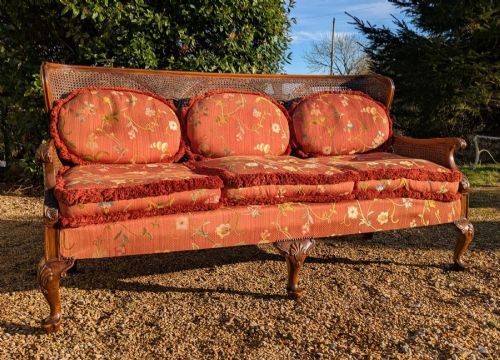
A French style caned settee brings lightness and carved elegance to a room through woven cane work and hardwood frames.
French Style Caned Settee
You will most commonly encounter twentieth-century revivals alongside earlier examples, taking the form of daybeds, canapés, and bergere sofas. These seating options combine exposed wooden frames with upholstered cushions in materials such as linen and damask fabric.
The aesthetic draws heavily upon historical design idioms like Louis XV, Louis XVI, and Gustavian styles. Artisans shaped these frames in walnut, beech, and giltwood, producing seating suited for drawing rooms and reception spaces.
Materials and construction
Makers utilised solid timbers such as walnut and beech to construct the load-bearing frames, often finishing the wood with paint, gilding, or polished surfaces. Carved details define the structural contours, framing the woven panels.
Cane panels are hand-woven into the wooden framework to create a taut, breathable surface for the back and sides. This technique lightens the visual weight of the furniture while providing sturdy structural support.
Upholstered elements frequently incorporate feather cushions and traditional textile coverings including linen and damask. These softer additions contrast with the rigid wooden and cane structure to ensure comfortable seating.
Listings feature settees spanning the eighteenth century through to the nineteen-twenties, incorporating beech, walnut, and giltwood materials.
Assessing quality and execution
The finesse of the hand-carved woodwork dictates much of the visual distinction across these pieces. Crisp floral motifs, balanced proportions, and clean joinery set finer examples apart from simpler production.
The tightness and regularity of the cane weaving indicate the skill involved in manufacturing the backrests and panels. Even tension across the woven grid ensures durability and an authentic period appearance.
The quality of the frame finish, whether original paint, rich walnut patination, or meticulous gilding, contributes heavily to the character of the piece. Well-preserved surfaces retain their depth and integrity over decades of use.
The French Style Caned Settee Glossary
- Canapé
- An upholstered couch or settee originating in France. These seats typically feature exposed wooden frames and decorative carving.
- Bergere
- An enclosed upholstered armchair or sofa featuring a solid upholstered back and sides, often incorporating cane work. Feather cushions are frequently added for seat comfort.
- Giltwood
- Timber treated with gold leaf or gold paint applied to the surface. This technique creates a luminous finish characteristic of formal period furniture.
- Gustavian
- The Swedish interpretation of French neoclassical design, notable for lighter painted finishes and restrained ornamentation. This style emerged during the eighteenth century.
- Canework
- Woven plant material used to form open-patterned panels in furniture backs and seats. It provides both structural flexibility and decorative texture.
French Style Caned Settee: Frequently Asked Questions
What is a canapé?
A canapé is a traditional French-style settee or sofa featuring an exposed wooden frame and decorative carved details. These pieces often incorporate upholstered elements and woven cane panels.
They served as formal seating in reception rooms and parlours during various historical periods, combining comfort with refined aesthetics.
How do I care for cane panels?
Cane panels require gentle cleaning with a damp cloth to remove dust from the woven strands. Avoid excessive moisture to prevent the natural material from becoming brittle.
Keeping the furniture away from direct heat sources helps maintain the flexibility and longevity of the cane work over time.
Where should I place a settee?
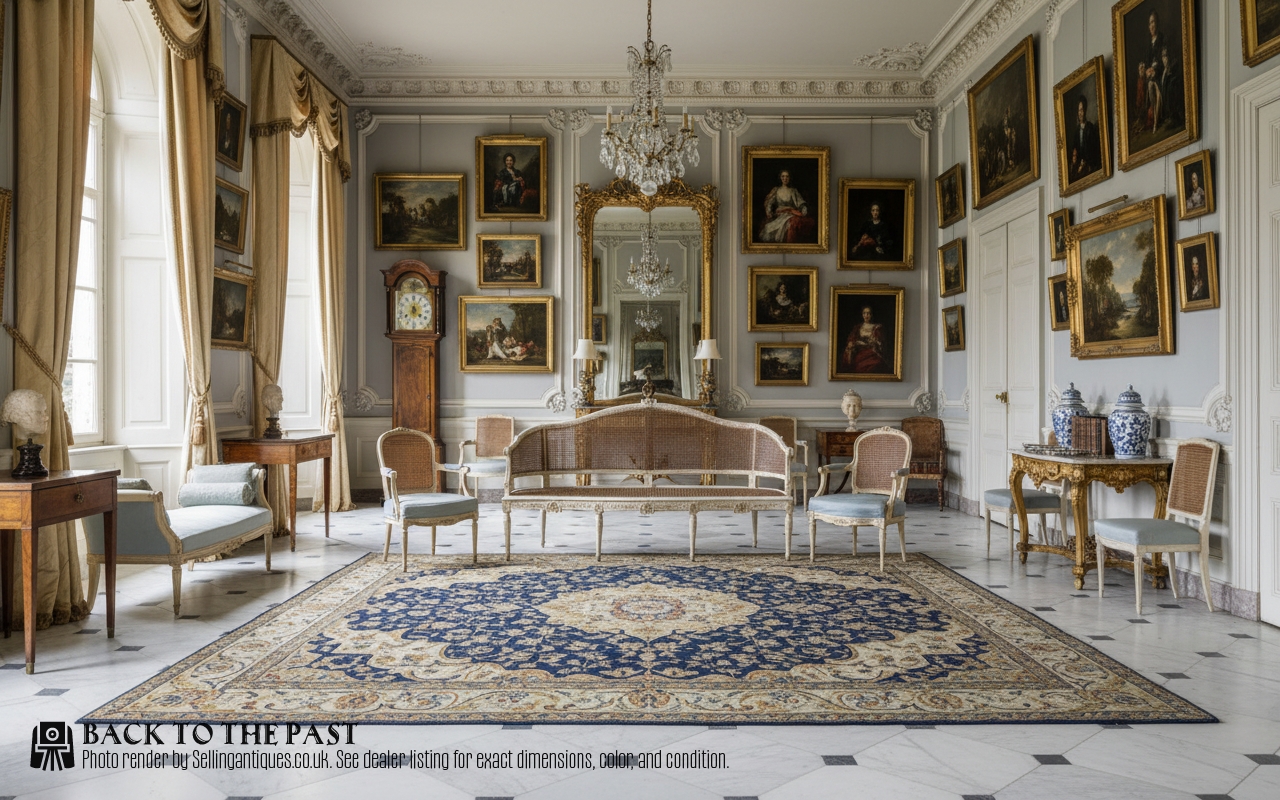
These settees work well in living rooms, bedrooms, or large hallways where their decorative backs can be appreciated. Their open cane work allows light to pass through, making them visually light in a room.
Pairing them with neutral walls or complementary period furniture enhances their aesthetic impact within an interior scheme.