
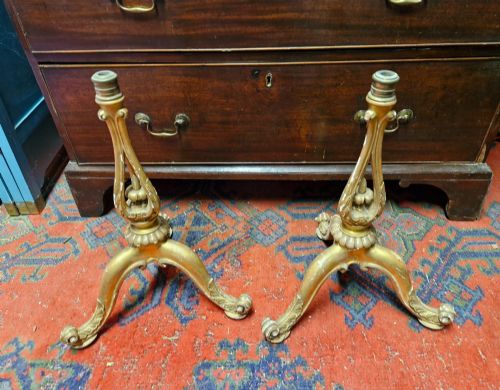
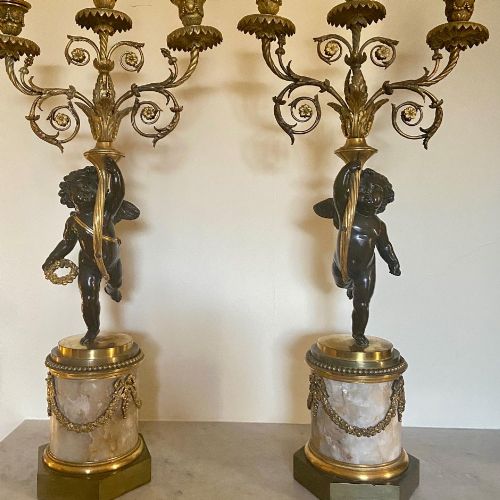
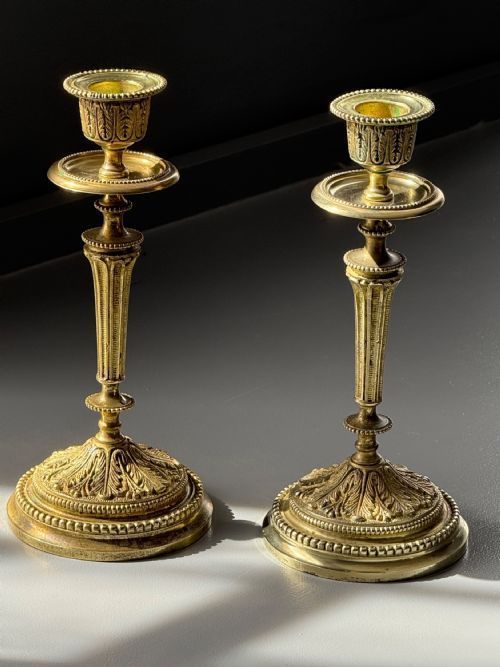
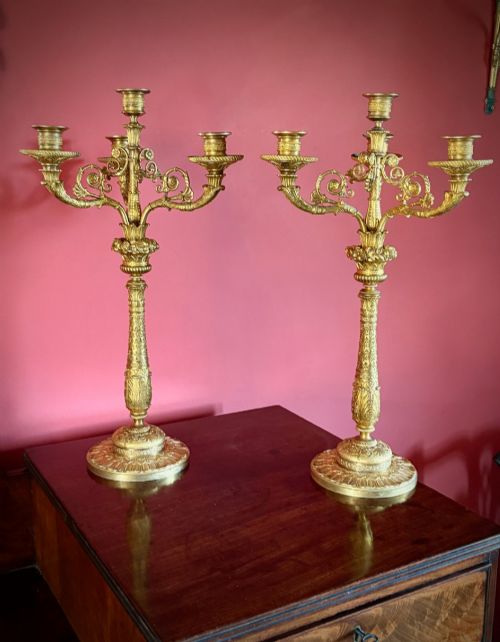

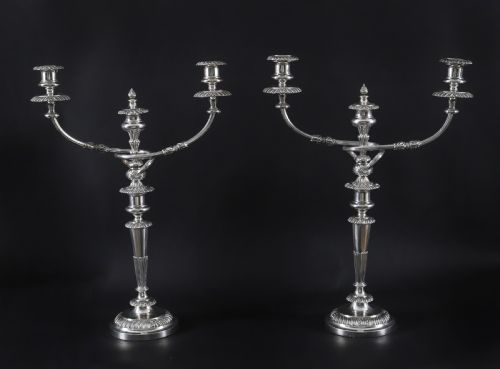
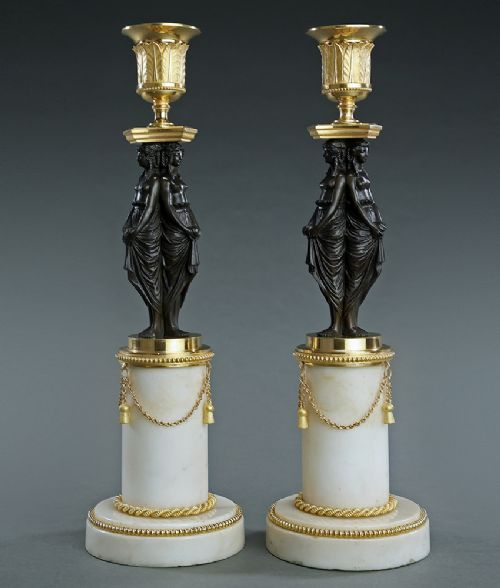
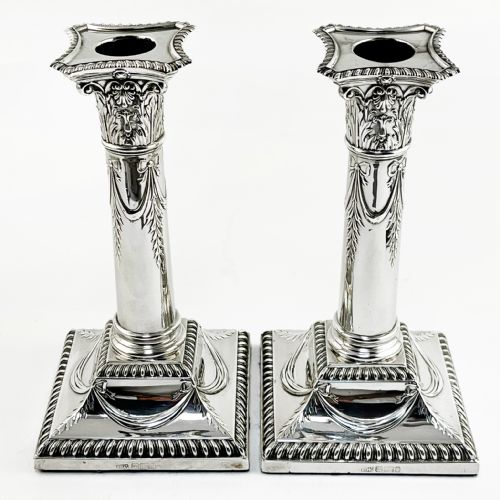
Neoclassical Candlestick Pair
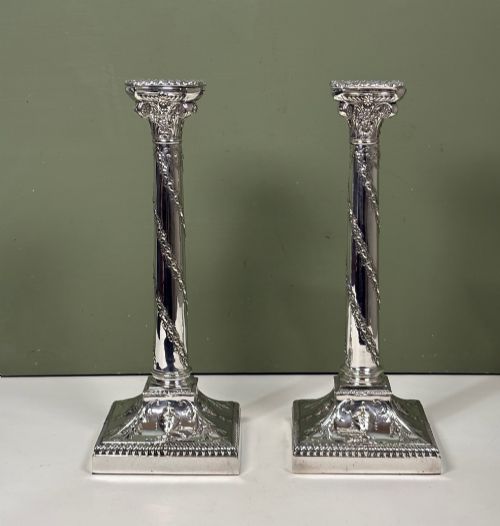
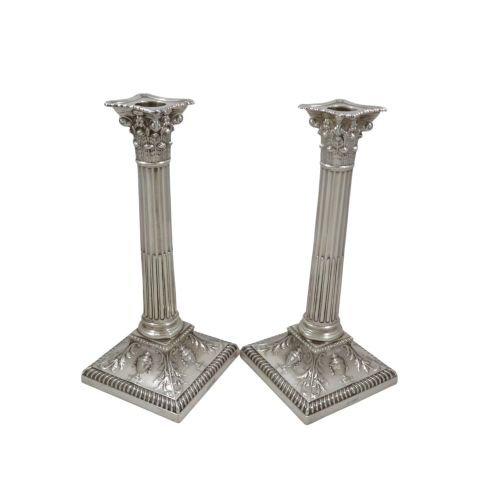
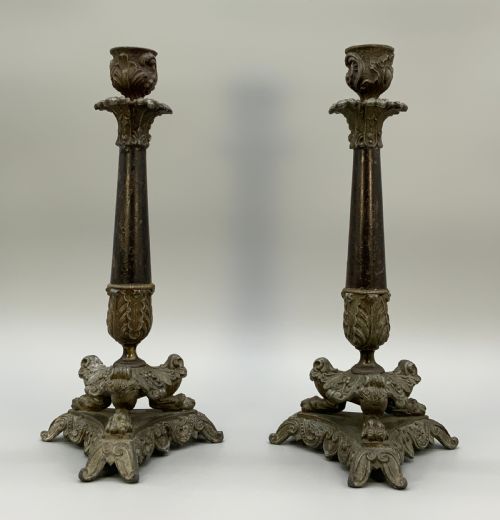
A neoclassical candlestick pair brings formal architectural balance to a room, cast in bronze, brass, and silver plate to echo antique proportions.
Neoclassical Candlestick Pair
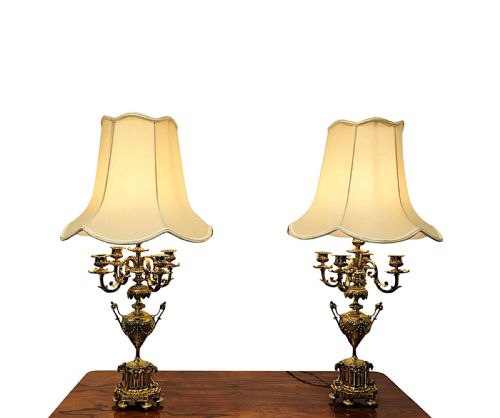
When you search for a neoclassical candlestick pair, you encounter matched sets designed to support tapers or multi-light branches with symmetrical order. The examples on this page span the eighteenth, nineteenth, and early twentieth centuries, drawing on Georgian, Louis XVI, and French Empire aesthetics.
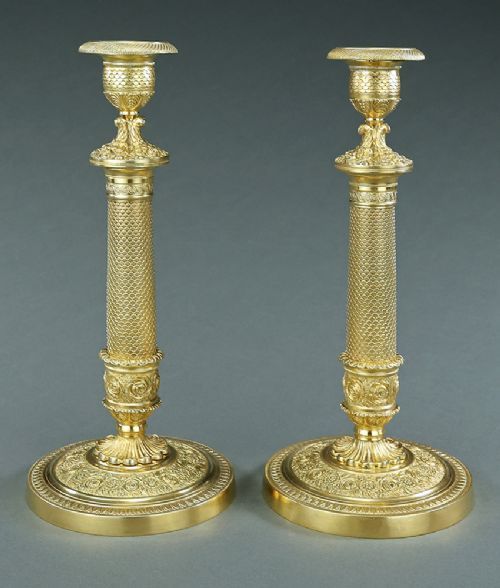
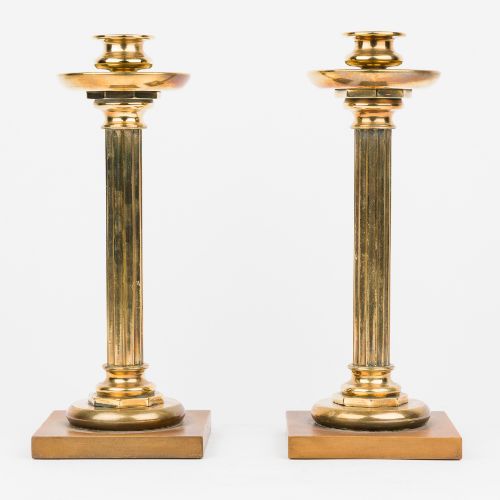
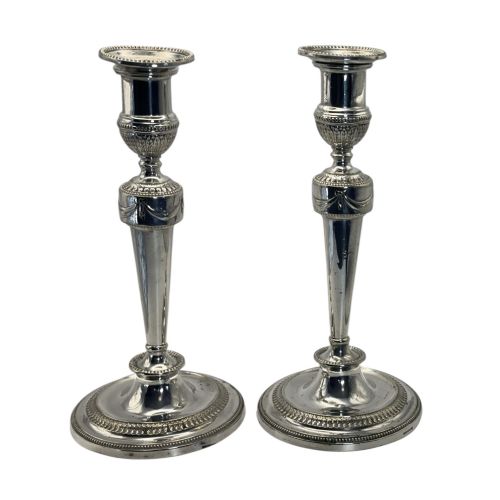
Most items you meet here take the form of metal columns, urn stems, or figural supports fashioned from brass, bronze, or silver plate. These pairs originate from English, French, and Swedish workshops, often utilising classical motifs like fluting, caryatids, and acanthus leaves.
How they were made
Foundry work relied on lost-wax casting or sand casting to produce bronze, ormolu, and brass components with sharp architectural detail. Goldsmiths and silversmiths shaped sterling silver and silver plate over copper cores, while other pieces combined turned hardwoods, marble plinths, and porcelain.
Gilding was applied via mercury or fire gilt methods to create durable, rich surfaces on bronze, alongside patination treatments that darkened selected areas for contrast. Components were joined with threaded pins or screws, allowing columns and bases to assemble tightly.
Listings feature materials ranging from precious sterling silver and ormolu to patinated bronze, brass, and silver plate.
What varies in quality
The crispness of the chasing and hand-finishing separates basic production from superior work. Fine examples retain sharp fluting, clean cast details, and heavy gauge metals that stand firm without wobble.
Original surface treatments and mercury gilding preserve depth and warmth that inferior secondary plating lacks. Matches between the two candlesticks must be exact in weight, height, and casting marks to hold true value.
Mappin & Webb·Matthew Boulton·Walker & Hall·Charles Boyton & Sons
The Neoclassical Candlestick Pair Glossary
- Ormolu
- Gilt bronze, created by applying a mixture of gold and mercury to a bronze object and heating it to drive off the mercury. This technique produced a rich, durable golden finish on many French pieces.
- Candelabra
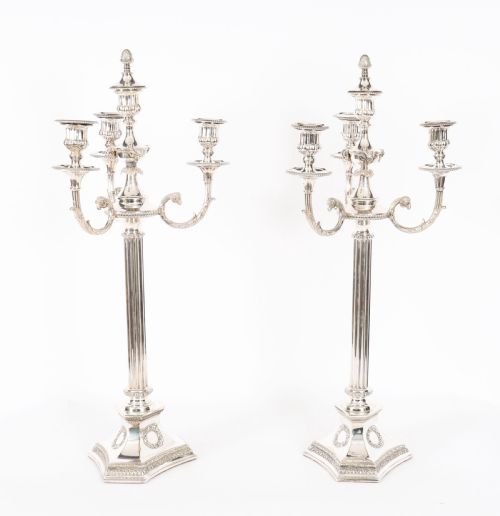
- A branched candlestick holding multiple lights on arms branching from a central stem. These larger forms often supported three or four lights.
- Caryatid
- A sculpted female figure serving as an architectural support instead of a column. They frequently appear supporting the drip pans on classical candle holders.
- Old Sheffield Plate
- A material made by fusing a thin sheet of sterling silver to a thicker copper base. It was produced before electroplating was invented.
- Jasper
- A fine-grained, opaque stoneware developed by Josiah Wedgwood that accepts metal oxides to produce coloured bodies. Blue and yellow varieties appear in classical revival designs.
Neoclassical Candlestick Pair: Frequently Asked Questions
What is a neoclassical candlestick pair?
A matched pair of candle holders designed with motifs from ancient Greece and Rome, such as columns, urns, and foliate scrolls.
They were produced across Europe and Britain from the eighteenth century onward, reflecting revivals in classical art and architecture.
How were these candlesticks used?
They stood on dining tables, mantelpieces, and sideboards to provide illumination by candle flame during evening hours.
Larger multi-light versions served as principal centrepieces in grand rooms, while smaller pairs lit intimate spaces.
How do I live with antique candlesticks?
Place them on stable surfaces away from drafts to ensure tapers burn evenly without dripping wax onto the metal or marble bases.
Clean them with a soft, dry cloth and avoid harsh commercial polishes that can wear away thin silver plate or historical patination.
How do I tell periods apart?
Eighteenth-century examples often display restrained Georgian proportions and hand-chased brass or silver, while nineteenth-century pieces frequently embrace heavier cast bronze, ormolu, and bolder classical revival ornamentation.
Edwardian and later twentieth-century items commonly utilise sterling silver or silver plate with machine-tooled accuracy.