

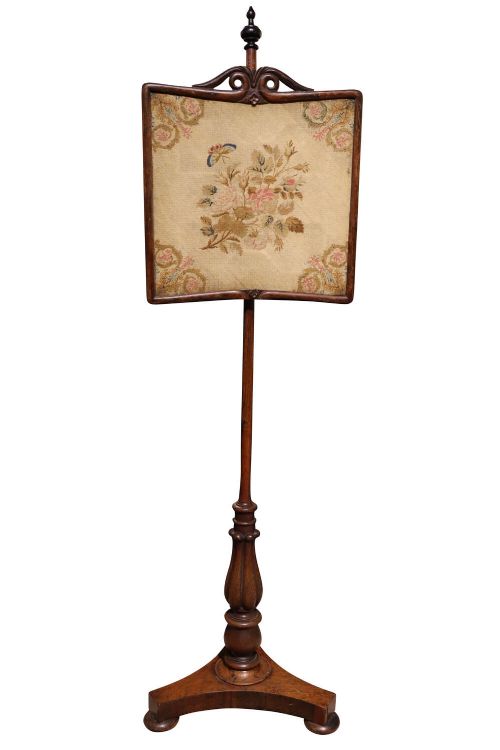
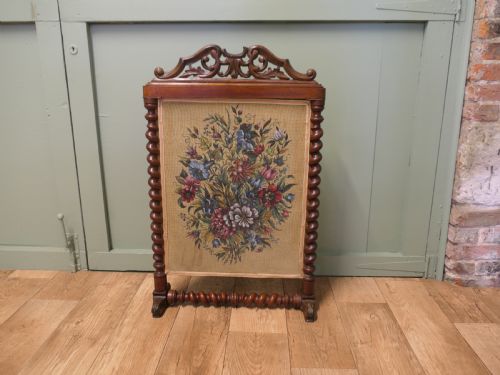
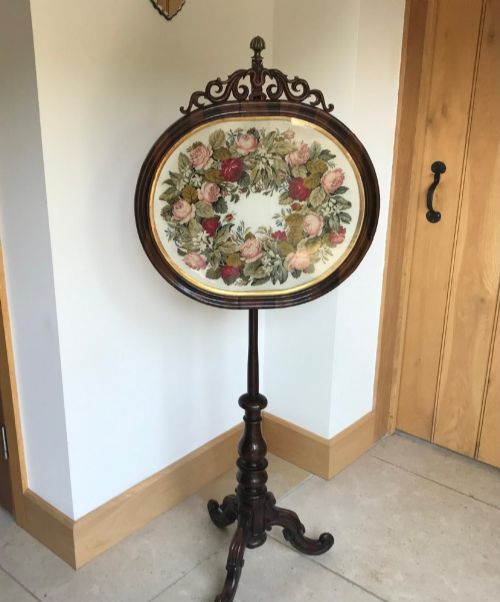


Needlework Hearth Screen
These needlework hearth screen examples are decorative fireplace accessories built to deflect radiant heat, bringing tactile embroidery and rich timbers directly to your sitting room.
Needlework Hearth Screen
Originating across the Georgian, Regency, William IV, and Victorian eras, these furnishings span the late eighteenth and nineteenth centuries. Woods like rosewood, mahogany, and satinwood form the upright standards and carved bases that support the needlepoint, wool, and silk pictorial panels.
How they were made
Cabinetmakers shaped dense hardwoods such as rosewood and mahogany into slender poles, tripod bases, and bobbin-turned frames, often incorporating brass adjustment mechanisms and gilded highlights. Joinery relied on secure turning, mortise and tenon joints, and carved detail to maintain stability on uneven hearth stones.
The textile panels utilised canvas, wool, silk, and Berlin work embroidery, stretched tight within wooden frames to display intricate figural and floral tapestries. Some examples incorporated glass panels or reflectors behind or alongside the needlework to enhance the warmth and light of the room.
Needlework Hearth Screen Retail Price Guide 2026
Typical asking prices for needlework hearth screen among the pieces listed under this phrase on Sellingantiques today, from the lower quarter to the upper quarter. They describe what is for sale here now, not the wider market.
Some nineteenth-century stitchers secretly included small hidden initials or whimsical pet portraits within their floral tapestries, waiting quietly by the hearth.
What varies in quality
The fineness of the needlework panel sets the best examples apart, judged by the density of the stitches, the complexity of the tapestry design, and the survival of the original silk or wool threads without fading or thinning. Finer pieces display meticulous Berlin work or detailed figural embroidery rather than simple repeating patterns.
Frame construction and timber selection dictate structural longevity, distinguishing robustly carved rosewood or satinwood from simpler softwood or plain oak alternatives. Original brass adjustment screws, uncompromised pole mechanisms, and well-proportioned tripod or pedestal bases indicate superior workshop origins.
The Needlework Hearth Screen Glossary
- Pole screen
- A tall, slender vertical stand featuring an adjustable framed panel that slides up and down on a central turned shaft. This design allowed sitters to raise or lower the needlework screen to block the heat from the hearth.
- Berlin work
- A style of charted needlepoint embroidery executed in wool on canvas that gained immense popularity during the nineteenth century. It relied on brightly coloured printed patterns to create detailed pictorial panels.
- Cheval screen
- A self-standing floor screen supported by two side pillars and feet rather than a central pole. These larger frames provided a broader barrier against the radiant heat of an open fireplace.
- Reflector
- A polished metal or mirrored panel fitted into a screen to bounce the warmth and light of the fire back into the room. They occasionally accompanied or replaced textile panels in functional settings.
Needlework Hearth Screen: Frequently Asked Questions
How do I date a pole screen?
Dating relies heavily on the timber species, turnings, and stylistic cues of the base and frame. Regency and George III pieces typically display slender proportions and satinwood or rosewood veneers, while heavier carved details point towards Victorian production.
The needlework panel itself also offers clues, as Berlin work embroidery and specific floral motifs gained prominence during the mid-nineteenth century. Comparing the joinery methods and hardware to established cabinetmaking periods helps narrow down the decade of manufacture.
Were these screens used for heat?
These furnishings were originally designed to protect delicate complexions and expensive makeup from the intense heat of open coal fires. Sitters adjusted the height of the panel on its pole to shield their faces while remaining seated comfortably nearby.
Over time, as heating methods evolved and central systems replaced open hearths, these pieces transitioned into purely decorative items. They remained valued for displaying intricate hand-stitched tapestries within formal reception rooms.
How do I care for the embroidery?
Protecting antique textiles requires keeping them out of direct sunlight to prevent the wool and silk threads from fading and becoming brittle. Gentle dusting with a soft brush helps maintain the surface without disturbing the aged canvas underneath.
Avoid placing these screens directly beside active heat sources or damp exterior walls, as temperature fluctuations stress both the wood and the fabric. Professional textile conservators should handle any necessary structural repairs to the needlework itself.
What is the difference between pole and cheval screens?
Pole screens utilise a single vertical standard mounted on a tripod or weighted base, carrying a small, movable panel that adjusts vertically. They are typically lighter and designed to protect a single person seated directly in front of the flames.
Cheval screens stand on wider, fixed feet with two supporting side posts that often allow the panel to tilt on horizontal pivots. Their broader surface area offers more substantial visual weight and a wider barrier across the hearth.