
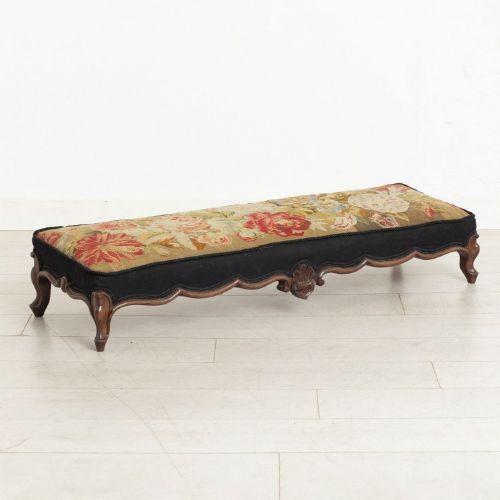


Needlepoint Low Stool
A needlepoint low stool brings tactile warmth to a room, offering sturdy timber frames beneath intricate hand-worked textile covers.
Needlepoint Low Stool
A needlepoint low stool provides a compact resting place for feet or a low seat beside a fireside. These pieces emerge predominantly from the Victorian and Edwardian eras, stretching back through the nineteenth century into revival periods.
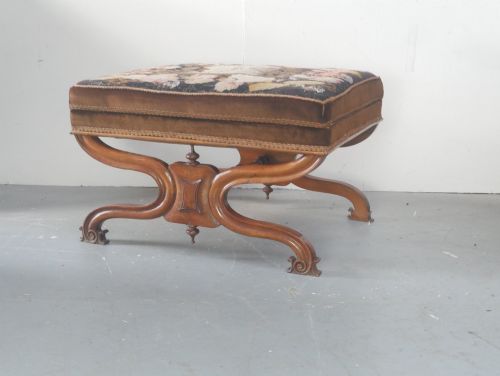
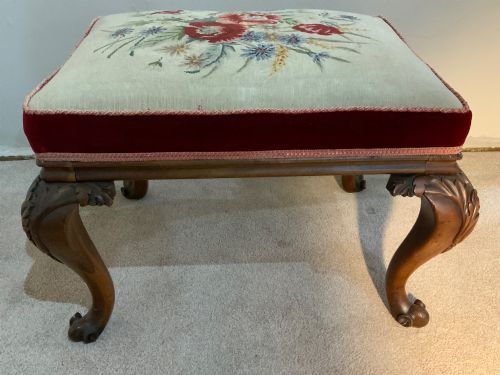
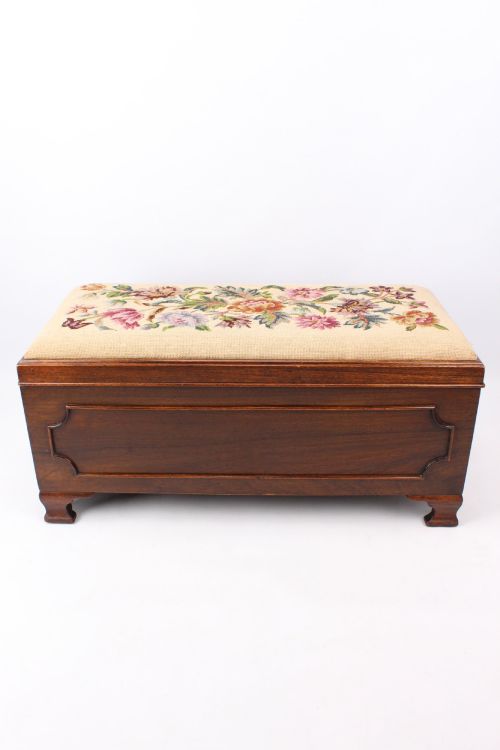
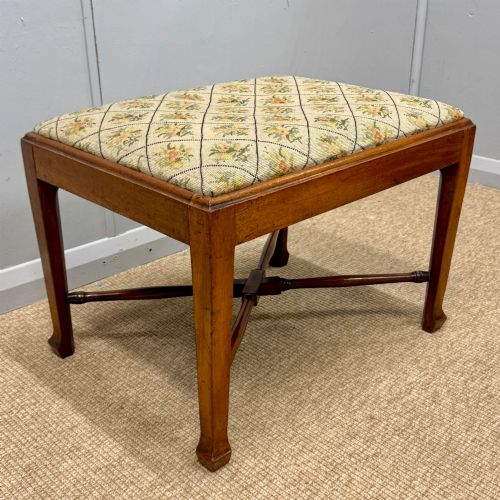
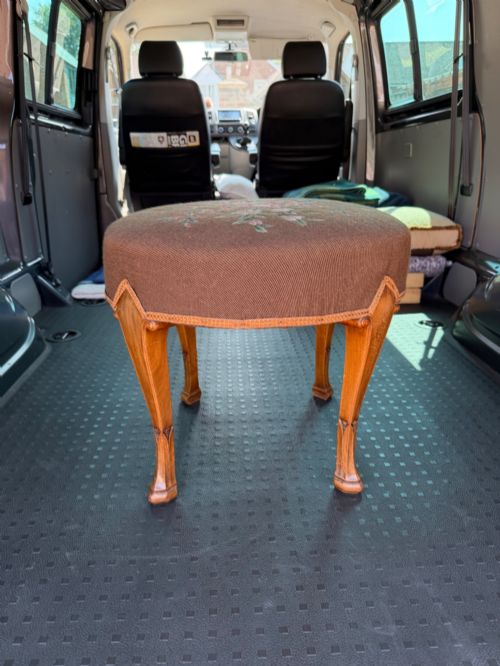
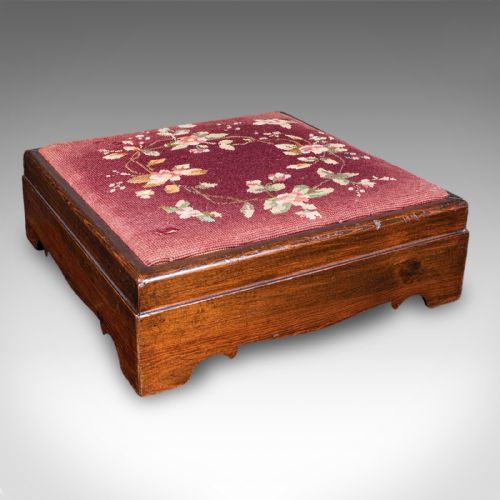
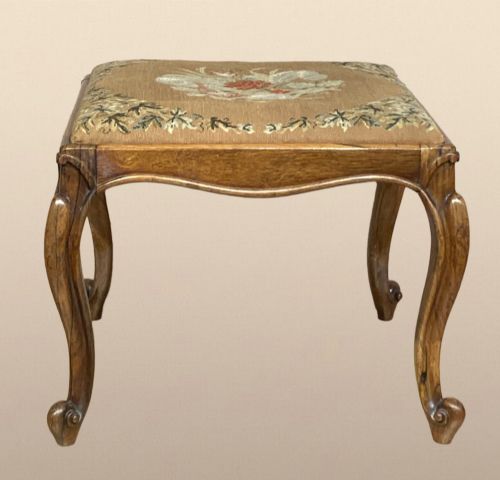
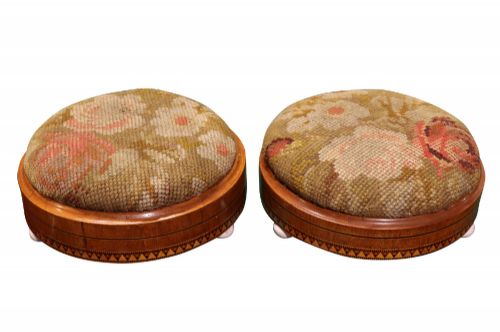
Most examples found here appear as circular or rectangular footstools, dressing table stools, and long ottomans. Walnut, mahogany, and rosewood frames dominate, often finished with short cabriole or turned legs that keep the seating plane low to the floor.
Timber frames and textile upholstery
Makers constructed the structural bases of these stools using hardwoods such as walnut, mahogany, rosewood, and pitch pine. Joinery relies on traditional techniques to support the downward pressure placed upon a low seat.
The defining textile element involves hand-stitched tapestry, wool, or needlepoint covers stretched over padded upholstery. These decorative fabric surfaces often feature geometric patterns or floral designs worked directly onto canvas.
The listings span from Georgian oak pieces up to twentieth-century mahogany dressing stools, showcasing a steady evolution in domestic seating.
Gradations in craftsmanship and textile preservation
Quality rests heavily on the crispness of the timber carving and the complexity of the wood selection, such as figured walnut or inlaid details. Finer pieces display refined proportions and robust joinery that withstands centuries of use.
The preservation of the needlepoint cover largely dictates desirability. Tight, undamaged wool stitching with vibrant original colours elevates an example far above one with re-worked or heavily worn textiles.
Whytock and Reid
The Needlepoint Low Stool Glossary
- Cabriole leg
- A furniture leg that curves out and then in, resembling the leg of an animal. This form appears frequently on walnut and mahogany stools from the Victorian period.
- Tunbridge ware
- Small wooden objects decorated with mosaic woodwork, creating microscopic geometric patterns. This decorative technique occasionally trims the edges of circular footstools.
- Tapestry
- A form of textile art traditionally woven on a loom or stitched by hand onto a canvas ground. In these pieces, it forms the textured top surface.
- Cross stretcher
- Wooden rails connecting the legs near the base to add structural stability. They are common on twentieth-century dressing table stools.
- Ottoman
- A low upholstered seat or footstool without a back or arms. These long variants accommodate extended seating or resting needs.
Needlepoint Low Stool: Frequently Asked Questions
Where should I place a low stool?
These compact pieces fit naturally beside an armchair or fireplace to serve as a footrest. They also function well tucked beneath a dressing table or positioned as a small standalone seat in a hallway.
The low profile ensures they do not crowd a room while adding texture through exposed timber and wool covers.
How do I care for the needlepoint cover?
Protect the wool and tapestry surfaces from direct sunlight to prevent the dyed colours from fading over time. Gentle vacuuming through a mesh screen helps remove dust settled between the yarn fibres.
Avoid liquid cleaners on antique textiles, as moisture can weaken old foundation canvas and cause shrinkage.
How do I distinguish Victorian from later styles?
Victorian examples often utilise dense rosewood or walnut with heavier, darker finishes and elaborate hand-carving. Mid-century and later revival pieces frequently employ lighter mahogany frames influenced by Queen Anne or Chippendale aesthetics.
Examining the underside reveals construction clues, such as hand-cut screws or older webbing materials characteristic of the nineteenth century.
Were these stools used purely for feet?
While primarily designed as footstools to keep feet away from cold draughty floors, many served as low dressing seats. Longer variants functioned as ottomans for relaxed seating in private chambers.
Their sturdy timber construction meant they could easily double as impromptu stands when needed.