
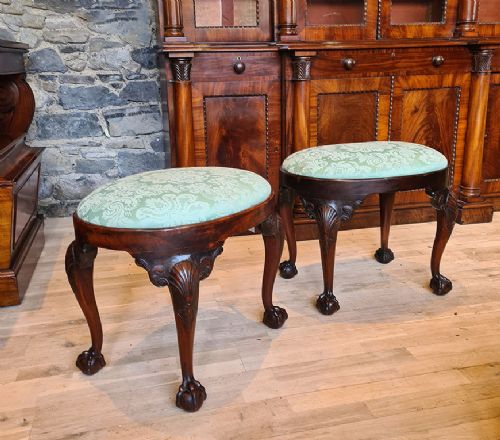


Chippendale Dressing Stool
These chippendale dressing stool pieces offer classical carved timber and upholstered seats, bringing period elegance to a bedroom or vanity.
Chippendale Dressing Stool
A chippendale dressing stool combines a solid timber frame with an upholstered seat designed for a vanity or dressing table. These seating pieces appear frequently in revival styles alongside earlier examples.
The inventory spans multiple eras, incorporating eighteenth century origins alongside Victorian, Edwardian, and twentieth century revivals. Most examples take the form of dedicated dressing stools or low footstools.
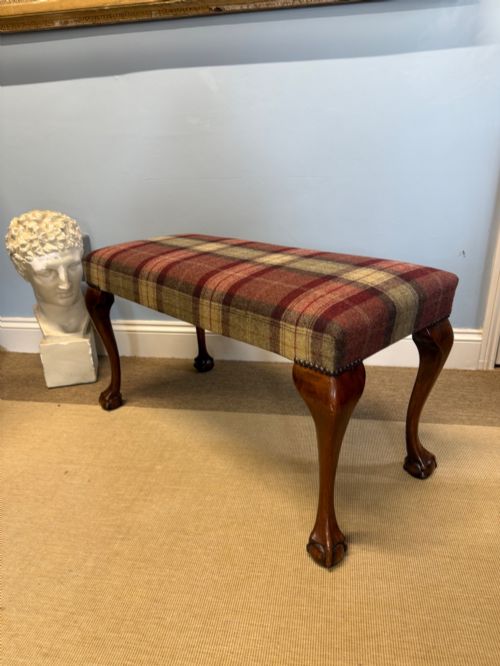
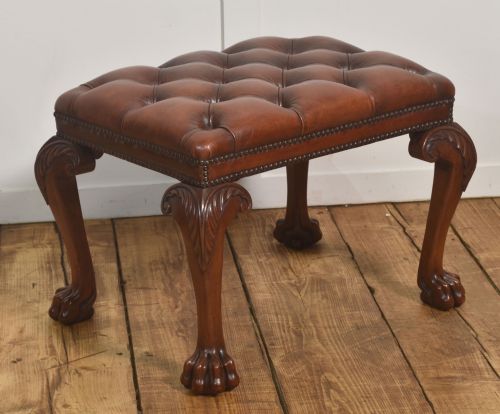
Makers drew on Georgian design principles, producing frames with carved woodwork and upholstered pads covered in leather, velvet, fabric, or wool.
Materials and construction methods
Makers relied primarily on mahogany and walnut for the structural frames, shaping the timber through carving and joinery. Brass hardware occasionally appears in the construction.
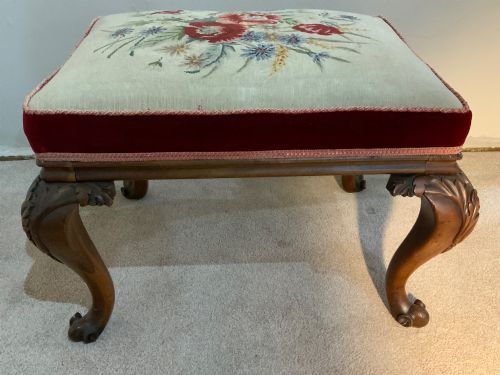
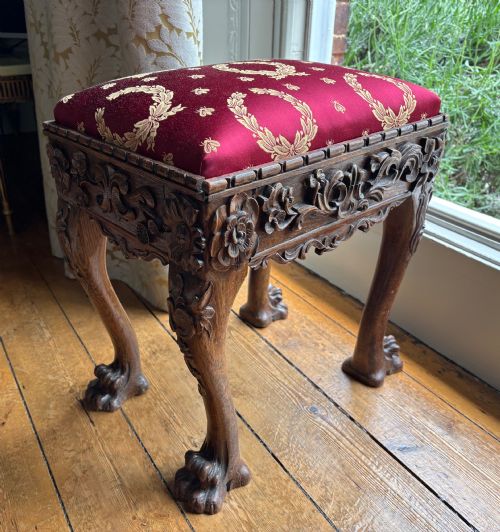
Seats utilise textiles including fabric, leather, velvet, wool, and damask for the upholstered upper surface, secured to the wooden frame.
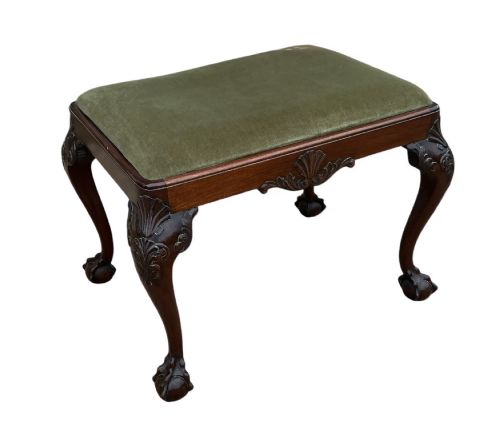
Some nineteenth-century makers evidently decided that a dressing stool needed ball-and-claw feet to hold its ground.
Distinguishing quality in frames and upholstery
Depth and crispness of the wood carving separate standard production from superior examples, particularly on the legs and frame rails. Timber selection also dictates the visual weight of the piece.
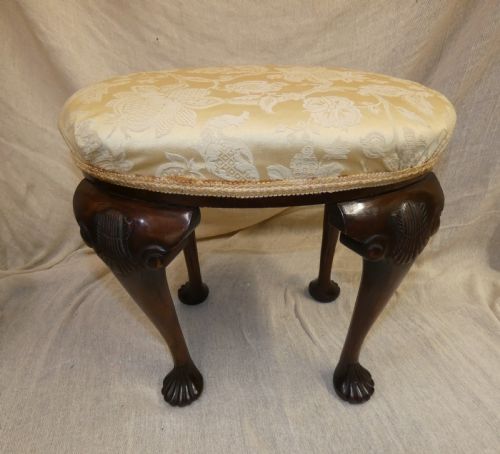
Upholstery finish and the choice of covering material, such as damask or leather, influence the overall presentation of the seating.
The Chippendale Dressing Stool Glossary
- Chippendale Style
- A design aesthetic reflecting the eighteenth-century patterns associated with Thomas Chippendale, characterised by carved mahogany frames.
- Serpentine Shape
- A furniture contour featuring a gentle curving line that undulates outward and inward, often seen on the frame rails.
- Damask
- A reversible figured fabric traditionally used for upholstery, providing a patterned surface texture.
- Upholstered Stool
- A seating platform padded with textile and stuffing over a wooden base.
Chippendale Dressing Stool: Frequently Asked Questions
What is a chippendale dressing stool used for?
These low seats function primarily as seating at a dressing table or vanity.
They also serve as occasional seats or decorative footstools within period interiors.
How do I date a mahogany stool?
Dating relies on timber characteristics, joinery techniques, and the style of the carved woodwork.
Twentieth-century revival pieces often display machine tooling, whereas older examples show hand-working marks.
Where should I place a dressing stool?
Position the piece beneath a vanity table or in a bedroom corner as an accent seat.
The compact dimensions allow integration into smaller dressing spaces.
What upholstery materials are common?
Original and replacement coverings include leather, velvet, wool, damask, and woven fabric.
Selection depends on the period of the frame and subsequent reupholstery.