


Needlepoint Foot Stool
A needlepoint foot stool brings warmth and tactile wool upholstery into a room.
Needlepoint Foot Stool
A needlepoint foot stool appears in forms ranging from small round parlour pieces to long carriage stools and low gout stools. The Victorian era supplies the bulk of these items, alongside pieces from the eighteenth and early nineteenth centuries.
Workshops fashioned frames in walnut, mahogany, rosewood and oak, often adopting Queen Anne, Chippendale or Scottish Baronial styles. Buyers find dressing stools, piano stools and ottomans alongside standard low footrests.
Materials and construction
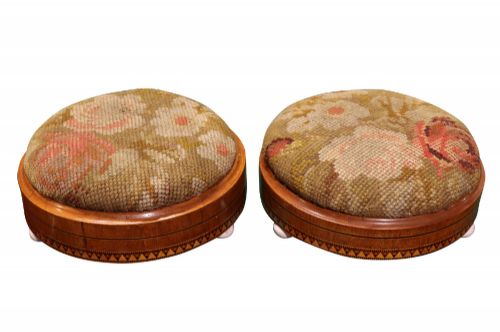
Cabinetmakers constructed sturdy hardwood frames from walnut, mahogany and rosewood, sometimes applying intricate inlay or Tunbridge Ware decoration. Upholsterers then secured wool tapestry and needlepoint textile tops over supportive stuffing.
Makers occasionally utilised beech or oak for internal structures or simpler domestic seating. Needlepoint and crewelwork designs deployed durable wool yarns to withstand heavy daily use.
Listings feature walnut, mahogany and rosewood frames paired with wool needlepoint, tapestry and velvet textiles across the nineteenth century.
Design and execution
The distinction between standard domestic seating and finer examples lies in the depth of timber carving and the complexity of the needlepoint pattern. Dense floral trellises, geometric kilim designs and Aubusson work indicate superior workshops.
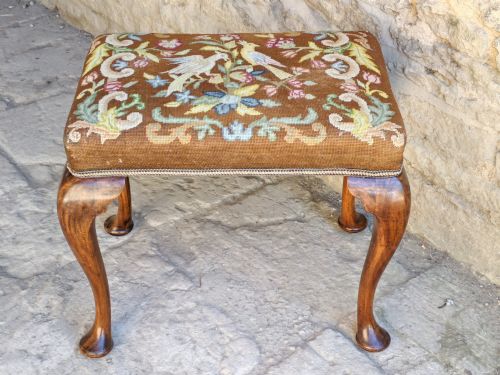
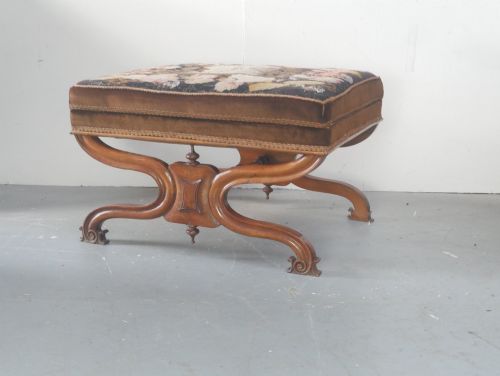
Turned or carved wooden supports, including X-frames and cabriole legs, distinguish ambitious regional and London pieces from basic utility stools.
The Needlepoint Foot Stool Glossary
- Tunbridge Ware
- A form of woodwork characterised by mosaic tile patterns made from tiny coloured woods. It appears on Victorian walnut stool frames.
- Needlepoint
- A type of counted thread embroidery stitched onto a stiff open canvas mesh. Wool yarns form the dense pictorial or geometric surfaces seen on these seats.
- Gout stool
- A low footrest designed with an adjustable inclined top to support a sufferer's foot. These pieces frequently feature wool tapestry upholstery.
- Carriage stool
- A long, low footrest intended for use in horse-drawn transport or cold domestic interiors. They often rest on short turned feet.
- Aubusson
- A style of tapestry woven in France, known for pictorial scenes and floral motifs. Such textiles occasionally cover high-end footstools.
Needlepoint Foot Stool: Frequently Asked Questions
What is a needlepoint foot stool?
A needlepoint foot stool is a small antique seat featuring an embroidered wool textile top stretched over a wooden frame. These pieces served various domestic purposes from resting tired feet to seating individuals at dressing tables.
Craftsmen built them in diverse regional and revival styles using hardwoods like walnut and mahogany. Their compact size makes them versatile additions to modern interiors.
How were they used in the past?
Victorian households placed these stools near firesides, in carriages, or beside pianos and dressing tables. Low gout stools provided angled support for resting swollen feet or legs.
Longer carriage stools warmed travellers' feet on cold journeys, while round parlour stools offered movable extra seating for guests. Their sturdy wool needlepoint surfaces endured generations of daily domestic friction.
How do I clean the needlepoint top?
Maintenance requires gentle surface dusting with a soft brush to remove accumulated particles without snagging the old wool threads. Avoid harsh chemical cleaners or excessive moisture which can rot aged textile fibres and damage internal stuffing.
Professional textile conservators should handle deep cleaning or structural repairs to the delicate tapestry work. Keeping the wool out of direct sunlight prevents the original dyes from fading.
How can I tell the period?
Dating relies on combining the timber species, the frame style and the characteristics of the needlepoint design. Early Victorian and Regency pieces often show dense walnut framing and floral wool work.
Later Victorian items occasionally incorporate Tunbridge Ware or more eclectic revival styles like Scottish Baronial. Comparing the joinery methods and turning styles against documented furniture eras clarifies the date of manufacture.