



Needlepoint Dining Chairs
Needlepoint dining chairs combine solid timber framing with intricate stitched upholstery, offering both firm support and historical charm around the table.
Needlepoint Dining Chairs
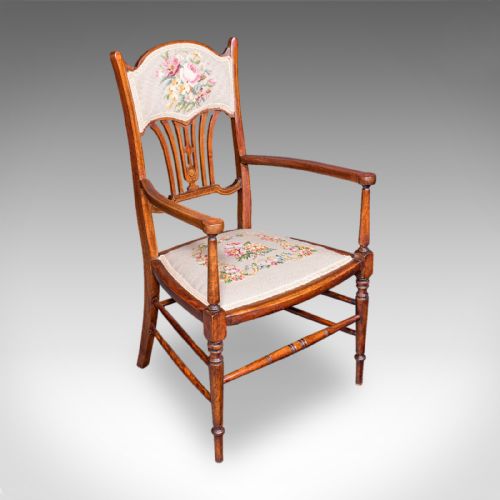
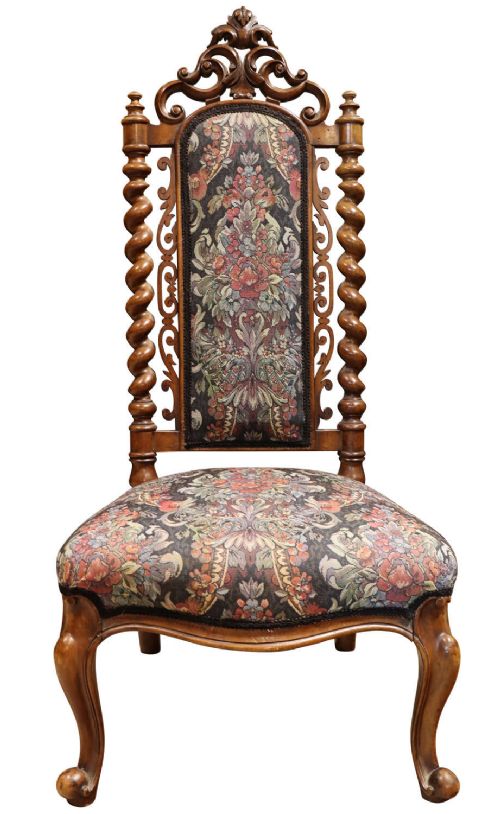
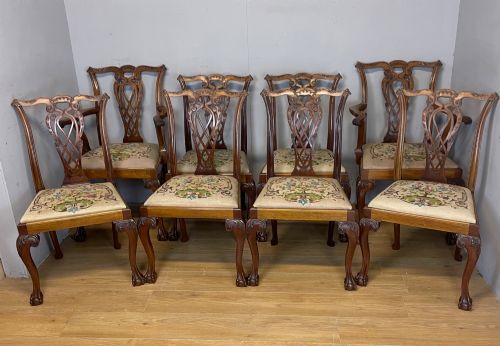
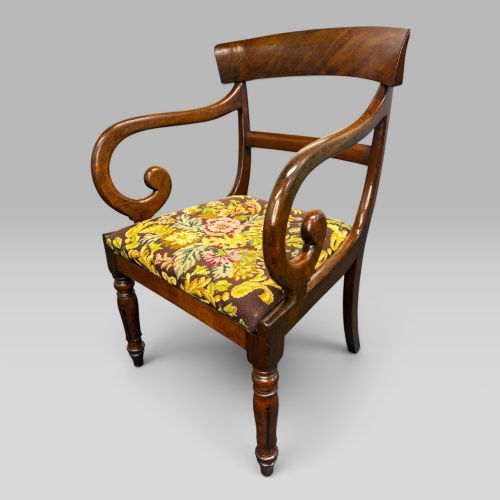
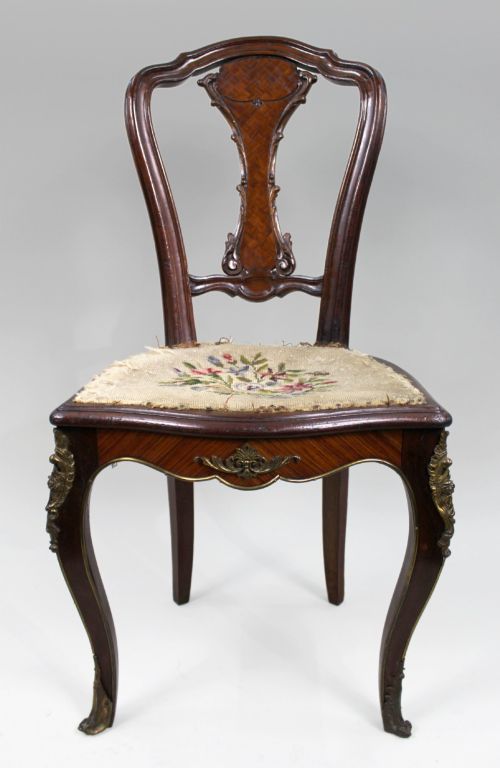
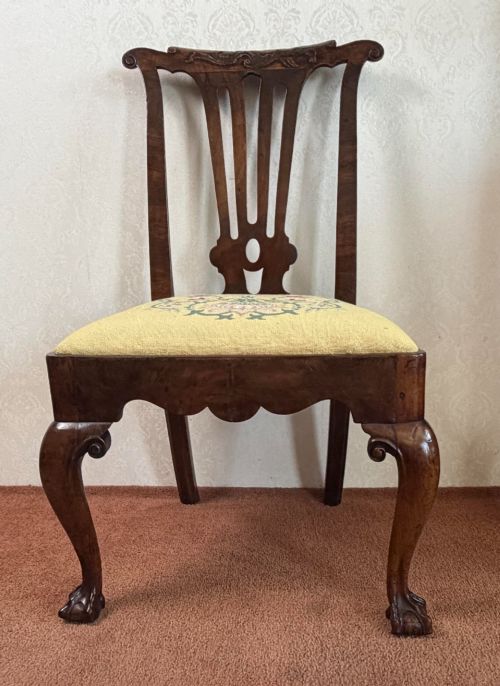
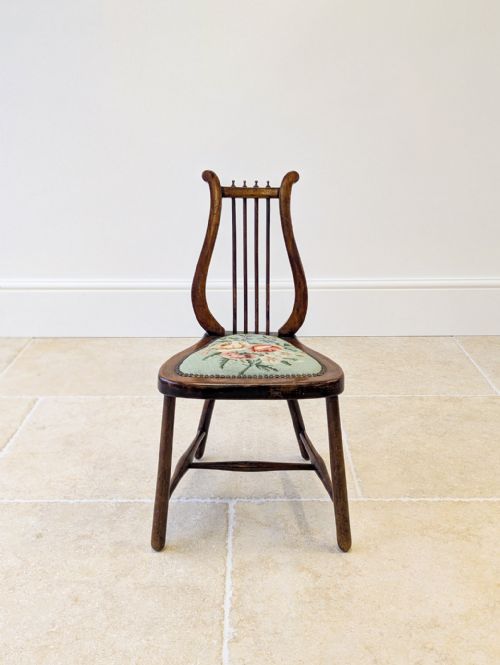
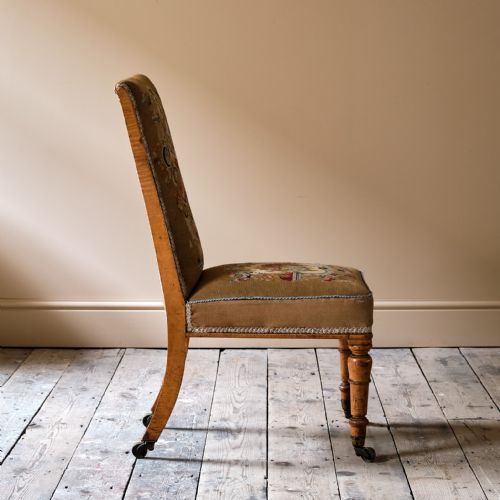
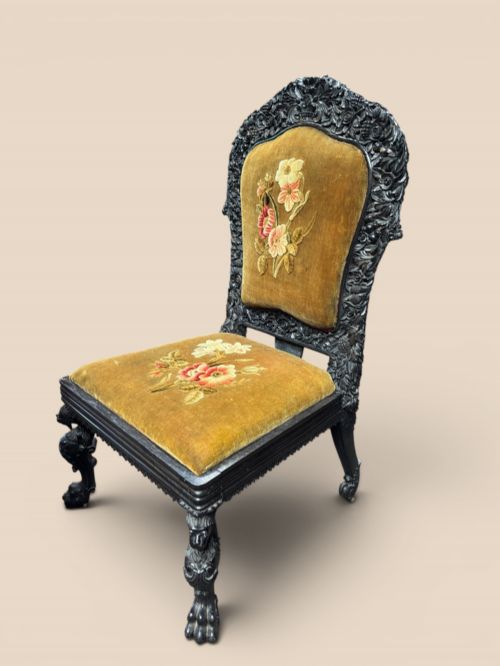
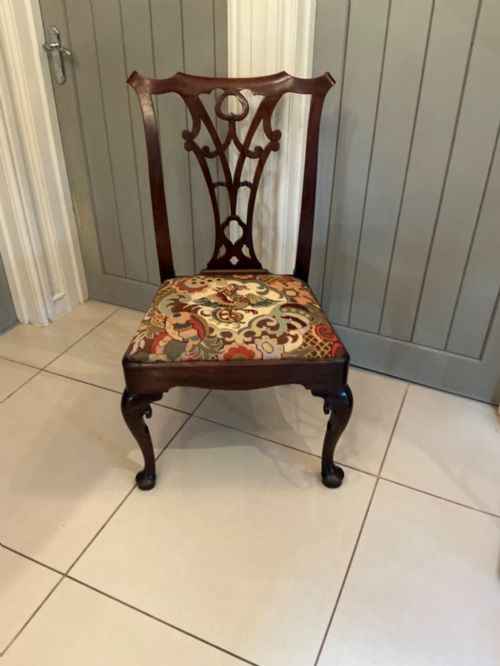
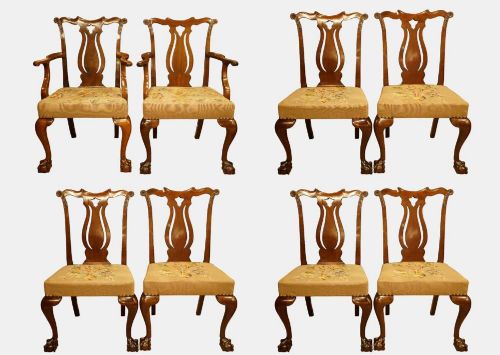
Needlepoint dining chairs are seating furniture featuring textile work on the seat or back, spanning periods from the eighteenth century through to the early twentieth century. When you examine needlepoint dining chairs on this page, you encounter forms such as side chairs, armchairs, and elbow chairs framed in timbers like mahogany, walnut, and beech.
The selection ranges from George III and Georgian mahogany sets to Victorian walnut designs and Edwardian creations. Many examples incorporate drop-in seats covered in wool work, tapestry fabric, or needlepoint upholstery, reflecting styles from Queen Anne and Chippendale revival to Regency and Art Nouveau.
How they were made
Cabinetmakers constructed the frames using hardwoods including mahogany, walnut, rosewood, and oak, often employing carved details, parquetry, or ormolu mounts depending on the period. The structural woodwork supports drop-in or fixed seats designed to house stitched textile panels.
The decorative element relies on wool and tapestry fabric worked in needlepoint or wool work, secured directly over the frame or within a removable seat rail. These stitched textiles utilise durable wool threads to withstand daily use around the dining table.
Needlepoint Dining Chairs Retail Price Guide 2026
Typical asking prices for needlepoint dining chairs among the pieces listed under this phrase on Sellingantiques today, from the lower quarter to the upper quarter. They describe what is for sale here now, not the wider market.
The available seating spans the eighteenth, nineteenth, and twentieth centuries, including Georgian, Victorian, and Edwardian periods.
What varies in quality
The standard of the timber frame dictates much of the quality, separating solid mahogany or walnut structures with crisp, hand-carved ornamentation from simpler beech or painted alternatives. Finer sets display precise joinery and balanced proportions, whether built during the Georgian era or recreated during later revival periods.
The tightness and complexity of the needlepoint upholstery also distinguish finer pieces, with densely worked wool designs holding up better than looser or worn textiles. Original upholstery retained on period frames commands particular attention from collectors who value historical integrity.
Charles Tozer·Warings·Waring and Gillow·Liberty and Co·Robert Strahan Dublin·Wheeler
The Needlepoint Dining Chairs Glossary
- Needlepoint
- A type of canvas work embroidery stitched with wool or silk threads. It creates a durable and colourful decorative surface frequently applied to seat covers.
- Drop in seat
- A removable seat frame that drops into a rebate in the chair rails. This construction allows the upholstered panel to be easily lifted out for reupholstering or cleaning.
- Elbow chair
- An armchair with shorter arms designed to fit beneath a dining table. These pieces provide additional side support without obstructing movement.
- Parquetry
- Geometric wood inlay work arranged in patterns across flat surfaces such as chair backs or seats. It demonstrates advanced cabinetmaking skill.
- Ormolu
- Gilt bronze mounts applied to furniture for decoration. This technique appears on specific Continental pieces to accent the wood framing.
Needlepoint Dining Chairs: Frequently Asked Questions
How do I clean needlepoint seats?
Gently vacuum the wool surface using a low suction brush attachment to remove dust without snagging the threads. Avoid soaking the textile or applying harsh chemical cleaners directly to the historic fibres.
For stubborn marks, consult a specialist textile conservator who understands antique wool work. Keeping the chairs away from direct sunlight prevents the colours in the tapestry from fading.
Are these chairs comfortable for daily use?
Most period chairs provide an upright and supportive seat designed for formal dining rather than lounging. The internal padding relies on traditional stuffing materials like horsehair, which feels firmer than modern foam.
Using them for everyday meals is entirely practical provided the timber frame remains stable and the joints are secure. Period seats are built to bear weight securely when handled with reasonable care.
How do I identify a revival style?
Revival pieces replicate earlier aesthetics, such as Chippendale or Queen Anne, but date from later decades like the Victorian era or the early twentieth century. Look at the timber finish and construction marks to help determine the actual manufacturing period.
Cabinetmakers often adopted historical styles to satisfy changing domestic tastes while utilising contemporary workshop techniques. Comparing the secondary woods and tool marks clarifies the true age of the chair.
Can I mix different chair styles together?
Pairing dissimilar chairs around a dining table creates an eclectic interior look favoured by many collectors. Ensure the seat heights match reasonably well so guests sit at a comfortable level relative to the table surface.
Matching timber tones or similar periods helps tie disparate seating choices into a cohesive arrangement. Armchairs work well placed at the head and foot of the table with side chairs positioned along the sides.