







Neapolitan Bronze Figure
A neapolitan bronze figure captures classical antiquity and southern Italian life, bringing sculptural mastery and historical charm into your home.

Neapolitan Bronze Figure
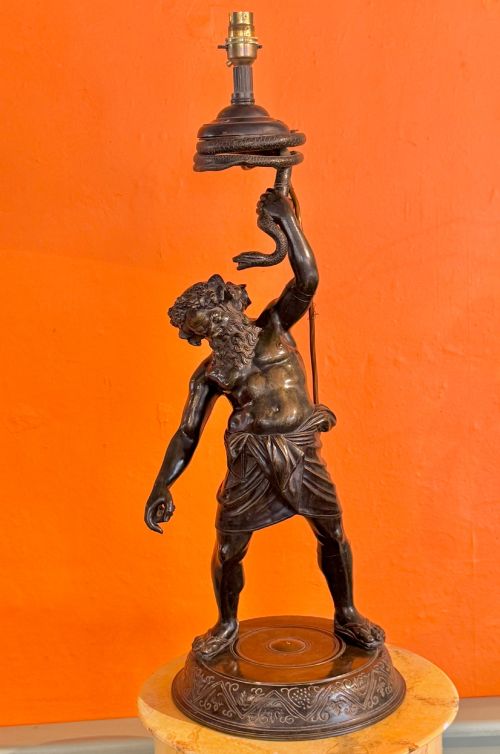
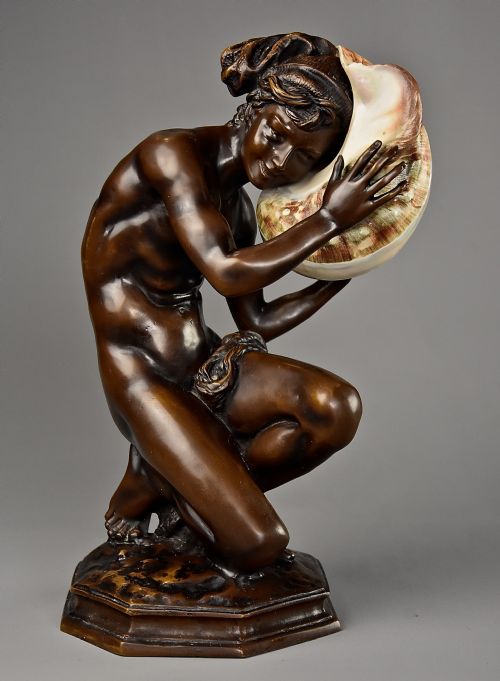
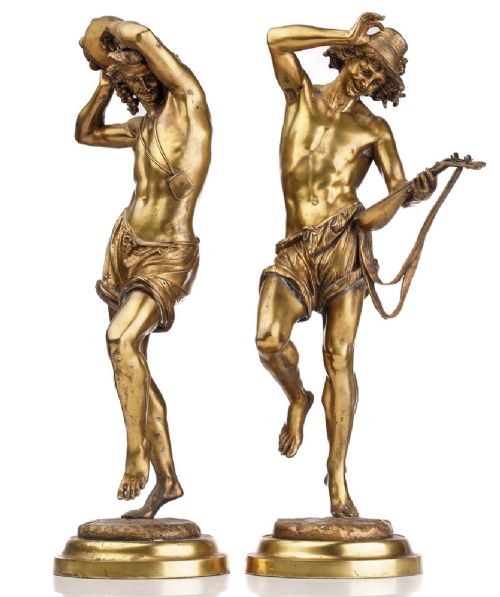
A neapolitan bronze figure is a sculptural work rooted in the 19th Century, often taking the form of a Grand Tour souvenir or a study after the antique. These pieces draw heavily on archaeological discoveries from Pompeii and classical mythology, depicting figures such as Narcissus, dancers, and local fishermen.
You will most commonly encounter 19th Century examples on this page, spanning decades from the 1880s to the 1930s. The subjects range from mythological deities like Dionysus and Bacchus to everyday characters like water carriers and musicians.
Many of these sculptures are mounted on heavy bases, including marble or fossil marble, elevating their presence as desk ornaments or cabinet pieces. Others double as functional objects, such as table lamps or fountain figures, reflecting the diverse output of Italian and French workshops.
Distinctions in quality
Quality rests upon the crispness of the casting and the sensitivity of the chisel work applied after the metal left the mould. Finer examples retain sharp facial expressions, articulate musculature, and careful texturing on hair and drapery.
The choice of patina and the integration of the sculpture with its marble or fossil marble base further define the standard of the piece. Superior examples exhibit harmonious proportions and a convincing adherence to the classical source material.
Listings feature works in bronze, brass, and fossil marble, spanning periods from 1880 through the 1930s.
G Amodio Naples·Giuseppe Renda·Vincenzo Gemito·Albert Ernest Carrier-Belleuse·Francisque Joseph Duret·Michele Amodio
The Neapolitan Bronze Figure Glossary
- Grand Tour
- A traditional trip of Europe undertaken by upper-class young European men of means, resulting in the acquisition of art and souvenir sculptures. These objects often replicated famous classical antiquities.
- Patination
- The process of applying chemical treatments to the surface of bronze to alter its colour and texture. Green patination and dark green finishes are common in this group.
- Fossil Marble
- A type of limestone containing ancient organic remains, frequently utilised as a sturdy base for 19th Century bronze sculptures. It adds both weight and visual contrast.
- After the antique
- A descriptor for works modelled on ancient Greek or Roman statues discovered during archaeological excavations. This practice defined much of 19th Century Italian and French sculpture.
Neapolitan Bronze Figure: Frequently Asked Questions
What is a neapolitan bronze figure?
A neapolitan bronze figure is a 19th Century sculpture produced in Italy or France, often depicting mythological subjects or local southern Italian characters. Many were created as Grand Tour souvenirs for travellers visiting Naples and Pompeii.
These pieces frequently draw inspiration from ancient statues excavated at nearby archaeological sites. They range from small cabinet figures to larger mounted bronzes and occasional table lamps.
How do I care for bronze and marble?
Bronze surfaces require only gentle dusting with a soft, dry cloth to prevent the accumulation of dirt. Avoid chemical polishes, which can strip the historic patination applied by the maker.
Marble and fossil marble bases should also be kept dry and wiped clean with a lint-free cloth. Protecting the stone from moisture ensures the polished surface remains intact.
Are these figures solid bronze?
Most 19th Century bronzes are cast using the lost-wax method as hollow forms rather than solid metal. This technique allowed workshops to manage weight and material costs while maintaining structural integrity.
Heavier elements are often balanced by dense mounting materials such as marble or fossil marble bases. The hollow construction is standard for both Grand Tour souvenirs and larger salon sculptures.
How can I tell the age of a bronze?
Dating relies on examining the casting quality, the type of patination, and the style of the base or mounting hardware. Pieces from the 19th Century often exhibit specific patinas, such as dark green or verdigris finishes, typical of Italian and French foundries.
Inscribed signatures or foundry marks can also help identify the period and maker. Comparing the casting details to known dated works provides further context for attribution.