


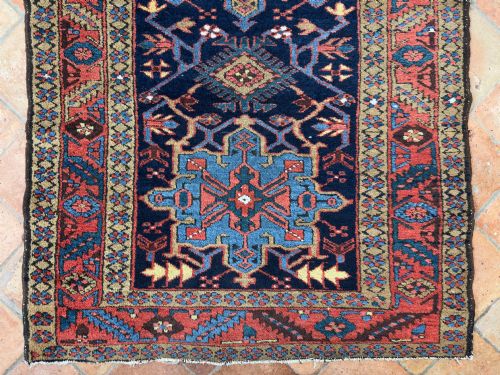
Navy Wool Oriental Runner
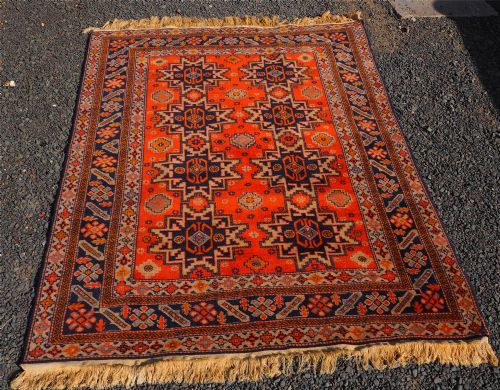
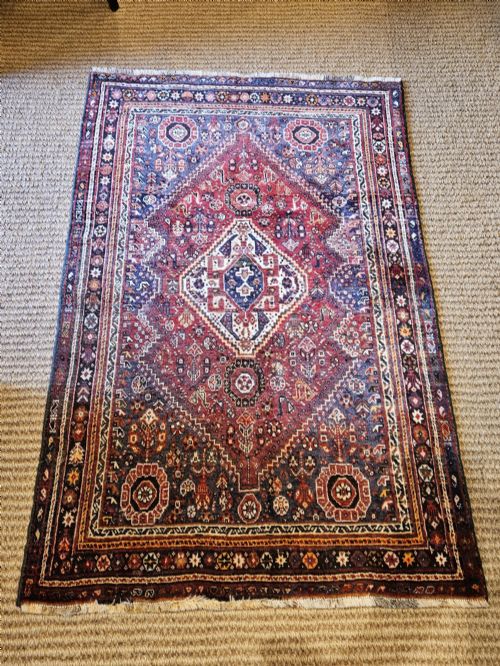
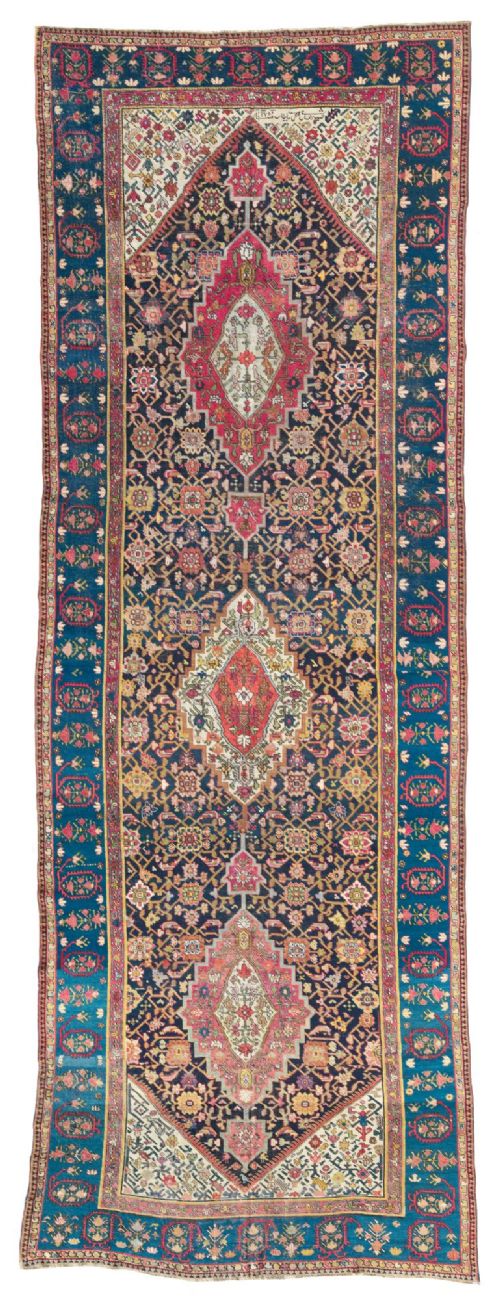
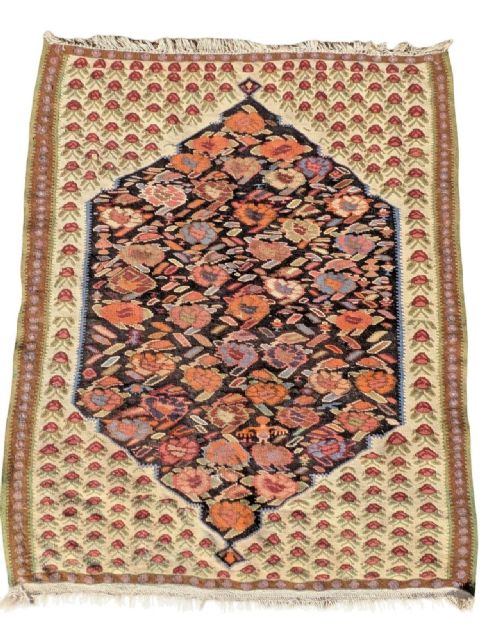
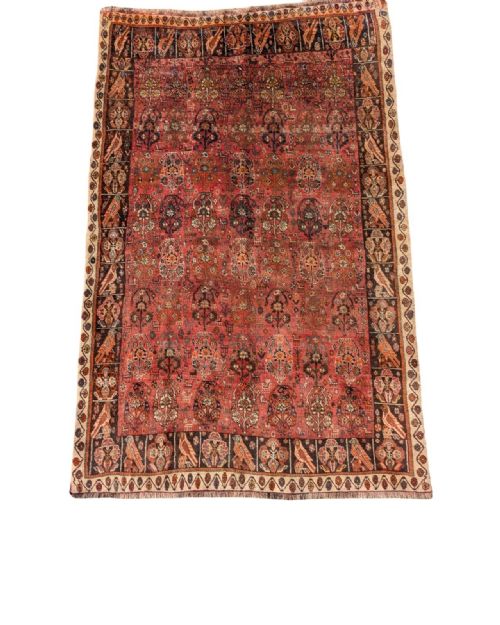
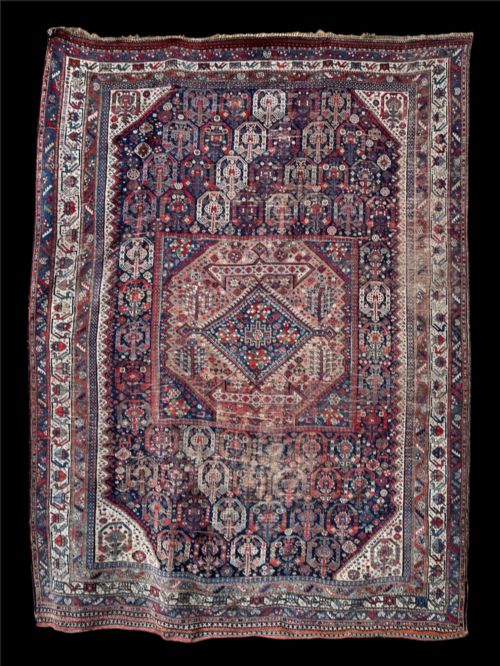
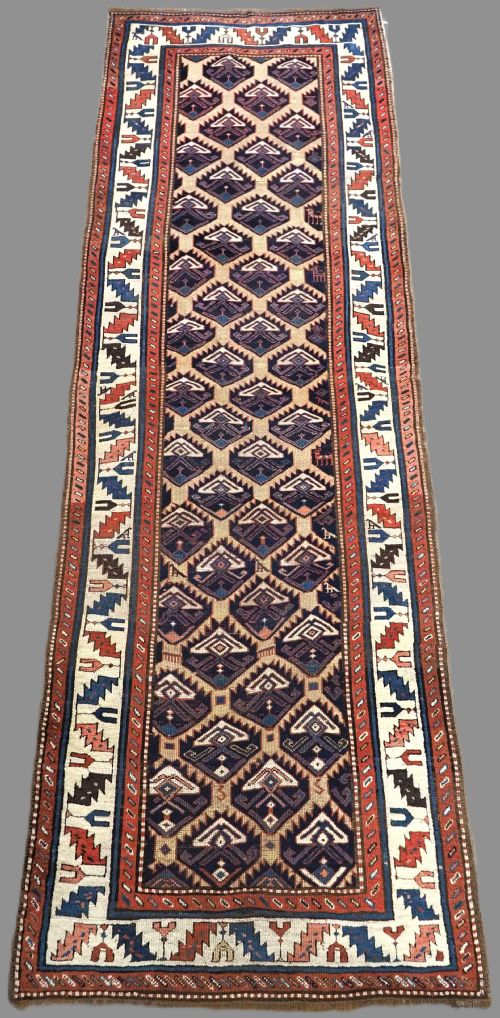
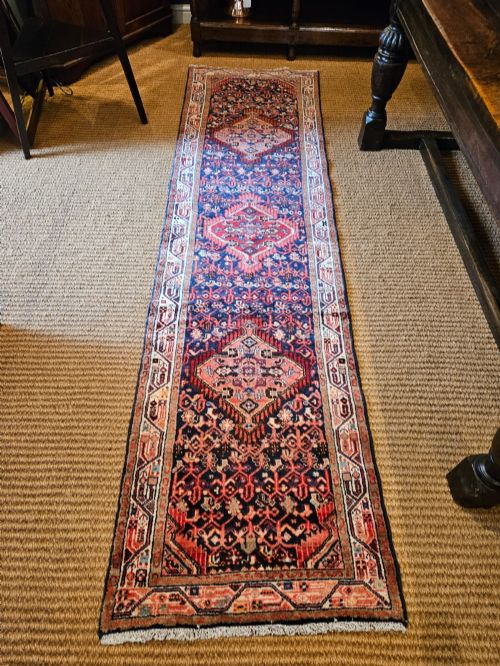
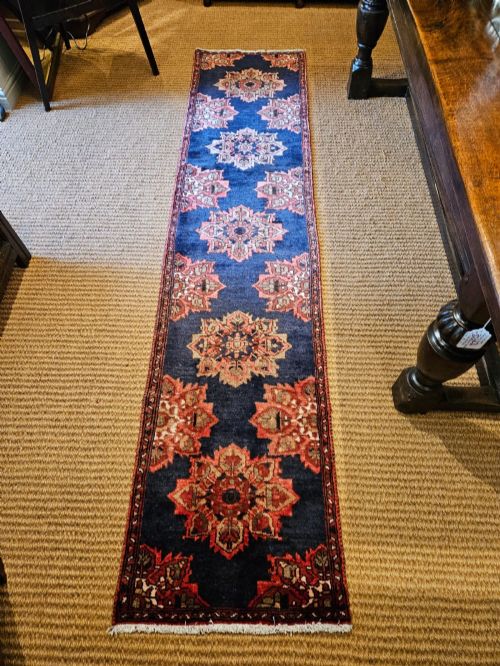
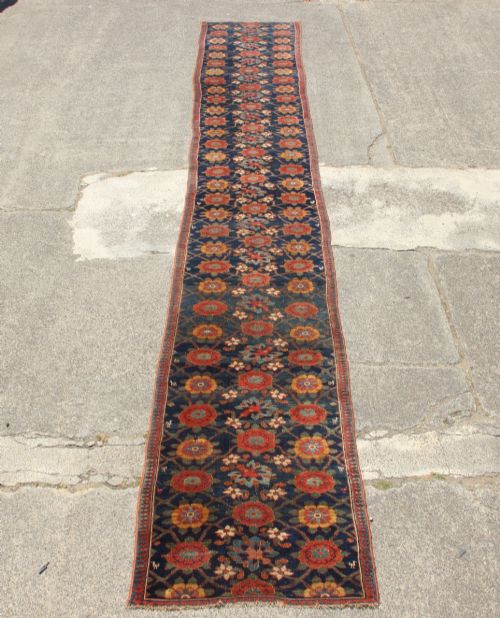
A navy wool oriental runner grounds a hallway with deep indigo tones and dense, traditional tribal motifs woven by hand.
Navy Wool Oriental Runner
A navy wool oriental runner provides a long, narrow format suited for corridors, hallways and narrow spaces, drawing upon traditions from Persia and the Caucasus. These floor coverings are designed to withstand heavy foot traffic while introducing rich indigo grounds and geometric or floral compositions.
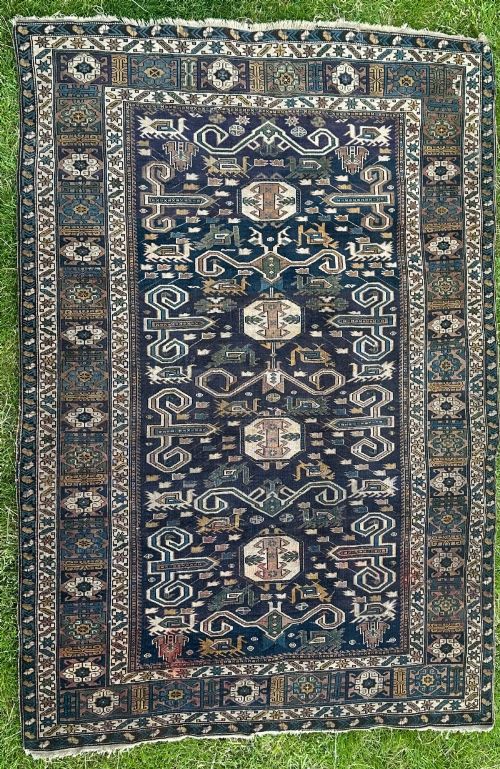
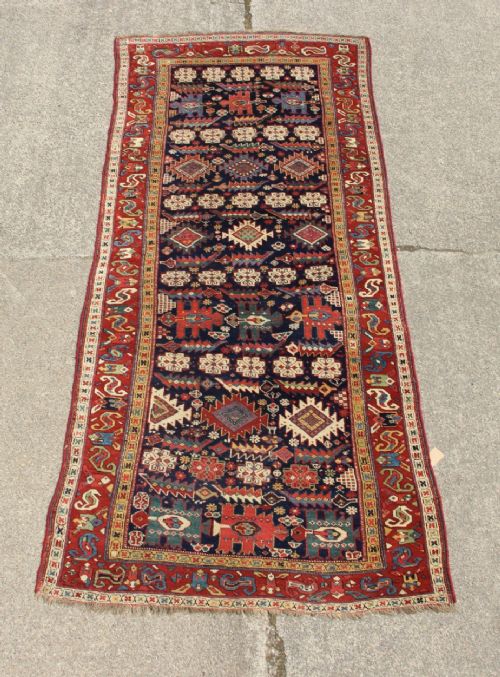
The pieces available here span from the mid nineteenth century through to the early twentieth century, encompassing tribal and village traditions. Buyers will encounter formats described as runner rugs, hallway runners and long runners, originating from regions such as Hamadan, Malayer and the Caucasus.
Originating from diverse weaving communities, these runners reflect distinct regional aesthetics, ranging from the structured floral patterns of Persian workshops to the bold geometric structures of Caucasian and Kurdish tribes. Each piece serves as a functional textile that brings historical character to domestic interiors.
How they were made
The construction relies fundamentally on wool, cotton and hand-spun wool, utilised for the pile, warp and weft foundations. Hand-knotting techniques secure the pile to the foundation threads, creating a dense and durable surface that holds dye firmly over decades of use.
Weavers employed natural dye sources to achieve the characteristic deep blue, red and neutral tones seen across these rugs. The preparation of hand-spun wool allows the yarn to take up dye with subtle variations in shade, contributing to the mottled, rich surface texture typical of older pieces.
Materials recorded across the inventory consist of wool, cotton and hand-spun wool.
What varies in quality
Quality in these runners is dictated by the fineness of the knotting and the tightness of the weave, which allows intricate designs to remain crisp and well-defined. Higher-grade examples demonstrate superior control over the symmetry of the geometric lattices or floral medallions along the long format.
The selection of materials also separates standard village pieces from finer workshop productions, with hand-spun wool and balanced foundations yielding greater resilience and tactile depth. Additionally, the consistency of the natural dye palette and the preservation of the original outer borders influence the overall integrity of the textile.
The Navy Wool Oriental Runner Glossary
- Runner
- A long, narrow carpet format traditionally used in hallways, corridors or alongside large furniture pieces. It guides movement through domestic spaces.
- Pile
- The vertical or diagonal loops of yarn that form the usable surface of a rug. It is sheared to an even height after knotting.
- Warp
- The stationary lengthwise threads stretched on the loom that form the structural skeleton of the rug. Weft threads are interlaced across them.
- Kelleh
- A large format rectangular rug, typically longer than it is wide, associated with Persian and Caucasian weaving traditions.
- Boteh
- A motif resembling a stylised almond or bent cypress tree, frequently repeated across oriental carpets and runner fields.
Navy Wool Oriental Runner: Frequently Asked Questions
Where should I place a runner?
These narrow formats suit hallways, corridors and landings where foot traffic is frequent yet concentrated along a central axis. Their dimensions allow them to bridge rooms while protecting exposed floorboards.
Ensure you use a suitable underlay beneath the textile to prevent sliding on hard floors and to cushion the wool pile against premature wear.
How do I clean an old wool runner?
Regular gentle vacuuming without a rotating brush roll removes surface grit from the wool pile before it settles into the cotton foundation. Professional textile cleaning is recommended for deeper maintenance to protect natural dyes.
Avoid soaking the rug or using harsh chemical detergents, as these can destabilise historic dyes and weaken hand-spun wool fibres.
What is the difference between tribal and village rugs?
Tribal rugs are woven by nomadic or semi-nomadic groups relying on memory and local motifs, resulting in expressive, geometric designs. Village rugs are produced in settled communities with more fixed regional traditions.
Both styles utilise durable wool and natural dyes, but village pieces often incorporate more structured floral medallions and balanced border arrangements.
How can I tell the age of a runner?
Dating relies on observing structural characteristics, material preparation, and stylistic traits typical of specific nineteenth and early twentieth century periods. Hand-spun wool and organic dye palettes generally point towards older production.
Examinations of the foundation weave, selvedges and end finishes help place the rug within a broader historical timeframe.