




Long Tribal Floor Runner
A long tribal floor runner brings enduring character and warmth to a hallway or extended space.
Long Tribal Floor Runner
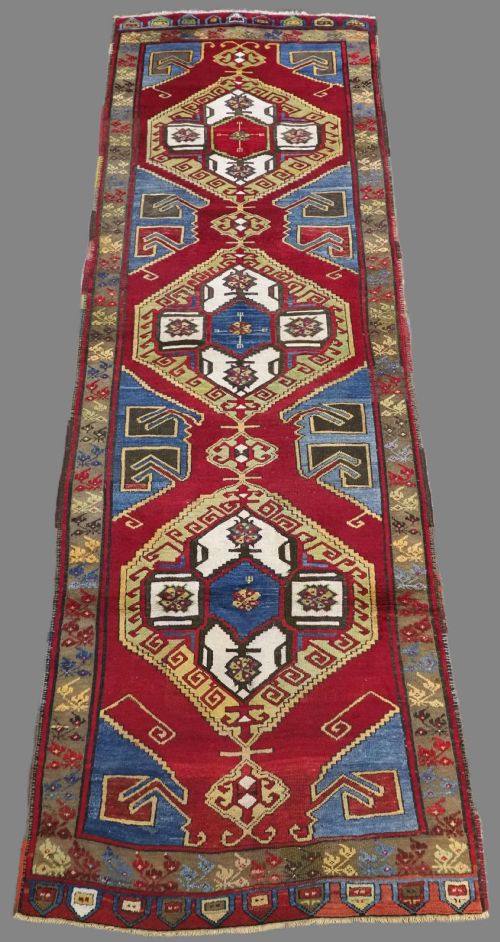
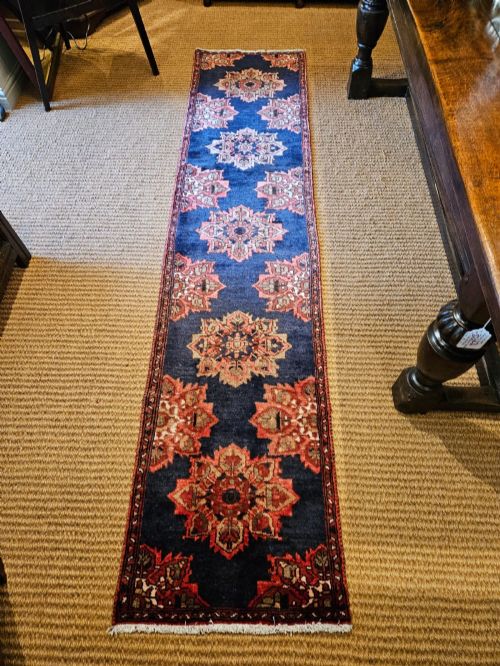
A long tribal floor runner is an elongated textile traditionally woven for narrow spaces such as corridors, hallways, and large rooms. These pieces originate from various weaving traditions including Persian, Caucasian, Anatolian, and Kurdish regions, spanning periods from the mid-nineteenth century into the early twentieth century.
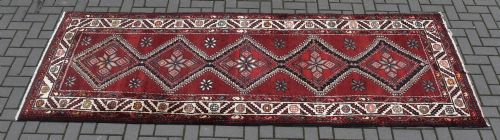
The versions most commonly met on this page combine extended proportions with tribal designs, featuring formats such as narrow runners, kelleh carpets, and long rugs. They serve both practical functions in heavy-traffic areas and decorative roles through geometric motifs, medallions, and all-over patterns.
Makers include various tribal groups and regional weaving centres across Persia, Turkey, the Caucasus, and North Africa. These textiles reflect the distinct aesthetic heritage of communities such as the Bakhtiari, Kurdish, Yomut, and Shirvan weavers.
How they were made
Materials rely predominantly on natural fibres, utilising wool, cotton, and hand-spun wool for foundations and pile construction. Hand-spun wool provides resilience and texture, while cotton frequently forms sturdy warps and wefts in specific regional workshops.
Weaving techniques incorporate traditional handweaving methods, flatweaving, and pile knotting as seen in kilims, soumaks, and standard pile carpets. Artisans employ natural dyeing methods to achieve deep tones of navy blue, red, and mellow secondary colours.
Listings feature pieces spanning the mid-nineteenth century to the early twentieth century, constructed from wool, cotton, and hand-spun wool.
What varies in quality
Quality rests upon the fineness of the knotting and the structural integrity of the foundation. Tighter, more precise construction along the edges and ends distinguishes higher-grade pieces from simpler village work.
The depth and complexity of the design also dictate standard, where expressive tribal motifs, well-balanced borders, and harmonious colour palettes elevate a runner. Handling materials that feature hand-spun wool and skilled dye work marks the upper tier of these textiles.
The Long Tribal Floor Runner Glossary
- Runner
- A long, narrow carpet format designed specifically for hallways, corridors, and stairs. It provides linear floor coverage in spaces where standard rectangular rugs do not fit.
- Kelleh
- A large, elongated rug format traditionally proportioned longer than a standard room rug but wider than a typical corridor runner. It often functions as a primary floor covering in traditional Persian interiors.
- Kilim
- A flatwoven textile produced without a pile by tightly interweaving warp and weft strands. This technique creates a lightweight, reversible fabric with sharp geometric patterns.
- Soumak
- A historic flatweaving technique involving wrap-threads that produce a braided texture on the face and loose threads on the reverse. It adds durability and structural weight to tribal rugs.
- Boteh
- A traditional almond-shaped motif representing a floral spray, cypress tree, or flame. It appears frequently across Persian and Caucasian weaving traditions.
Long Tribal Floor Runner: Frequently Asked Questions
Where should I place a long runner?
These textiles suit high-traffic thoroughfares such as hallways, corridors, and long landings where linear floor coverage is required. Their narrow proportions also allow them to sit effectively beside beds or within gallery spaces.
Ensure the floor beneath is level and consider using a suitable underlay to prevent sliding and reduce wear on the historic fibres.
How do I clean an antique runner?
Routine maintenance involves gentle surface vacuuming without the beater bar engaged, alongside occasional professional cleaning suited to antique textiles. Avoid harsh chemical agents or excessive moisture.
Promptly blot any spills with a clean, dry cloth rather than rubbing, protecting the natural wool and hand-spun fibres from damage.
Are these runners durable for daily use?
Traditional construction methods using wool and hand-spun materials make these textiles remarkably resilient for everyday walking areas. The dense pile and sturdy foundation handle normal foot traffic well.
Rotating the piece periodically ensures even exposure to wear and light, preserving the balance of the pile over years of use.
How do I distinguish regional styles?
Regional characteristics appear through distinct colour palettes, border treatments, and geometric or floral motifs. Caucasian pieces often display sharp geometric lattices, while Persian Heriz and Kurdish examples frequently feature bold central medallions or all-over shrub designs.
Examining the weave structure, fringe construction, and secondary shades provides further clues to the specific origin of each textile.