
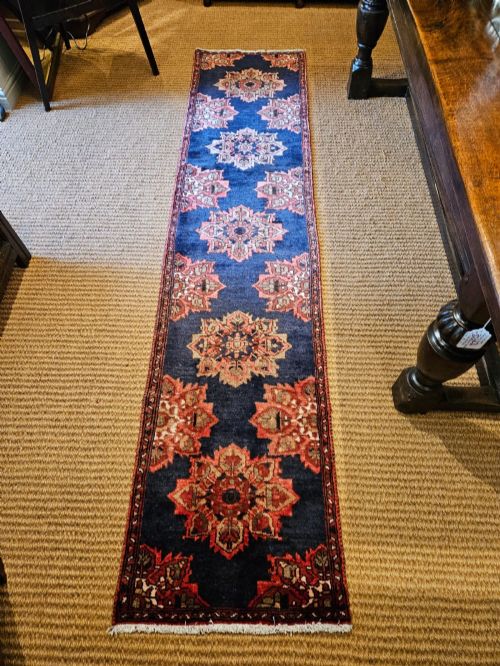
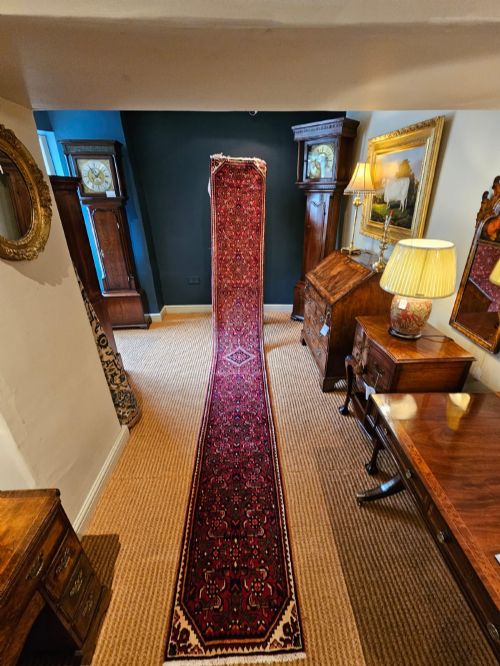
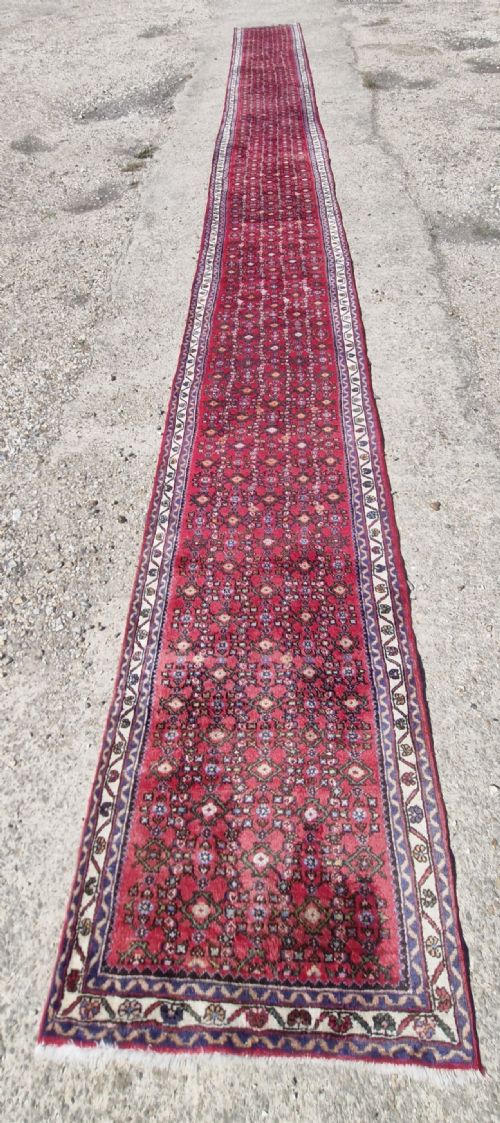
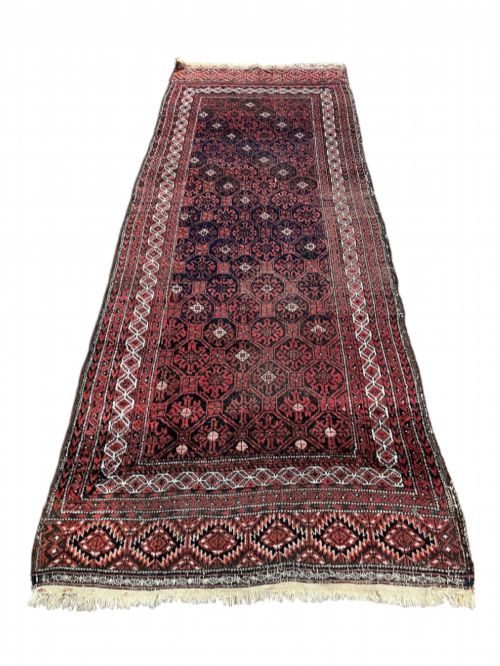
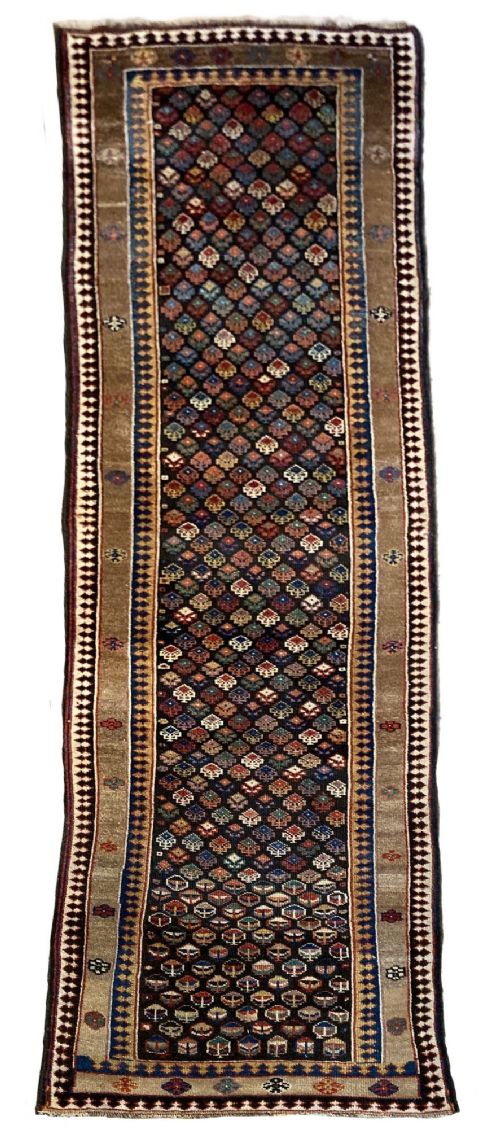


Long Narrow Wool Rug
A long narrow wool rug brings character and warmth to hallways, corridors and landings.
Long Narrow Wool Rug
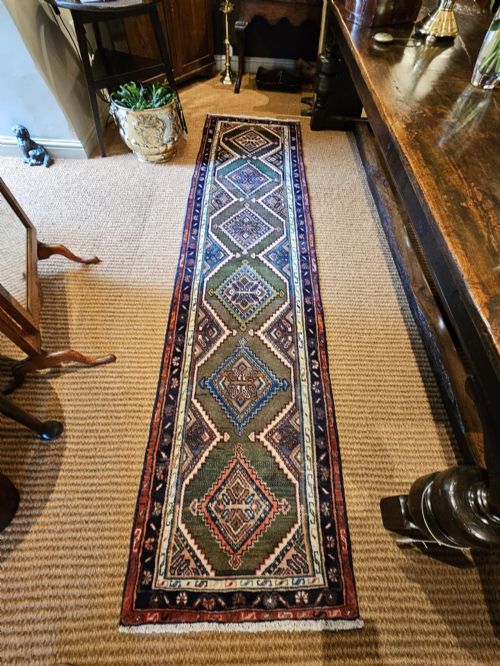
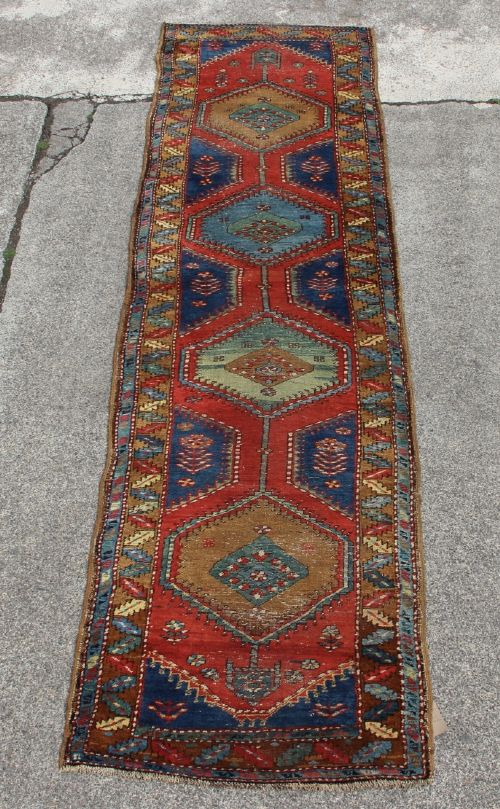
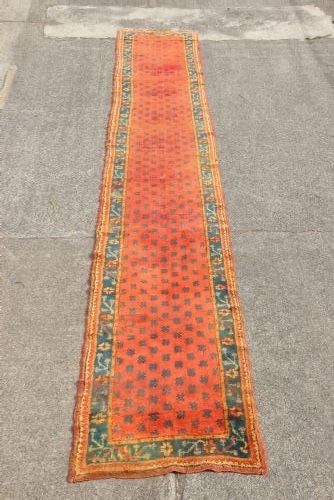
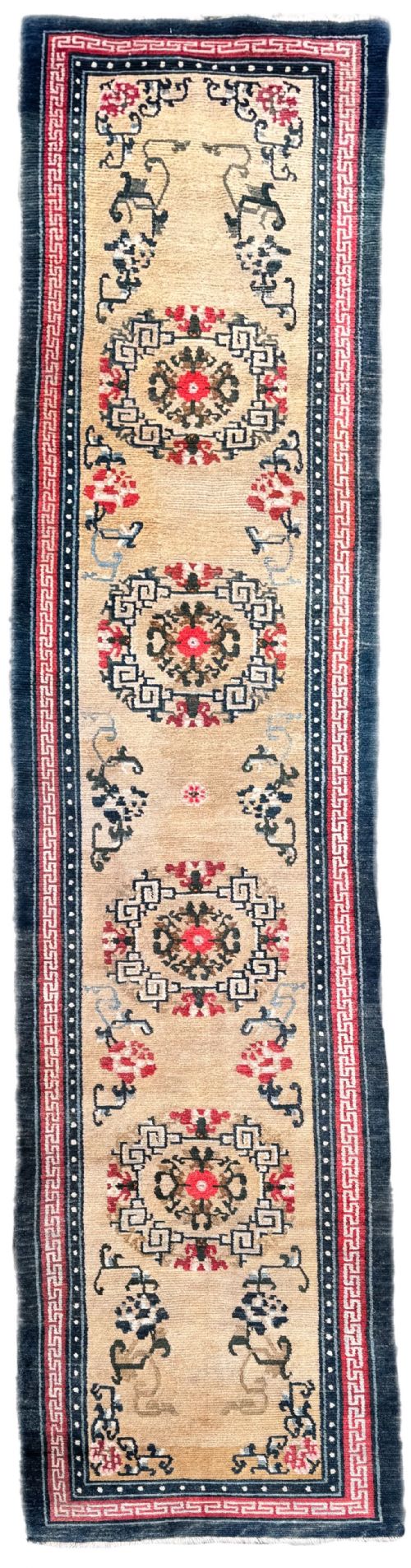
A long narrow wool rug serves as a runner for hallways, corridors and long rooms, spanning origins from Persia, Turkey, Morocco, Tibet, the Caucasus and Afghanistan. These floor coverings bridge domestic spaces with practical utility, protecting floorboards while defining linear architecture.
The pieces appearing on this page span from the late nineteenth century through to the mid-twentieth century, including items made in the 1880s, 1890s, 1900s, 1910s, 1920s, 1930s and 1960s. They are most frequently encountered as traditional Persian, Turkish or tribal pieces woven in regional workshops and nomadic camps.
Forms include specific regional types such as Heriz, Hamadan, Sarouk, Bidjar, Oushak, Kurdish, Baluch, Afshar, Shirvan and Moroccan Berber runners. Buyers select them for their extended proportions, which suit narrow architectural spaces where standard rectangular carpets fail to fit.
How they were made
Weavers construct these runners predominantly using wool and hand-spun wool pile knotted onto cotton or wool foundations, occasionally incorporating camel hair for natural tone and durability. The materials provide resilience against heavy foot traffic in domestic hallways.
Production techniques encompass traditional hand-knotting and flat-weaving methods, visible in mixed constructions such as the half kilim kelim runner. Natural dyeing methods yield the mellow colours and deep blue or olive green backgrounds seen across the selection.
Listings feature pieces dated across the nineteenth and twentieth centuries, spanning the 1880s to the 1960s.
What varies in quality
Quality in these floor coverings rests upon the density of the knotting, the fineness of the wool and the precision of the tribal or regional design execution. Tighter knots and superior hand-spun wool yield greater longevity and sharper definition in geometric or floral motifs.
The integrity of the foundation warps and wefts determines structural stability, while the consistency of natural dyes influences how gracefully the textile ages under foot. Pieces displaying unusual proportions or specific regional attributions often exhibit higher artistic ambition.
Heriz·Hamadan·Sarouk·Bidjar·Oushak
The Long Narrow Wool Rug Glossary
- Runner
- A long narrow rug designed specifically for hallways, corridors, stairs and landings. Its elongated proportions guide movement through domestic spaces.
- Kilim
- A flat-woven carpet or runner produced without a pile by tightly interweaving warp and weft strands. This technique creates a lightweight, reversible textile.
- Pile
- The upright yarn loops or cut ends that form the soft surface of a knotted rug. Wool pile provides cushioning and insulation underfoot.
- Warp
- The vertical foundation threads stretched tightly on a loom before weaving begins. Wefts and knots are secured across these parallel support lines.
- Weft
- The horizontal threads passed back and forth across the warp strings to bind the knots in place. Together with warps, they form the structural grid of the textile.
Long Narrow Wool Rug: Frequently Asked Questions
Where should I place a runner?
These long narrow wool rugs suit hallways, corridors, staircases and narrow landings where foot traffic is heavy. Their elongated format directs movement through the home while softening hard wooden or tiled floors.
They also work well alongside long galley kitchens or beside bedroom furniture where standard rectangular carpets prove too wide. The narrow proportions balance long, empty architectural passages effortlessly.
How do I clean an old wool rug?
Regular gentle vacuuming without a rotating brush bar removes surface dust and grit from the wool pile. Professional specialist cleaning remains essential for deep washing to protect the natural fibres and dyes.
Avoid soaking the piece or applying harsh chemical detergents, as moisture can weaken cotton foundations and cause colour run. Promptly blot accidental spills with a clean, dry cloth rather than rubbing the fibres.
Are these runners durable for daily use?
Traditional wool and hand-spun pile construction makes these runners inherently resilient for everyday household traffic. Natural lanolin in the wool repels dirt and cushions footsteps effectively over decades of use.
Pairing the textile with a quality underlay prevents slipping and absorbs impact, extending the lifespan of the foundation. Even pieces dating back to the nineteenth century handle normal corridor activity when properly maintained.
How can I tell regional rug styles apart?
Regional styles reveal themselves through distinct colour palettes, knotting structures and geometric or floral motifs. For instance, Heriz runners often feature bold medallion geometry, whereas Hamadan pieces display dense overall village patterns.
Examining the selvedges, fringe construction and back knotting helps identify specific origins such as Kurdish, Baluch or Caucasian workshops. Each weaving tradition utilises local wool qualities and dye recipes characteristic of its geographic area.