


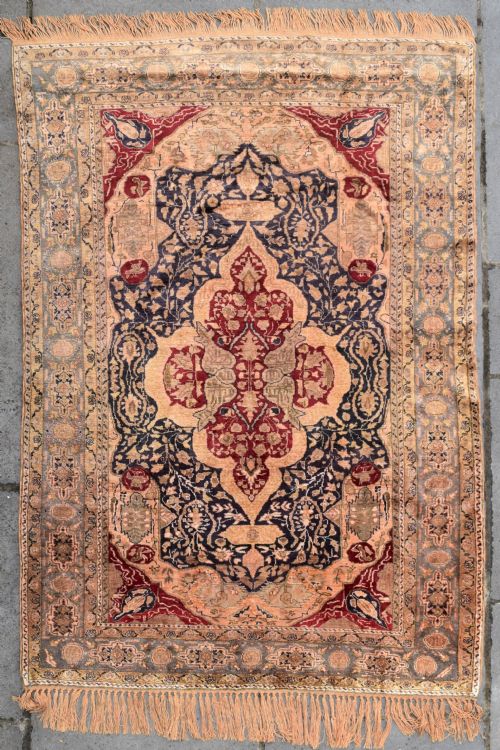

Navy Turkish Carpet
These navy turkish carpet pieces offer traditional Anatolian and Ottoman weaving traditions, bringing authentic regional patterns and rich textures to your floor.
Navy Turkish Carpet
When you search for a navy turkish carpet, you encounter hand-knotted textiles originating from various Anatolian centres and regions. These floor coverings span periods from the early nineteenth century through to the mid-twentieth century.
The selection includes village and tribal formats such as runners, prayer rugs, area rugs, and larger carpets. Examples range from structured town pieces to geometric tribal formats.
Village weaves display bold motifs like star medallions and regional patterns associated with places like Konya, Bergama, and Yagcebedir. Town workshops produce finer carpets from Sivas, Ushak, Panderma, and Hereke.
How they were made
Weavers constructed these pieces using wool, hand-spun wool, cotton foundations, and occasionally silk or floss silk. Natural materials provided the pile and structural warp and weft threads.
Village rugs typically utilise heavy wool piles knotted by hand onto sturdy cotton or wool foundations. Finer workshop pieces incorporate delicate silk fibres to achieve intricate detail and smooth surfaces.
One miniature silk Hereke rug comes framed behind glass, turning a floor textile into a portable wall picture.
What varies in quality
Quality rests upon the density of the knotting and the precision of the regional design execution. Finer silk or tightly packed wool piles distinguish workshop productions from looser tribal village pieces.
The choice of materials and the integrity of the dye work dictate the longevity and visual depth of the weaving. Superior examples retain crisp motifs and robust foundations despite decades of domestic use.
Kemaliye·Konya·Panderma Bandirma·Yagcebedir·Bergama·Ushak·Sivas·Hereke·Dosemealti
The Navy Turkish Carpet Glossary
- Yastic
- A small pile-woven face from Anatolia, traditionally utilised as a bolster or cushion cover. These formats often display compressed tribal motifs.
- Medallion
- A central decorative motif placed in the field of a rug or carpet. Star and geometric medallions dominate many village pieces.
- Prayer rug
- A small format textile featuring a mihrab or arch design at one end, oriented toward Mecca during daily prayers. These often incorporate blue or neutral grounds.
- Runner
- A long, narrow carpet format designed specifically for hallways, corridors, or staircases. They measure significantly longer than they are wide.
- Pile
- The upright yarn loops or tufts forming the soft surface of a carpet. It is knotted onto the underlying warp and weft foundation.
Navy Turkish Carpet: Frequently Asked Questions
How do I clean an old carpet?
Professional specialist cleaning is essential for antique and vintage woven textiles to protect natural fibres and traditional dye formulas.
Regular gentle suction without a rotating brush helps remove embedded dust without damaging the wool or silk pile.
Can these rugs go in hallways?
Narrow runner formats are specifically designed to fit hallways, corridors, and narrow transition spaces in the home.
Using a quality underlay prevents slipping and cushions the foundation against hard flooring surfaces.
How do I tell village from town rugs?
Village and tribal rugs display geometric designs, thicker wools, and spontaneous colour shifts reflecting local weaving traditions.
Town workshop pieces utilise finer materials like silk, symmetrical floral patterns, and highly controlled execution.
What is a prayer rug used for?
Prayer rugs historically served a devotional function, featuring a characteristic architectural arch design known as a mihrab.
Today they function as compact decorative wall hangings or small accent floor coverings in domestic interiors.