

Navy Terracotta Carpet
A navy terracotta carpet brings rich indigo and warm earth tones into a room, grounding the space with centuries of woven tradition.

Navy Terracotta Carpet
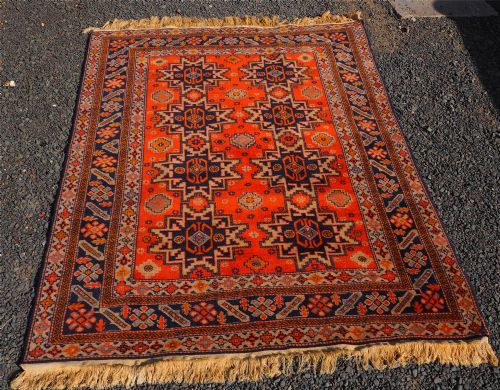
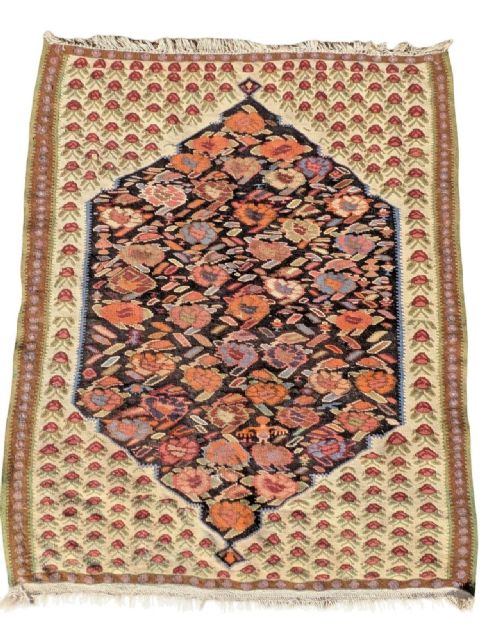
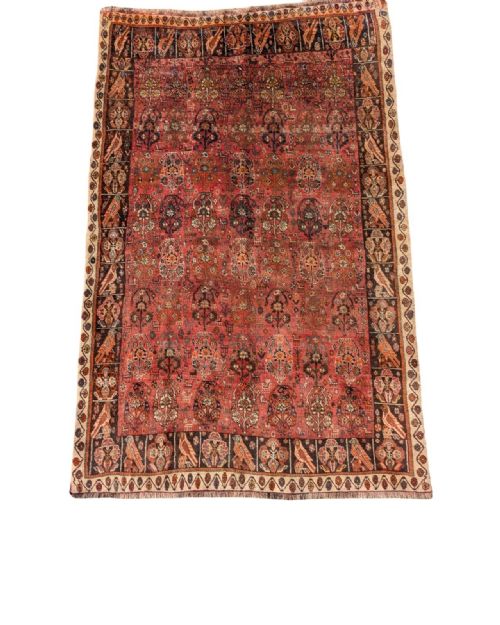
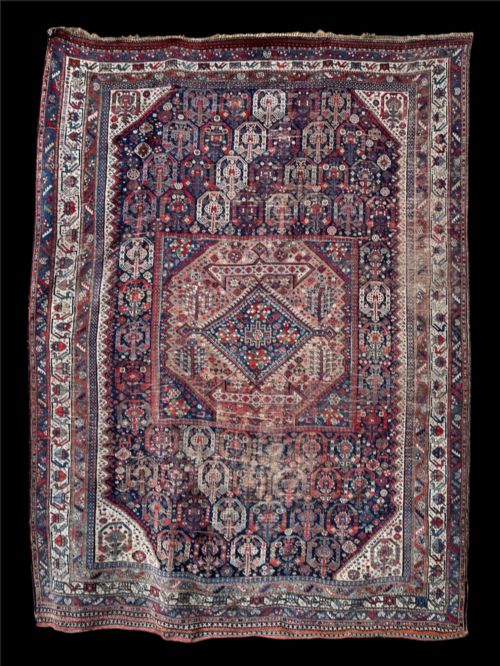
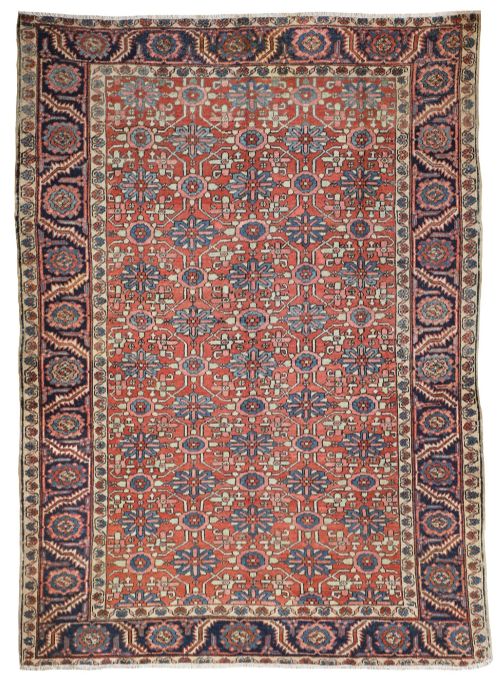
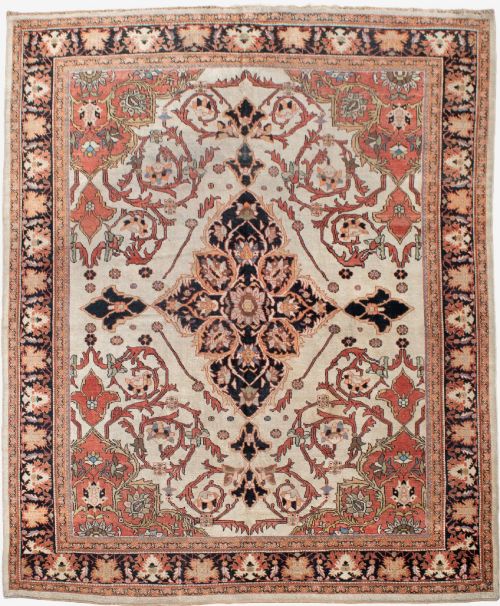
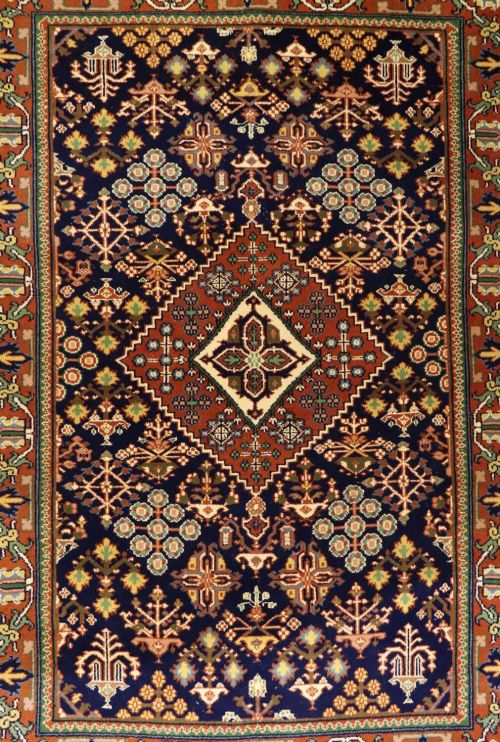
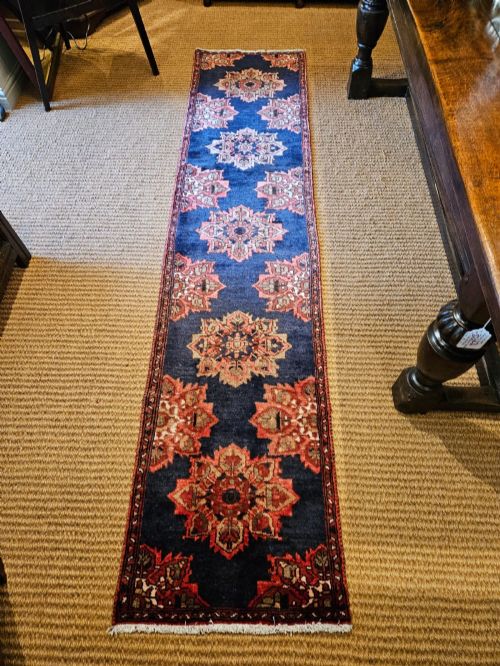
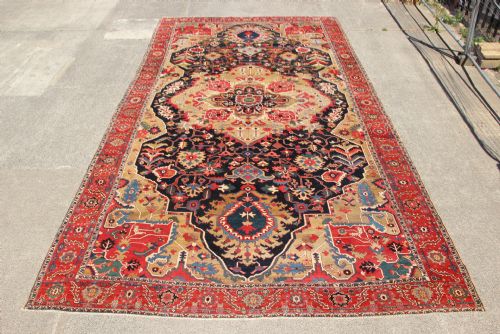
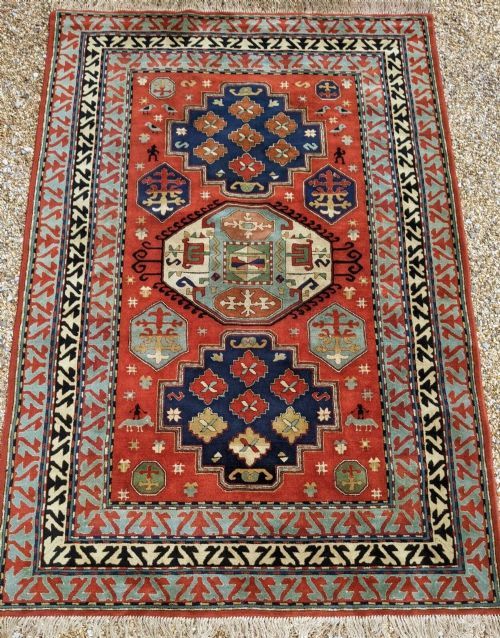
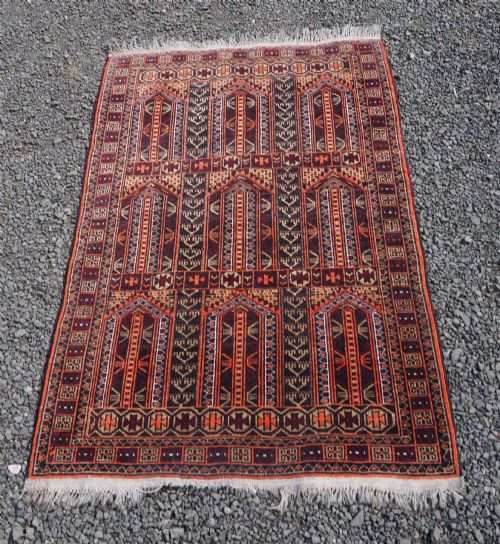
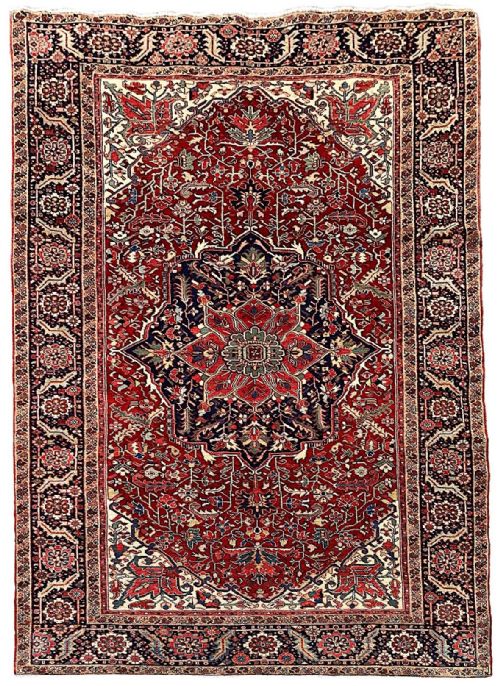
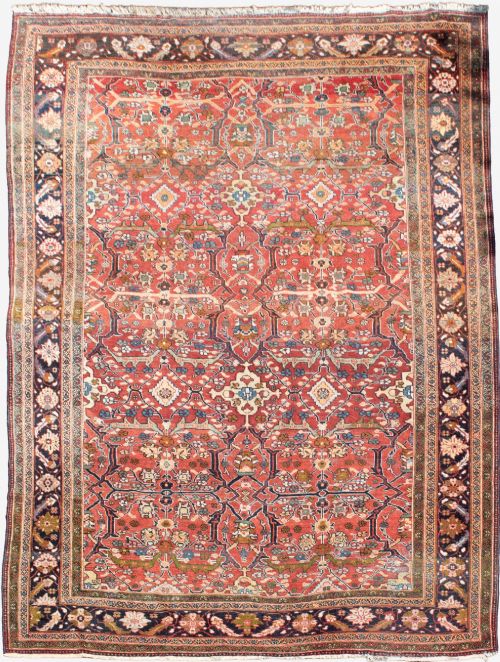
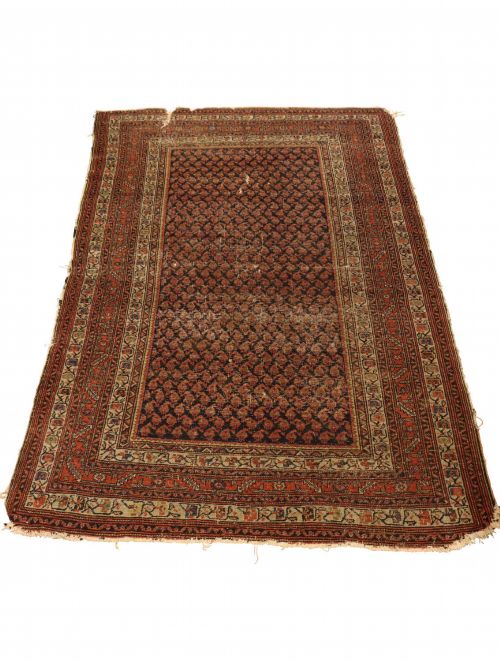
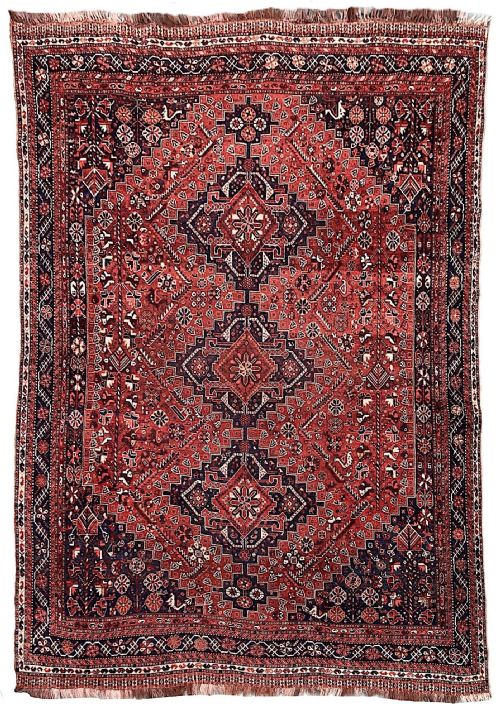
A navy terracotta carpet search brings together hand-knotted room-size floor coverings and runners originating from Persian and Caucasian workshops. These textiles span the late nineteenth century through the early decades of the twentieth century, displaying deep blue fields paired with warm reddish-brown terracotta accents.
The selections available here rely heavily on robust village and town weaves rather than strictly court productions. Buyers encounter geometric medallions, all-over boteh motifs, and tribal patterns originating from weaving centres such as Heriz, Malayer, and Shiraz.
Most examples utilise durable wool foundations combined with wool pile, designed originally to withstand generations of domestic use. The palette remains remarkably consistent, balancing dark navy tones against earthy terracotta and soft neutral contrasts.
Materials and construction
These carpets rely on hand-spun wool for both the pile and the foundational warps and wefts, occasionally incorporating cotton for structural stability in specific town pieces. Weavers knotted the wool by hand onto vertical looms, securing each knot tightly to create a dense, resilient surface.
Natural dye sources provided the characteristic deep navy and warm terracotta shades, yielding subtle variations in tone known as abrash across the wool pile. This traditional dyeing method ensures that the colours age gracefully and develop a softer patina with time.
Nomadic weavers often incorporated small stray animal motifs into geometric borders, escaping strict symmetry.
Assessing quality and character
Quality in these floor coverings rests upon knot density, the precision of the geometric or floral layout, and the balance of the navy and terracotta colour palette. Finer village and town weaves demonstrate meticulous execution in intricate medallions and borders.
The integrity of the wool foundation and the uniformity of the pile height determine the longevity of the piece. Strong, even wear preserves the clarity of the design, while uneven pile reduction alters the visual impact of the contrasting colours.
The Navy Terracotta Carpet Glossary
- Abrash
- Natural variations in wool colour caused by changes in dye batches during production. This tonal variation adds subtle horizontal shading across the carpet.
- Boteh
- A stylised almond or pear-shaped motif of Persian origin. It frequently appears repeated in rows across the field of antique rugs.
- Kelleh
- A long, narrow format carpet traditionally suited for narrow rooms or hallways. Proportions are typically longer than a standard area rug.
- Medallion
- A large central ornamental design placed in the middle of the carpet field. It serves as the primary focal point of the composition.
- Warp
- The vertical threads stretched lengthwise on the loom that form the skeleton of the carpet. Fringe typically extends from these structural threads at both ends.
Navy Terracotta Carpet: Frequently Asked Questions
How do I clean a wool carpet?
Regular gentle vacuuming without a beater bar removes loose dirt from the wool pile safely.
Professional specialist cleaning remains essential for deep washing to protect the natural dyes.
Can I place these in high traffic areas?
Traditional hand-knotted wool construction provides exceptional durability for busy rooms.
Using a quality underlay prevents sliding and reduces friction against the floorboards.
How do I identify a Heriz weave?
Heriz carpets feature bold geometric medallions and robust corner spandrels.
The heavy use of cotton in the foundation adds structural rigidity compared to softer tribal pieces.
What causes colour variation in the wool?
Hand-dyed wool naturally absorbs pigments differently from batch to batch during preparation.
This characteristic produces gentle tonal shifts known as abrash across the navy and terracotta fields.