


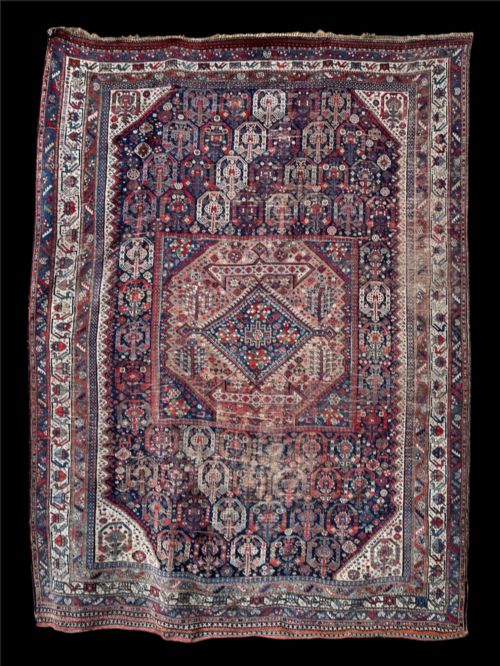
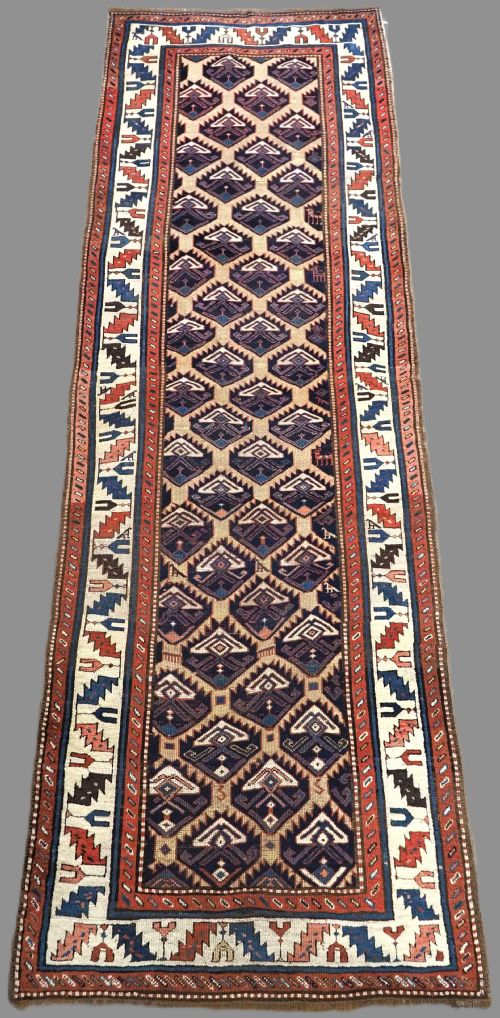
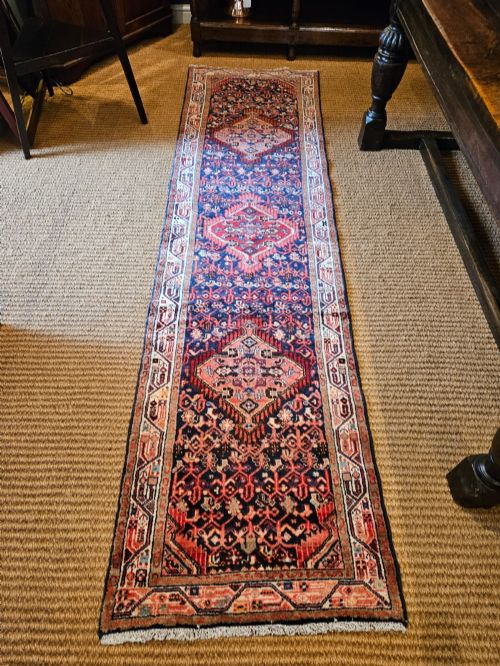
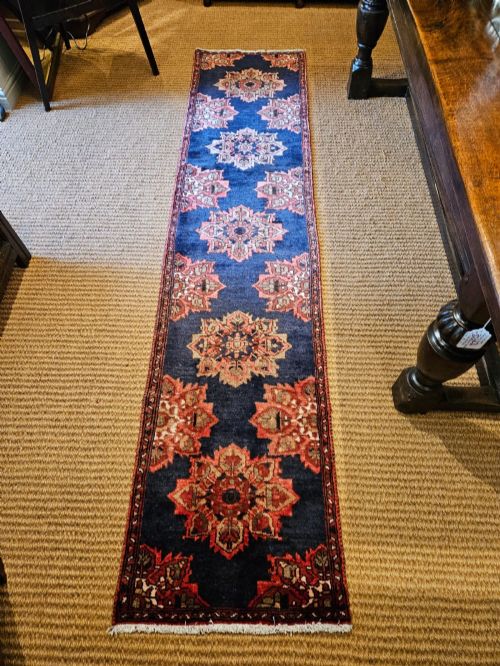
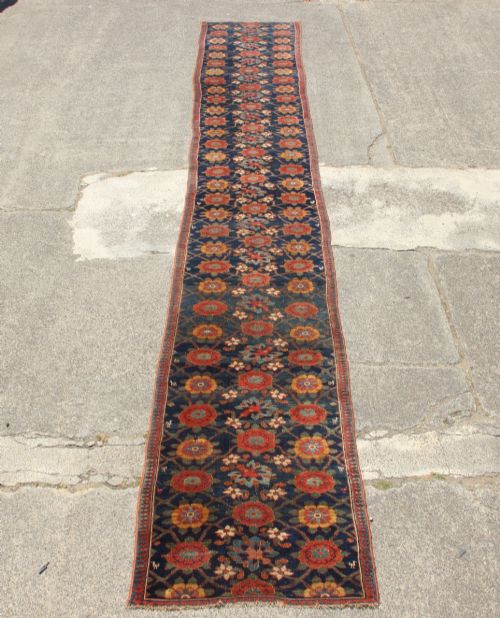
Navy Persian Runner
A navy persian runner brings deep indigo ground and centuries of weaving tradition straight to a hallway.
Navy Persian Runner
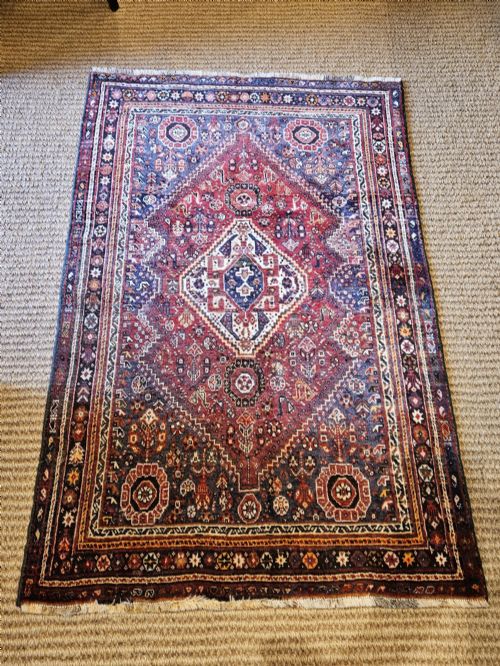
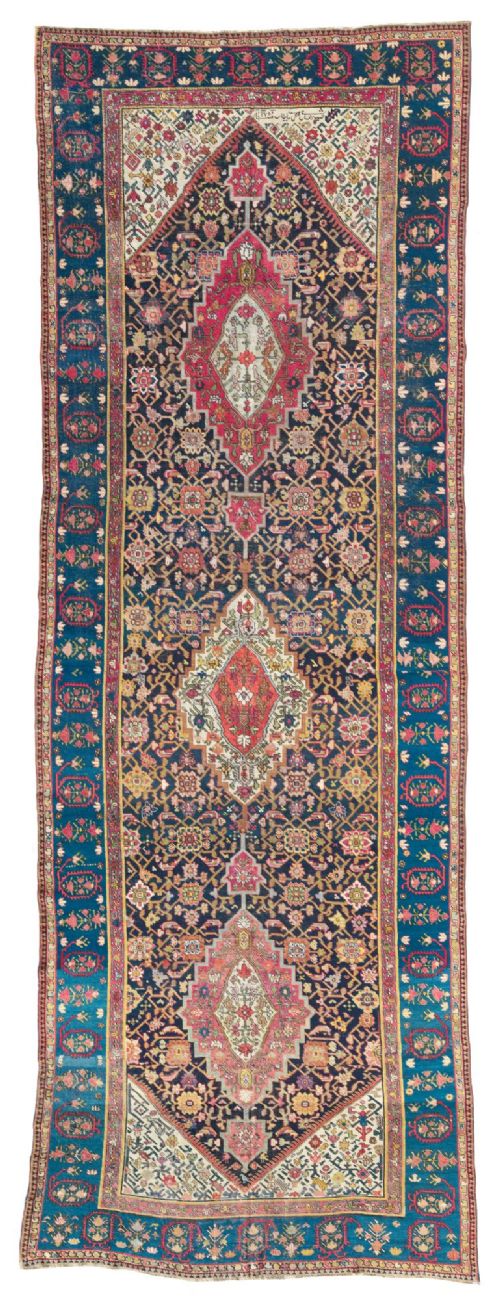
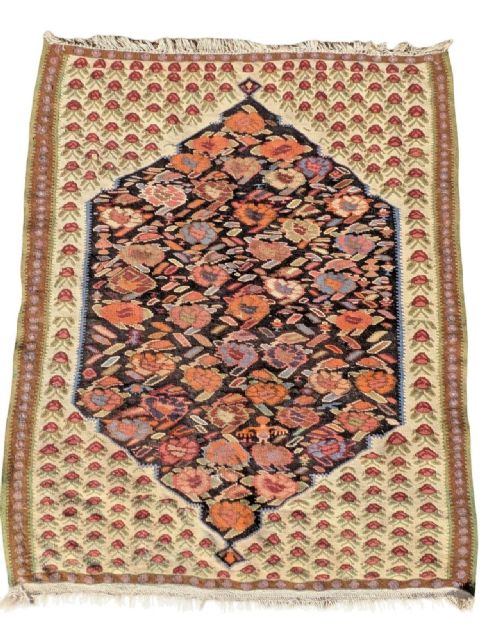
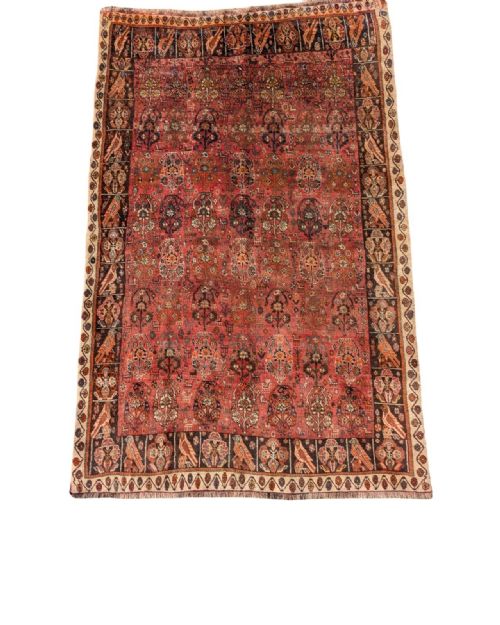
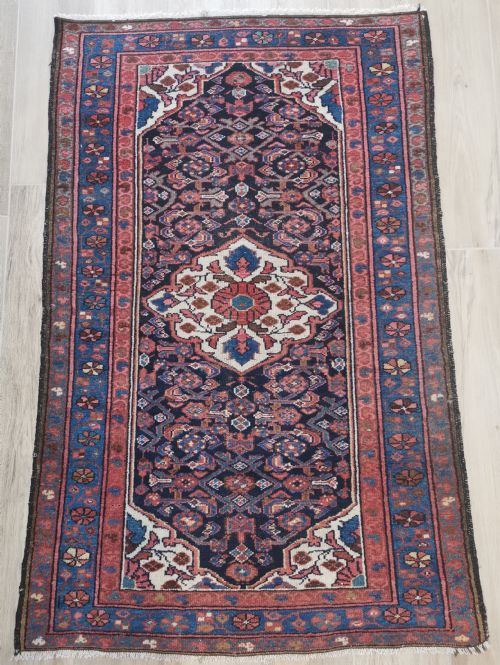
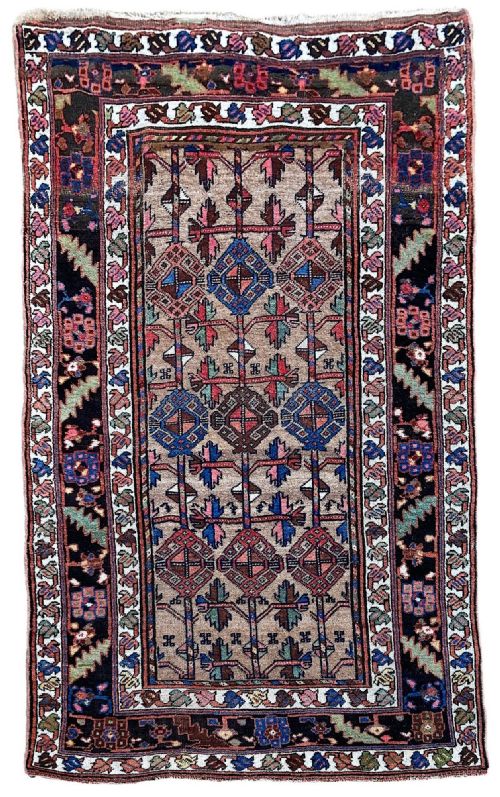
A navy persian runner is a long, narrow carpet format designed primarily for corridors and staircases, utilising deep blue grounds rooted in traditional Middle Eastern weaving centres. When you search for a navy persian runner, you encounter pieces originating from specific tribal confederacies, village workshops, and regional centres across Persia.
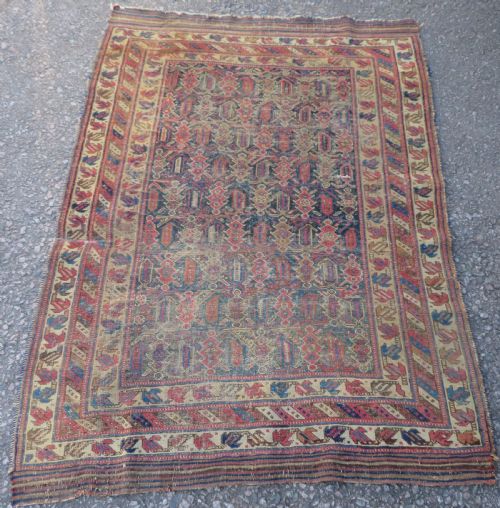
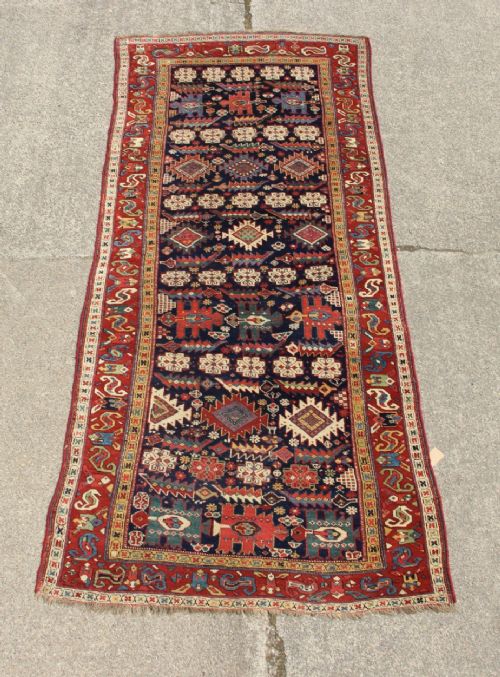
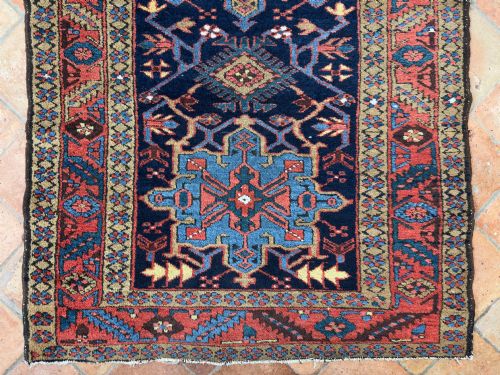
The selections available here span from the late nineteenth century through to the 1930s, encompassing styles such as Kurdish, Hamadan, Malayer, and Heriz. These examples demonstrate the classic elongated proportions necessary for hallway placement while retaining the intricate field patterns typical of traditional Persian artistry.
Materials and Construction
These textiles rely principally on wool pile knotted tightly onto cotton or wool foundations, utilising hand-spun wool for durability and rich dye absorption. Natural dyeing traditions provided the deep navy blue backgrounds alongside contrasting terracotta, ivory, and rust tones.
Weavers employed hand-knotting techniques specific to their region or tribe, creating dense structures that withstand heavy foot traffic in narrow spaces. The structural integrity depends on sturdy selvedges and tightly packed rows of knots securing the wool pile.
Navy Persian Runner Retail Price Guide 2026
Typical asking prices for navy persian runner among the pieces listed under this phrase on Sellingantiques today, from the lower quarter to the upper quarter. They describe what is for sale here now, not the wider market.
Listings span several decades, featuring wool and hand-spun wool materials across traditional Persian, Kurdish, and Caucasian village styles.
Assessing Quality and Execution
Quality in these runners rests on knot density, the precision of the geometric or floral design, and the stability of the foundation. Finer examples exhibit meticulous detail in motifs like the boteh, Herati, or Mina Khani patterns, executed with crisp outlines against the dark field.
The integrity of the wool and the consistency of the hand-spun yarn also dictate the handle and resilience of the piece. Uniform wear and well-maintained edges distinguish superior survivals from those with heavy foundation exposure or extensive structural intervention.
Shahsavan·Kashgai·Baluch
The Navy Persian Runner Glossary
- Runner
- A long, narrow carpet format traditionally utilised in hallways, corridors, and on staircases. These pieces measure significantly longer than they are wide.
- Boteh
- A traditional teardrop or almond-shaped motif with a curved upper end, frequently repeated across Persian carpet fields. It represents a floral or cypress tree symbol.
- Kelleh
- A large, room-sized format or an elongated rug proportion traditionally used in Persian domestic spaces. They sit between standard area rugs and full carpets in scale.
- Selvedge
- The reinforced side edges of a carpet formed by wrapping the outermost warp threads. Good selvedges prevent the rug from fraying along the lateral margins.
- Warp
- The stationary vertical threads stretched across a loom that form the structural foundation of the textile. Weft threads are woven horizontally across these warps to secure the knots.
Navy Persian Runner: Frequently Asked Questions
Where should I place a runner?
These narrow formats work best in high-traffic corridors, hallways, and entryways where their elongated dimensions guide movement through a home.
Ensure you measure both the length and width of your space carefully, leaving a uniform border of bare floor visible around the perimeter of the textile.
How do I clean an antique runner?
Professional cleaning is essential for antique wool textiles to prevent dye bleeding and fibre degradation from improper chemical treatments.
Routine maintenance involves gentle surface vacuuming without the beater bar engaged, preventing dirt from settling deep into the wool pile.
Are these runners durable enough for daily use?
Hand-knotted wool runners constructed in the nineteenth and early twentieth centuries were built for domestic endurance and heavy foot traffic.
Utilising a quality underlay pad beneath the runner prevents slipping and cushions the wool pile against hard floor surfaces.
How can I tell village runners apart?
Village and tribal pieces often display memory-driven geometric motifs, idiosyncratic colour shifts, and coarser knotting compared to city workshop productions.
Examining the structural materials, such as the spin of the wool and the colour palette, helps identify specific regional traditions like Hamadan or Kurdish weaving.