


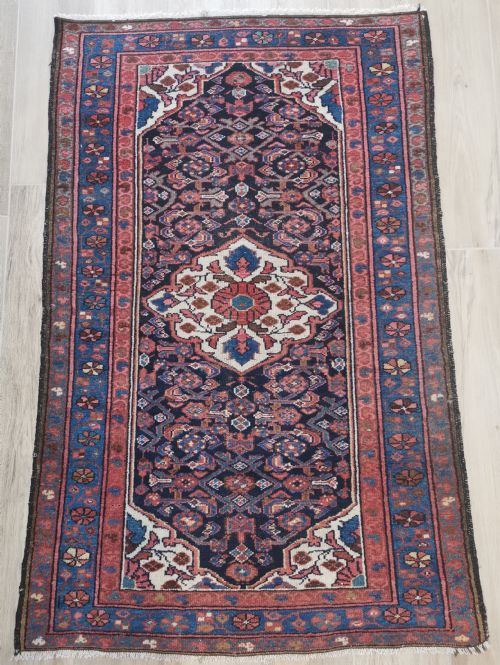
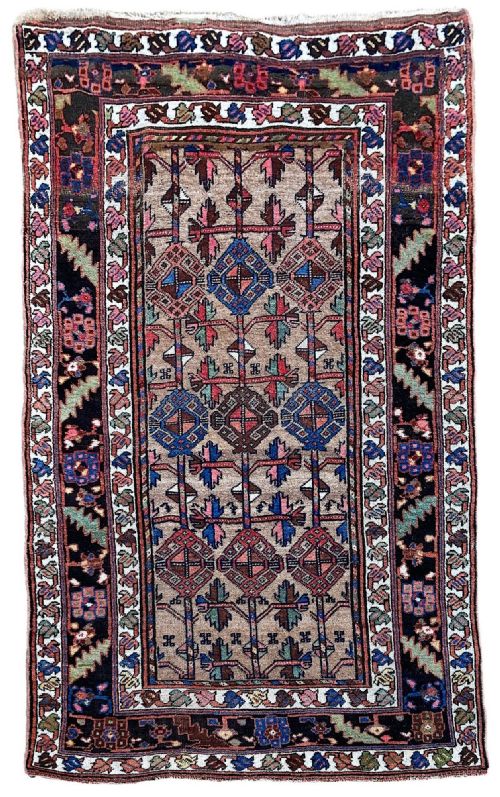
Navy Persian Carpet Runner
A navy persian carpet runner brings depth and structure to a hallway through deep indigo wool and traditional village designs.
Navy Persian Carpet Runner
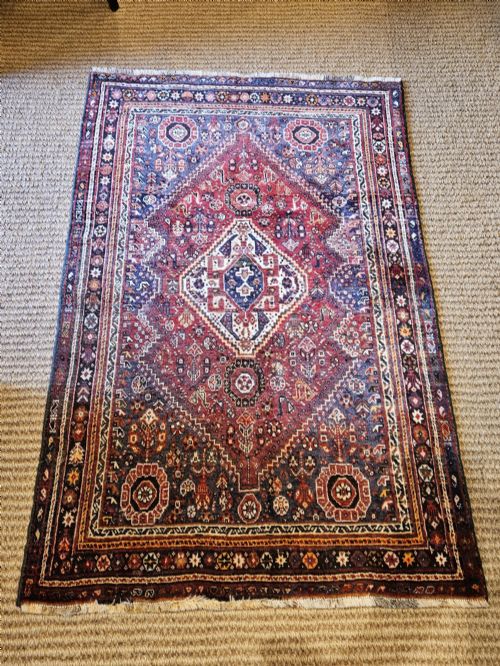
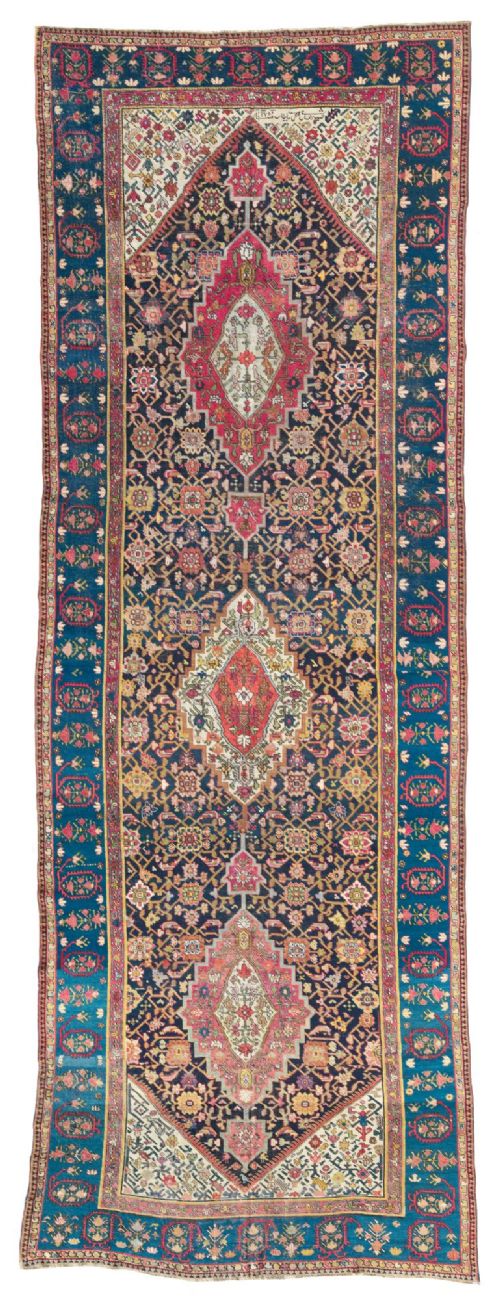
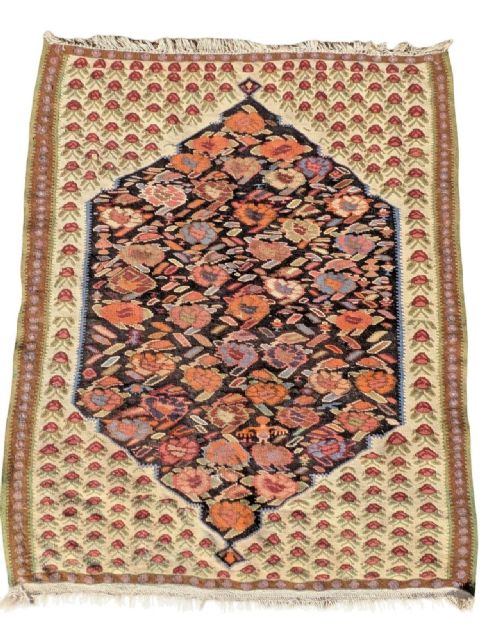
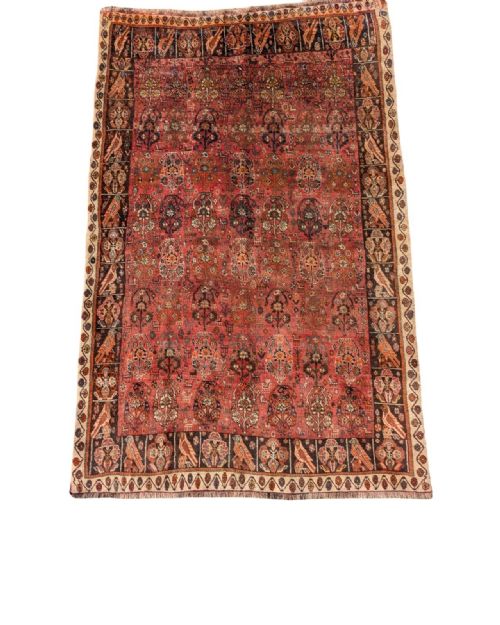
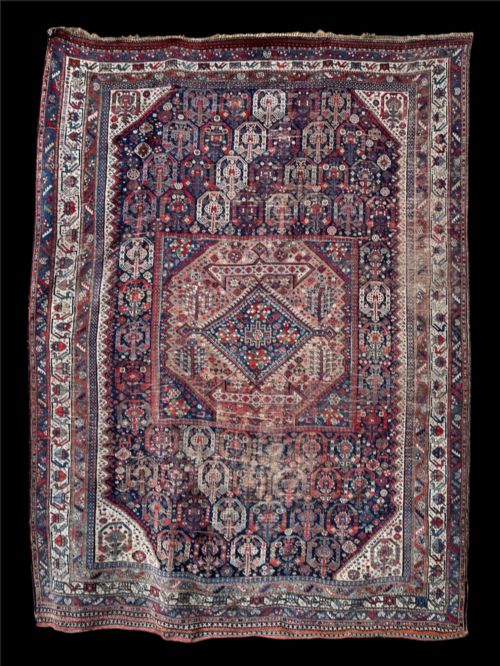
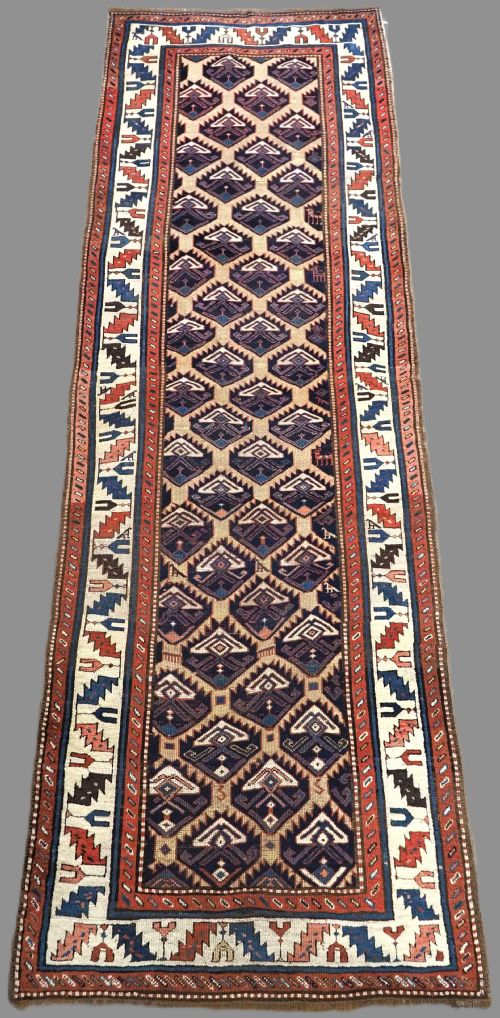
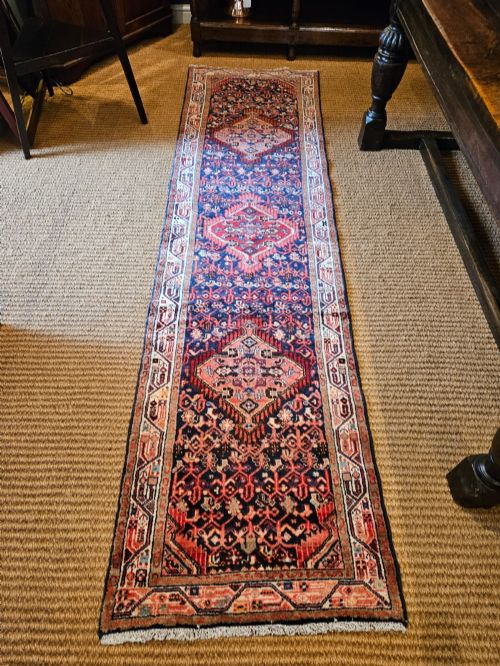
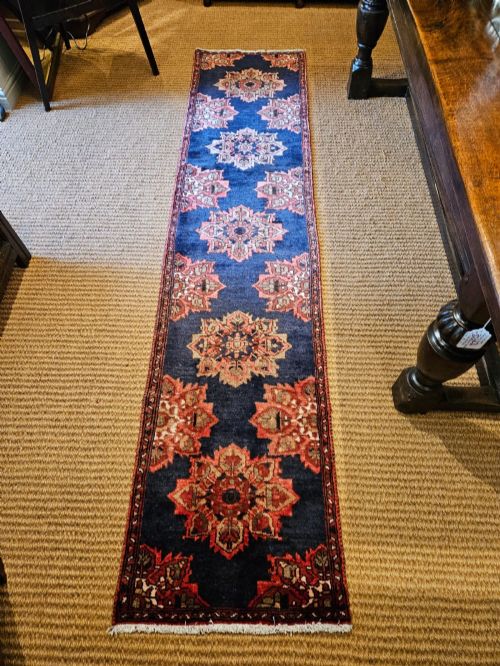
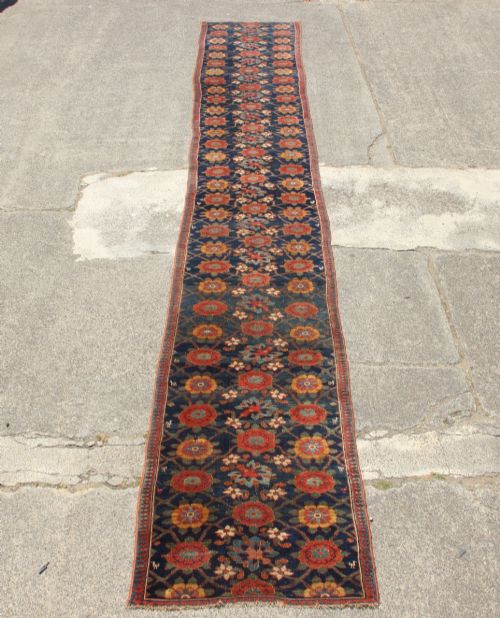
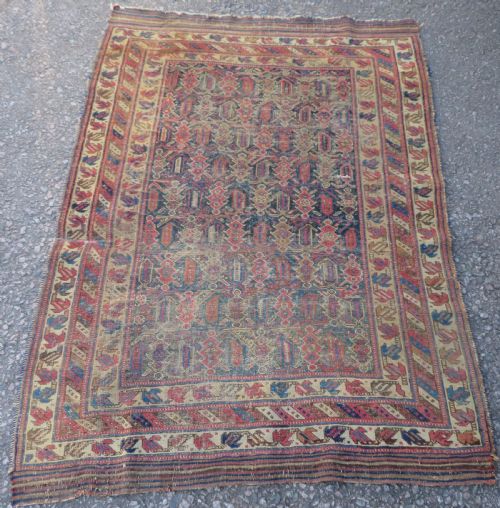
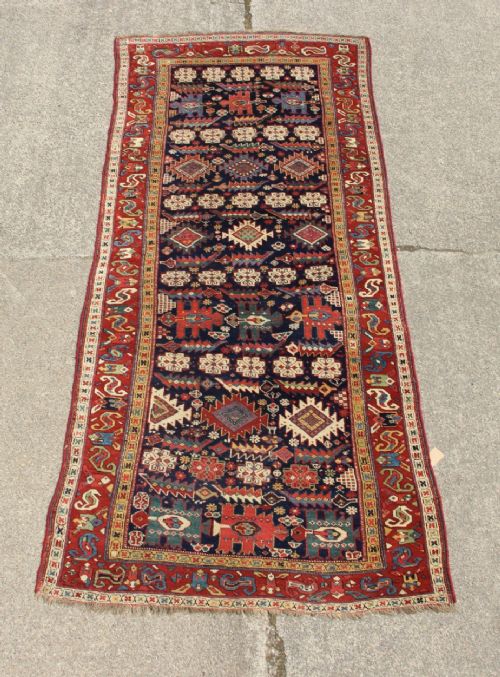
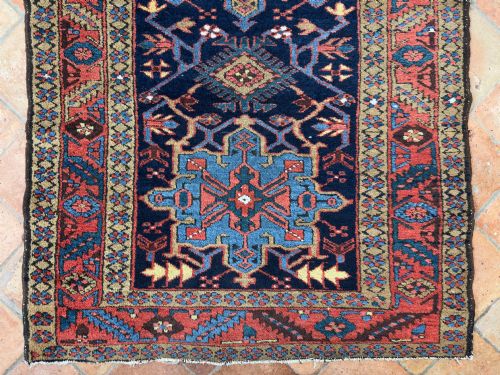
A navy persian carpet runner is a long, narrow textile intended for corridors, hallways and narrow rooms, grounding the floor with dark blue ground fields. The pieces seen here span from the late nineteenth century into the 1930s, taking the form of traditional runners, kellehs and long village formats.
Most examples originate from Persian tribal and village workshops, including Hamadan, Kurdish, Malayer and Heriz traditions. These formats were woven to fit domestic architecture, providing durability and rhythmic pattern along lengthways proportions.
How They Were Made
Makers utilised hand-spun wool and cotton foundations, tying dense knots by hand to build resilient pile surfaces that withstand heavy footfall. Natural and early chemical dyestuffs created the characteristic deep navy backgrounds, often contrasted with madder reds and ivory motifs.
Weavers constructed these long formats on horizontal or vertical looms, employing geometric lattice work, boteh repeats and Heriz or Kurdish tribal symbols. The structure relies on sturdy cotton warps and wefts to maintain straight edges along extended room lengths.
Listings span periods from the 1850s to the 1930s, featuring wool materials and regional styles such as Kurdish, Hamadan and Heriz.
What Varies in Quality
Quality rests upon knot density, the crispness of the drawing and the saturation of the wool pile across the field. Finer pieces demonstrate precise execution in intricate mina khani or lattice designs, while simpler village rugs rely on robust wool texture and charming tribal asymmetry.
The integrity of the foundation and the preservation of original selvedges dictate the longevity of a runner. Examples with evenly worn, lustrous hand-spun wool show superior material selection compared to those with coarse or uneven pile reduction.
Shahsavan
The Navy Persian Carpet Runner Glossary
- Runner
- A long, narrow carpet format designed specifically for hallways, corridors and stairs. It guides movement through a building while protecting wooden floorboards.
- Kelleh
- A room-size carpet or elongated format that is longer than a standard rug but wider than a typical runner. These pieces suit spacious galleries or large reception rooms.
- Boteh
- A stylised almond or paisley motif representing a floral spray, cypress tree or flame. It appears repeatedly across Persian village and tribal weaving.
- Mina Khani
- An all-over repeating pattern composed of daisy-like rosettes connected by curved lattice lines. This symmetrical design creates a balanced rhythm along long formats.
- Selvedge
- The bound or reinforced edge running parallel to the length of the carpet, preventing the side cords from unravelling. Original selvedges indicate careful preservation.
Navy Persian Carpet Runner: Frequently Asked Questions
Where should I place a navy persian carpet runner?
These narrow formats work best in hallways, long corridors and entryways where foot traffic demands a durable, grounding floor covering. Their dark indigo backgrounds naturally mask everyday dust while adding architectural definition to transitional spaces.
Ensure you measure the corridor width and leave a uniform margin of exposed floorboards on either side. A quality underlay keeps the heavy wool structure secure and prevents slipping on hard surfaces.
How do I care for antique wool runners?
Vacuum the rug regularly with a suction-only attachment, avoiding rotating brush bars that can pull at the hand-knotted pile. Professional cleaning by specialists in antique textiles is recommended every few years to remove deep-set grit.
Protect the piece from direct, prolonged sunlight to prevent natural dyes from fading unevenly. Rotating the runner annually ensures even wear patterns across high-traffic sections.
How do I tell different village types apart?
Hamadan and Kurdish runners often display distinctive geometric medallions, boteh motifs or Herati patterns woven in saturated navy and red wool. Heriz and Bidjar pieces tend to feature bolder, more rigid architectural frameworks with heavier wool foundations.
Examining the weave density on the reverse side reveals whether a piece stems from a structured town workshop or a spontaneous tribal weaving tradition.
Are these runners suitable for heavy use?
Hand-knotted wool runners from the nineteenth and early twentieth centuries were built for daily domestic wear in busy household corridors. The combination of dense wool pile and sturdy cotton foundations provides exceptional resilience against constant footsteps.
While antique textiles require mindful maintenance, their robust construction handles hallway traffic far better than modern machine-made alternatives.