
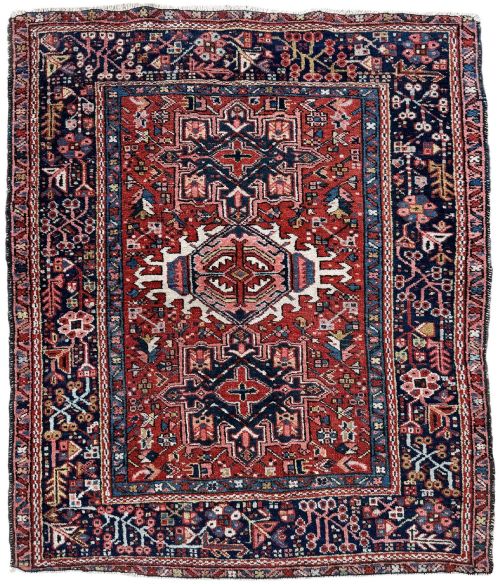
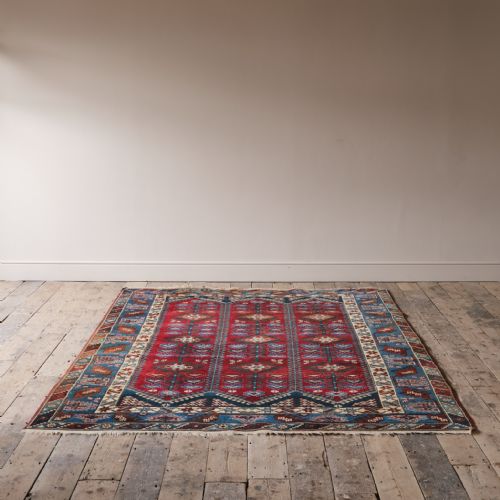
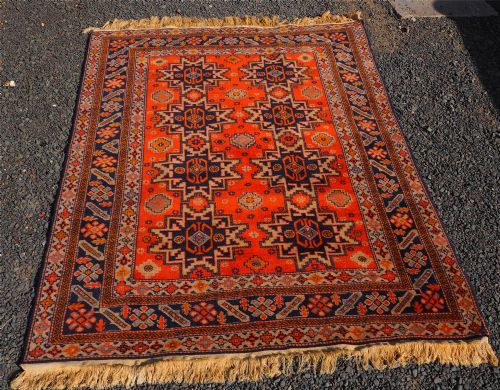
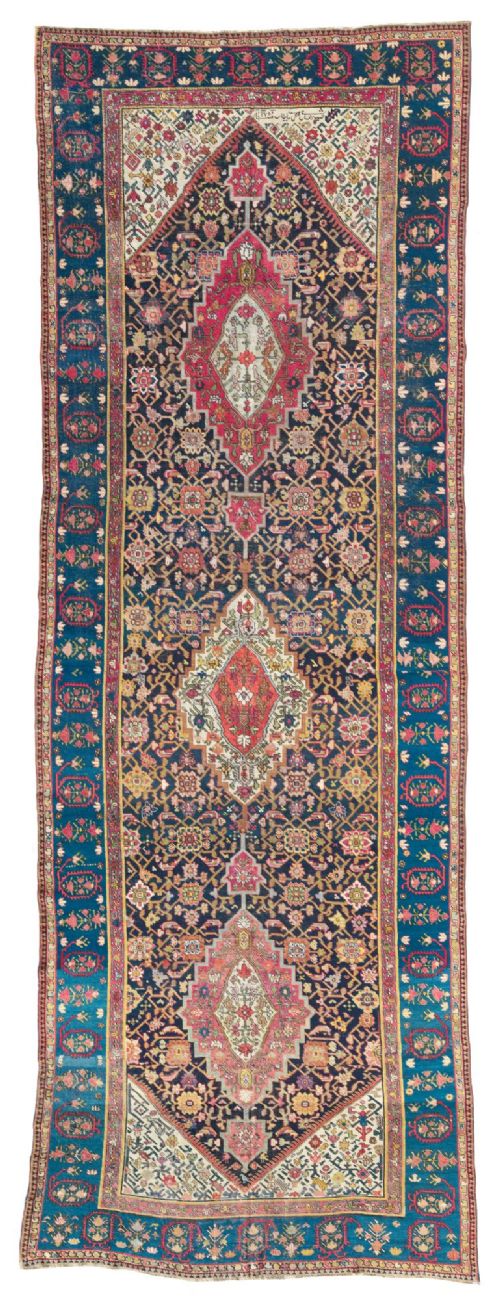
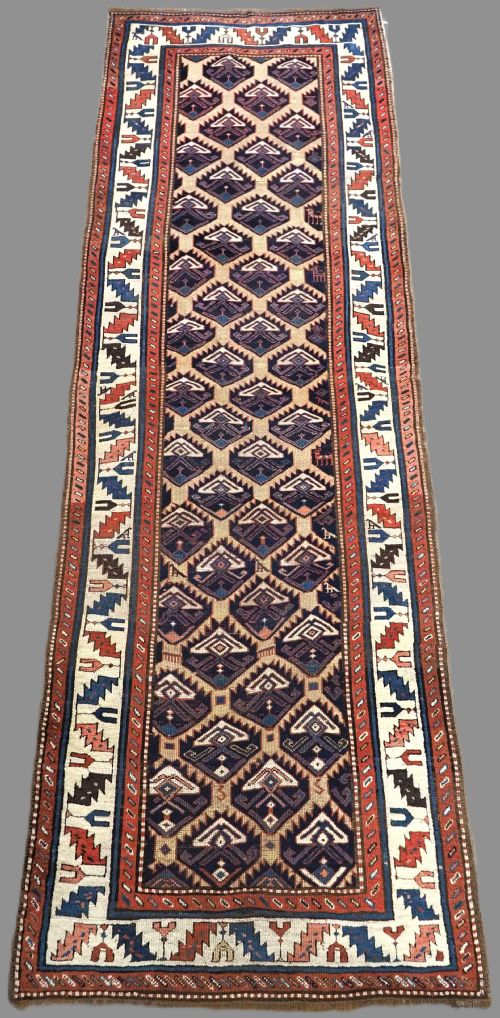
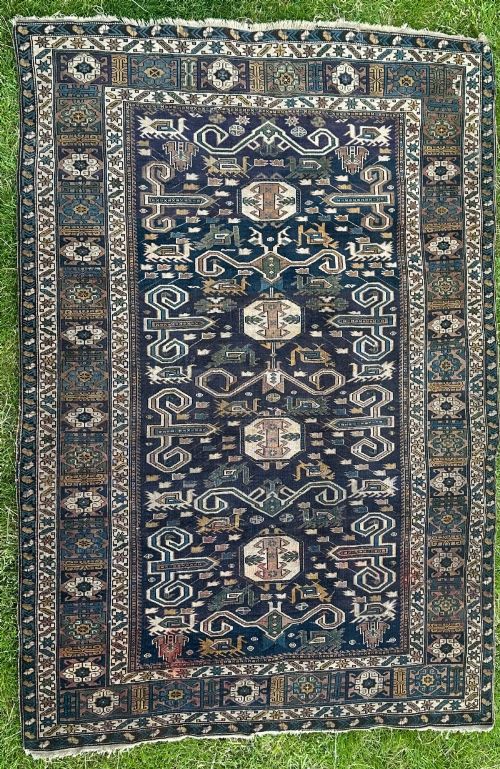
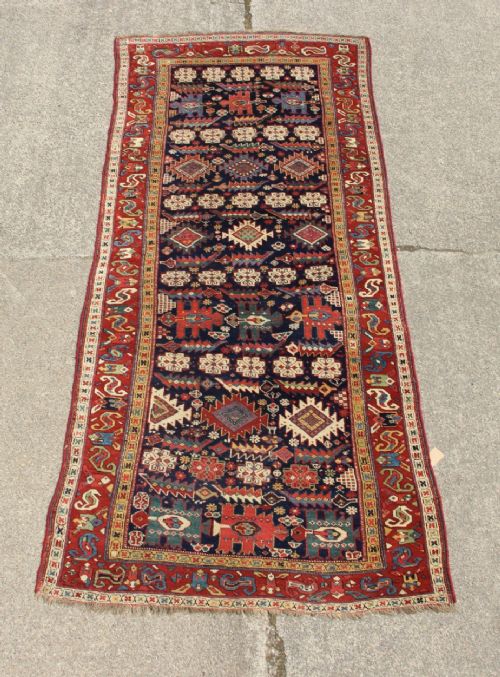
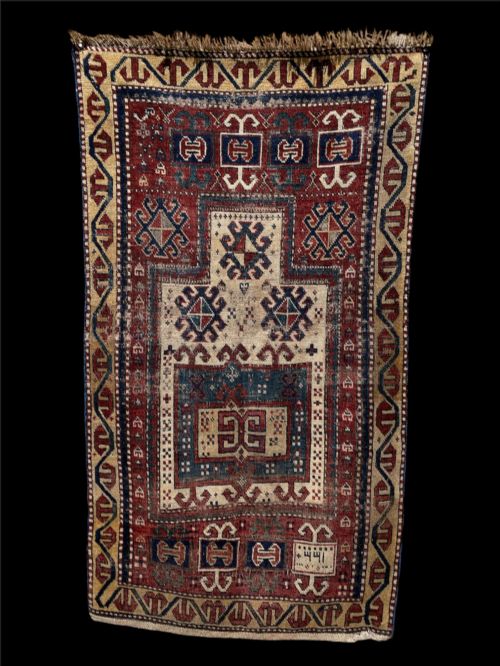
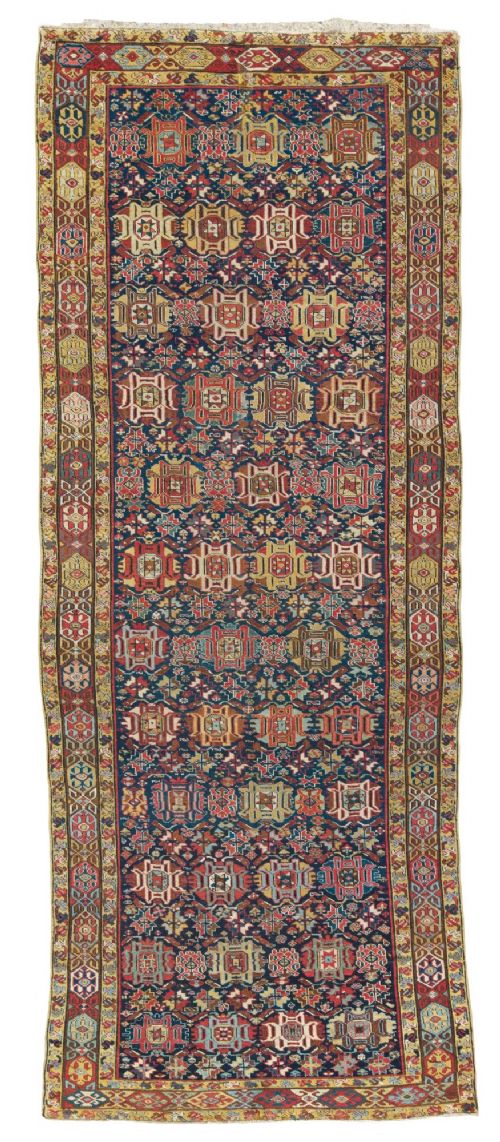
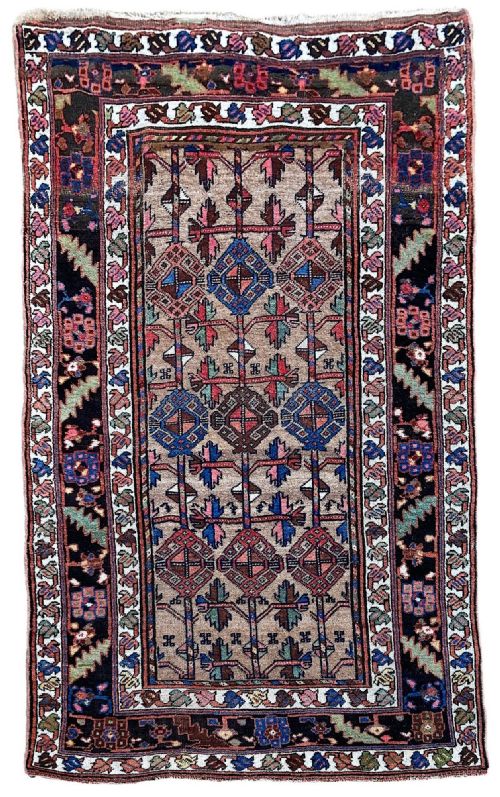


Navy Caucasian Runner Rug
A navy caucasian runner rug brings tribal geometry and saturated wool to a hallway.
Navy Caucasian Runner Rug
When searching for a navy caucasian runner rug, buyers look at narrow, elongated floor coverings originating from the Caucasus region and surrounding tribal areas. These pieces typically date from the late nineteenth century through the early decades of the twentieth century, bridging Victorian interiors and modern spaces.
The most common formats on this page include runner rugs, hallway runners, and long kelim or pile formats featuring indigo and dark blue fields. They combine geometric medallions, boteh motifs, and lattice patterns woven by traditional regional groups such as the Kurdish, Kazak, Gendje, and Kuba communities.
While specific hues vary, the combination of a dark blue foundation with polychrome secondary motifs creates the distinct visual rhythm expected in Caucasian and North-West Persian tribal weaving. These runners serve both functional pathway use and decorative wall placement.
How they were made
The construction relies on hand-knotted wool pile secured on cotton or wool foundations, utilising natural dyes to achieve deep navy tones and contrasting accent colours. Artisans hand-spun the sheep's wool before knotting, resulting in a dense, resilient pile designed for heavy foot traffic.
Weavers employed traditional upright looms, tying symmetrical or asymmetrical knots depending on the specific tribal origin, whether Caucasian, Kurdish, or Shahsavan. Vegetable and insect-derived colourants provided the foundational palette, yielding rich variations in the indigo field over decades of oxidation.
Materials documented across the inventory consist entirely of wool, cotton, hand-spun wool, and natural dyes.
What varies in quality
Quality in these runners depends on the tightness of the knotting, the stability of the foundation, and the crispness of the geometric drawing. Finer examples display intricate precision in repeating motifs like the Lesghi star or lattice work, demonstrating superior control by the weaver.
Material preparation also dictates distinction, with hand-spun wool and well-preserved natural dyes retaining vibrancy and depth better than compromised alternatives. The integrity of the original selvedges and ends separates well-maintained survivals from heavily altered pieces.
The Navy Caucasian Runner Rug Glossary
- Boteh
- A stylised almond or pear-shaped motif representing a-seed or floral spray, frequently repeated in rows across Caucasian runners.
- Kelleh
- A large format rectangular rug, longer than it is wide, often functioning as a room-size carpet or extended hallway piece.
- Kazak
- A term for rugs woven in the southern and western regions of the Caucasus, known for bold geometric medallions and primary colour palettes.
- Gendje
- A specific Caucasian weaving centre producing runners and small carpets characterised by striped designs and colourful boteh motifs.
- Selvedge
- The reinforced side edges of a rug, finished to prevent the horizontal weft threads from unravelling during daily use.
Navy Caucasian Runner Rug: Frequently Asked Questions
How do I clean an old wool runner?
Maintenance requires gentle vacuuming without a beater bar and professional hand-washing by specialists in antique textiles when deep cleaning becomes necessary. Avoid harsh chemical detergents that strip natural oils from the hand-spun wool.
Keep the rug out of direct, continuous sunlight to protect the deep navy indigo dyes from fading unevenly over time. Rotating the runner periodically ensures even wear across high-traffic hallway sections.
What is a Kazak design?
Kazak designs feature bold, large-scale geometric medallions, hooked polygons, and strong primary colours set against contrasting fields. These patterns derive from specific regional weaving traditions in the Caucasus.
The aesthetic relies on abstract animal and floral forms rather than curved Persian court styles, giving the rugs a distinctive tribal appearance.
How do I date these runners?
Dating relies on assessing the wool quality, dye composition, structural materials, and stylistic markers recorded in the specific regional weaving traditions. Natural dyes combined with hand-spun wool typically indicate production prior to the widespread introduction of synthetic aniline colours.
Structural details such as wool warps and specific knot counts help differentiate nineteenth-century pieces from later twentieth-century village productions.
Where should I place a long runner?
Hallways, corridors, and narrow entryways provide ideal locations for these elongated formats, protecting bare flooring while adding warmth and colour. They also function effectively in galley kitchens or alongside large beds.
Using a breathable, high-quality rug underlay prevents slipping and cushions the foundation against hard subfloors.