
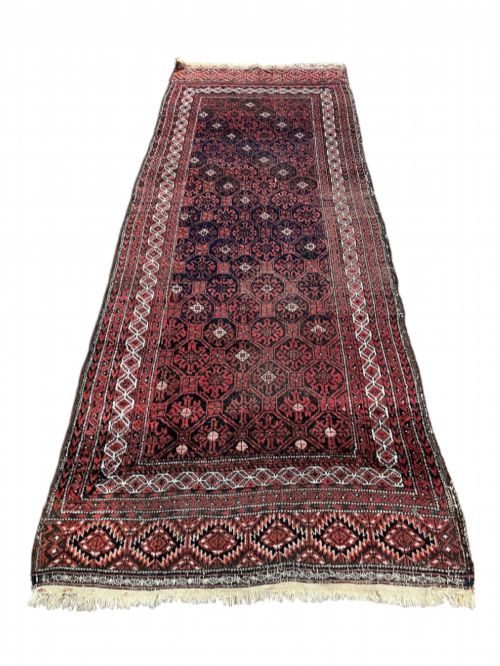
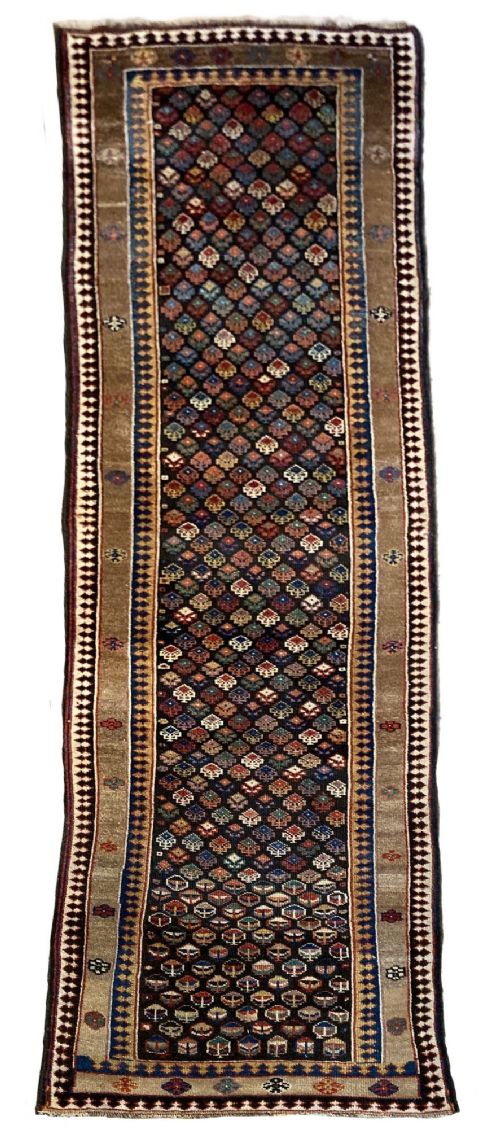


Narrow Wool Hallway Runner
A narrow wool hallway runner brings warmth and distinct pattern to a passageway, drawing the eye along corridors and landings.
Narrow Wool Hallway Runner
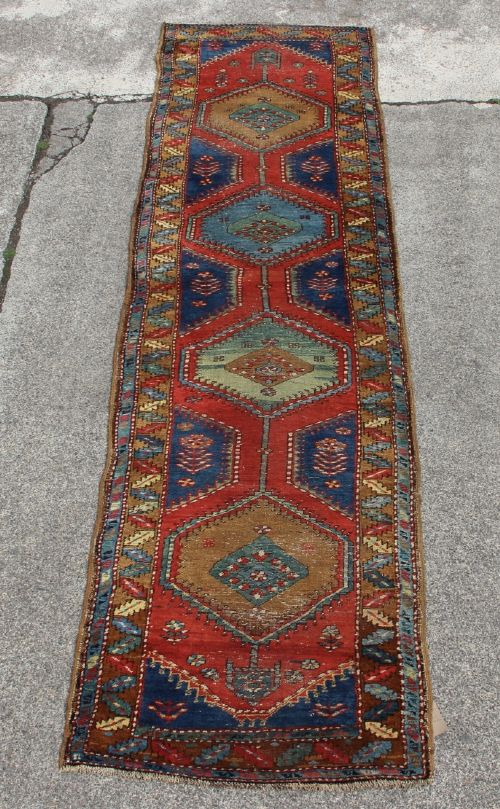
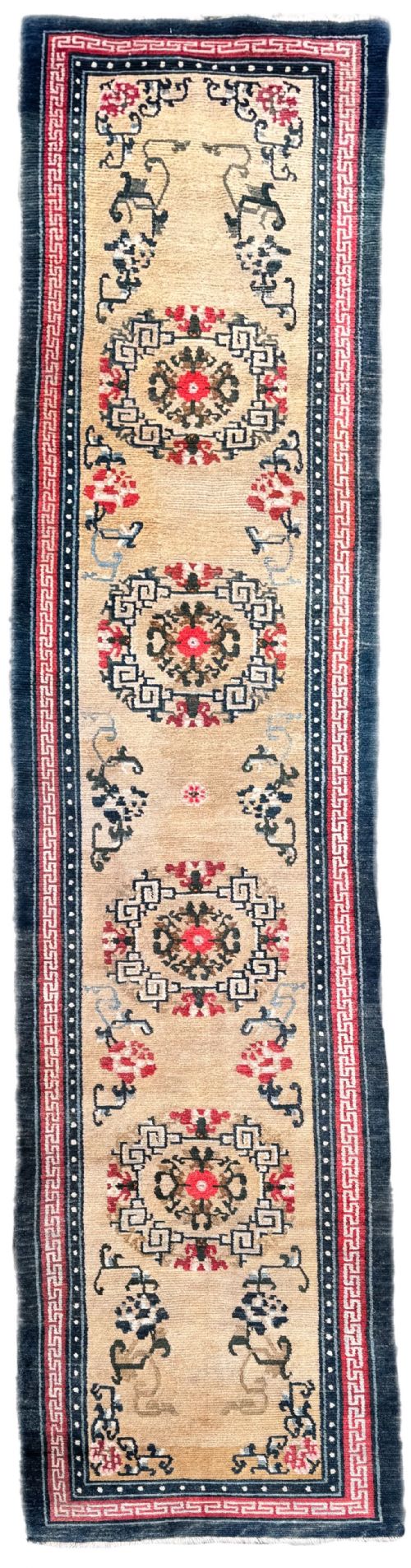
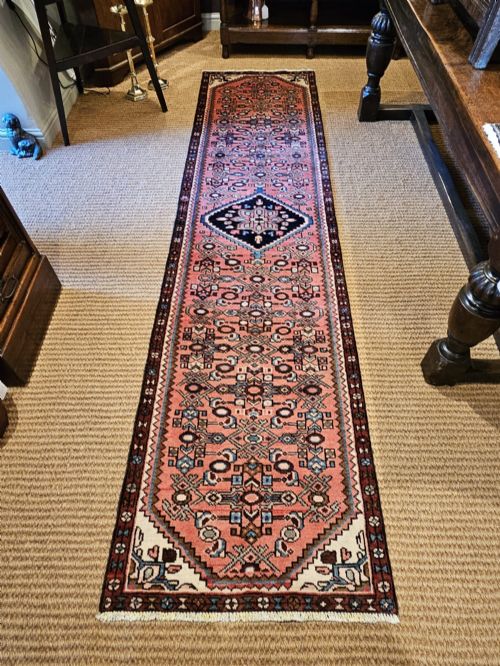
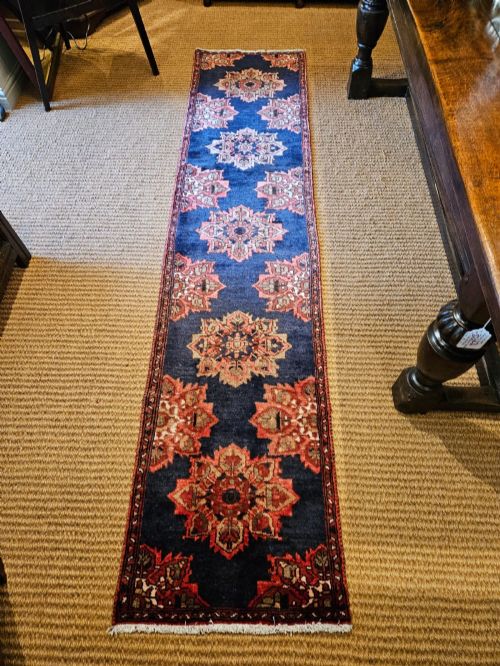
A narrow wool hallway runner is a long, linear floor covering designed specifically for corridors, halls, and landings. These pieces originate from various traditions, including Persian tribal workshops, Turkish weaving centres, and Moroccan Berber communities, spanning from the nineteenth century into the twentieth century. They provide both practical floor protection and a strong decorative focal point in otherwise narrow spaces.
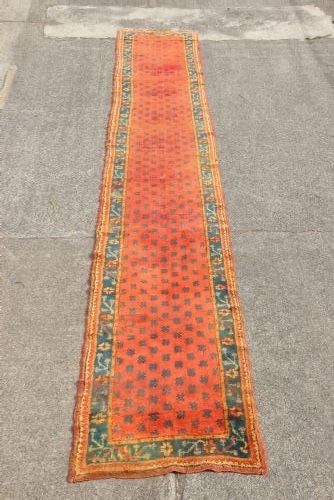
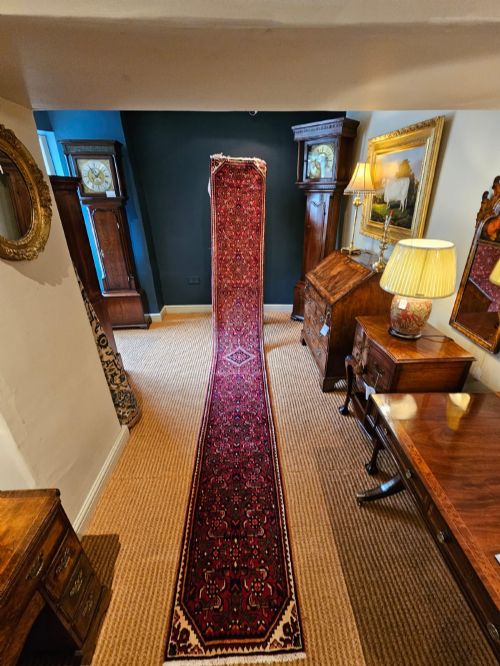
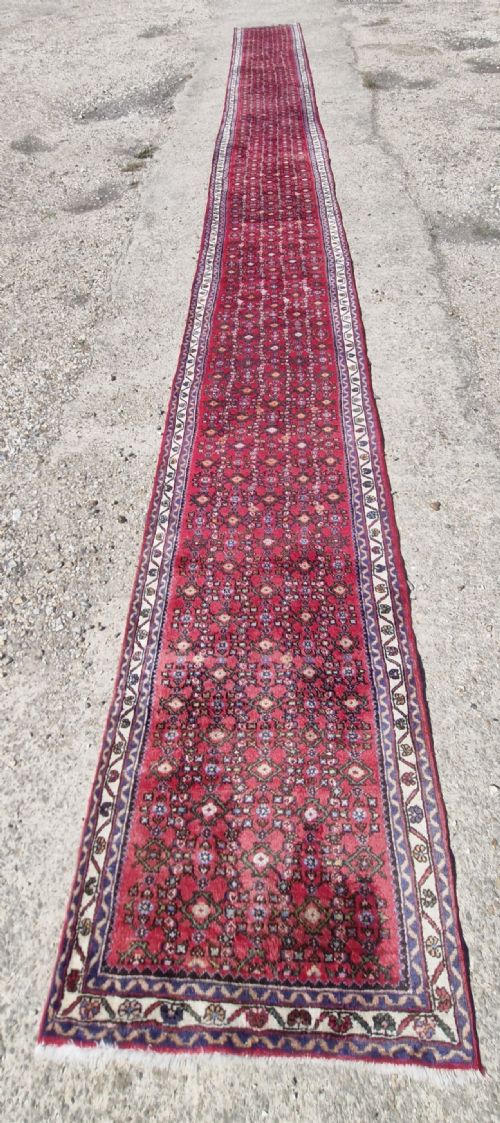
The selection on this page encompasses diverse regional styles such as Heriz, Hamadan, Kurd, and Oushak. Dimensions vary significantly, ranging from compact lengths of around two metres up to extensive thirty-two-foot installations. Buyers encounter traditional Persian geometric motifs alongside Anatolian kilim weaves and tribal designs from North-West Persia.
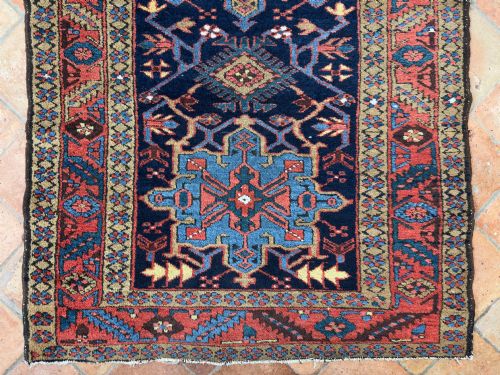
These floor coverings suit homes requiring durable textiles with historical character. Their elongated proportions allow them to fit corridors where standard rectangular rugs cannot go. Each piece reflects the specific weaving heritage and palette of its origin, from deep navy and olive backgrounds to rich earthy tones.
How they were made
Construction relies primarily on natural wool and cotton, occasionally incorporating hand-spun wool or camel hair for specific pile and foundation elements. Wool provides the resilient pile necessary for heavy foot traffic in hallways, while cotton foundations offer structural stability and crisp alignment for geometric patterns. Weavers tied dense knots or utilised flatweave kilim techniques depending on the regional tradition.
Dyers employed natural materials to colour the wool, producing deep indigos, warm madders, and earthy neutrals that age gracefully over decades. The spinning and dyeing methods ensure that the textiles maintain structural integrity through generations of use. Hand-knotting techniques allow complex medallions and tribal motifs to emerge clearly across the narrow format.
Listings span periods from the nineteenth century through the 1960s, featuring wool, cotton, and camel hair across Persian, Turkish, and Moroccan origins.
What varies in quality
Quality rests in the precision of the weave, the density of the knotting, and the handling of the wool. Tighter knots and finer hand-spun wool yield a more resilient surface that withstands corridor footfall while preserving sharp detail in the motifs. The balance of proportions also dictates visual success, particularly in exceptionally long formats where straight edges and consistent width demonstrate skilled loom setup.
The choice of dyestuffs and the harmony of the palette distinguish finer examples from standard production. Subtle tonal variations within the wool add depth to fields of navy, olive, or red. Well-executed tribal or geometric designs show deliberate planning across the elongated field rather than compressed or distorted repeats.
Heriz·Hamadan·Oushak·Bidjar
The Narrow Wool Hallway Runner Glossary
- Kilim
- A flatwoven carpet or runner produced without a pile. These pieces rely on interlocking weft threads to create sharp geometric patterns.
- Pile
- The upright yarn loops or cut ends that form the soft surface of a knotted rug. Density of pile affects both durability and tactile feel.
- Medallion
- A central ornamental motif placed in the field of a runner. It often anchors the geometric or floral composition of the design.
- Foundation
- The underlying structure of warp and weft threads that supports the knotted wool pile. Cotton and wool are typical foundation materials.
- Weft
- The horizontal threads passed back and forth across the warp to secure the knots. They form the solid backbone of the woven textile.
Narrow Wool Hallway Runner: Frequently Asked Questions
How do I choose the right length for my hallway?
Measure the clear floor space of your corridor, leaving a uniform border of exposed flooring around the perimeter of the runner. Consider doorways and opening arcs to ensure the textile does not obstruct movement.
Take into account whether the runner needs to span the entire length of the hall or sit centrally within the space. Longer passages benefit from continuous runs or paired pieces from matching regional traditions.
Are these runners suitable for heavy foot traffic?
Traditional wool and cotton construction provides natural resilience against daily wear in busy corridors and landings. Dense knotting and quality wool fibres ensure the pile springs back underfoot over decades of domestic use.
Using a suitable underlay beneath the runner prevents slipping and cushions the textile against hard stone or timber floors. Regular rotation equalises wear patterns across high-traffic zones.
How do I identify a Persian Heriz runner?
Heriz runners typically feature bold, geometric medallions and strong structural framing within the field. Their palette often incorporates deep reds, navy blues, and contrasting ivory accents.
The robust weave and characteristic large-scale geometric motifs distinguish Heriz pieces from finer curvilinear workshop rugs. Proportions remain sturdy and well-suited to narrow architectural spaces.
How should I care for an antique wool runner?
Vacuum the runner gently using suction power without a rotating brush roll to protect the wool fibres and knot structure. Periodic professional cleaning maintains the integrity of natural dyes and removes embedded grit.
Keep the textile out of direct, harsh sunlight to prevent fading of indigo and madder tones over time. Address spills immediately by blotting with a clean cloth rather than rubbing.