




Tribal Geometric Hallway Rug
A tribal geometric hallway rug brings linear patterns and rich dyes from nineteenth and early twentieth century workshops into narrow domestic spaces.
Tribal Geometric Hallway Rug
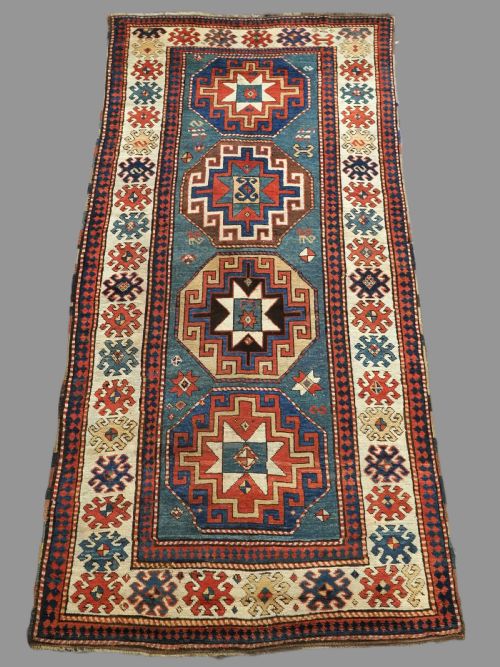
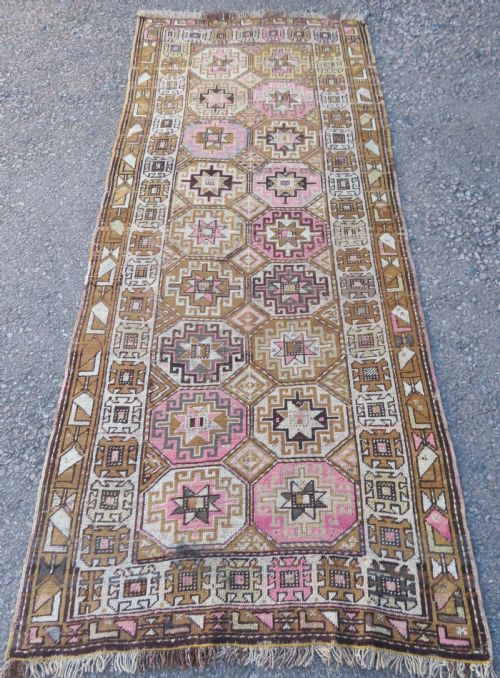
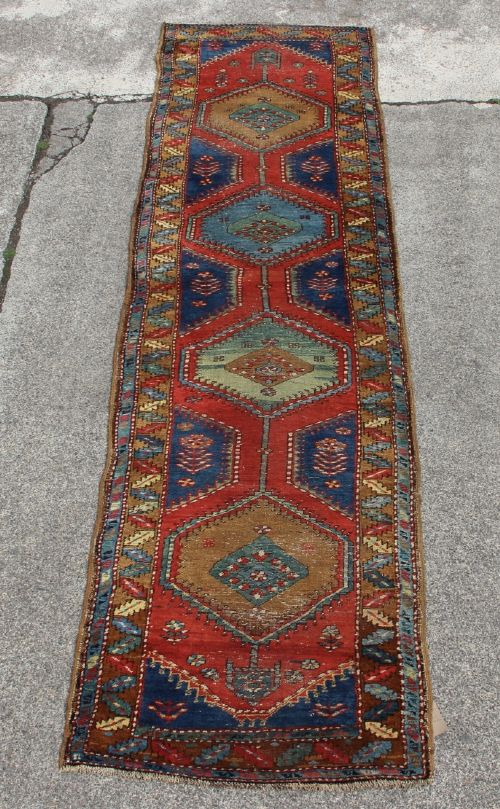
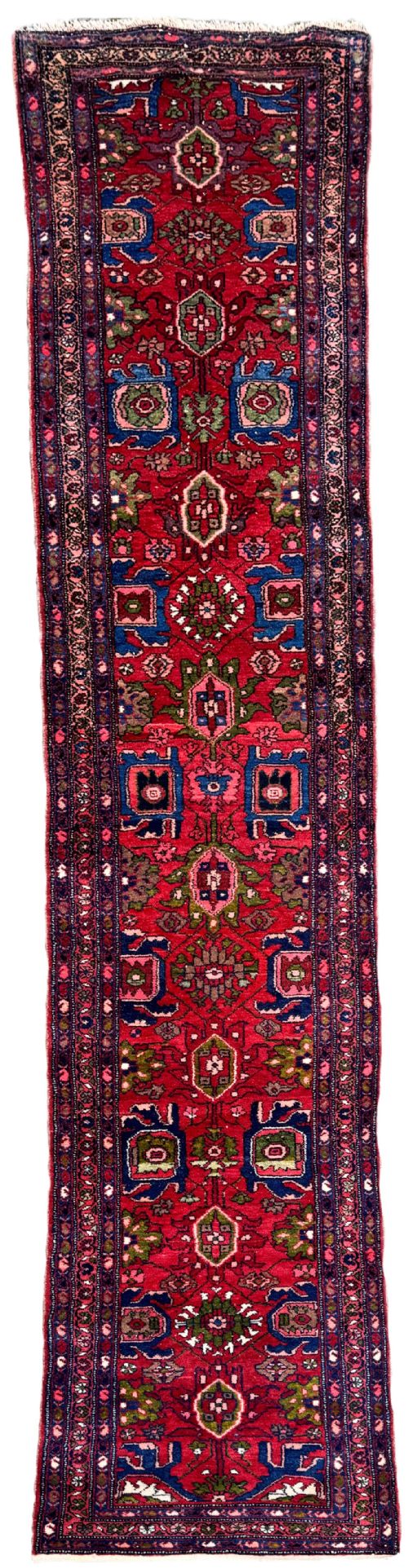
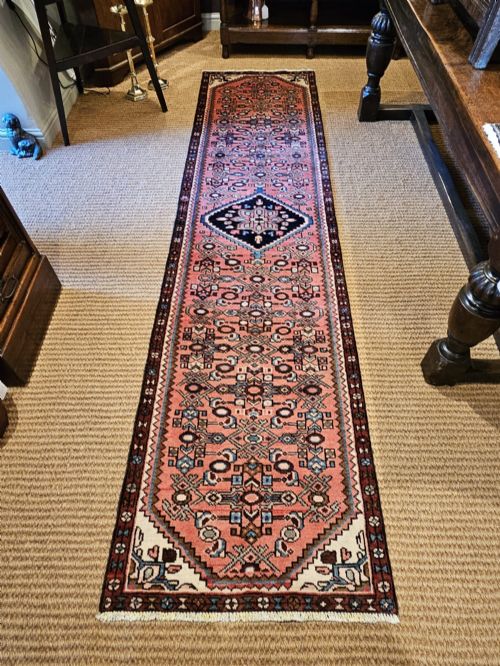
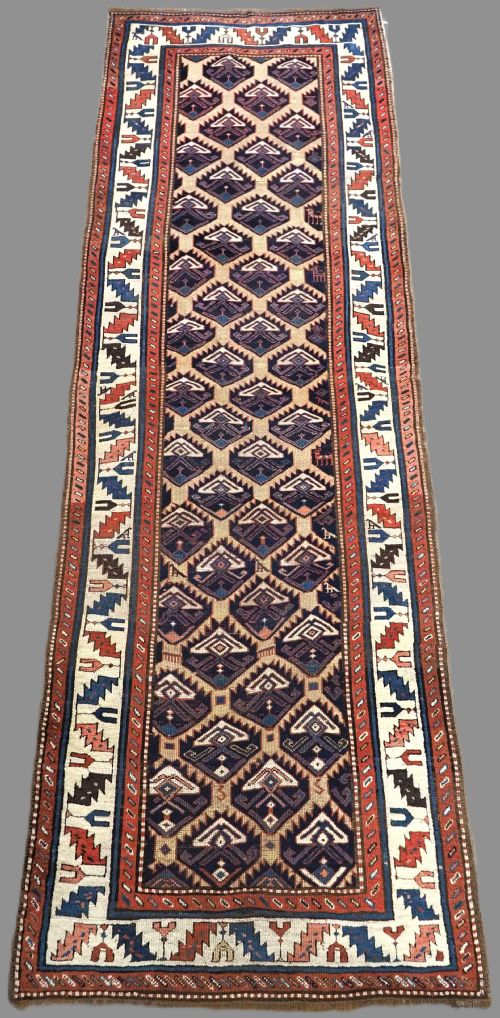
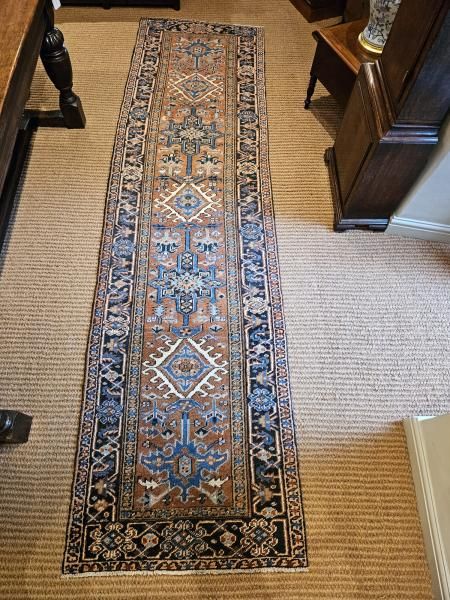
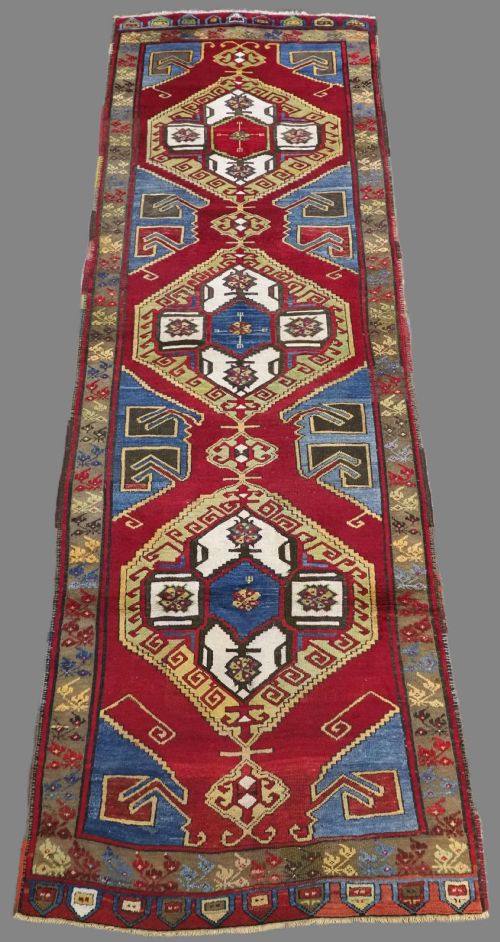
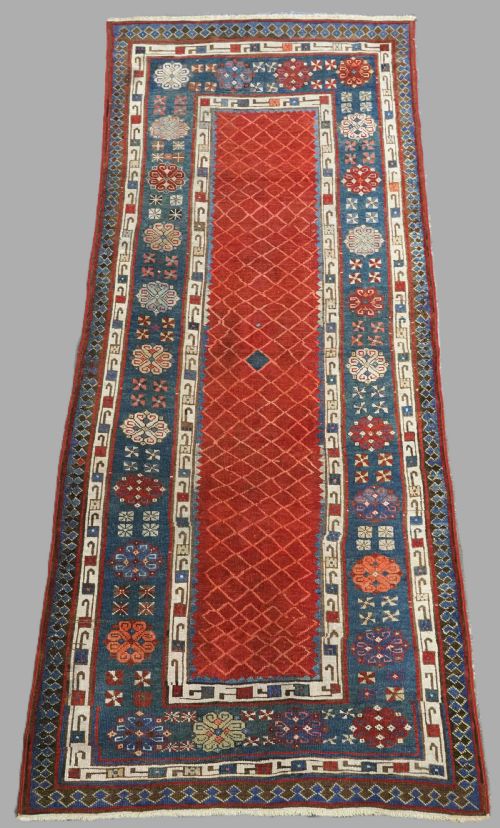
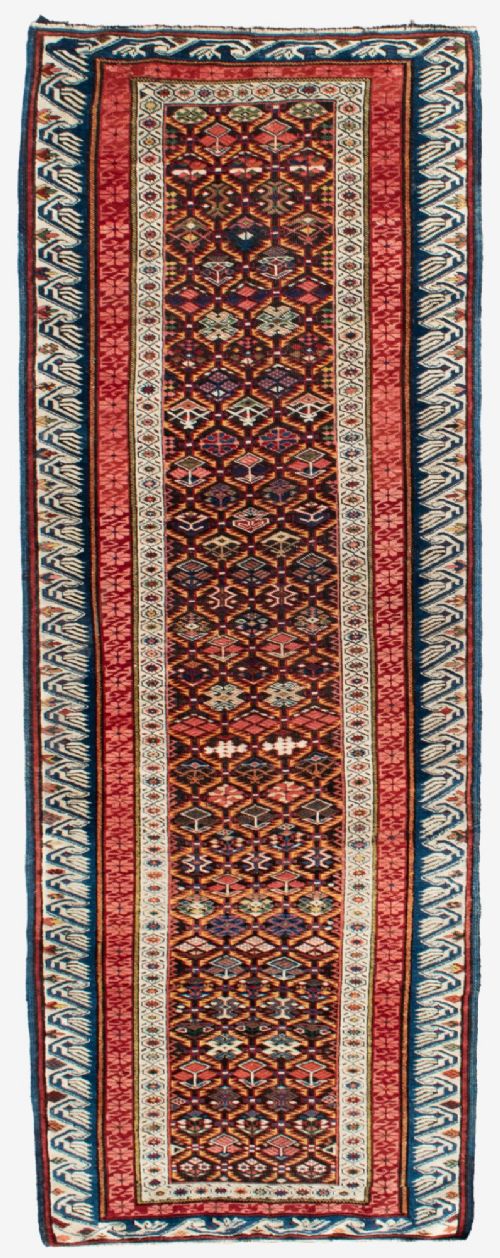
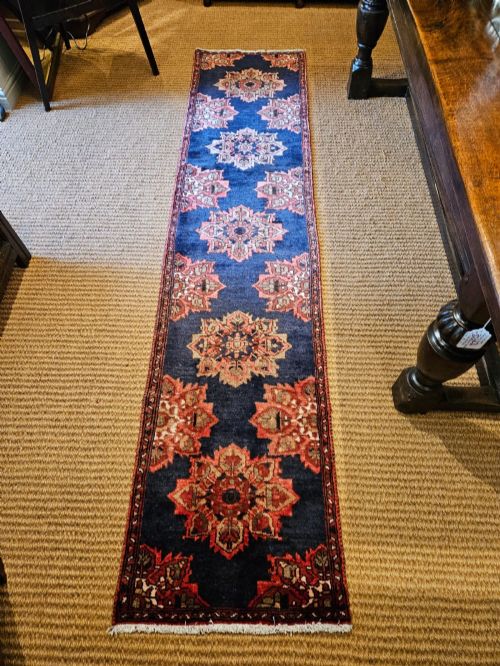
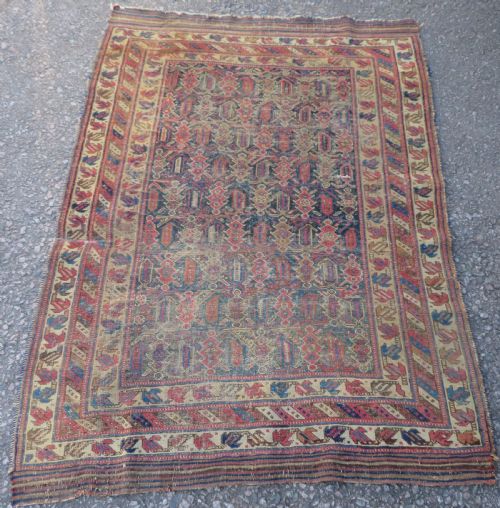
A tribal geometric hallway rug is a long, narrow floor covering distinguished by angular motifs, medallions and repeating border bands. These pieces originate primarily from Persian, Caucasian, Anatolian and Kurdish weaving traditions spanning the nineteenth and early twentieth centuries.
The format is specifically designed for corridors, landings and narrow passages where linear floor space requires a balanced composition. Runners dominate this category, alongside long rugs and narrow carpets originating from rural and village looms.
Makers in regions such as Heriz, Hamadan, Shirvan and Gendje utilised local motifs passed down through generations. The resulting items combine utility with traditional tribal iconography executed in resilient materials.
How they were made
These textiles are built upon natural fibre foundations using wool and cotton for warp and weft threads. Handspun wool forms the pile, providing density and resilience under heavy foot traffic.
Dyes derived from natural sources give the wool its characteristic depth and variation across the length of the rug. Weavers knotted the pile by hand onto vertical looms, securing each row with sturdy weft compaction.
Object types include runner rugs, hallway runners and long carpets originating from Persian, Caucasian and Anatolian traditions.
What varies in quality
Quality rests upon the tightness of the knotting and the stability of the foundation. Finer knot density allows complex geometric lattices and crisp linear details to emerge clearly from the background.
The selection of wool and the integrity of the natural dyes dictate how the pile ages under daily use. Pieces retaining thick pile and secure edge bindings demonstrate superior original construction and careful preservation.
Kurdish weavers·Shahsavan workshops·Bidjar weavers·Heriz weavers
The Tribal Geometric Hallway Rug Glossary
- Runner
- A long, narrow carpet format designed specifically for hallways and corridors. This shape balances spatial proportions in confined domestic passageways.
- Warp
- The longitudinal threads stretched vertically on a loom that form the structural foundation of the textile. Weft threads are woven horizontally across these structural elements.
- Pile
- The vertical or slanted tufts of wool that stand up from the woven foundation to form the usable surface of the rug. Pile depth affects both the tactile feel and the durability of the piece.
- Medallion
- A central ornamental motif placed in the field of the rug. These geometric or floral shapes anchor the surrounding pattern repetition.
- Lattice
- An open, repeating network of crisscrossing lines forming geometric compartments across the field. This layout is common in Caucasian and Persian village weaving.
Tribal Geometric Hallway Rug: Frequently Asked Questions
Where should I place a runner?
These long formats suit hallways, corridors and narrow landings where linear floor coverage is needed. They protect high traffic floorboards while adding warmth and pattern to transitional spaces.
Ensure the passage width allows the edges to lie flat without curling against skirting boards or door swings.
How do I care for wool pile?
Regular gentle vacuuming without a rotating brush roll prevents dust accumulation within the wool fibres. Prompt attention to spills using dry extraction methods protects the natural dyes.
Professional cleaning suited to antique textiles maintains the integrity of the handspun wool over decades of use.
How do I date an antique runner?
Dating relies on stylistic markers, structural analysis and dye characteristics consistent with nineteenth and early twentieth century production. Regional weaves often display specific palette shifts and structural nuances tied to particular decades.
Comparing edge finishes and wool preparation helps narrow the period of origin between the late nineteenth century and the 1930s.
Are these pieces handwoven?
Every piece in this category is produced by hand on traditional looms using techniques passed down through generations. Artisans knotted the wool pile manually onto cotton or wool foundations.
This method produces natural variations in tension and symmetry that distinguish handmade textiles from modern machine-woven alternatives.