


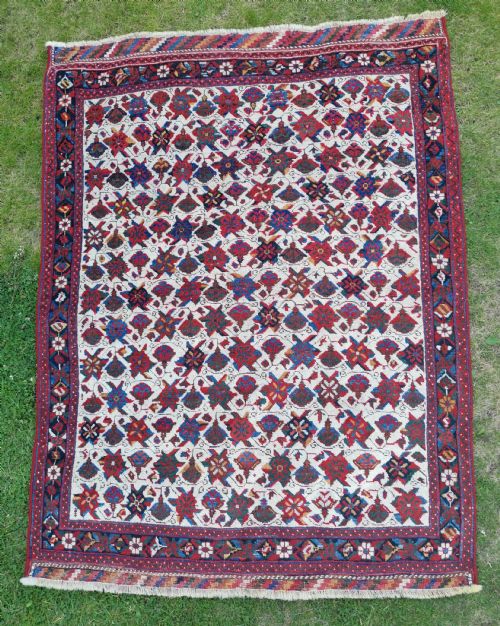
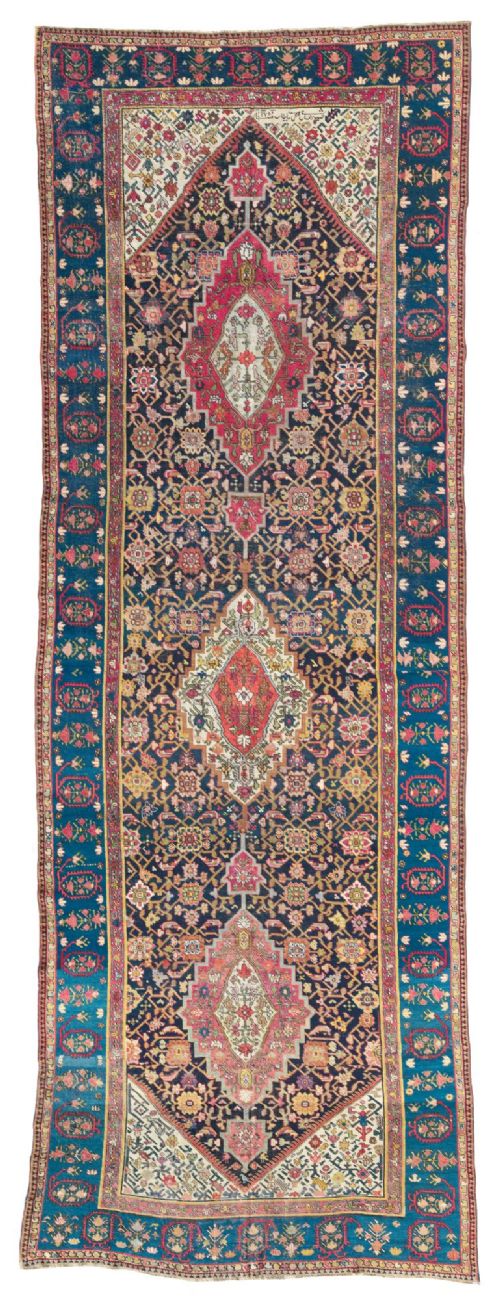
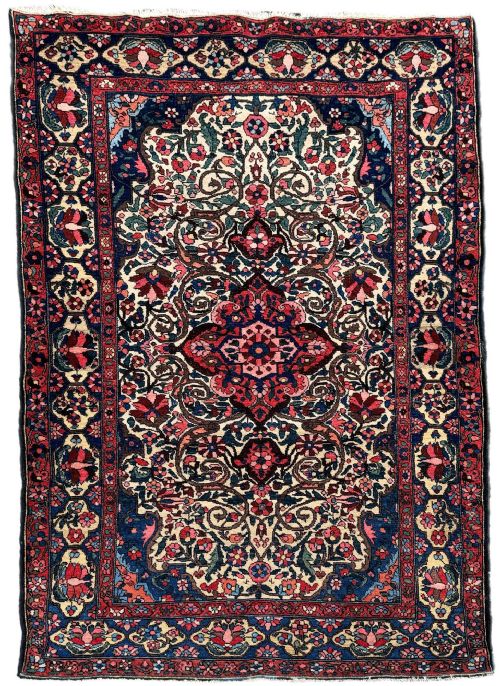
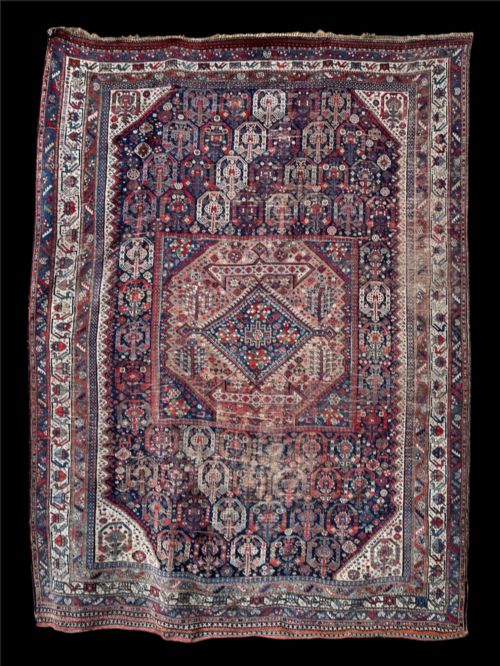
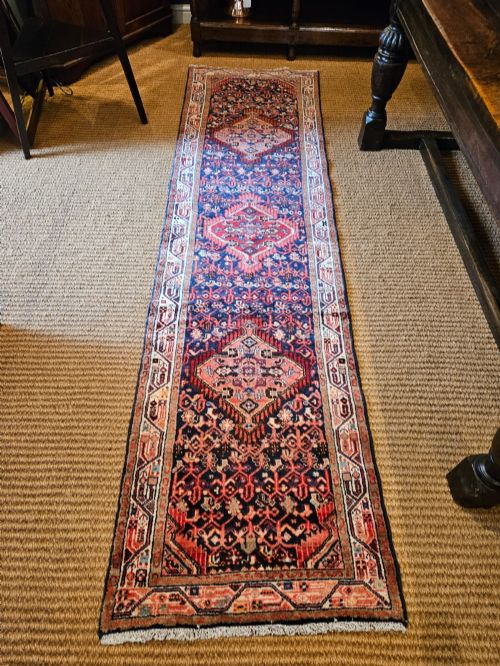
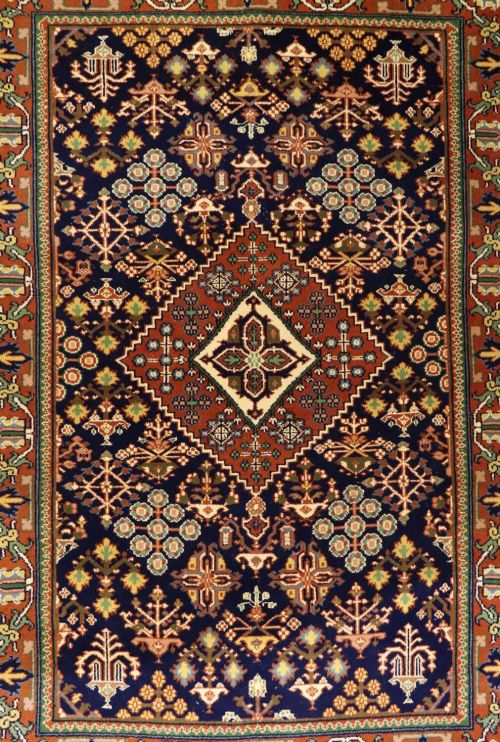
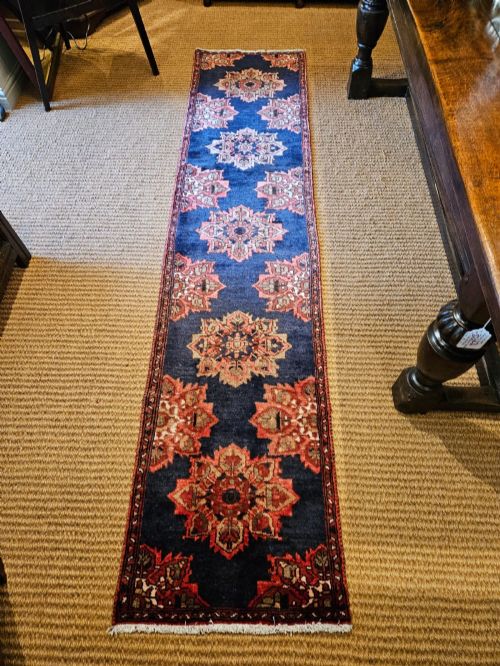
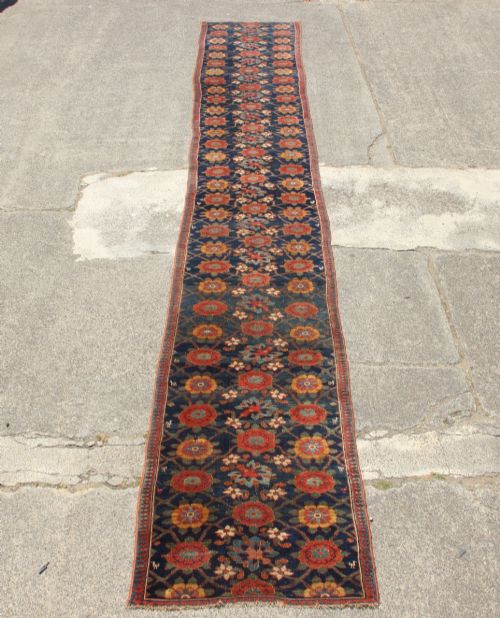
Navy Blue Tribal Rug
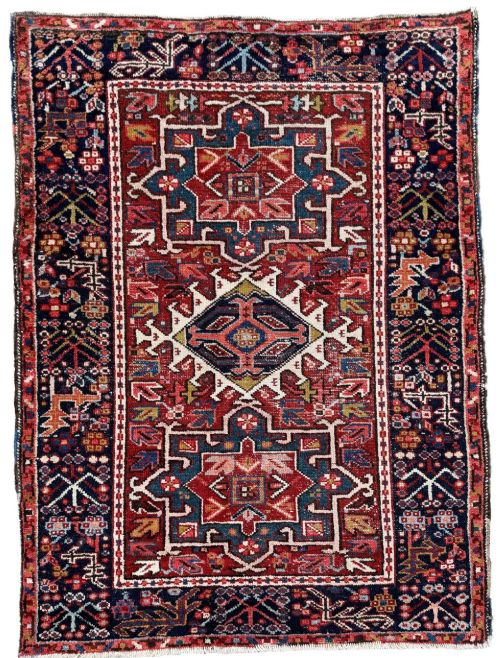
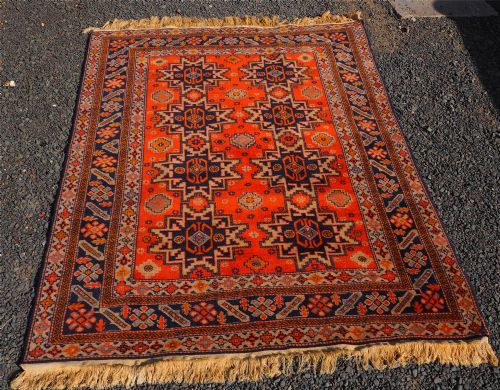
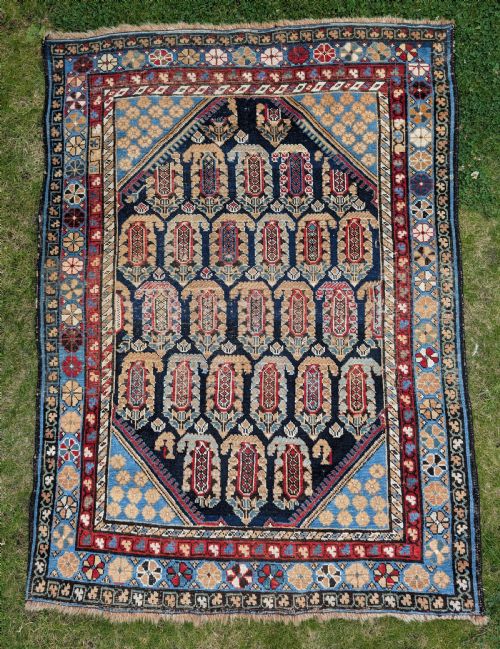
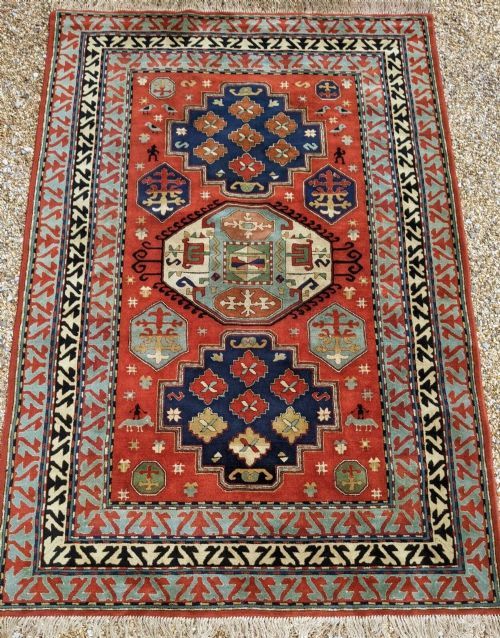
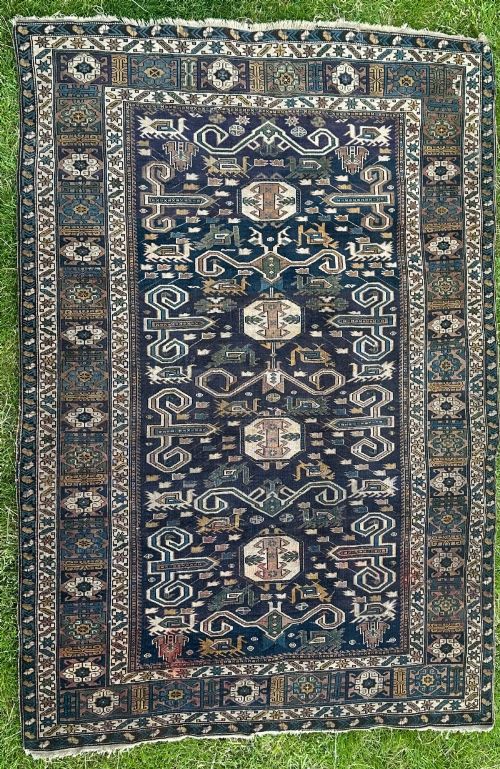
A navy blue tribal rug brings deep indigo tones and geometric nomadic patterns straight to a floor, grounding a room with centuries of hand-knotted tradition.
Navy Blue Tribal Rug
A navy blue tribal rug represents floor coverings woven by nomadic and village communities across Persia and the Caucasus from the nineteenth century into the mid-twentieth century. Buyers searching this phrase look for deep indigo grounds paired with bold geometric medallions, tribal motifs, and intricate border systems.
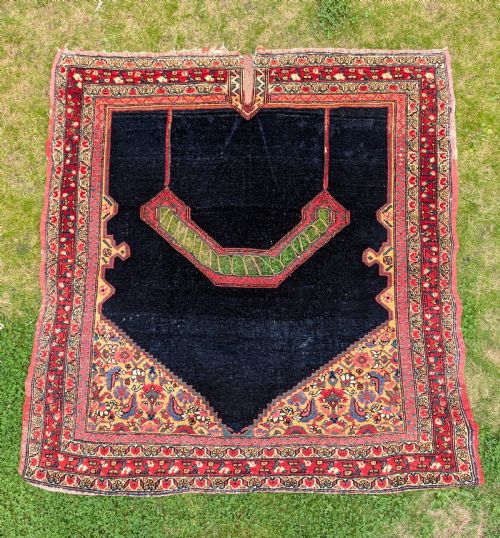
The selections available here span formats from small scatter rugs and saddle covers to long hallway runners and room-size carpets. Pieces originating from tribal confederacies such as the Khamseh, Qashqai, and Afshar appear alongside village weaves from regions like Karaja, Heriz, and Shirvan.
Dating ranges from the mid-nineteenth century through the 1930s, offering choices between early natural-dye antiques and later vintage interpretations. The predominant palette relies heavily on rich navy and midnight blues contrasted against terracotta, ivory, and soft reds.
How they were made
Construction relies primarily on wool piles hand-knotted onto sturdy cotton or wool foundations using traditional upright looms. Weavers utilised hand-spun wool for the pile, absorbing natural dyestuffs that create the characteristic depth and variation observed across indigo fields.
Weft and warp tension combined with dense knotting produces durable structures designed to withstand nomadic movement and domestic use. The handling of edge finishes and geometric field layouts reflects regional techniques passed down through generations of tribal artisans.
Navy Blue Tribal Rug Retail Price Guide 2026
Typical asking prices for navy blue tribal rug among the pieces listed under this phrase on Sellingantiques today, from the lower quarter to the upper quarter. They describe what is for sale here now, not the wider market.
Object forms span area rugs, long runners, and compact saddle covers woven by nomadic groups.
What varies in quality
Quality rests in the precision of the knotting, the saturation and clarity of the indigo dye within the wool, and the integrity of the structural foundation. Tightly packed piles and balanced geometric proportions separate finer tribal village pieces from heavier, coarser utility weaving.
The condition of the wool pile and the retention of original side selvedges and end borders dictate the grade of survival in older examples. Piles that have worn down evenly reveal the underlying structure without compromising the strength of the foundation yarns.
Qashqai Tribe·Afshar Tribe·Shahsavan Tribe
The Navy Blue Tribal Rug Glossary
- Medallion
- A central ornamental motif placed in the middle of the rug field. Tribal weavers often used geometric or hexagonal medallions to anchor the composition.
- Kelleh
- A long, narrow format carpet traditionally used in Persian domestic interiors. These rectangular pieces fit specific architectural spaces like corridors or gallery rooms.
- Sofreh
- A flatwoven or piled textile used for ceremonial dining or food preparation among nomadic tribes. They display sparse geometric layouts distinct from standard floor rugs.
- Saddle cover
- A small animal trapping designed to fit over a riding mount. These functional items feature specialised cutouts and compact tribal designs.
- Selvedge
- The bound or reinforced side edges of a rug. Original selvedges protect the structural warp threads from fraying.
Navy Blue Tribal Rug: Frequently Asked Questions
How do I identify a tribal rug?
Tribal rugs display asymmetric or geometric motifs drawn from memory rather than rigid cartographic plans. Look for bold medallions, stylised animal figures, and repeating tribal borders.
The materials typically consist of hand-spun wool dyed with rich indigo and earthy tones on simple vertical looms.
Where were these rugs made?
Production centres span the nomadic territories and mountain villages of Persia and the Caucasus. Regions like Kerman, Fars, Karabagh, and Shirvan produced distinct regional styles.
Nomadic confederacies carried portable looms across seasonal migration routes, incorporating local flora and iconography into their wool work.
Are these rugs suitable for hallways?
Many examples on this page are produced in runner formats specifically suited for hallways and corridors. Long, narrow proportions accommodate high-traffic walking areas.
Dense wool construction provides natural resilience against daily footfall while protecting delicate underlying floors.
How should I care for an antique rug?
Protect the piece by placing it on a breathable rug underlay to prevent sliding and uneven friction. Vacuum gently using suction attachments without rotating bristle brushes.
Professional specialist cleaning is recommended to preserve the integrity of natural wool fibres and historic indigo dyes.