


Navy Blue Caucasian Carpet
These woven floor coverings bring distinct geometric patterns and rich heritage directly into a home.
Navy Blue Caucasian Carpet
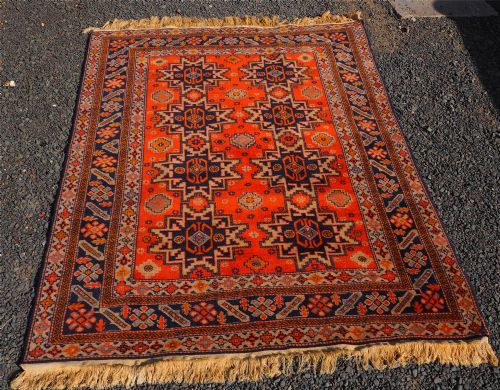
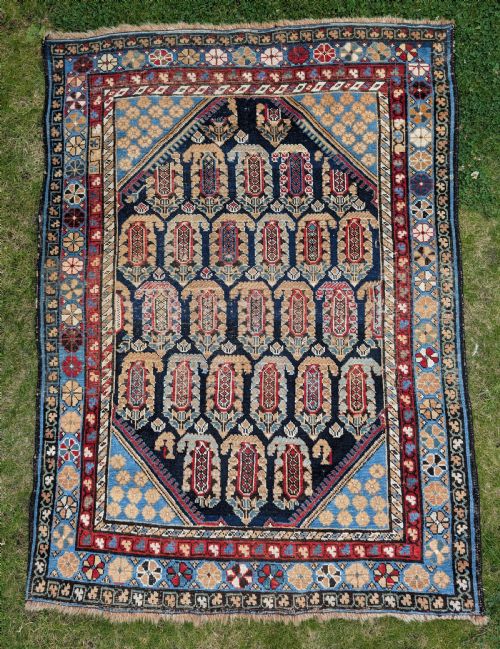
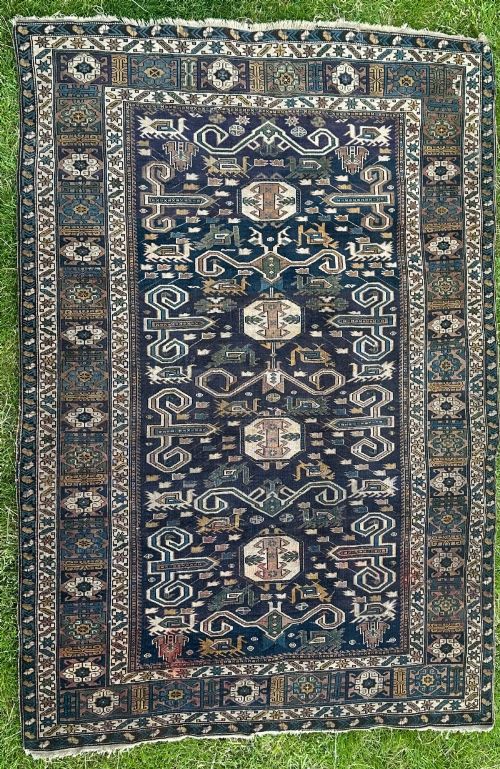
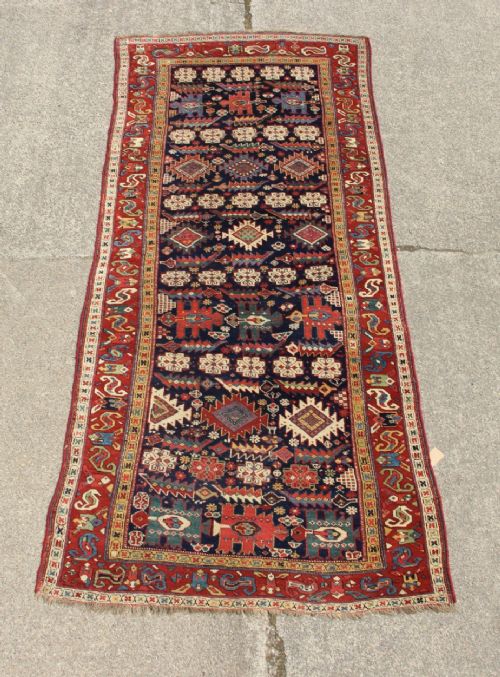
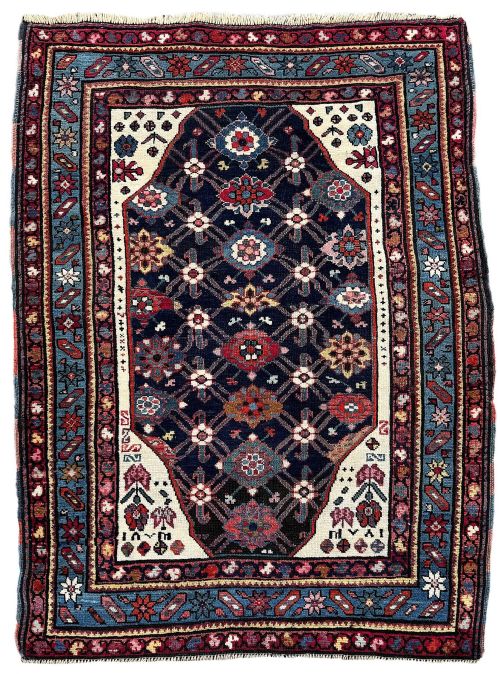
A navy blue caucasian carpet represents a dense category of woven floor coverings originating from the Caucasus region and surrounding tribal areas, spanning production dates from the mid-nineteenth century through the early twentieth century.
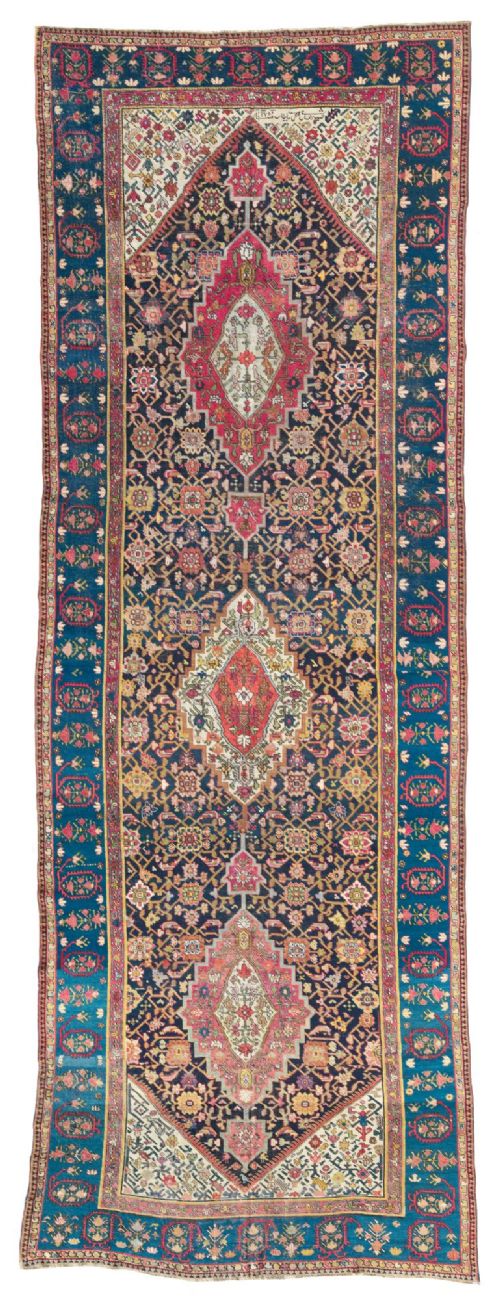
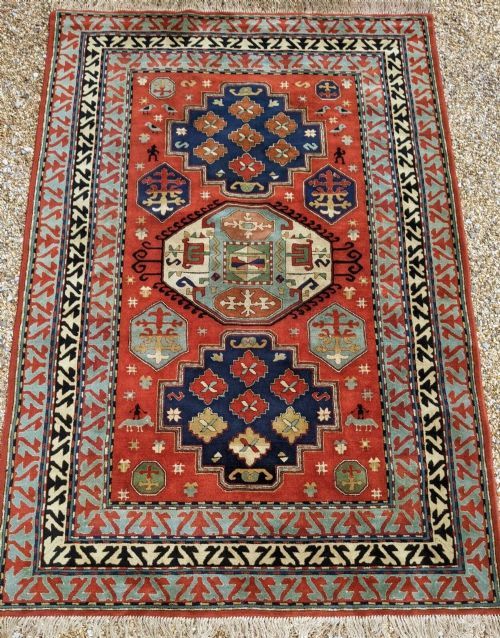
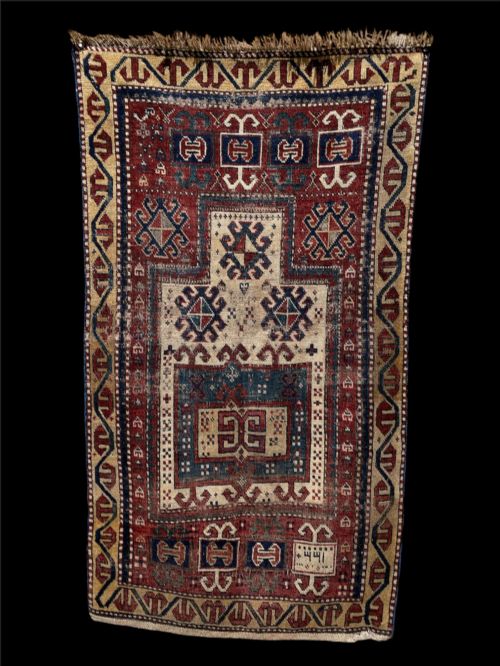
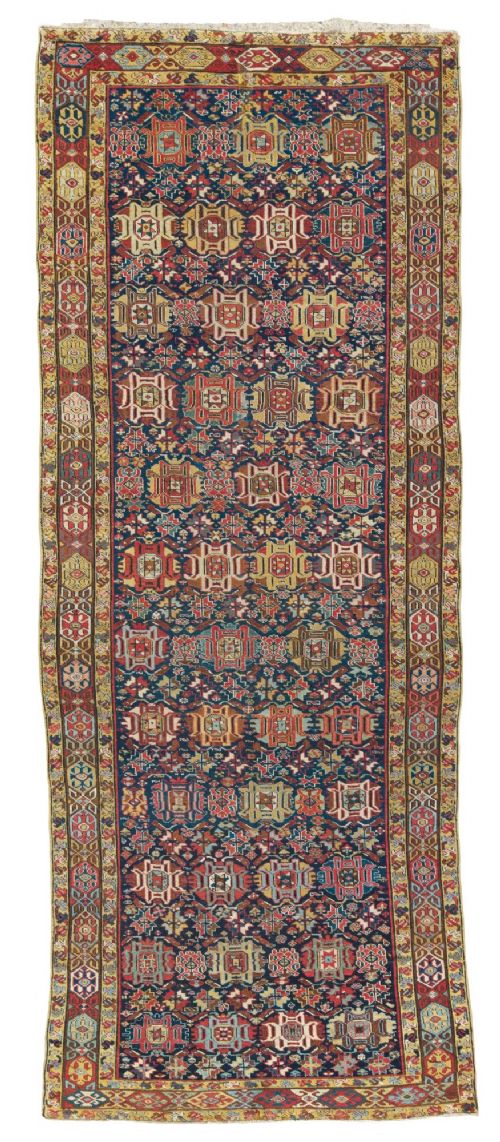
Buyers encounter formats ranging from square area rugs and long hallway runners to specialised prayer rugs and substantial kelleh formats, produced by various regional groups including Shirvan, Karabagh, Kuba, and Kazak weavers.
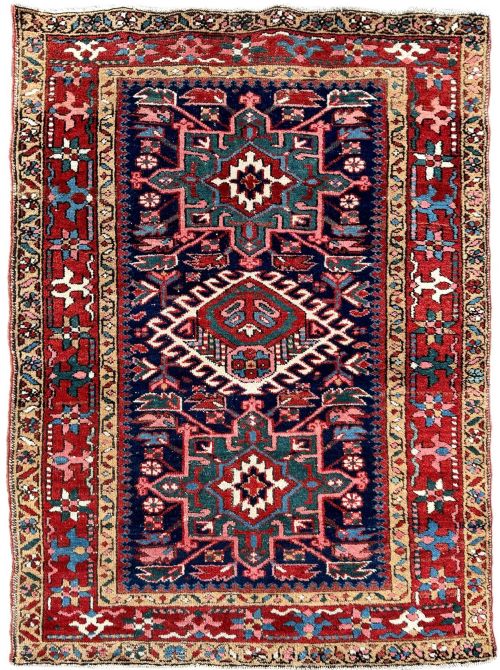
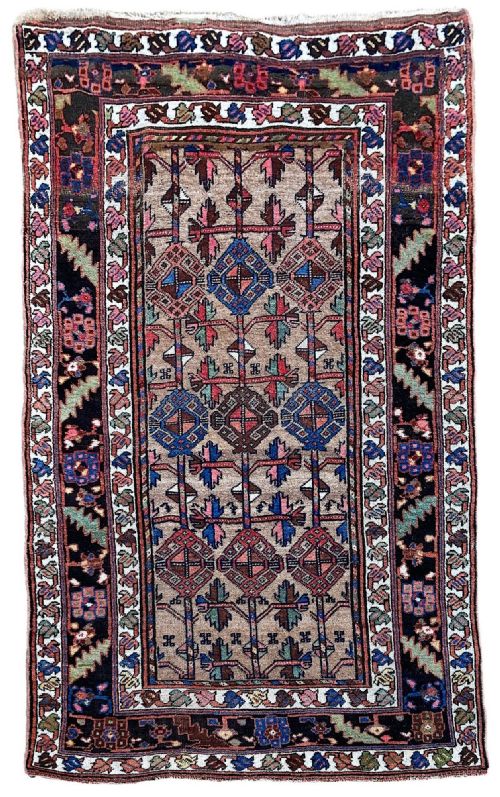
The selection includes specific tribal and village pieces such as Shahsavan, Kurdish, Jaf, and Karadja productions, alongside related Persian Heriz designs that share similar regional weaving traditions.
How they were made
Weavers utilised hand-spun wool for the pile and structured the foundations using cotton or wool warps and wefts, hand-knotting each piece securely.
Natural and vegetable dyes provided the saturated palette, yielding deep navy blues and contrasting accent colours that matured over decades of use.
Certain nineteenth-century tribal weavers casually embedded tiny human figures, meandering animals, and stray peacocks among strict geometric medallions.
What varies in quality
Knot density and precision of the geometric drawing distinguish finer village and tribal examples from heavier commercial or standard utilitarian weaves.
The purity and depth of the natural dyes, alongside the condition of the wool pile and original selvedges, determine the lasting integrity of each woven piece.
The Navy Blue Caucasian Carpet Glossary
- Kelleh
- A large, elongated carpet format traditionally used in Persian and Caucasian interiors. These pieces offer extended proportions suited for spacious hallways or large rooms.
- Prayer Rug
- A smaller rug featuring a central mihrab or niche design used historically for daily prayers. These formats display focused geometric iconography.
- Runner
- A long, narrow carpet format designed for corridors and staircases. These pieces balance repeated geometric motifs along an elongated axis.
- Boteh
- A stylised almond or paisley motif found throughout Caucasian and Persian weaving. This ancient symbol represents life and eternity.
- Memlinc Gul
- An octagonal Caucasian gull motif featuring hooked edges. It appears frequently in Kurdish and regional tribal weaving.
Navy Blue Caucasian Carpet: Frequently Asked Questions
How do I style a runner rug?
Place these narrow formats in hallways or entryways to introduce pattern and warmth to high-traffic domestic spaces. Their linear proportions guide movement while protecting underlying flooring.
Ensure adequate underlay is used to keep the woven structure stable on hard surfaces. They pair effectively with both traditional timber floors and neutral stone tiles.
What is a prayer rug?
These smaller formats feature a distinct arch or niche design that points toward Mecca during ritual use. Weavers often arranged specific medallions and borders around this central architectural motif.
Display them on walls as textiles or place them in low-traffic sitting areas to preserve the delicate pile. Their compact scale makes them versatile accent pieces.
How are regional types identified?
Examine the specific geometry of the medallions, the drawing of the border motifs, and the characteristic palette of the wool. Specific regions like Shirvan or Kazak employed distinct structural signatures.
Consulting structural details such as knot type and end finishes helps separate village weaving from larger workshop productions. Each group utilised unique local colour combinations.
How do I care for antique wool?
Vacuum gently using suction only without a rotating brush roll to protect the hand-spun pile from damage. Rotate the floor covering periodically to ensure even exposure to light and wear.
Address spills immediately by blotting with a clean cloth rather than rubbing the fibres. Professional cleaning by a specialist in antique textiles is recommended periodically.