
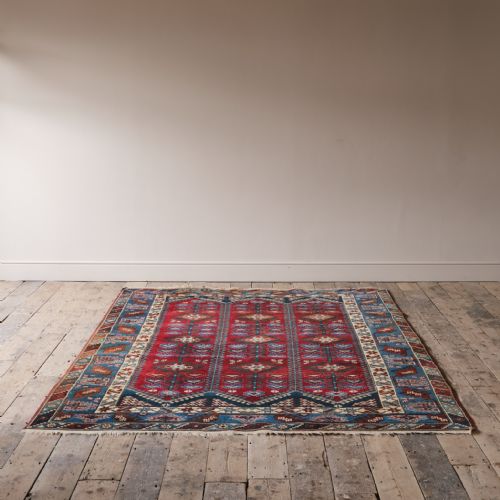
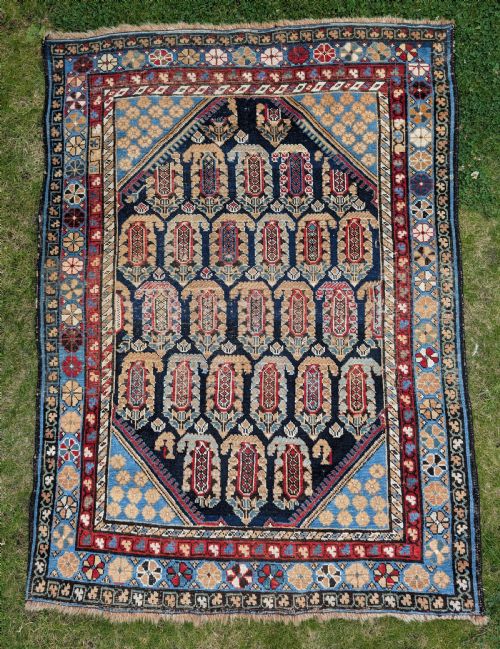
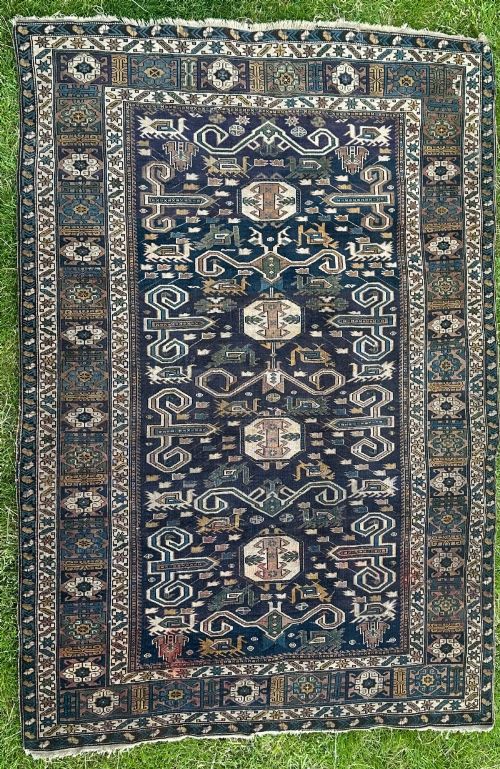
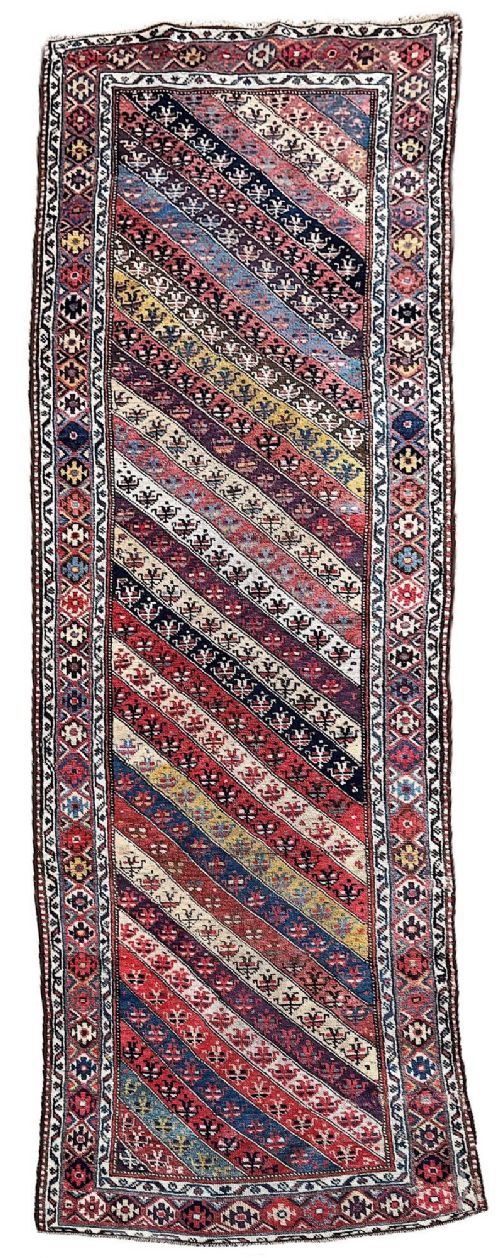
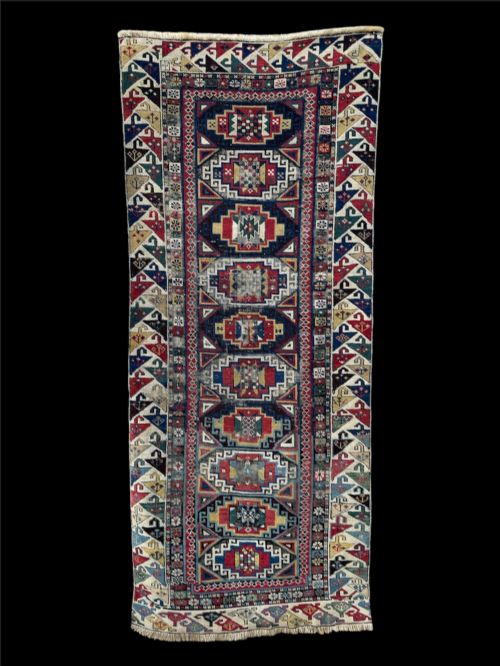


Vintage Shirvan Tribal Rug
A vintage shirvan tribal rug brings the geometric clarity and rich natural dyes of the eastern Caucasus straight to your floor.
Vintage Shirvan Tribal Rug
A vintage shirvan tribal rug represents the weaving traditions of the eastern Caucasus, spanning from the late nineteenth century into the early decades of the twentieth. These pieces appear in formats ranging from small prayer rugs and square formats to long runners and flatwoven kilims.
The aesthetic leans heavily on Caucasian and Persian tribal motifs, utilising crisp geometric layouts, medallions, and stylised animal or floral forms. Regional variations include specific styles such as Baku, Kuba, Marasali, and Talish types alongside traditional Shirvan designs.
Makers in these Caucasian regions produced floor coverings designed for practical nomadic or village use, adapting patterns passed down through generations. Surviving examples reflect the distinct cultural exchange and weaving techniques of the East Caucasus.
Materials and Construction
Weavers constructed these textiles predominantly using wool and hand-spun wool for the pile and foundation, often incorporating cotton for structural elements. The hand-spinning process yields irregular yarn thicknesses that absorb dye unevenly, giving the surface a naturalabrash.
Colour comes from natural dyes derived from local plants and minerals, creating soft faded tones and deep saturated grounds that mellow gracefully over decades. The weave density varies from the dense knotting of pile rugs to the flat texture of banded kilims.
Some weavers slipped stylised birds and tiny geometric critters into the borders just to keep the long hours at the loom interesting.
Assessing Quality and Execution
Quality rests upon the crispness of the drawing and the complexity of the geometric arrangement, distinguishing standard village production from superior workshop output. Sharply defined motifs and balanced proportions indicate a weaver with absolute mastery of the regional vocabulary.
The handling of natural dyes dictates the visual depth of the surface, as harmonious dye lots and subtle colour shifts create an engaging interplay across the field. Secondary details, such as well-executed Kufic or bird borders, elevate the overall sophistication of the piece.
The Vintage Shirvan Tribal Rug Glossary
- Abrash
- Natural variations in wool colour caused by changes in dye batches or hand-spun yarn lots. This slight tonal banding adds considerable visual movement to the rug surface.
- Kilim
- A flatwoven textile produced without a pile by tightly interweaving warp and weft threads. These pieces offer geometric banded designs and a lighter structural weight.
- Prayer rug
- A specialised format featuring a distinct mihrab or arch design at one end. Historically utilised for daily devotional practices, these pieces direct the eye toward a central focal point.
- Kufic border
- A decorative guard stripe mimicking angular Arabic script. This geometric border style frequently frames Caucasian field designs.
- Runner
- A long, narrow format originally woven for corridors or specific architectural spaces. These elongated pieces demand precise repetition of geometric motifs down the axis.
Vintage Shirvan Tribal Rug: Frequently Asked Questions
How do I care for an old wool rug?
Vacuum gently without using a rotating brush bar to protect the hand-spun wool pile from unnecessary friction and fibre loss.
Keep the textile out of direct sunlight to preserve the natural dyes and prevent uneven fading across the field.
Where were these pieces made?
Weavers produced these textiles across the Caucasus region, particularly focusing on the Shirvan, Kuba, and Baku areas of the eastern Caucasus.
Local village and nomadic communities passed down specific geometric patterns and weaving techniques through generations.
What is a flatwoven kilim?
A kilim is constructed without pile by interlocking the coloured weft threads tightly over the vertical warp yarns to create a flat surface.
These pieces often display bold banded designs and function well as lighter floor coverings or decorative wall hangings.
How do I distinguish regional types?
Study the specific border patterns, medallion structures, and field layouts, such as the distinctive star motifs of Lesghi pieces or the mihrab arches of prayer rugs.
Palettes also offer clues, with certain villages favouring ivory grounds while others rely on deep blues and reds.