




Naval Vessel Painting
A naval vessel painting captures the power of historic fleets on canvas and paper, offering a direct window into maritime combat and exploration.
Naval Vessel Painting
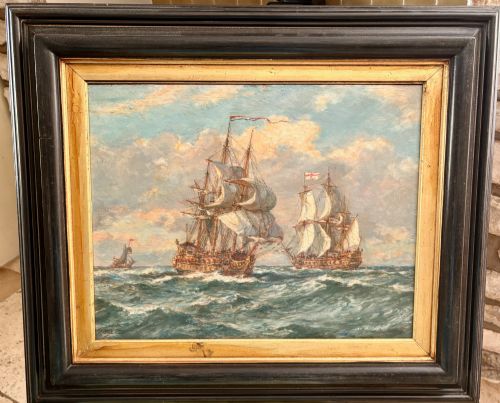
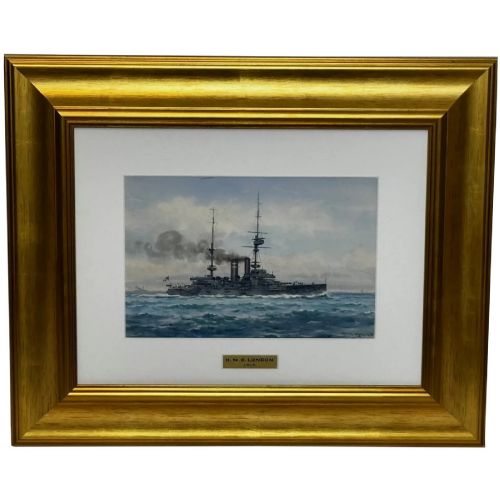
When you search for a naval vessel painting, you encounter depictions of named warships, cruisers, and historic engagements spanning multiple centuries. The selection on this page ranges from early nineteenth-century oils to twentieth-century watercolours detailing specific vessels like the HMS Blenheim and HMS Victory.
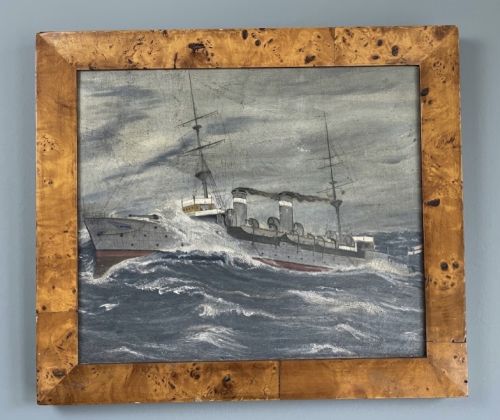
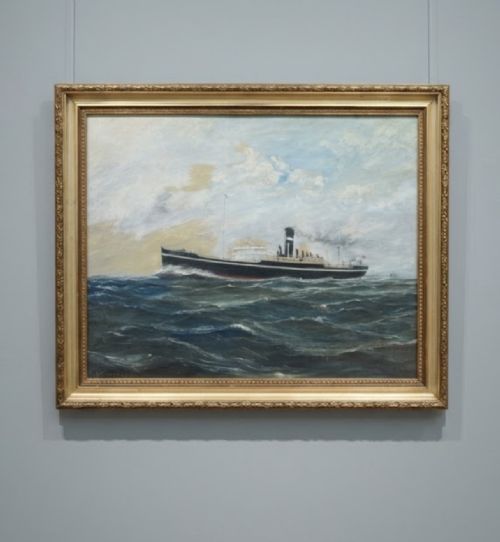
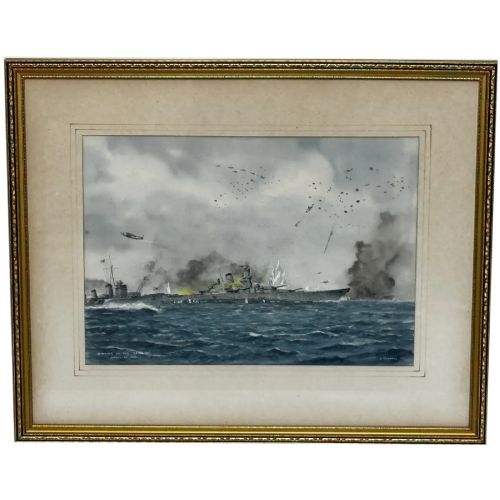
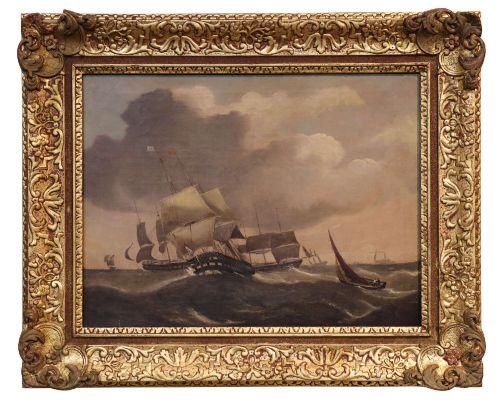
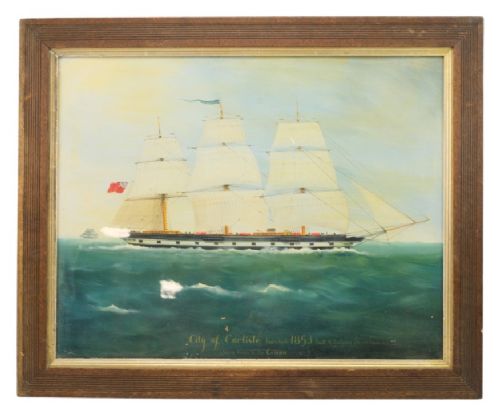
You are most likely to meet framed watercolours and oil paintings on canvas or panel that document naval architecture, fleet movements, and coastal scenes. These works capture specific historic actions, such as scenes relating to Trafalgar or the Crimea, alongside portrayals of ironclads, steamships, and galleons.
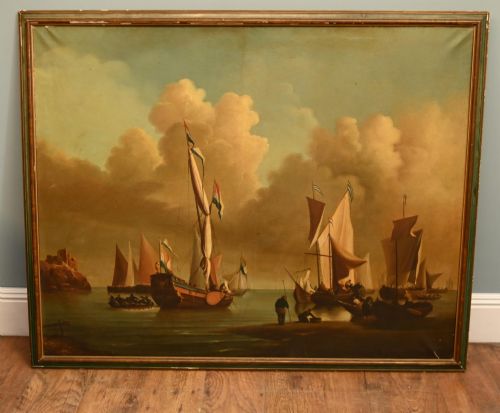
The objects vary from intimate watercolours created by naval officers and specialist marine artists to larger oils executed in the Dutch marine style or Victorian maritime tradition. Each piece preserves a distinct record of naval history through the firsthand observation of military shipping.
Materials and Technique
Artists deployed oil paint on canvas or wooden panel to build luminous depictions of turbulent seas, rigging, and hull details. Watercolours and gouache on paper were frequently utilised by maritime specialists and naval personnel to record specific vessels with precise draftsmanship.
Works of this nature rely on a thorough understanding of naval architecture, scale, and atmospheric conditions at sea. Painters combined fluid washes for water and sky with meticulous line work for masts, sails, and gunports.
Naval Vessel Painting Retail Price Guide 2026
Typical asking prices for naval vessel painting among the pieces listed under this phrase on Sellingantiques today, from the lower quarter to the upper quarter. They describe what is for sale here now, not the wider market.
Periods represented span from the eighteenth century through the Edwardian era to the mid-twentieth century.
Assessing Quality
Quality in a marine painting rests upon the artist's technical grasp of vessel construction and the convincing rendering of water and weather. The finest works demonstrate accurate rigging, proper perspective, and a disciplined handling of light upon hull and wave.
The distinction between standard decorative pieces and superior works lies in the immediacy of the observation and the artist's documentary precision. Pieces by named marine specialists or naval officers often carry a superior depth of technical detail regarding the specific ship portrayed.
James Hardy·Eric Tufnell·Frank Watson Wood·Bernard Gribble·Charles William Adderton·Vincenzo D’Esposito·Dion Pears·Marie-Edouard Adam·Ebeneezer Colls·Charles Dixon·WF Mitchell·Francis Holman
The Naval Vessel Painting Glossary
- Marine art
- Artwork that focuses on or is मुख्य रूप से inspired by the sea, including ships, shipping, and coastal views. This genre encompasses both calm harbours and turbulent naval engagements.
- Frigate
- A warship built for speed and manoeuvrability, typically used for patrol and escort duties. These vessels feature prominently in eighteenth and nineteenth-century maritime compositions.
- Gouache
- An opaque water-based medium that dries to a matte finish, allowing artists to build dense highlights on paper. It is frequently found combined with watercolour in naval studies.
- Ironclad
- A steam-propelled warship protected by iron or steel armour plates, introduced in the mid-nineteenth century. Such vessels mark a transitional era in naval vessel painting.
Naval Vessel Painting: Frequently Asked Questions
What periods do these paintings cover?
The available works span from the eighteenth century through the Edwardian era and into the mid-twentieth century. They reflect shifting naval technologies from wooden sailing frigates to ironclad battleships.
Earlier pieces often capture historic engagements or generic coastal shipping, while later twentieth-century works frequently document specific named naval vessels and modern fleets.
How can I tell a watercolour from an oil painting?
Watercolours are painted on paper, usually protected behind glass, displaying a translucent quality where the white of the paper illuminates the pigment. They often capture swift atmospheric effects and fine linear detail in the rigging.
Oil paintings utilise heavier pigments applied to canvas, panel, or board, possessing a textured surface that can show brushstrokes and impasto. They handle deep shadows and rolling sea spray with greater physical depth.
Who painted these maritime scenes?
The creators include professional marine artists, academy-trained painters, and serving naval officers who recorded ships from direct professional experience. Artists such as Frank Watson Wood and Eric Tufnell brought authentic naval knowledge to their watercolours.
Other works originate from anonymous or regional British and European schools documenting local harbour traffic and historic naval actions for private patrons.
How should I frame and display a maritime painting?
Works on paper require conservation mounting behind glass to protect the delicate watercolours or gouache from ultraviolet light and humidity. Traditional gilt wood frames complement the historical nature of nineteenth and early twentieth-century marine subjects.
Position paintings away from direct sunlight and excessive moisture to preserve the stability of both paper fibres and oil canvases over time.