

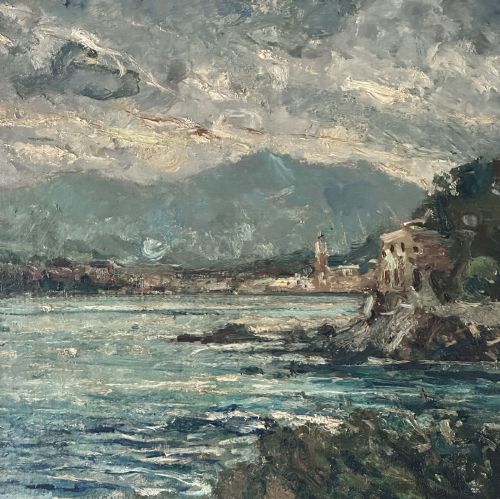
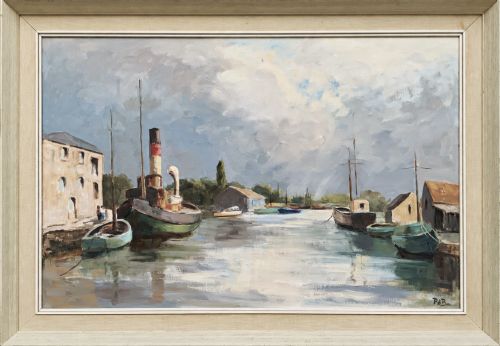
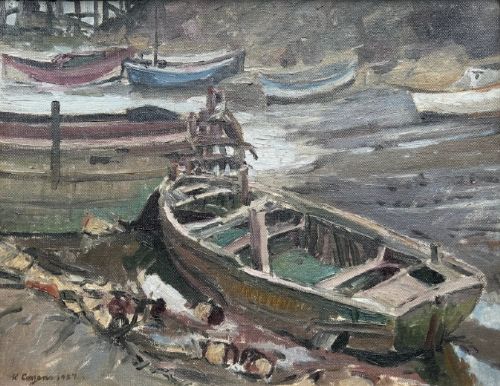
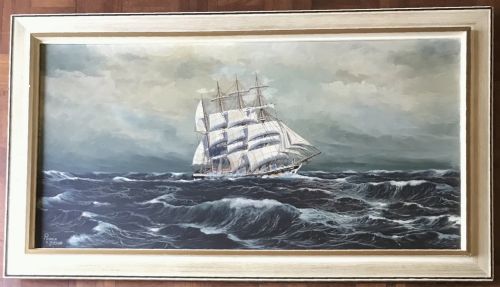
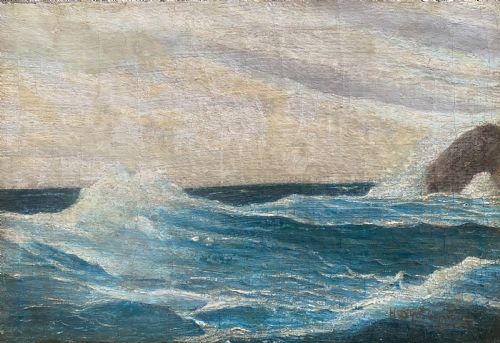


Grey Seascape Oil Painting
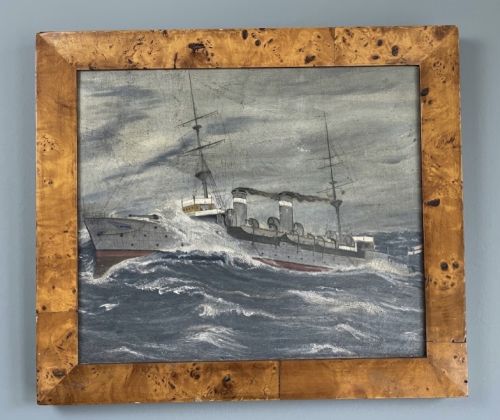
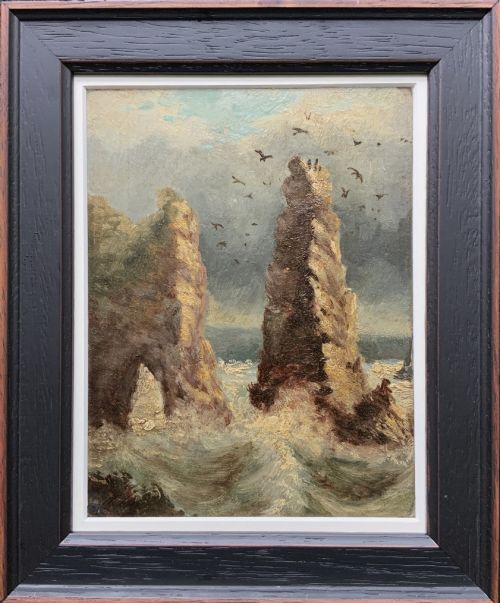
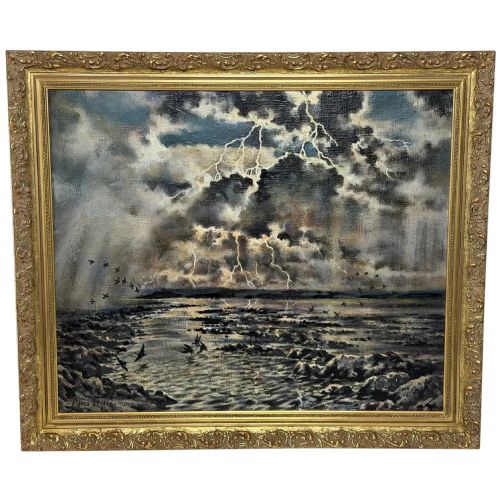
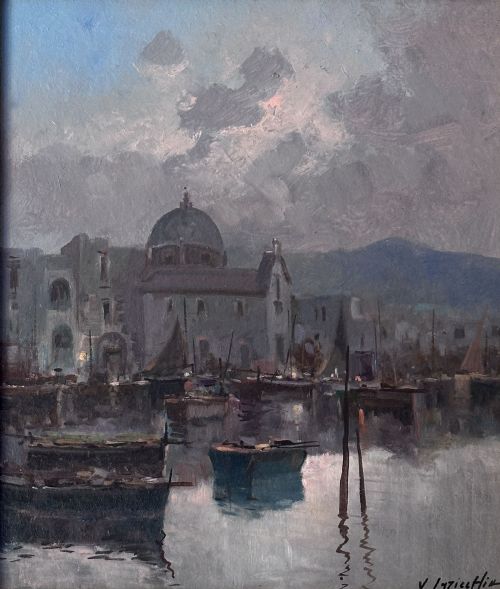
When you search for a grey seascape oil painting, you are looking at coastal scenes rendered in muted tones of slate, charcoal and silver.
Grey Seascape Oil Painting
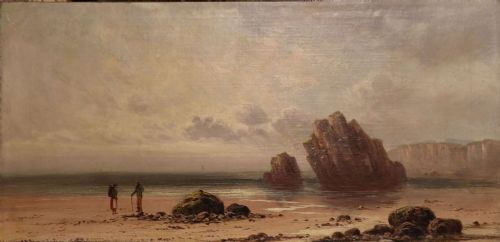
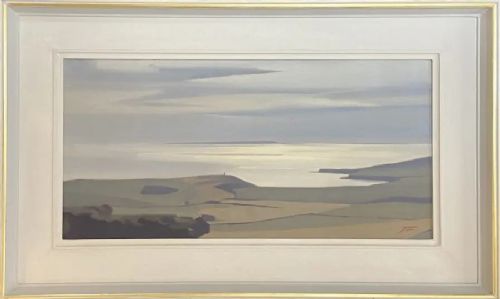
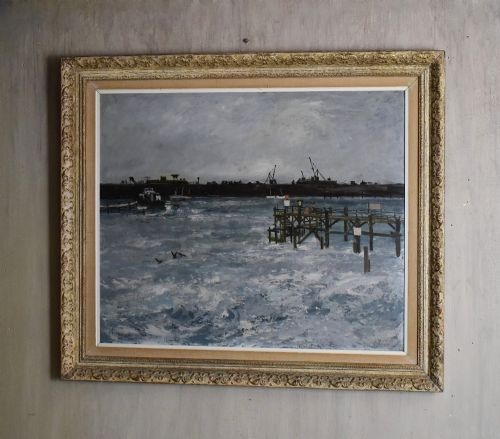
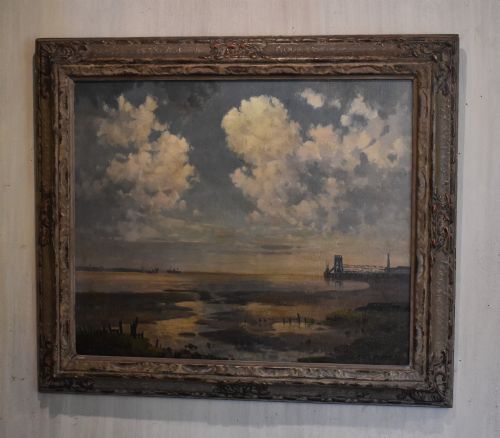
A grey seascape oil painting captures maritime views, turbulent waters, and coastal shores through the lens of nineteenth and twentieth-century movements. The selection on this page ranges from Victorian marine art and British Impressionism to mid-century modern and post-war British interpretations.
The subjects span moody harbours, stormy seas, and quiet estuaries executed by artists working across Britain, France, Belgium, and Russia. Buyers will encounter works dated from the Victorian era through the 1950s, created on both stretched canvas and wooden board.
How they were made
These works rely on oil paint applied to prepared canvas or wood panels, sometimes building up thick impasto to convey the texture of churning waves. Painters utilised brushes and palette knives to mix cool pigments directly on the support, capturing atmospheric light over water.
Many of these pieces retain their original wooden frames, often finished with gilt or painted mouldings that complement the cool palette of the marine subject matter.
Grey Seascape Oil Painting Retail Price Guide 2026
Typical asking prices for grey seascape oil painting among the pieces listed under this phrase on Sellingantiques today, from the lower quarter to the upper quarter. They describe what is for sale here now, not the wider market.
Several artists preferred painting stormy tides over calm waters, capturing the exact moment a wave hits the rocks.
What varies in quality
The distinction between works rests upon the artist's command of atmospheric perspective and tonal subtlety within a restricted colour range. Stronger examples convey deep spatial recession and movement in the water without relying on excessive detail.
Condition of the oil surface and the integrity of the original canvas or board also influence the standing of a piece. Works that retain their untouched painted surface and period framing demonstrate higher preservation.
Kenneth Cozens·Clive Browne·Peter Brannan·James Fry·Edward Henry Eugene Fletcher·William Greaves·Charles Sim Mottram·Owen Bowen·George Gregory·John Davison Liddell·Frank Myers Boggs·Fred Dade·Bertram Priestman·John W Gilroy·Henri Cadiou
The Grey Seascape Oil Painting Glossary
- Impasto
- Paint applied thickly to a canvas or board, standing out in relief from the surface. This technique allows the artist to build physical texture into crashing waves or cloudy skies.
- Canvas
- A closely woven heavy cloth used as a surface for oil painting. It is typically stretched across a wooden frame before being painted upon.
- Board
- A rigid wooden panel utilised as a sturdy alternative to stretched canvas. Painters often applied oils directly to these prepared surfaces during the twentieth century.
- Gilt
- A thin layer of gold leaf or gold paint applied to wooden picture frames. It adds a warm metallic contrast to the cool tones of a grey marine scene.
- Maritime art
- Works of art that depict or draw inspiration from the sea, ships, and coastal environments. This genre encompasses both calm harbour scenes and dramatic shipwrecks.
Grey Seascape Oil Painting: Frequently Asked Questions
What periods do these paintings come from?
The works span from the nineteenth century through the mid-twentieth century, encompassing Victorian maritime pieces alongside later modernist interpretations.
Creators worked across different decades, reflecting shifting artistic approaches to coastal landscapes from the 1800s to the 1950s.
Where were these maritime scenes painted?
The paintings depict coastal locations across Britain, France, Spain, and Belgium, recording specific harbours, estuaries, and open seas.
Artists often travelled to working fishing ports and coastal villages to capture authentic marine environments on location.
How should I hang an oil painting?
Oil paintings on canvas or board require stable wall spaces away from direct sunlight and excessive humidity. Proper picture wire and wall fixings suited to the weight of the frame ensure secure display.
Allowing adequate circulation behind the frame helps preserve the wooden stretcher and the canvas support over time.