
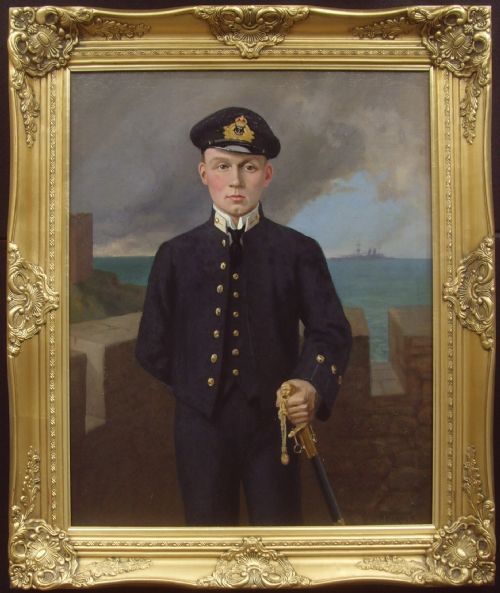
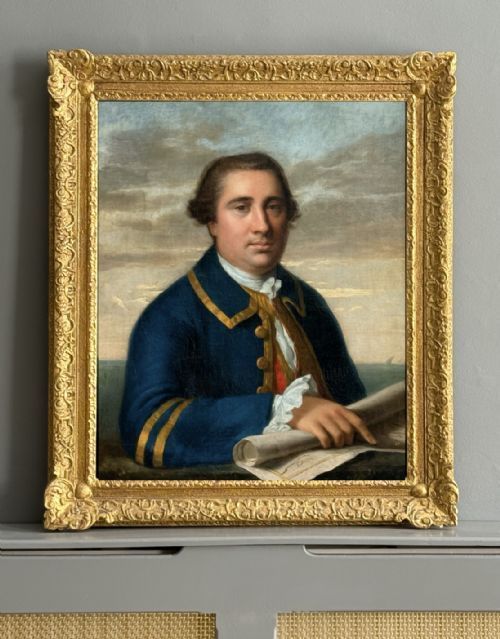


Naval Officer Oil Painting
A naval officer oil painting captures the authoritative presence of maritime commanders through centuries of portraiture.
Naval Officer Oil Painting
A naval officer oil painting depicts commanders, captains, and admirals ranging from the 17th century through the mid-20th century. These works document distinguished military careers across various periods including the Georgian, Regency, and Victorian eras.
The most common subjects encountered here are uniformed commanders captured in formal canvas portraits. Many examples portray named historical figures associated with significant British naval campaigns and royal service.
Materials and technique
Artists painted primarily with oil paint on stretched canvas supports. The application of oil pigment allowed for rich tonal depth in capturing the intricate details of naval uniforms and medals.
Many historical frames utilise carved wood and gesso with giltwood finishes. These gilt frames complement the dark maritime uniforms and provide a formal presentation for fine art portraiture.
Sir Francis Drake appears here alongside Georgian captains, reminding us that naval portraiture includes history's most famous privateers and explorers.
Distinctions in quality
Quality rests upon the artist's ability to render the sitter's likeness and expression convincingly. Works executed by accomplished portraitists display superior command over facial anatomy and fabric texture.
The sophistication of the composition and the preservation of the original oil pigment dictate the distinction between standard provincial works and important historical pieces.
LEMUEL FRANCIS ABBOTT·John Simmons·Sir Thomas Lawrence·George Frederick Clarke·Henry L Gates·John Laviers Wheatley·Maurice Codner·Robert Ker Porter·Ambrosini Jerome·Richard Hall
The Naval Officer Oil Painting Glossary
- Oil on canvas
- A traditional painting technique utilising pigment suspended in drying oil applied to a woven fabric support stretched across a wooden frame.
- Giltwood
- Wood that has been coated with gold leaf or a thin layer of gold paint, frequently seen on historical picture frames.
- Gesso
- A paint mixture consisting of a binder mixed with chalk, gypsum, or pigment, used to prepare wood surfaces for gilding.
- Portraiture
- The art or practice of creating portraits, particularly those focusing on individual human subjects and their official attire.
Naval Officer Oil Painting: Frequently Asked Questions
What periods do these paintings cover?
The available artworks span from the seventeenth century through to the mid-twentieth century. This timeline covers Elizabethan explorers up to modern royal naval commanders.
Most pieces originate from the eighteenth and nineteenth centuries, reflecting prominent eras of maritime expansion and conflict.
How are the subjects identified?
Subjects are frequently identified through historical records, inscriptions, or detailed depictions of specific uniform insignia and orders.
Many portraits record the names and titles of notable admirals, captains, and royal figures directly within the historical documentation.
Where should I hang an oil painting?
These portraits require stable indoor environments away from direct sunlight and excessive humidity to protect the canvas and oil medium.
Displaying them on solid interior walls allows the giltwood frames and dark maritime tones to anchor a room's decor.
What uniforms do the officers wear?
The sitters appear in period-appropriate military attire ranging from early merchant navy coats to formal nineteenth-century naval jackets and admiral uniforms.
Details often include medals, swords, torches, and specific orders such as the Order of St. Louis.