


Naval History Artwork
Naval history artwork brings historic sea battles, famous vessels and commanders straight to your walls through oil paintings, watercolours and engravings.
Naval History Artwork
Naval history artwork captures the dramatic stories of fleets, sea battles and notable commanders through oil paintings, watercolours and engravings. These pieces record maritime heritage from the eighteenth century up to the mid-twentieth century.
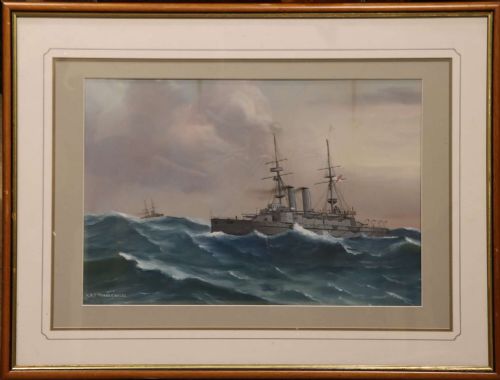
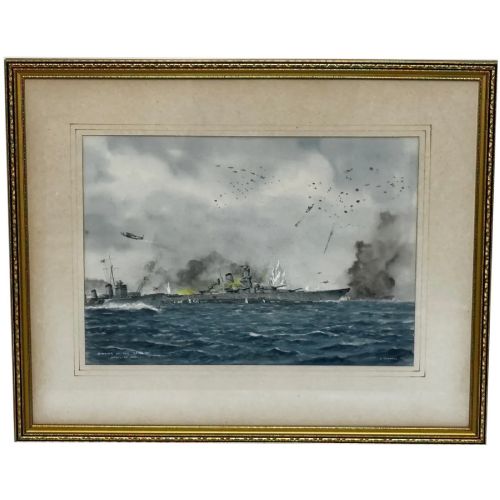
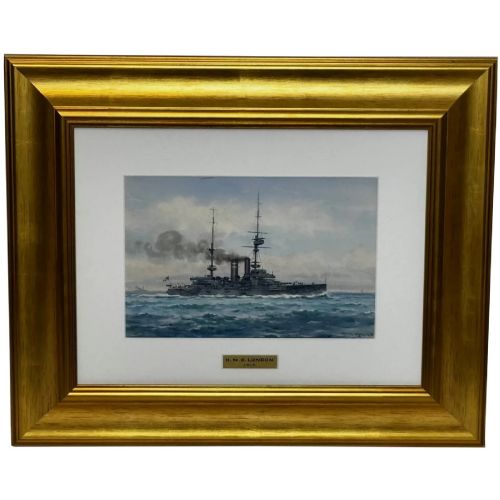
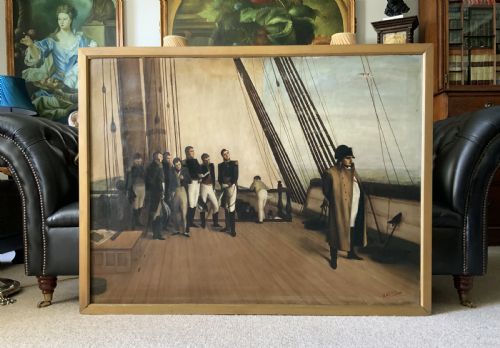
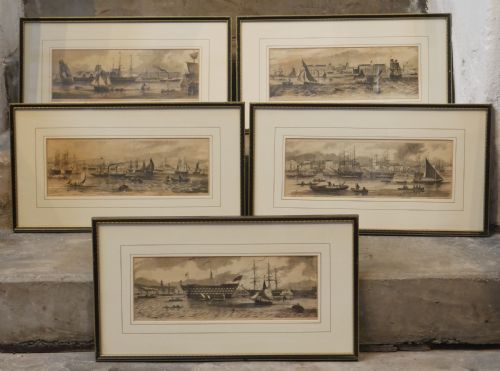
Buyers most frequently meet nineteenth-century oil paintings, Victorian nautical scenes and early twentieth-century watercolours depicting specific vessels like HMS Prince of Wales or HMS London. Portraits of admirals and captains also appear alongside depictions of frigate maneuvers and port scenes.
How they were made
Artists painted these marine subjects using oil paint on canvas or wood panels, alongside gouache and watercolour on paper. Engravings provide another method utilised to record naval docks and maritime events for broader distribution.
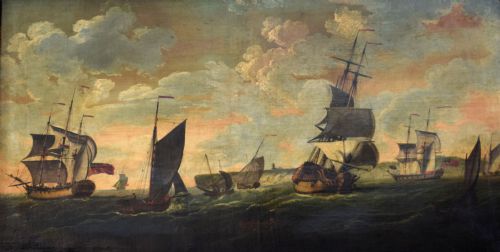
Works on paper typically feature watercolour or gouache applied delicately to capture sea spray and rigging detail. Oil paintings on canvas employ layered pigments to render deep ocean tones and atmospheric skies above historic fleets.
Materials recorded across these artworks include oil paint, canvas, wood, paper, glass, watercolour and gouache.
What varies in quality
The standard of naval history artwork depends upon the artist's command of maritime anatomy, rigging accuracy and historical context. Works by known marine painters display a surer handling of wave motion and vessel perspective than unsigned pieces by the English school.
Materials and medium condition also separate standard decorative prints from fine original oil paintings and detailed period watercolours. The precision in portraying specific naval vessels and portraits elevates certain works above standard maritime records.
Eric Tufnell·Frank Watson Wood·John Simmons·Maurice Codner·Sir William Charles Ross·Francis Holman
The Naval History Artwork Glossary
- Gouache
- An opaque water-based paint that dries to a matte finish, frequently utilised in maritime watercolours for vivid highlights on sails and sea foam.
- Frigate
- A fast, medium-sized warship with three masts, commonly featured in eighteenth and nineteenth-century marine paintings and coastal views.
- Engraving
- A printmaking technique where an image is incised into a metal plate, allowing multiple detailed impressions of naval docks and historic scenes.
- Maritime realisms
- An artistic style focused on accurate depiction of ships, naval engagements and coastal topography without romantic exaggeration.
- Watercolour on paper
- A translucent painting medium applied to paper supports, favoured by artists for capturing atmospheric skies and marine conditions quickly.
Naval History Artwork: Frequently Asked Questions
What is naval history artwork?
Naval history artwork comprises paintings, watercolours, drawings and engravings that depict historic warships, sea battles, naval commanders and maritime scenes. These pieces serve as visual records of naval operations and maritime heritage from the eighteenth century through to the mid-twentieth century.
Collectors find everything from detailed watercolours of specific vessels like HMS London to grand oil paintings capturing sea battles and portraits of admirals. Each piece documents a distinct era of naval architecture and maritime tradition.
How do I date an antique marine painting?
Dating a marine painting involves examining the style of the vessel, the clothing of any figures, the artist's signature and the materials used such as canvas, wood or paper. Rigging styles and ship designs changed significantly between the eighteenth century and the mid-twentieth century, offering clear chronological clues.
Historical subjects often depict specific documented events or newly launched warships, which helps narrow down the period of creation. Attributions to known marine artists further clarify the likely date of execution.
How were maritime watercolours created?
Maritime watercolours were created by artists applying water-soluble pigments and gouache onto paper supports to capture ships at sea. This medium allowed painters to work with speed and precision when recording changing weather conditions, rigging details and coastal topography.
Artists often combined watercolour with ink or gouache highlights to add depth to churning waves and billowing sails. These works were usually framed behind glass to protect the paper from moisture and light damage.
Where should I hang maritime art?
Maritime art suits rooms with stable light and humidity away from direct sunlight, which can fade watercolours and gouache over time. Traditional studies, libraries and living spaces complement the dark wood tones and nautical themes often found in these historical pieces.
Framing with conservation-grade glass helps preserve works on paper such as engravings and watercolours. Oil paintings on canvas require simple dusting and protection from extreme temperature shifts to maintain their condition.