


19th Century Naval Oil
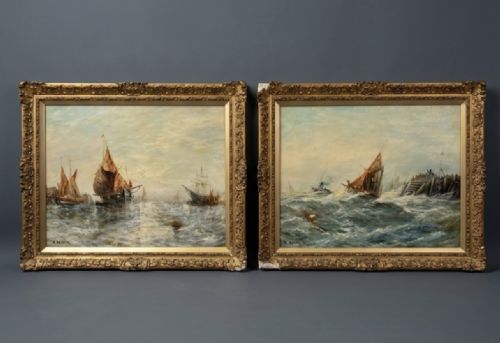
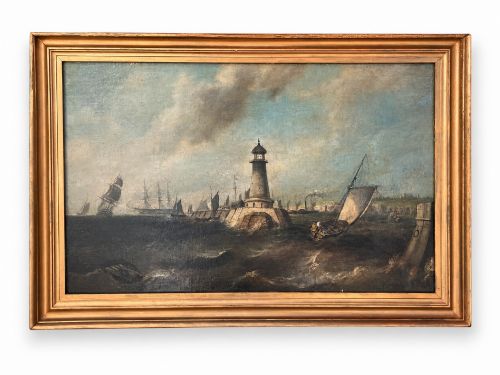
These 19th century naval oil paintings depict historic warships, maritime battles, and naval officers, offering collectors authentic records of sea power and maritime heritage.
19th Century Naval Oil
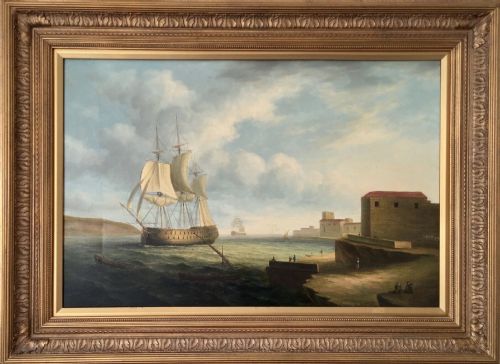
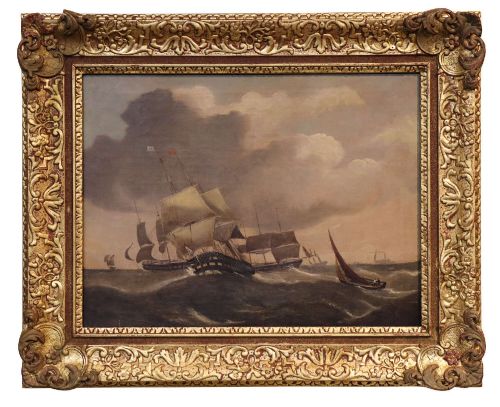
When searching for 19th century naval oil, a buyer encounters marine art capturing warships, royal yachts, and pivotal engagements on the water. These works document specific vessels such as frigates, schooners, and galleons, often anchored off historical harbours or navigating heavy seas.
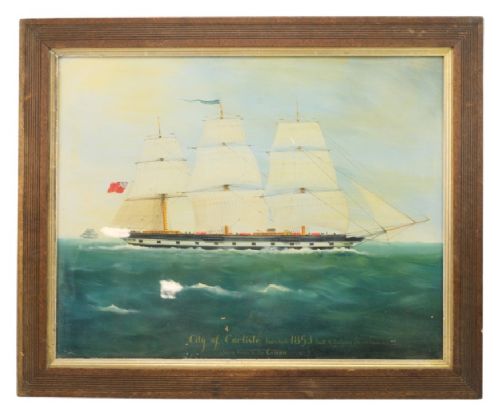
The most common pieces on this page span the Victorian and Regency periods, featuring both bustling coastal scenes and formal portraits of naval officers and admirals. Canvases and panels record historic ships like the Thermopylae and HMS Bombay, executed by named artists and anonymous English or Anglo-Chinese schools.
Materials and construction methods
Artists utilised oil paint on stretched canvas, wooden panels, and board to build up rich marine compositions. These works frequently incorporate framing in giltwood or gold leaf, enhancing the maritime subject matter.
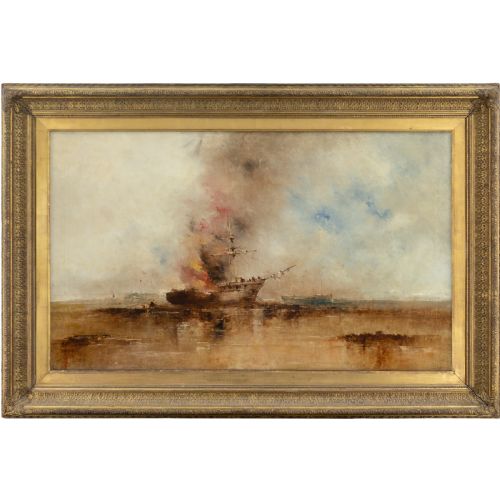
Brushwork ranges from detailed maritime portraiture of naval officers to expressive depictions of choppy waters and burning ships. Pigments capture the atmospheric conditions of the English coast, foreign harbours, and open seas.
Materials documented across the collection include oil paint, canvas, wood panels, gold leaf, and giltwood frames.
Factors influencing quality
Quality rests upon the precision of the ship's rigging and hull structure, alongside the artist's ability to render the movement of water and atmospheric light. Works attributed to identified painters or professional marine circles typically display superior handling of perspective and historical detail.
The integration of the subject within its environment distinguishes standard decorative works from accomplished fine art. Surviving original frames in giltwood also contribute to the integrity of the piece.
James Hardy·William McAlpine·Nicholas Condy·Marie-Edouard Adam·Ebeneezer Colls·Richard Brydges Beechey·William Langley·George Frederick Clarke·Samuel Lane·Robert Ker Porter·Ambrosini Jerome
The 19th Century Naval Oil Glossary
- Giltwood
- Wood carved and covered with a thin layer of gold leaf or gold paint. This finish frequently borders period marine oil paintings to complement the subject.
- Panel
- A flat piece of wood used as a rigid support for oil paint instead of stretched canvas. Several 19th century maritime scenes utilise board or panel substrates.
- Frigate
- A warship with a mixed armament built for speed and manoeuvrability. These vessels appear frequently in naval oil paintings off the English coast.
- Schonnner
- A sailing vessel with two or more masts and fore-and-aft sails. Naval schooners are a common subject in Victorian maritime art.
19th Century Naval Oil: Frequently Asked Questions
How do I identify naval portraits?
Naval portraits depict officers and admirals in official uniforms, often holding swords, documents, or telescopes against a backdrop of coastal fortifications or sea engagements. Inscriptions on the canvas or frame frequently identify the sitter and their rank.
Background details such as distant warships or signal flags provide further context to the naval career of the subject portrayed.
What subjects appear in these paintings?
The selections encompass active naval warfare, burning ships, royal yachts, and named merchant clippers under sail. Scenes range from local coastal views off Plymouth and Malta to historic naval battles.
Individual portraits of admirals and junior officers also feature prominently alongside depictions of specific schooners, frigates, and steam ships.
How should I display marine art?
These oil paintings suit traditional studies, libraries, or living spaces with stable humidity and indirect lighting. Protecting the canvas from direct sunlight preserves the oil pigments and the integrity of the original giltwood frame.
Mounting the piece securely on a wall away from heat sources ensures the wood panel or canvas remains stable over time.
What periods do these paintings cover?
The works primarily date from the nineteenth century, spanning the Regency and Victorian eras through the early nineteen-hundreds. Artists recorded contemporary naval developments as well as retrospective views of earlier engagements.
Dates within the evidence extend from the early 1800s through the Victorian period and into the twentieth century.