


Historical Sailing Vessel Art
Historical sailing vessel art captures the maritime heritage of past centuries through oil paintings, watercolours, and lithographs depicting ships at sea and in harbour.
Historical Sailing Vessel Art
Historical sailing vessel art comprises visual works depicting ships, harbours, and coastal scenes from past eras, spanning the eighteenth, nineteenth, and twentieth centuries. Buyers searching for these pieces encounter diverse forms including oil paintings on canvas, watercolours on paper, and lithographs.
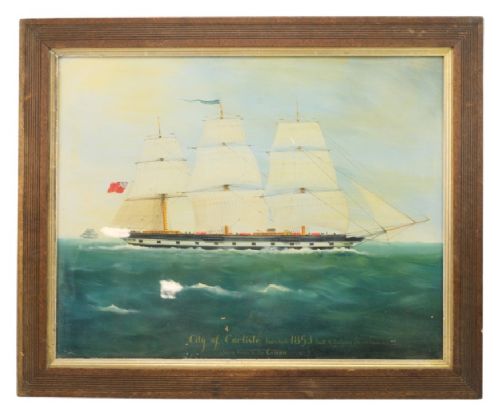
The selections on this page draw from British, Scottish, and Belgian schools, alongside works attributed to specific artists such as Samuel Owen and Richard Ball Spencer. Subjects range from named vessels like the City of Carlisle and the Mary Wylie to broader harbour and coastal views from the Georgian and Victorian periods.
Nineteenth-century maritime art dominates the selection, reflecting the high volume of marine painting produced during the height of the age of sail. Buyers frequently find works capturing specific regional waters, such as the English coast, Portsmouth harbour, or Scottish shores.
Materials and technique
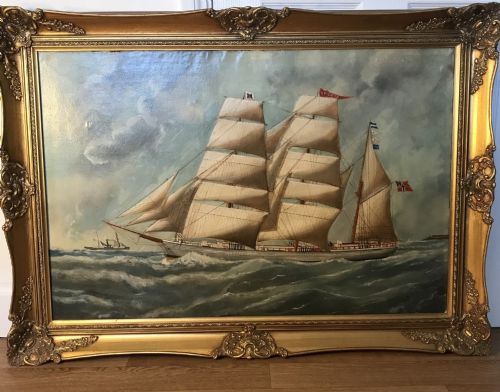
Artists working within historical sailing vessel art relied primarily on oil paint applied to canvas or board, alongside watercolour on paper and printed lithography. Ground pigments mixed with oil allowed for layered application to render the turbulent textures of water and the intricate rigging of three-masted schooners and barques.
Support materials reflect the period of production, utilising woven canvas stretched over wooden frames or heavy paper stocks for watercolours. Frames often incorporate giltwood and gold leaf, matching the traditional presentation styles of the Georgian and Victorian eras.
The inventory includes named vessels, coastal figures, harbour scenes, and multi-position frigate studies by British and Belgian artists.
Evaluating quality
Quality in historical sailing vessel art rests upon the artist's technical understanding of maritime architecture, rigging, and nautical perspective. Works by accomplished painters demonstrate precise delineation of hull construction and sail trim against atmospheric skies and water.
The handling of light and movement distinguishes finer pieces from standard decorative works, particularly in how artists capture the roll of a frigate or the calm of a harbour scene. Attribution to recorded makers or identifiable schools also elevates the standing of a piece within the field.
George Shaw·Samuel Owen·Frank Wood·Paul Jean Clays·Richard Ball Spencer
The Historical Sailing Vessel Art Glossary
- Barque
- A sailing vessel with three or more masts having the fore and main masts square-rigged and the mizzenmast fore-and-aft rigged. This configuration was common for merchant trading ships during the nineteenth century.
- Frigate
- A warship built for speed and manoeuvrability, typically carrying a single continuous gun deck. In maritime art, frigates often appear depicted in multiple positions or engagements off the coast.
- Lithograph
- A print produced by a printing process based on the incompatibility of oil and water, utilising a stone or metal plate. Sets of these prints were popular for recording naval vessels and coastal scenes.
- Seascape
- A work of art depicting the sea, coastal views, or marine vessels in motion. These compositions focus heavily on the atmospheric conditions of weather and water.
- Watercolour
- A painting method in which the paints are made of pigments suspended in a water-based solution, typically executed on paper. This medium was frequently used for detailed harbour views and preliminary sketches.
Historical Sailing Vessel Art: Frequently Asked Questions
What periods do these paintings cover?
The works span from the eighteenth century through the nineteenth and into the mid-twentieth century. Most examples date from the Victorian and Georgian maritime eras.
Selections include dated pieces from 1800, 1837, 1860, and 1914, reflecting changing styles in marine art over two centuries.
Are all the pieces original oil paintings?
While oil paintings on canvas form the majority of the selection, other mediums are represented. Buyers will also find antique watercolours and nineteenth-century lithograph sets.
Support materials range from wood and canvas to paper, occasionally housed in period giltwood frames with gold leaf.
How do I identify a named ship in a painting?
Many historical marine paintings depict specific vessels documented by inscriptions on the canvas, stretcher, or accompanying records. Ships like the Mary Wylie or the City of Carlisle often carry specific historical context related to trade or military transport.
Artists frequently recorded the exact names of merchant barques, fishing boats, and frigates alongside regional landmarks such as Portsmouth harbour or the Tamar.
How should I display maritime art at home?
Historical maritime art suits traditional interiors, particularly libraries, studies, or living spaces with period architectural details. The giltwood frames often found on these oil paintings pair well with classic wall finishes and wood furnishings.
Placement should avoid direct sunlight to protect oil pigments, canvas supports, and delicate watercolours on paper over time.