
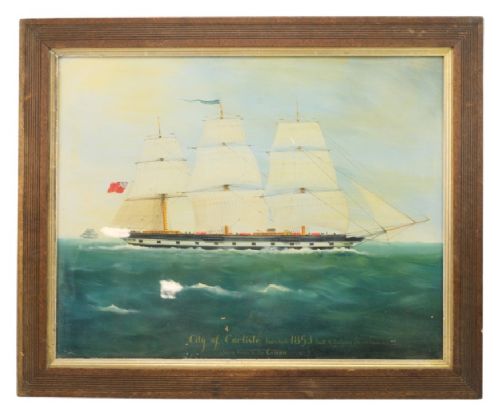


English School Marine Art
English school marine art captures the enduring power of the sea through historical paintings and watercolours that bring maritime history directly into your home.
English School Marine Art
When you search for english school marine art, you encounter a focused selection of coastal landscapes, dramatic seascapes, and historical vessel portraits spanning several centuries. The pieces available on this page primarily consist of oil paintings and watercolours originating from the eighteenth, nineteenth, and early twentieth centuries. These artworks depict specific coastal regions, bustling rivers, and stormy waters with distinct regional associations.
You are most likely to meet nineteenth-century works representing British maritime subjects, from turbulent open seas to calmer river views like the Medway. The selection includes framed country house canvases alongside delicate watercolours on paper, capturing both grand naval scenes and humble fishing boats. Each piece reflects the artistic output of British painters working within recognised historical periods such as the Regency and Victorian eras.
How they were made
The physical foundation of these artworks relies heavily upon oil on canvas, oil on card, and watercolour on paper, framed by traditional materials such as wood, gold leaf, giltwood, and gesso. Painters applied pigments to primed canvas or prepared card to capture transient effects of light and weather upon the water. Watercolour works utilised diluted pigments on paper to achieve luminous skies and translucent coastal atmospheres.
Presentation played a vital role in the creation of these pieces, with heavy giltwood and gesso frames providing structural dignity and visual containment. The combination of carved wood and gold leaf ornamentation elevated domestic wall art into significant decorative statements suitable for period interiors.
Listings feature works spanning the eighteenth, nineteenth, and early twentieth centuries, executed in oil and watercolour.
What varies in quality
The primary distinction across these works lies in the handling of atmosphere, maritime accuracy, and the sophistication of the surrounding frame. Superior examples demonstrate a confident command of light and movement in turbulent seas or coastal light, whereas lesser pieces rely on formulaic repetition without atmospheric depth. The articulation of rigging, hull construction, and topographical detail separates master observers from routine practitioners.
Material preservation further differentiates the range, particularly the stability of the canvas or paper and the integrity of the original giltwood and gesso frames. Works attributed to documented hands or specific regional traditions naturally command greater scholarly interest than anonymous school pieces.
George Morland·William Wyld·Percy Brooke·Thomas Bush Hardy·Edmund John Niemann·Henry Bright
The English School Marine Art Glossary
- Giltwood
- Wood carved and coated with gold leaf for decorative framing. This traditional technique provides a bright, reflective border that enhances the colours within the painting.
- Gesso
- A plaster-like mixture applied to wooden frames as a smooth base for gilding. It allows craftsmen to model intricate decorative reliefs before applying gold leaf.
- Watercolour
- A painting method using water-soluble pigments on paper. This medium creates transparent washes that capture delicate shifts in coastal light and weather.
- Frigate
- A historical warship with three masts used extensively during the sail era. Depictions of these vessels demand precise knowledge of naval architecture.
- Seascape
- A work of art depicting the sea, coastlines, or marine vessels. These compositions focus on maritime weather, tides, and nautical activities.
English School Marine Art: Frequently Asked Questions
What is english school marine art?
It encompasses oil paintings and watercolours created by British artists focusing on coastal scenes, naval vessels, and maritime landscapes. These works document the historical relationship between Britain and the sea.
They reflect shifting artistic styles from the eighteenth century through to the early twentieth century, capturing both dramatic coastal weather and tranquil river vistas.
How were these marine paintings displayed?
Historically, these artworks hung in grand country houses and domestic interiors within heavy giltwood and gesso frames. The ornate framing elevated the status of the maritime subject matter.
Today, they function as focal points in traditional or eclectic room schemes, bringing historical depth and coastal atmosphere to domestic walls.
How do I identify a nineteenth-century piece?
Nineteenth-century works often display specific stylistic markers associated with the Victorian era, including detailed rigging on vessels and dramatic atmospheric effects. The supporting materials, such as canvas mounted on stretchers or card, align with period manufacturing methods.
Signatures, artist attributions, and framing styles frequently provide further clues to the precise decade of creation.