
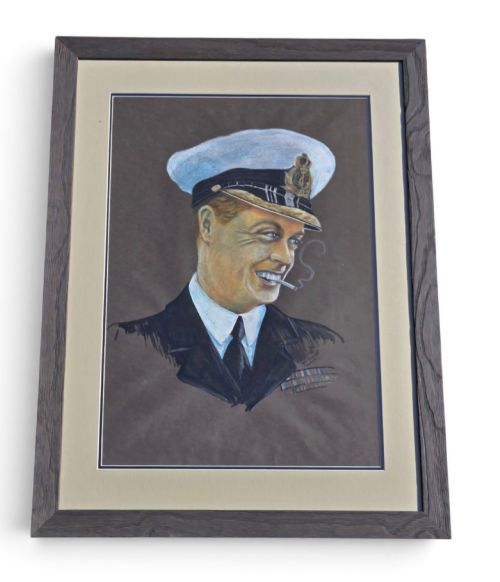


British Naval Officer Painting
A british naval officer painting captures the authority and maritime history of the Royal Navy through centuries of portraiture.
British Naval Officer Painting
A british naval officer painting depicts commanders, admirals and officers who served at sea, often dressed in formal uniform to record their rank and service. The selections on this page span several centuries, including works from the 17th century through to the mid-20th century.
Buyers encounter different formats within these listings, ranging from large oil on canvas portraits to intimate enamel and watercolour miniatures on agate or paper. These artworks frequently identify specific historical figures, such as admirals and fleet commanders.
The styles shift across the periods represented, moving from Elizabethan and Georgian works to Regency, Victorian, Art Deco and mid-century portraiture. Each piece reflects the artistic conventions of its specific decade.
Materials and Construction
Miniatures demanded specialised techniques, utilising delicate enamel or painting directly onto agate panels. These small formats were frequently housed in precious metal frames, such as gold, featuring protective glass covers.
The listings span eight distinct periods, stretching from the 17th century through to the 1950s.
Assessing Quality and Execution
Quality rests in the precision of the facial likeness and the detailed rendering of the naval uniform, medals and regalia. Skilled portraitists captured the individual character and social standing of the sitter rather than relying on standard templates.
The distinction between a workshop piece and a work by a named Royal Academician lies in the handling of light, brushwork and composition. Original framing, particularly period gold settings for miniatures, preserves the integrity of the object.
Henry Bone ARA·Sir Thomas Lawrence PRA·George Frederick Clarke·Henry L Gates·Samuel Lane·John Laviers Wheatley·Maurice Codner·Robert Ker Porter·Ambrosini Jerome·Richard Hall·Herskind
The British Naval Officer Painting Glossary
- Agate panel
- A thin slice of semi-precious stone used as a stable, smooth painting surface for portrait miniatures.
- Enamel miniature
- A small painting created by fusing powdered glass pigments to a metal base through firing.
- Oil on canvas
- Pigments bound with an oil medium applied to a stretched woven fabric support.
- Portrait miniature
- A highly detailed, small-scale portrait designed for intimate viewing or personal carriage.
- Royal Academician
- An artist elected as a full member of the Royal Academy of Arts in London.
British Naval Officer Painting: Frequently Asked Questions
How do I identify the rank of the officer?
Officers can often be identified by the specific details of their naval uniform, including lace, epaulettes and insignia visible in the portrait. Contemporary inscriptions or historical documentation recorded on the frame or reverse also provide confirmation of rank.
Many listings name the specific historical figure depicted, allowing buyers to cross-reference naval records and service histories.
What is the difference between a full-scale painting and a miniature?
Full-scale works are typically executed in oil on canvas and were designed for display in grand rooms, boardrooms or institutional galleries. They offer broad visibility of the sitter's uniform and background setting.
Miniatures are painted on a much smaller scale using enamel, watercolour or oil on surfaces like paper or agate, intended for close inspection or personal possession.
How should I care for an antique oil painting?
Antique oil paintings require stable environmental conditions away from direct sunlight, excessive heat and sudden humidity changes. Maintaining a consistent room temperature prevents the canvas and paint layers from cracking.
Dust should be removed gently with a soft, dry brush, avoiding any liquid cleaners or chemical solvents on the paint surface.
Are all these portraits painted from life?
Some portraits are official sittings captured directly from life by contemporary artists, while others are posthumous tributes or studio copies. Commissioned works by noted portraitists are more likely to be direct studies of the sitter.
Provenance notes and artist biographies help establish whether a work was painted during the lifetime of the naval officer.