


Naval Officer Portrait
A naval officer portrait captures the authority and service of figures at sea across centuries of maritime history.
Naval Officer Portrait
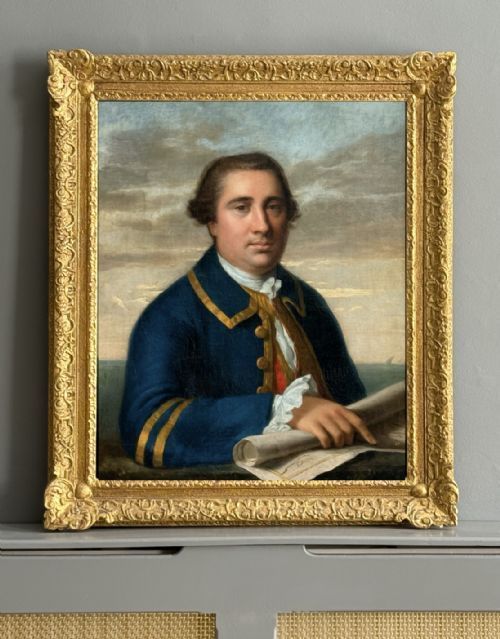
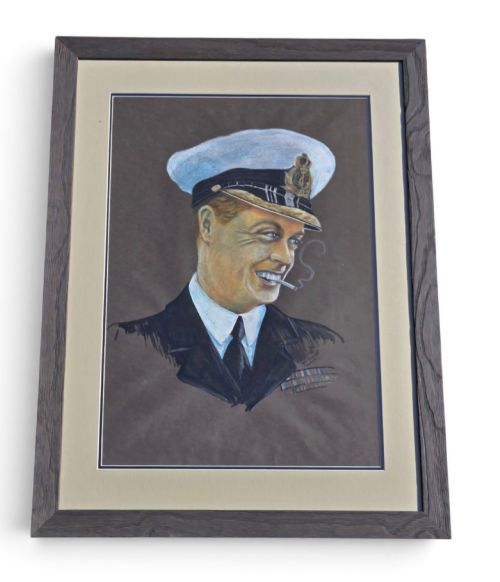
A naval officer portrait records the likeness and uniform of commanders, captains, and admirals from the seventeenth century through to the mid-twentieth century. These works range in scale from large oil paintings on canvas down to intimate portrait miniatures rendered on agate panels or paper.
The versions most commonly met on this page span the eighteenth and nineteenth centuries, reflecting Georgian and Victorian periods alongside occasional modern depictions. Subjects appear in formal service dress, sometimes holding telescopes or swords to denote their maritime rank.
Materials and Techniques
Artists deployed oil paint upon canvas and wood panels to build up deep tones for uniforms and background seas, often applying fine glazes for facial details. Watercolours and pastels on paper appear in smaller works, alongside detailed enamel miniatures.
Framing forms an integral part of these pieces, utilising carved wood, gilt surrounds, and specialist mountings such as gold frames for portrait miniatures.
Naval Officer Portrait Retail Price Guide 2026
Typical asking prices for naval officer portrait among the pieces listed under this phrase on Sellingantiques today, from the lower quarter to the upper quarter. They describe what is for sale here now, not the wider market.
Several naval commanders insisted on posing with their trusty telescopes tucked firmly under their arm.
Assessing Quality and Execution
The preservation of the paint surface and the originality of the frame influence the standing of each piece, distinguishing studio-standard works from simpler decorative renderings.
LEMUEL FRANCIS ABBOTT·Henry Bone ARA·John Simmons·Sir Thomas Lawrence PRA·George Frederick Clarke·Henry L Gates·Samuel Lane·John Laviers Wheatley·Maurice Codner·Robert Ker Porter·Ambrosini Jerome·Richard Hall·Armand Pallière
The Naval Officer Portrait Glossary
- Portrait miniature
- A small-scale painting executed with high precision on materials such as ivory, paper, or agate. These portable likenesses were frequently commissioned as tokens of affection or remembrance.
- Oil on canvas
- Pigments bound in a drying oil applied to a woven fabric support stretched across a wooden frame. This method allows for rich blending of colours and durable longevity.
- Enamel miniature
- A painting created by fusing powdered glass colours onto a metal base through firing in a kiln. This technique preserves the vibrancy of the pigment over centuries.
- Watercolour
- A painting method where fine pigment is suspended in a water-soluble binder applied to paper. It yields translucent tones suited to lighter, portable portraits.
Naval Officer Portrait: Frequently Asked Questions
What periods do these portraits cover?
The available pieces span from the seventeenth century through the Georgian and Victorian eras up to the mid-twentieth century.
This broad timeline encompasses shifting uniform styles and evolving portrait painting techniques across different maritime conflicts.
How were portrait miniatures housed?
Miniatures frequently appear in dedicated protective cases or fitted with precious metal surrounds such as eighteen-carat gold frames.
These compact formats allowed officers to carry likenesses of themselves or family members during lengthy sea voyages.
What do uniform details indicate?
Uniforms and insignia reveal the specific rank and era of the naval officer, from captain up to admiral of the fleet.
Decorations and orders painted on the subject often point to historical campaigns or royal appointments.
Are all sitters identified?
Certain works record the specific names of commanders and admirals, while others depict anonymous gentlemen in naval service.
Inscribed frames and archival records sometimes help connect an unknown sitter to a particular historical vessel or engagement.