
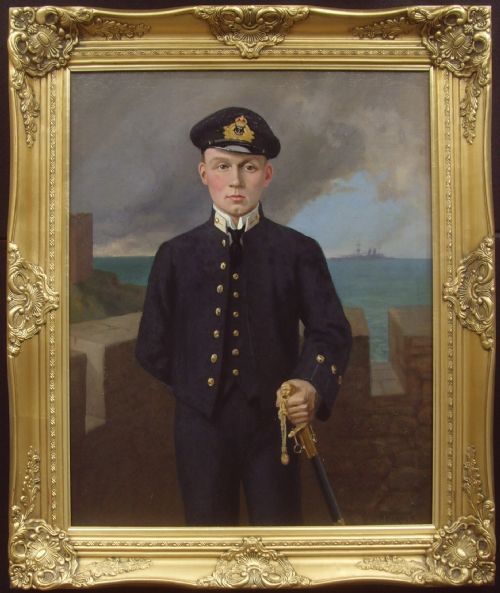


Royal Navy Oil Portrait
A royal navy oil portrait brings home centuries of maritime command, capturing officers, monarchs and vessels in oils.
Royal Navy Oil Portrait
A royal navy oil portrait captures notable figures, monarchs, naval officers and historic vessels across several periods.
You will encounter pieces ranging from Georgian maritime studies to mid-century British portraiture and twentieth-century realism.
The subjects include named commanders such as Admiral of the Fleet David Richard Beatty and Vice-Admiral Sir Henry Hotham, alongside historic ships like HMS Swift and HMS Blenheim.
Materials and construction
These works are executed in oil paint on canvas, utilising traditional canvas supports mounted on wood stretchers.
Many examples are housed within original gilt wood frames embellished with gold leaf, completing the presentation of the period.
Some naval officers served so long they likely witnessed the transition from wooden sailing ships to modern cruisers.
Judging quality and execution
Quality rests in the precision of the brushwork and the psychological depth of the sitter, distinguishing master portraitists from routine studio output.
The integration of the painted surface with its period gilt wood frame contributes significantly to the integrity of the piece.
Henry L Gates·Samuel Lane·John Laviers Wheatley·William Dring·Maurice Codner·Richard Hall
The Royal Navy Oil Portrait Glossary
- Canvas
- A heavy woven fabric used as a surface for oil painting. It is typically stretched tightly over a wooden frame before work begins.
- Gilt wood frame
- A wooden picture frame coated with gold leaf or metallic gilt. These frames often reflect the specific decorative taste of the portrait's era.
- Oil paint
- A slow-drying paint made by mixing pigments with a drying oil, most commonly linseed oil. This medium allows for rich colour blending and fine detail.
- Maritime
- Pertaining to the sea, shipping or naval matters. In art, this designates scenes depicting ships, coastal views or naval engagements.
Royal Navy Oil Portrait: Frequently Asked Questions
What periods do these portraits cover?
The selection spans from the early nineteenth century through the Victorian and Edwardian eras into the mid-twentieth century. This includes specific dates such as eighteen hundred, nineteen twenty, nineteen thirty, nineteen forty and nineteen fifty.
Each period brings distinct artistic styles, ranging from Georgian maritime depictions to mid-century British realism.
Who are the subjects in these paintings?
Subjects include crowned monarchs like King George VI and high-ranking naval officers such as admirals and vice-admirals. Notable figures depicted include Admiral of the Fleet David Richard Beatty and Prince Philip, Duke of Edinburgh.
Other works record specific vessels of the Royal Navy, including HMS Swift and HMS Blenheim.
How should I hang an oil portrait?
Select a wall with stable environmental conditions, avoiding direct sunlight and excessive humidity to protect the oil paint and canvas. Ensure the weight of the canvas and its gilt wood frame is supported securely by appropriate fixings.
Position the painting at eye level to fully appreciate the detail of the uniform and the expression of the sitter.
How do I identify the era of a frame?
Examine the construction joints, the profile of the mouldings and the application of the gold leaf. Period frames often show age-appropriate wear and construction methods matching the date of the canvas.
The style of the gilding and ornamentation typically aligns with the prevailing fashion of the portrait's execution.