

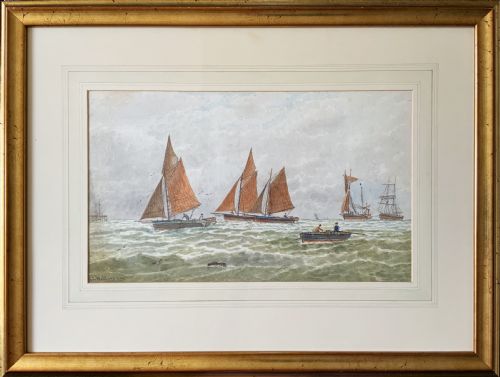
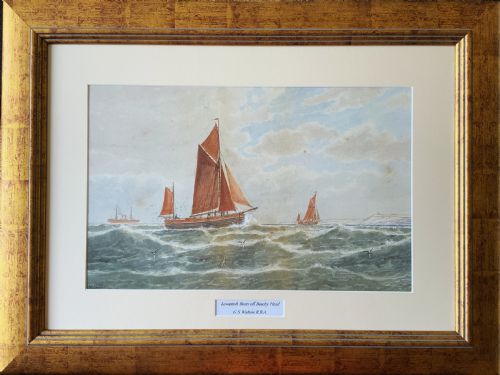


Nautical Watercolour Picture
A nautical watercolour picture captures the changing moods of the sea and harbour life, offering buyers a direct window into maritime history.
Nautical Watercolour Picture
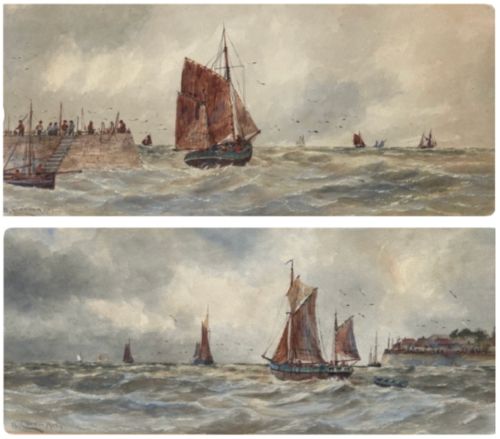
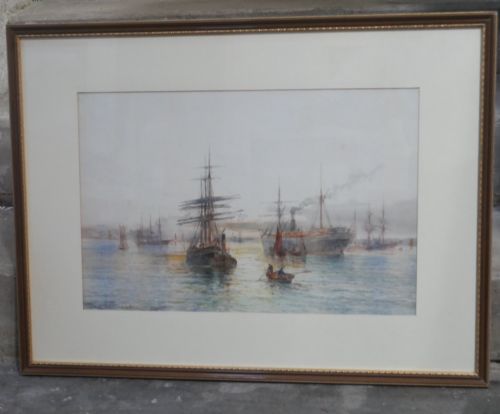
A nautical watercolour picture is a painted study of ships, coastal harbours, and open seas executed on paper. These works document vessels ranging from nineteenth-century sailing clippers and fishing boats to early twentieth-century naval craft.
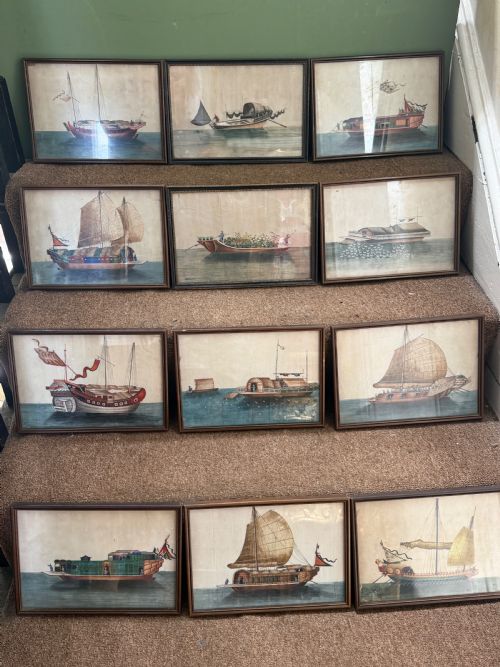
The pieces on this page span the nineteenth century through to the mid-twentieth century, encompassing Victorian and Edwardian maritime art alongside British impressionism. Common formats include framed paintings and decorative sets depicting junks, barques, and coastal scenes.
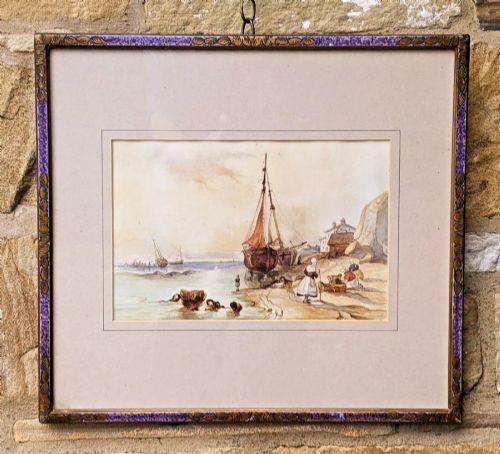
Buyers encounter individual sheets and paired works framed in wood, gilt wood, or hand-enamelled polychrome surrounds. Subjects frequently focus on specific British ports, named ships, and working coastal communities.
How they were made
Artists painted these works primarily on paper using water-soluble pigments, often combining watercolour with gouache to achieve opaque highlights on cresting waves and ship rigging. The water-based media allowed practitioners to capture translucent skies and fluid coastal light.
Many works incorporate protective glass within wooden frames, occasionally augmented by gold leaf or gilt wood moulding. Some period frames feature hand-enamelled polychrome detailing that complements the maritime palette within.
A French sailor once created a sentimental gouache tribute to his ironclad battleship, complete with detailed memories of his shipmates.
What varies in quality
Quality rests on the artist's command of maritime architecture, spatial perspective, and atmospheric conditions. Accomplished hands render rigging, hull construction, and water movement with absolute precision and spontaneity.
The strength of the composition and the clarity of the provenance separate ordinary topographical records from superior marine paintings. Works by recognised Victorian and Edwardian marine specialists demonstrate greater command over light and historical detail.
George Stanfield Walters·William Frederick Settle·Vincenzo D’Esposito·William Lee Hankey·Thomas Bush Hardy·Samuel John Milton Brown
The Nautical Watercolour Picture Glossary
- Gouache
- An opaque watercolour paint mixed with a white pigment binder. This medium allows artists to lay down solid, light-reflecting highlights on sea foam and clouds.
- Barque
- A sailing vessel with three or more masts. These large commercial ships frequently appear in late nineteenth and early twentieth-century marine art.
- Seascape
- A painting depicting the sea. These works focus on open water, coastal views, and marine weather rather than land-based subjects.
- Clipper
- A very fast nineteenth-century merchant sailing ship with multiple masts and square sails. They are prized subjects in maritime painting for their graceful hulls.
- Provenance
- The documented history of a painting's ownership and origin. Clear attribution adds historical context to named vessels and makers.
Nautical Watercolour Picture: Frequently Asked Questions
How do I date a nautical watercolour?
Dating relies on stylistic clues, artist signatures, and the type of vessel depicted in the composition. Uniforms, ship architecture, and framing materials often point to specific decades between the nineteenth and mid-twentieth centuries.
Examine any inscriptions on the reverse of the paper or frame for dates, titles, and artist locations. Documentation from galleries or estates also assists in establishing the exact period of execution.
Where should I hang a marine watercolour?
Hang these works away from direct sunlight to prevent the watercolour pigments and paper support from fading over time. Stable indoor humidity levels protect both the paper and the original wooden or gilt frames.
Position paintings at eye level in spaces with controlled lighting to appreciate the fine brushwork and delicate washes. Proper archival backing ensures the paper remains flat within the frame.
What is the difference between watercolour and gouache?
Watercolour relies on transparent pigments that allow the white of the paper to shine through the paint layers. Gouache incorporates a chalky binder that creates an opaque, matte finish suitable for solid highlights.
Many maritime artists combined both mediums on a single sheet to contrast luminous skies with solid wooden hulls and foaming water. This mixed technique defines much of the period's marine output.