


Nautical Pottery
Nautical antique pottery encompasses maritime earthenware jugs, vessels, and figures capturing the maritime trade and naval history of past centuries.
Nautical Pottery
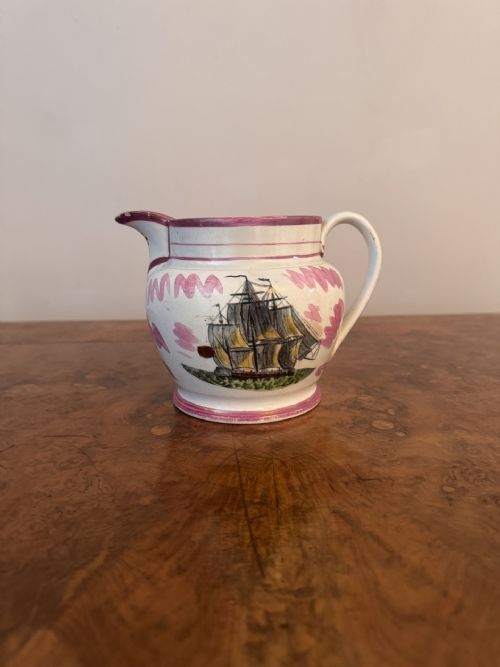
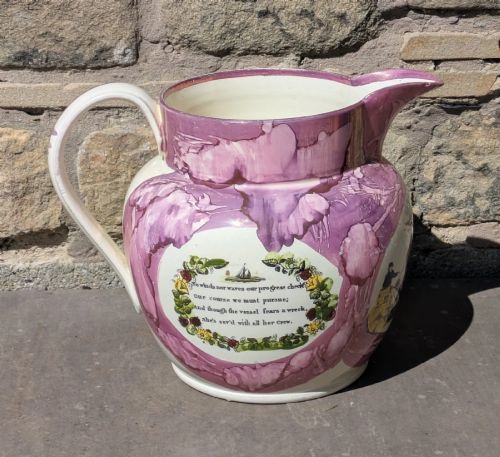
Nautical antique pottery comprises ceramic and earthenware pieces decorated with maritime themes, ships, and sailor subjects originating primarily from the eighteenth, nineteenth, and early twentieth centuries. When exploring nautical antique pottery, buyers encounter distinct forms such as large pink lustre jugs, commemorative bowls, majolica teapots, and Staffordshire pottery figures.
The selections span Georgian, Victorian, and Art Deco styles, reflecting changing tastes in maritime commemoration. Sunderland pink lustre jugs featuring tall ship designs and sailors' arms represent the most common form encountered in this category.
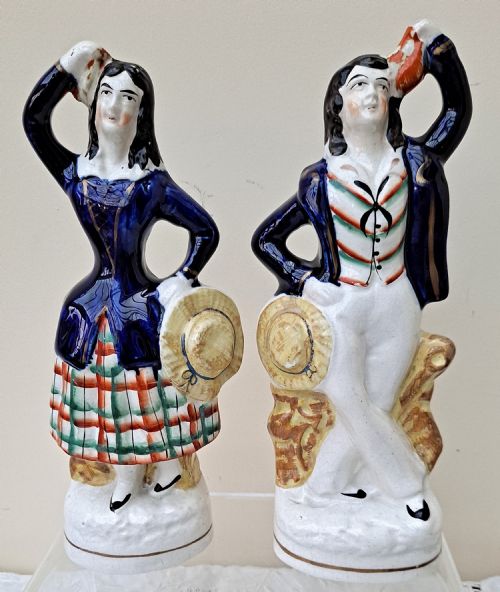
Figural pieces also feature prominently, including theatrical figures like Ben Backstay alongside Royal Navy officers' mess bowls and Liverpool Herculaneum plates. These objects served both decorative and domestic functions in coastal homes and maritime households.
Materials and production techniques
Makers utilised earthenware and ceramic bodies as the foundation for these maritime vessels and figures, shaping them by hand or mould. Artisans then applied glazes, including lead glazes and metallic oxides, to seal the porous clay and create glossy surfaces.
Decoration relied heavily on enamel painting and lustre techniques, where metallic films produced the distinctive pink or copper sheen seen on Sunderland ware. Firing in kilns fixed the metallic oxides and enamels permanently to the ceramic surface.
Listings feature earthenware and ceramic pieces spanning the Georgian, Victorian, and Art Deco periods, utilising lead glaze, enamel, and metallic oxide techniques.
Assessing quality and craftsmanship
Quality in these ceramic pieces rests on the clarity of the maritime transfer printing, the richness of the pink lustre application, and the crispness of the hand-painted enamel details. Superior examples exhibit vibrant, well-preserved pigments and sharply defined ship motifs without blurring or running in the glaze.
The modelling of Staffordshire figures and the symmetry of thrown jugs and bowls further distinguish finer pieces. Heavier earthenware bodies and more complex forms, such as large sailors' arms bowls or matched pairs of theatrical figures, demonstrate greater artisanal skill.
Robert T Lallement·Herculaneum Pottery
The Nautical Pottery Glossary
- Lustreware
- Earthenware decorated with a metallic glaze that produces an iridescent or shiny surface finish. Sunderland pink lustre is particularly known for its mottled pink appearance derived from gold or metallic compounds.
- Majolica
- A type of earthenware coated with an opaque tin-lead glaze and painted with metallic oxide colours. It creates vibrant, glossy green, brown, and blue surfaces found on nineteenth-century teapots and salad bowls.
- Staffordshire pottery
- Earthenware produced in the Staffordshire Potteries region of England, famous for figural groups and theatrical characters. These figures were slip-cast or hand-modelled and hand-painted in enamel colours.
- Transfer printing
- A method of applying engraved designs to ceramics by pressing paper stamped with metallic oxides onto the clay body. This technique allowed intricate sailing ship scenes to be reproduced consistently on jugs and plates.
- Earthenware
- Porous pottery fired at relatively low temperatures, requiring a glaze to become watertight. It serves as the primary ceramic body for the majority of nineteenth-century maritime jugs and bowls.
Nautical Pottery: Frequently Asked Questions
What is Sunderland lustre pottery?
Sunderland lustre pottery consists of earthenware jugs, plaques, and bowls produced in the North East of England during the eighteenth and nineteenth centuries. These pieces typically feature transfer-printed images of tall ships, maritime verses, and the iconic Wearmouth Bridge.
The distinctive pink metallic sheen is created through a special glazing technique involving gold or metallic solutions. They were often given as tokens to sailors or displayed in coastal homes.
What are sailors arms bowls?
Sailors arms bowls are large ceramic bowls decorated with traditional maritime symbols, flags, and verses dedicated to seafaring life. They were produced in pottery centres such as Sunderland during the nineteenth century for use in taverns and homes.
The interior and exterior often display detailed hand-painted or transfer-printed sailing ships alongside sentimental toasts. Surviving examples offer insight into maritime community culture of the period.
How do I care for antique ceramic jugs?
Antique ceramic jugs require gentle handling and should be kept away from direct sunlight to protect their enamel colours and lustre glazes. Dusting with a soft, dry cloth is usually sufficient for routine maintenance.
Avoid submerging them in water or using chemical cleaners, as this can damage the porous earthenware and nineteenth-century metallic finishes. Display them on stable surfaces away from high-traffic areas.