



Pink Splash Lustreware
Pink splash lustreware brings tactile weight and the distinct metallic shimmer of nineteenth-century maritime craft straight to your table.
Pink Splash Lustreware
Pink splash lustreware primarily consists of nineteenth-century ceramic jugs and decorative bowls originating from Sunderland. These vessels combine utilitarian earthenware forms with distinct pink splash metallic glaze effects that catch the light.
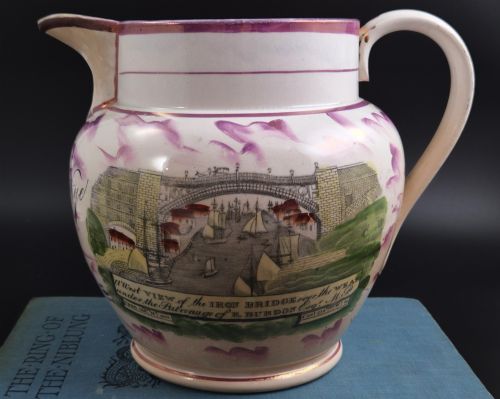
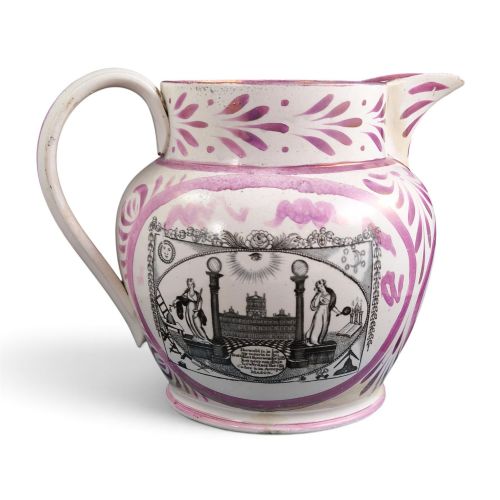
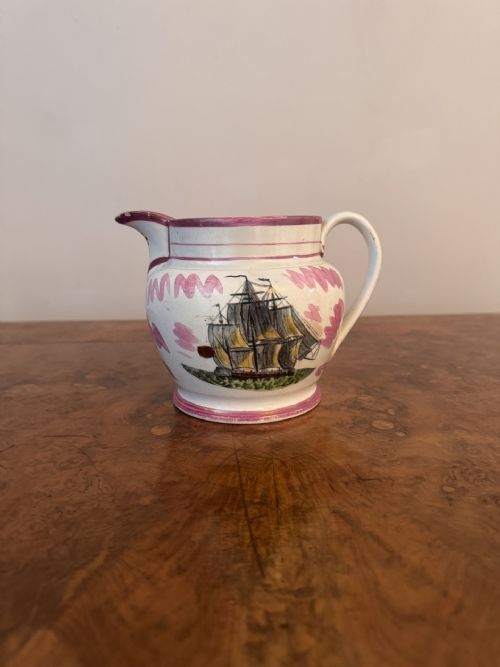
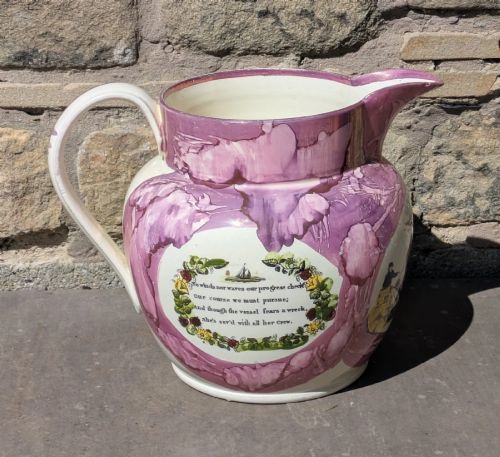
The pieces on this page heavily feature Georgian and Victorian examples, including maritime themes, Masonic prints, and poetic panels. Collectors frequently encounter large jugs and pitchers bearing transfer-printed scenes such as tall ships or the Iron Bridge over the Wear.
How pink splash lustreware was made
Potters shaped earthenware and pearlware bodies before applying metallic oxides and lustrous glazes to create the characteristic iridescent surface. Artisans then utilised transfer printing to apply detailed maritime scenes, verses, and commemorative inscriptions onto the ceramic.
Makers integrated hand-applied enamel colours alongside the metallic glaze to highlight specific details within the transfer prints, such as ship flags and poetic panels. This combination of ceramic body, glaze, and enamel defined the visual texture of the wares.
Listings span the nineteenth century, encompassing both Georgian pearlware and Victorian earthenware bodies decorated with metallic glazes and enamels.
What varies in quality
Quality rests upon the crispness of the transfer printing and the depth of the metallic lustre glaze across the earthenware body. Pieces featuring named subjects, specific dates, or complex multi-print maritime themes demonstrate superior artistic ambition.
The visual balance between the pink splash effect and the underlying ceramic surface dictates the refinement of the piece. Stronger examples maintain vibrant enamel highlights that complement the metallic oxide without obscuring the form.
The Pink Splash Lustreware Glossary
- Lustre glaze
- A metallic glaze applied to ceramics to produce an iridescent, metallic sheen when fired. This technique creates the signature reflective quality found on nineteenth-century pieces.
- Pearlware
- A refined earthenware developed in the eighteenth century featuring a subtle bluish glaze that pooled in crevices. It served as a smooth canvas for transfer-printed decoration.
- Transfer print
- A decorative technique where an inked design is transferred from an engraved copper plate to paper and then onto the ceramic surface. This allowed potters to reproduce complex maritime scenes and poems consistently.
- Earthenware
- A porous ceramic fired at lower temperatures, forming the primary body for these utilitarian vessels before glazing. It provides the solid weight characteristic of these jugs and bowls.
Pink Splash Lustreware: Frequently Asked Questions
What is pink splash lustreware?
Pink splash lustreware comprises nineteenth-century ceramic jugs and bowls decorated with a distinctive metallic pink glaze. These items frequently display transfer-printed maritime scenes, ships, and poems.
The pottery largely originates from Sunderland workshops dating across the Georgian and Victorian eras. They combine earthenware bodies with colourful enamel highlights and metallic oxides.
How were these jugs used?
These vessels served both practical and commemorative functions within nineteenth-century households and maritime communities. Large jugs held liquids for communal dining while celebrating sailors, local landmarks, or fraternal orders.
Many pieces acted as display items on mantelpieces or dresser shelves rather than daily kitchenware. Their detailed prints and poetic verses recorded cultural sentiments of the period.
How do I date these pieces?
Dating relies on stylistic clues, ceramic bodies, and occasionally direct inscriptions found on the vessel. Georgian pieces often utilise pearlware bodies, whereas Victorian examples shift towards heavier earthenware.
Reference to specific events, such as the Iron Bridge over the Wear or named maritime subjects, helps narrow down the period of manufacture. Surviving examples span from around 1800 through the mid-nineteenth century.
What themes appear on the jugs?
Maritime themes dominate the decoration, featuring tall ships, sailors' arms, and naval imagery. You will also find topographical subjects like the Iron Bridge over the Wear alongside poetic panels.
Some specialised vessels incorporate Masonic symbols or boxing scenes within their transfer-printed designs. These varied motifs reflect the social interests of the people who commissioned and used them.