


Narrow Mahogany Tallboy
A narrow mahogany tallboy delivers vertical storage with compact floor footprints, using dense timber to anchor traditional bedrooms.
Narrow Mahogany Tallboy
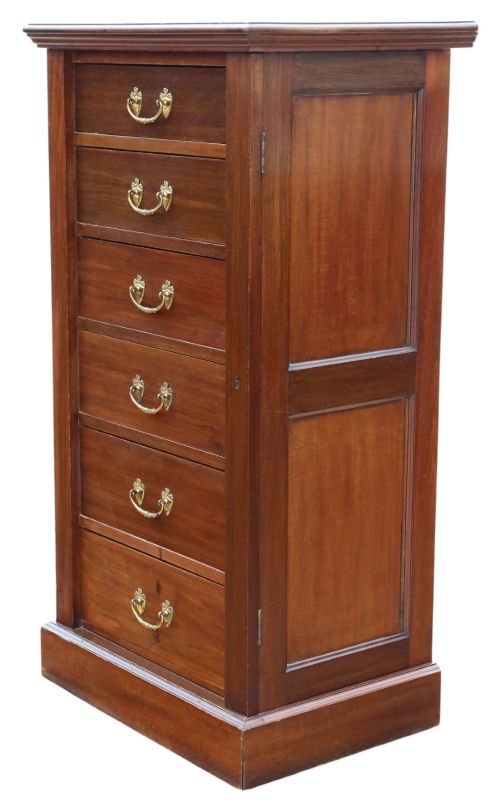
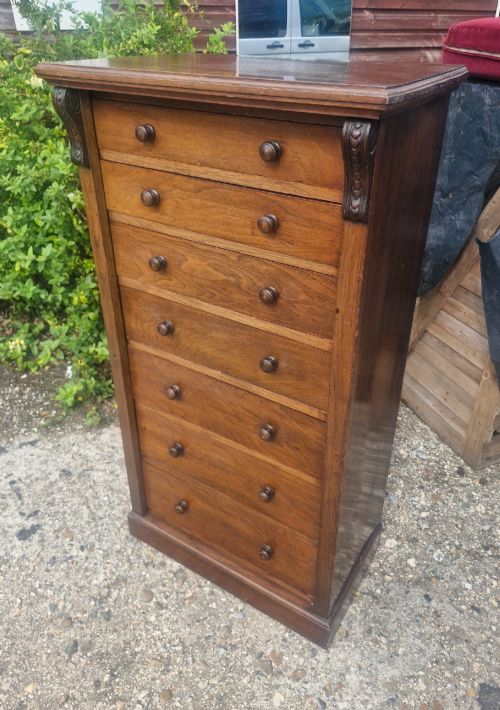
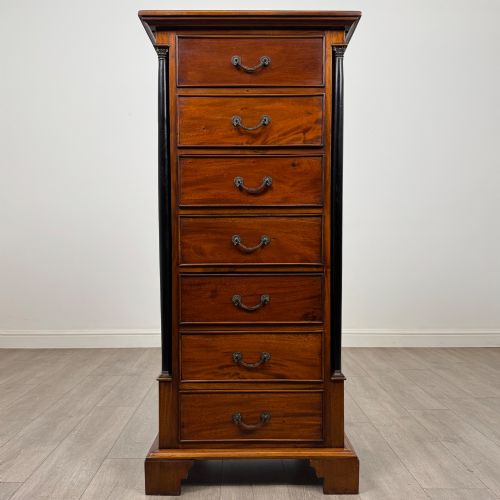
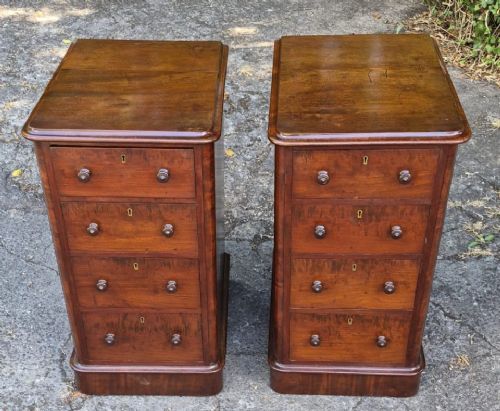
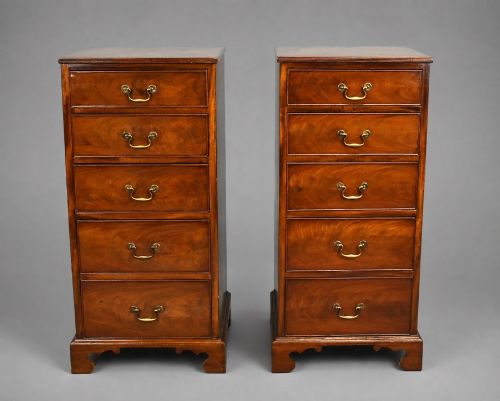
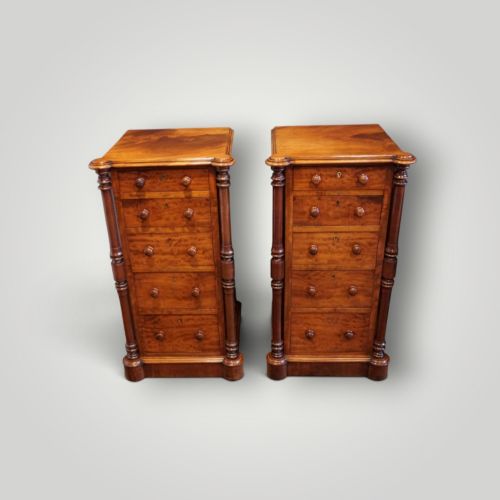
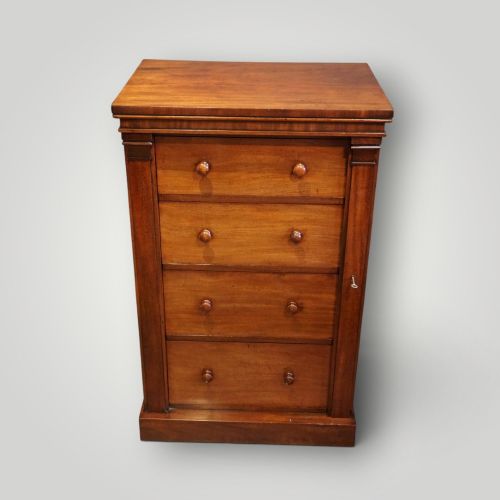
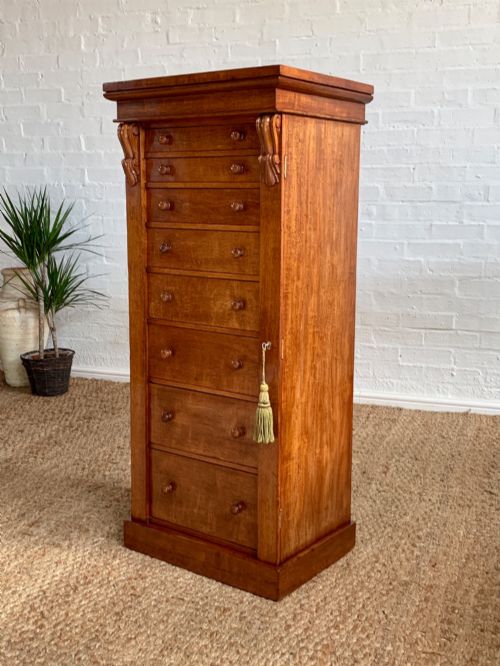
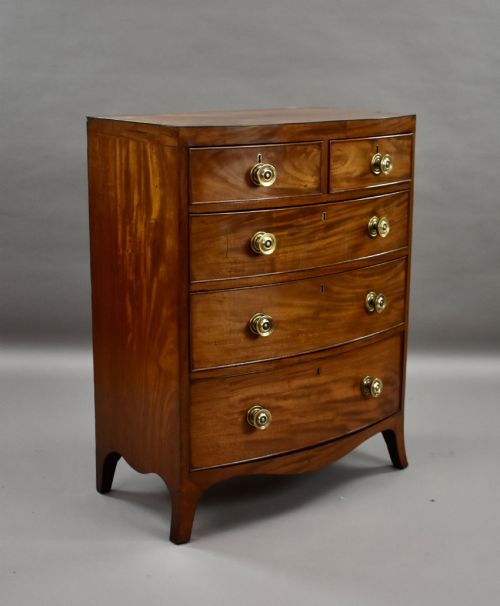
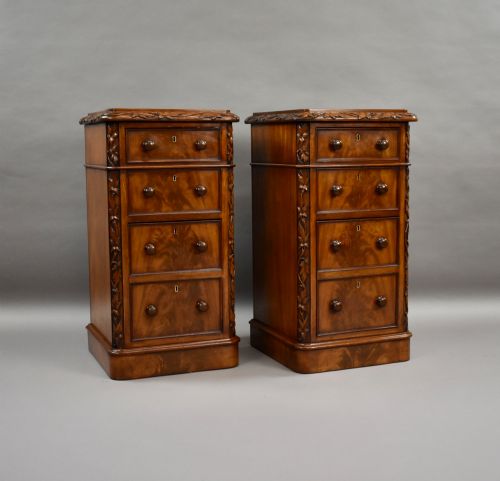
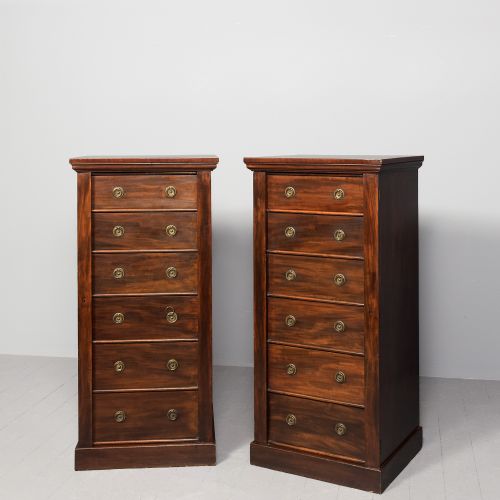
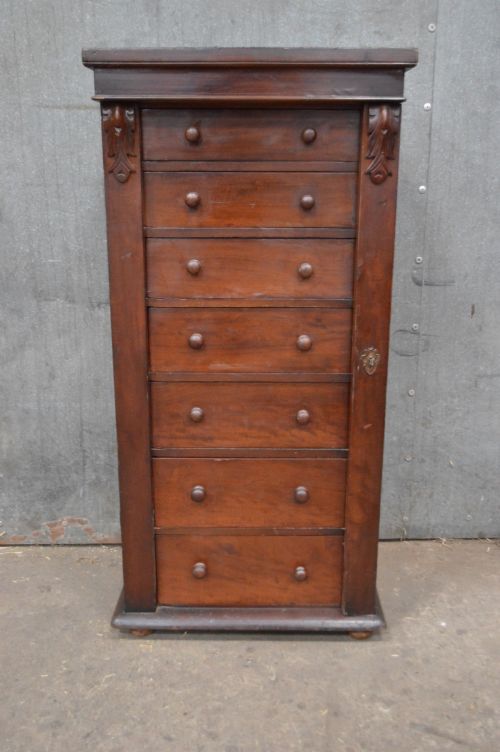
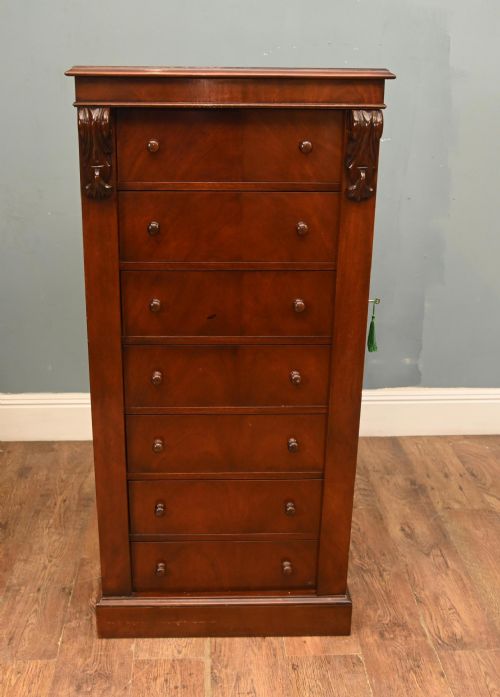
A narrow mahogany tallboy stands as a vertically proportioned chest of drawers designed to maximise storage without dominating floor space. These pieces emerge primarily from Victorian, Edwardian, and Georgian periods, alongside later revivals stretching into the twentieth century. Buyers seeking a narrow mahogany tallboy encounter traditional upright forms, including Wellington chests, pillar chests, and compact bedside cabinets.
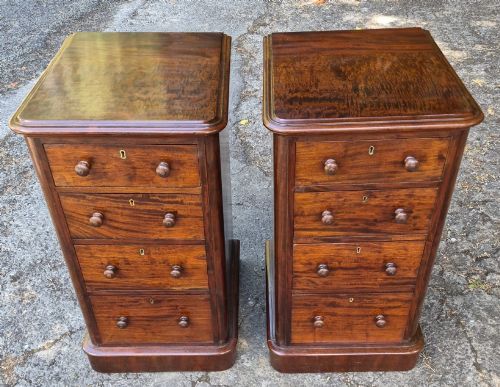
The inventory shows these items spanning multiple forms beyond standard chests, incorporating secretaire bookcases, slim cabinets, and tiered bedside chests. Mahogany remains the constant material anchor, frequently enhanced with flame veneers or satinwood details. Such vertical case furniture suits rooms requiring deep drawer capacity within restricted wall spaces.
Distinguishing quality in vertical cabinetry
Quality separates through the selection of timber veneers and the precision of structural joinery within the drawer frames. Superior pieces display bookmatched flame mahogany or carefully figured grain that flows seamlessly across multiple drawer fronts. Original hardware, intact locking mechanisms, and retained turnings elevate the integrity of a piece.
Lesser examples reveal simpler secondary timbers, mismatched drawer linings, or replacement handles that disrupt the historical cohesion. The crispness of carved details, the smooth glide of narrow drawers, and the stability of tall upright carcases define the upper tier of the selection.
Listings feature mahogany, satinwood, walnut, and ebonised wood across Victorian, Edwardian, and Regency periods.
Warings Liverpool·Gillows of Lancaster·Maple and Co
The Narrow Mahogany Tallboy Glossary
- Tallboy
- A tall chest of drawers, often formed of one chest stacked upon another or built as a single tall upright carcase. This form provides substantial vertical storage whilst maintaining a modest footprint.
- Wellington chest
- A tall, narrow chest of seven drawers secured by a hinged locking stile on one vertical edge. Originating in the nineteenth century, this design securely holds numerous small items.
- Flame mahogany
- A veneer cut from the fork of the mahogany tree where branches join the trunk, creating a characteristic rippled, flame-like grain pattern. Cabinet makers used this figure on primary display surfaces.
- Fiddleback
- A variety of figured timber featuring undulating cross-grain ripples historically utilised for musical instruments and fine furniture. The grain catches light from changing angles.
- Secretaire
- A desk disguised as a chest of drawers featuring a pull-down writing flap revealing internal pigeonholes and small compartments. This dual-purpose form combines storage with a compact writing surface.
Narrow Mahogany Tallboy: Frequently Asked Questions
How do I spot a genuine period tallboy?
Examine the timber construction inside the drawers, looking for hand-cut dovetails and solid secondary woods rather than modern plywood boards. Period examples show consistent ageing, traditional wax finishes, and construction methods appropriate to nineteenth or early twentieth-century workshops.
Check for original backboards and uniform wear around the drawer runners and handles. Alterations or married parts often reveal mismatched timber shades and incongruous joinery upon close inspection.
What is a Wellington chest?
A Wellington chest is a specific tall, narrow furniture form containing stacked drawers secured by a hinged locking bar on one side. This wooden flap locks all drawers simultaneously with a single key.
Originating in the Victorian era, these cabinets maximise vertical storage capacity while keeping contents secure within a slim footprint.
Where should I place a narrow tallboy?
These compact pieces fit comfortably in alcoves, tight hallways, or beside beds where standard wide chests cannot go. Their vertical orientation provides significant drawer space without consuming valuable floor area.
Ensure tall examples are secured to wall studs if placed in high-traffic areas to prevent tipping, given their narrow base relative to height.
How do I care for mahogany furniture?
Maintain mahogany surfaces by applying natural beeswax periodically and avoiding direct sunlight that can fade the rich reddish-brown tones. Keep the timber away from extreme radiator heat to prevent wood shrinkage and veneer cracking.
Dust regularly with a soft, dry cloth and lift items rather than sliding them across the polished top surface.