
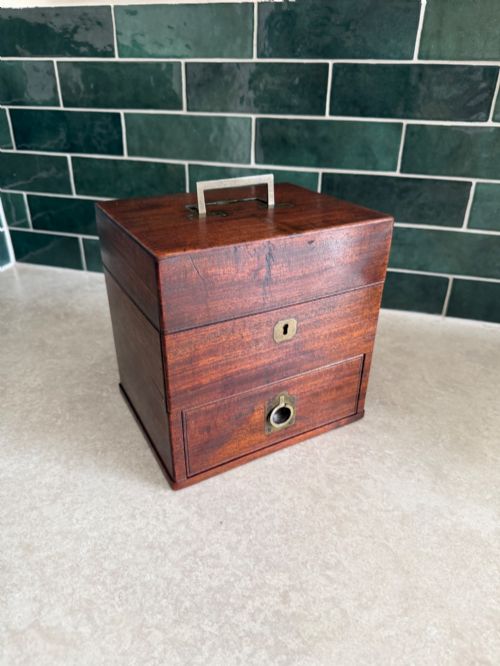
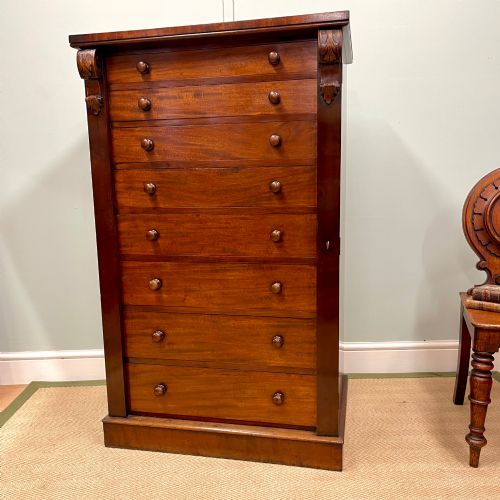


Collectors Locking Chest
These collectors locking chest examples are secure, upright drawer units designed to hold small specimens safely.
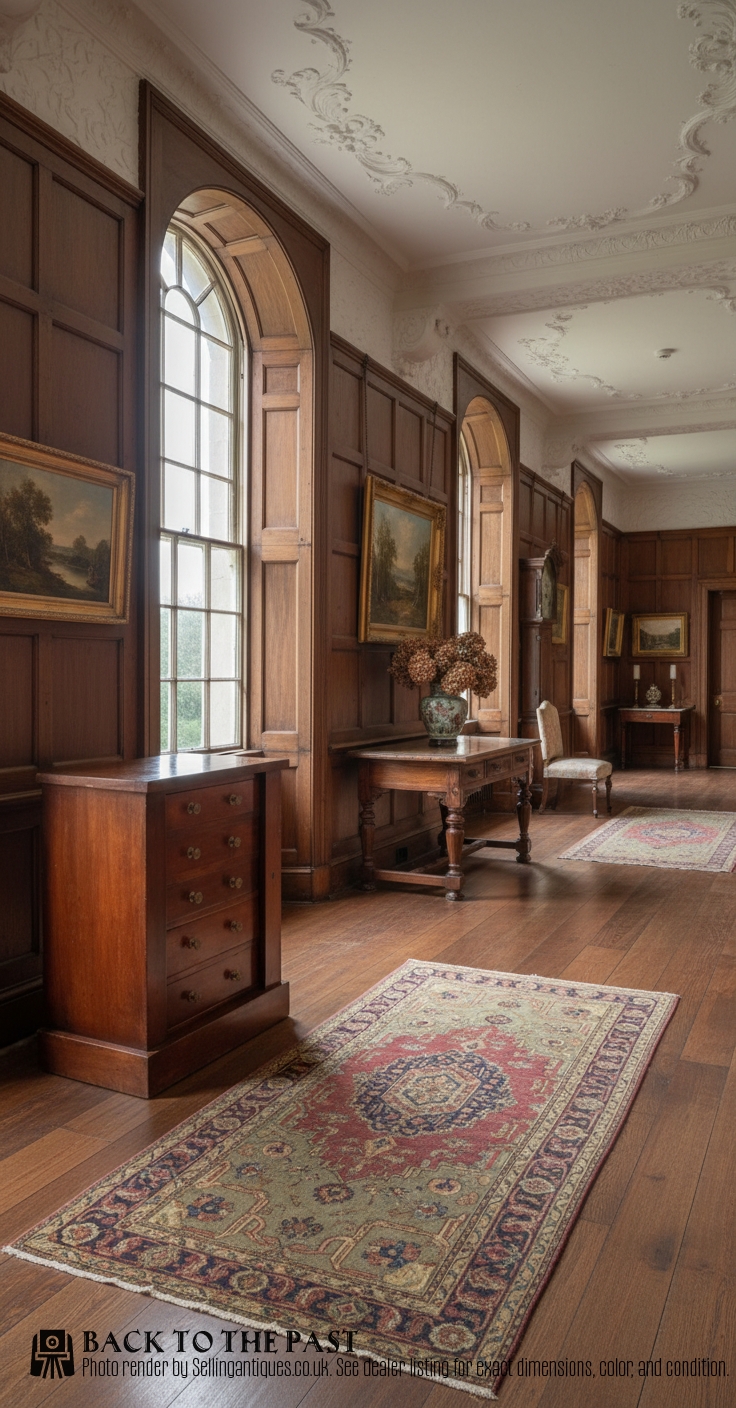
Collectors Locking Chest
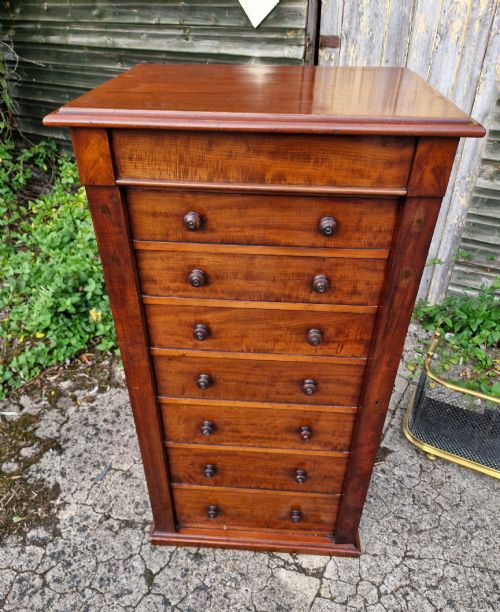
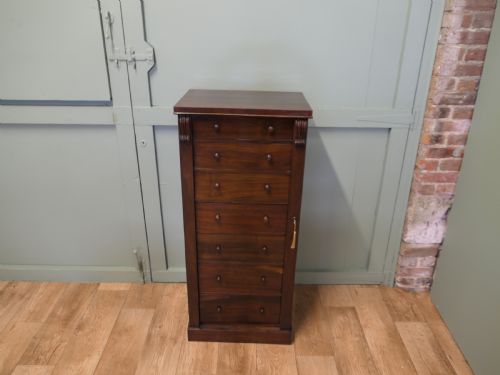
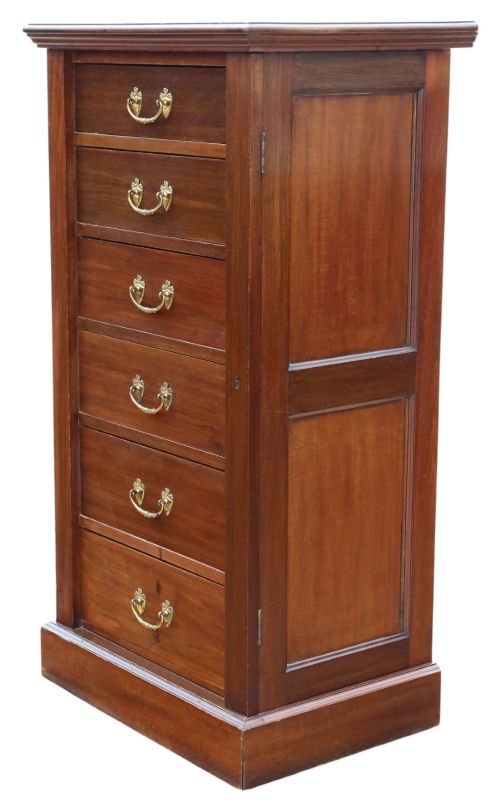
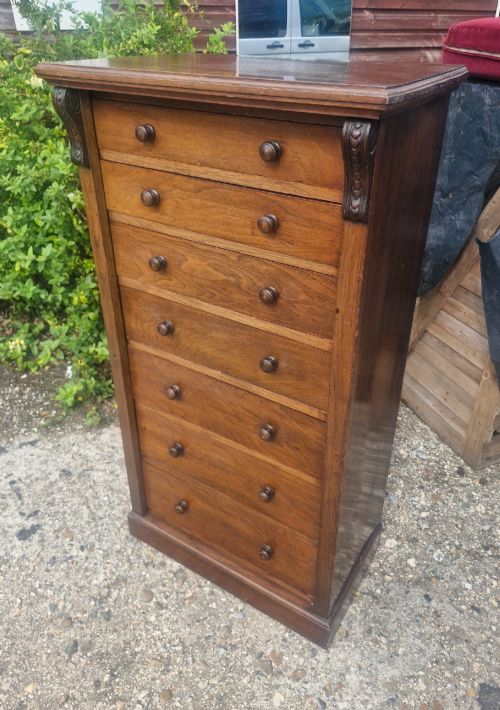
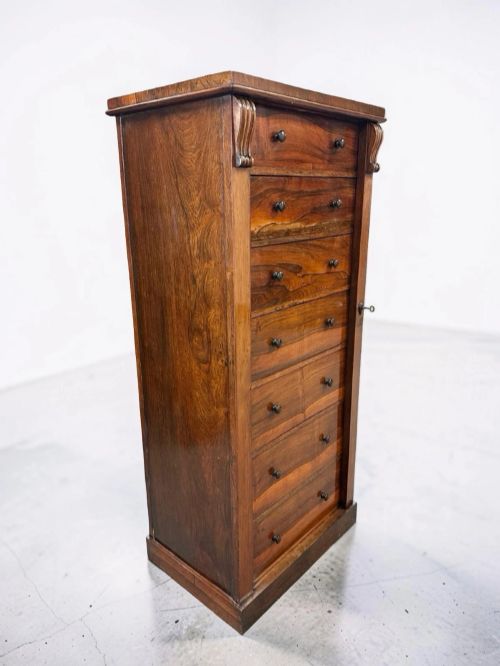
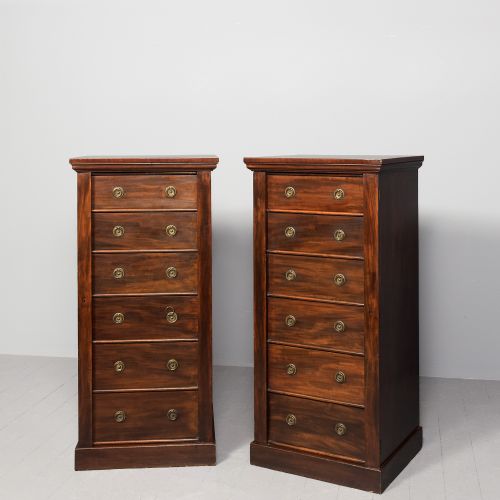
A collectors locking chest is typically encountered as a tall, narrow drawer unit designed to secure precious contents behind a locking stile. The form spans several decades of the nineteenth century and the early twentieth century, emerging primarily in Victorian and Edwardian periods.
How they were made
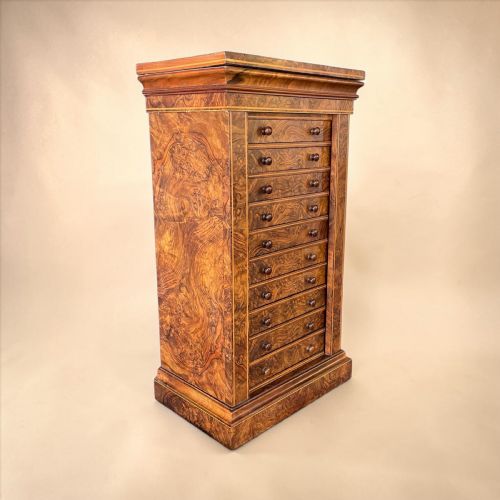
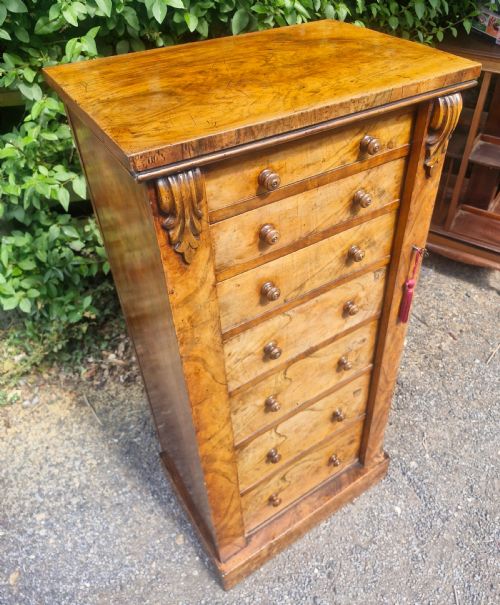
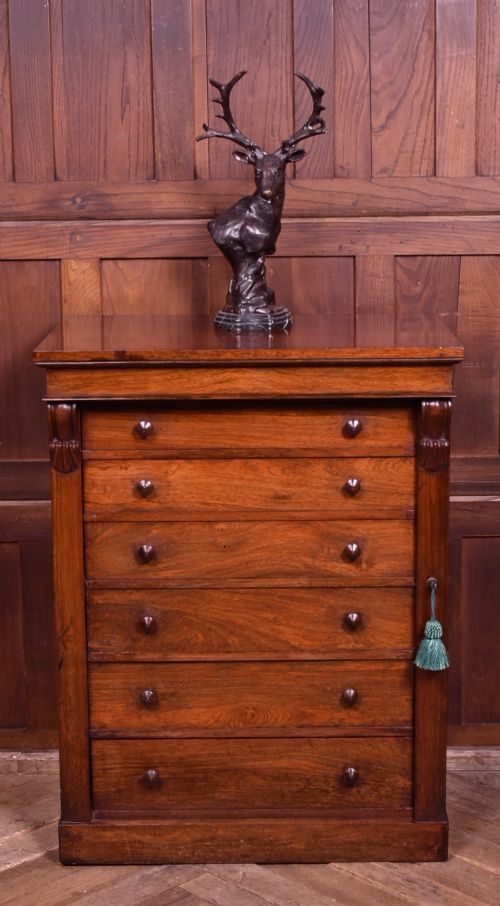
Cabinet makers utilised dense hardwoods such as mahogany, walnut, and rosewood, often applying flame veneers or burr walnut to the primary surfaces for visual depth. Drawer construction relies on traditional joinery housed within a rigid vertical carcase.
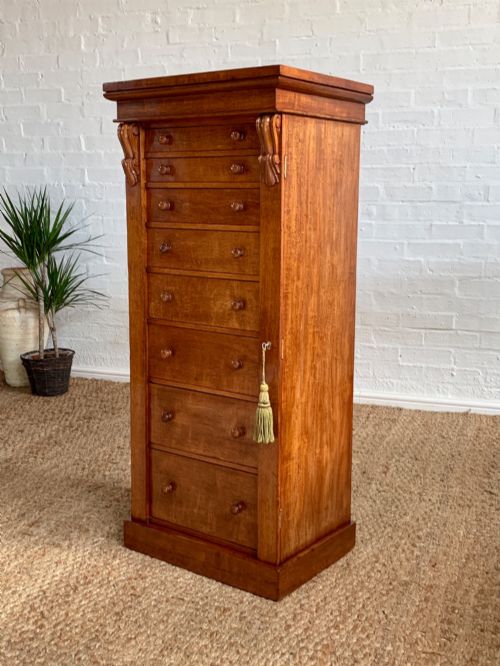
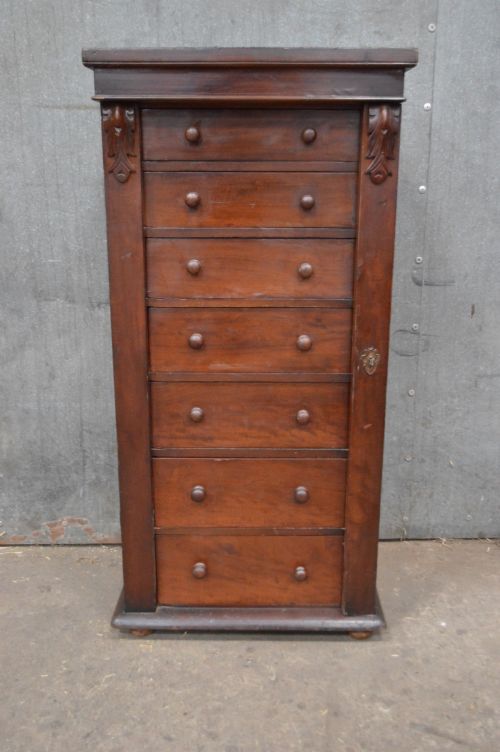
The defining mechanical feature is the hinged locking stile, a vertical locking piece secured by a key that prevents the drawers from opening. Turned knobs and original brass hardware complete the construction of these robust cabinets.
Listings feature mahogany, walnut, and oak alongside rosewood, satinwood, and burr walnut across the Victorian and Edwardian periods.
What varies in quality
Quality rests upon the choice of timber figure, such as highly figured walnut or flame mahogany veneer, and the crispness of the turned wooden knobs. Expert selection of grain patterns elevates the appearance of a tall, narrow cabinet significantly.
The precision of the locking mechanism and the smooth operation of the hinged locking stile determine the mechanical standard. Superior examples maintain original working locks and keys alongside tight, clean drawer joints.
S. Mordan & Co·Gillows of Lancaster·Maple & Co
The Collectors Locking Chest Glossary
- Wellington chest
- A tall, narrow chest of drawers featuring a hinged locking piece on one side that secures all drawers when locked. This form typically contains six or seven drawers.
- Locking stile
- The vertical wooden bar attached by hinges to the side of the carcase, designed to swing over the drawer edges and lock them shut. It represents the primary security feature of the chest.
- Burr walnut
- A prized wood veneer showing intricate, swirling grain patterns formed from tree growths. It provides rich visual texture on Victorian cabinet fronts.
- Flame mahogany veneer
- Timber sliced to reveal a flickering, flame-like pattern across the drawer faces. Cabinet makers selected these veneers for high-status furniture.
- Specimen cabinet
- A specialised storage unit built to hold small collections safely within shallow drawers. These pieces often feature fitted interiors tailored for delicate items.
Collectors Locking Chest: Frequently Asked Questions
How do you lock a collectors locking chest?
You push all the drawers fully closed so that their edges align flush within the carcase frame. Then you swing the hinged locking stile into place over the drawer edges and turn the key.
Turning the key engages an internal mechanism that secures the vertical bar against the drawers, preventing any of them from being pulled open until the key is turned back.
What were these tall chests originally used for?
These cabinets served to store valuable documents, personal journals, and delicate collectors' specimens securely in a compact footprint. The narrow proportions allowed them to fit neatly into studies and dressing rooms.
Owners appreciated the security provided by the locking stile, which kept sensitive papers and small valuables safe from casual access while remaining close at hand.
How do I date a Victorian locking chest?
Dating relies on observing the choice of timber, the presence of specific veneers like burr walnut or flame mahogany, and the style of the turned knobs. Victorian examples span several decades with distinct stylistic shifts.
Earlier pieces often feature rich rosewood or plain mahogany, while later nineteenth-century versions introduce bolder figured veneers and variations in drawer counts up to seven.
Can I use a collectors locking chest for modern storage?
These chests fit modern interiors well by offering deep vertical storage within a minimal floor space. The narrow drawers suit accessories, stationery, and small personal collections.
Placing the chest in a study or bedroom provides functional organisation while retaining the character of nineteenth-century cabinet work and figured timber.