


Narrow Mahogany Console
A narrow mahogany console brings architectural discipline to a hallway, offering a surface that holds a lamp without blocking the passage.
Narrow Mahogany Console
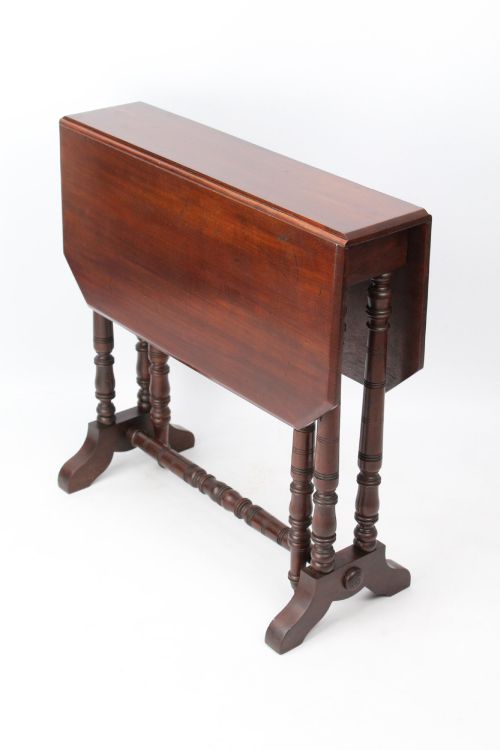
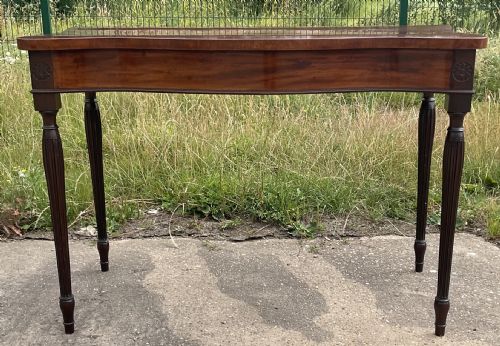
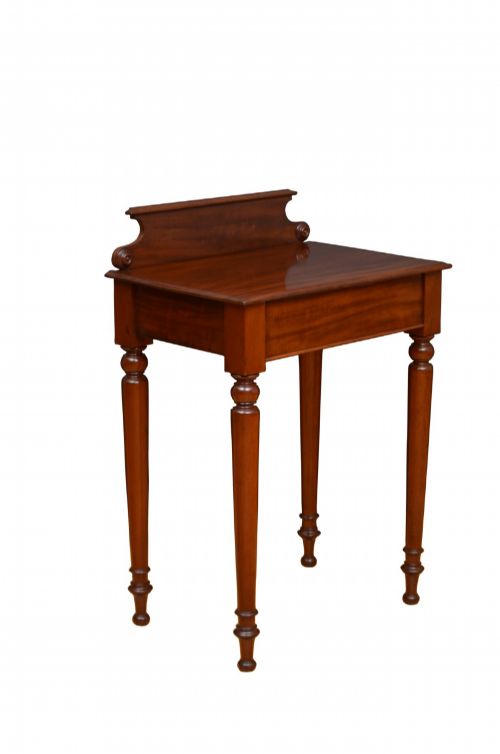
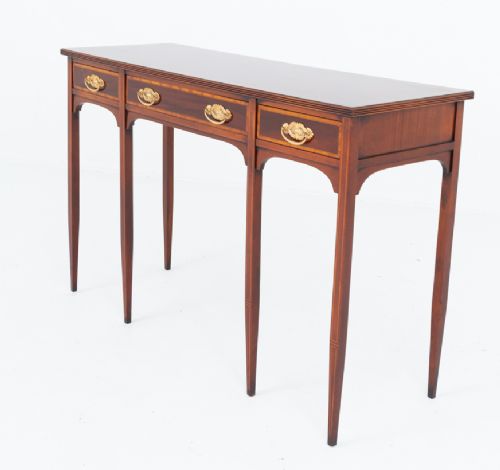
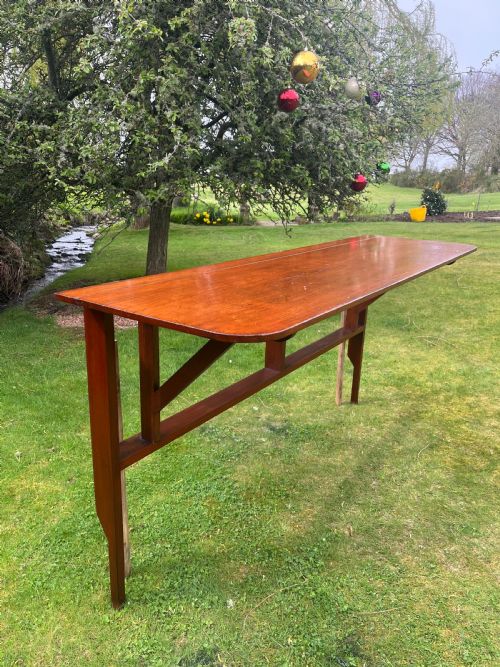
A narrow mahogany console sits flat against a wall in halls and reception rooms, providing a practical resting place for correspondence and keys. The pieces found here span the nineteenth century into the twentieth, taking the form of console tables, pier tables, servers, and occasional gate-leg tables such as the Sutherland.
Most examples lean on nineteenth-century design vocabulary, frequently adopting Georgian, Regency, or Victorian proportions. Makers often kept the depth shallow so the furniture could slip into tight corridors without obstructing movement.
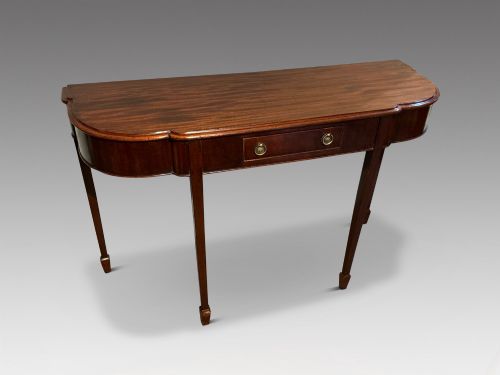
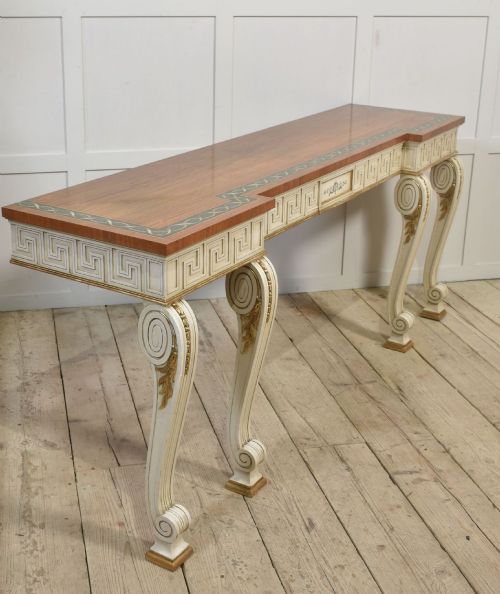
The selection ranges from restrained rectilinear tables to serpentine fronts and breakfront models, occasionally incorporating drop leaves or drawers. These variations reflect how earlier workshops adapted standard table designs for constrained domestic spaces.
Materials and construction
Makers relied primarily on mahogany for its dense grain and stable working properties, often enhancing the timber with satinwood inlay or contrasting stringing. Secondary woods such as pine appear in concealed structural areas like drawer linings.
Surface detailing frequently involves decorative veneers, hand-painted motifs, and applied brass or gilt mounts, particularly on revival pieces from the Edwardian era. Some examples combine the timber base with contrasting marble tops for added durability and weight.
The listings span from nineteenth-century Georgian styles to early twentieth-century Edwardian drop-leaf Sutherland tables.
Assessing craftsmanship and finish
Quality rests upon the selection of timber figures and the precision of the joinery, particularly where legs join the frieze or where drop leaves pivot. Finer pieces display crisp hand-cut stringing and well-matched veneer grains across the top surface.
The handling of secondary details separates standard production from superior work. Well-executed tables show careful attention to the timber's natural patina, solid brass fittings, and structural stability in weight-bearing legs.
Druce and Co
The Narrow Mahogany Console Glossary
- Console table
- A table designed to stand against a wall, traditionally fixed with brackets or resting on front legs. It serves narrow spaces like hallways and drawing rooms.
- Pier table
- A low table built to stand against the wall beneath a pier glass mirror. These tables share the shallow proportions typical of narrow console designs.
- Sutherland table
- A narrow drop-leaf table with hinged flaps supported by pivoting legs. Named after the Duchess of Sutherland, this form folds flat for easy storage.
- Serpentine front
- A furniture front characterised by a curved outline that is convex in the centre and concave at the ends. This shape requires skilled joinery.
- Stringing
- Thin inlay lines of a contrasting wood used to outline panels and borders on tabletops. It adds linear definition to mahogany surfaces.
Narrow Mahogany Console: Frequently Asked Questions
Where should I place a narrow console table?
These tables suit narrow entrance halls, corridors, and landings where floor space is limited. Their shallow depth allows them to sit flush against a wall without obstructing foot traffic.
They also function effectively behind sofas or beneath mirrors in living rooms, offering a display surface for lamps and decorative objects.
How do I care for a mahogany surface?
Keep mahogany furniture away from direct heat sources and strong sunlight to prevent the timber from drying out or fading. Dust regularly with a soft, dry cloth.
Apply a traditional beeswax polish occasionally to nourish the wood and maintain its deep lustre. Avoid silicone-based sprays, which can build up and damage the polish over time.
How can I tell a Victorian console from a later revival piece?
Nineteenth-century pieces often show signs of age in the timber grain, hand-cut joinery marks, and the wear patterns on secondary woods like pine. The construction methods reflect the hand tools and workshop practices of the period.
Revival pieces from the early twentieth century often display cleaner, more uniform machine-cut elements while faithfully copying earlier Georgian or Regency styles.