


Antique Military Table
An antique military table brings portable campaign history into a modern room through clever folding frames and robust timber.
Antique Military Table
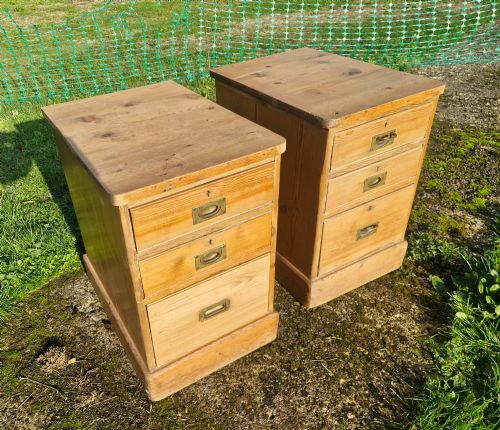
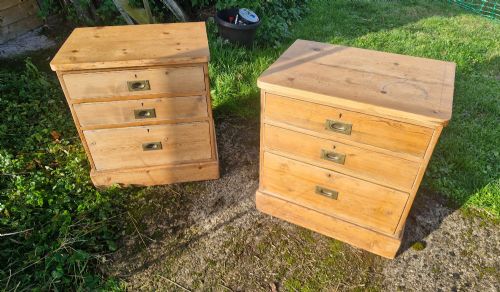
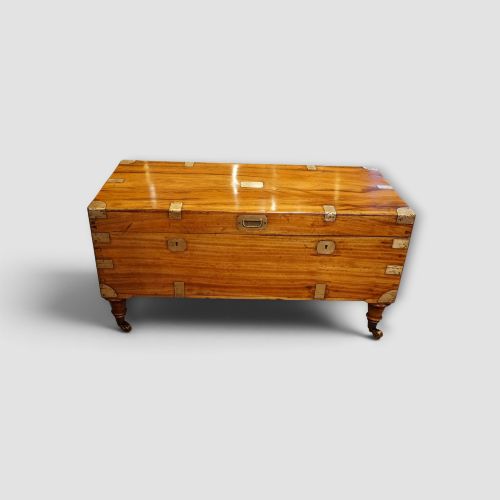
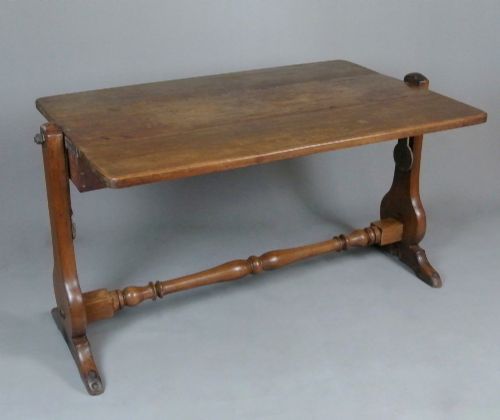
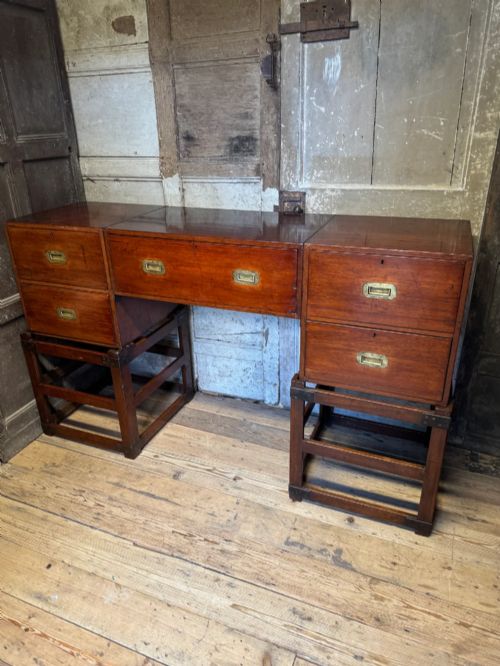
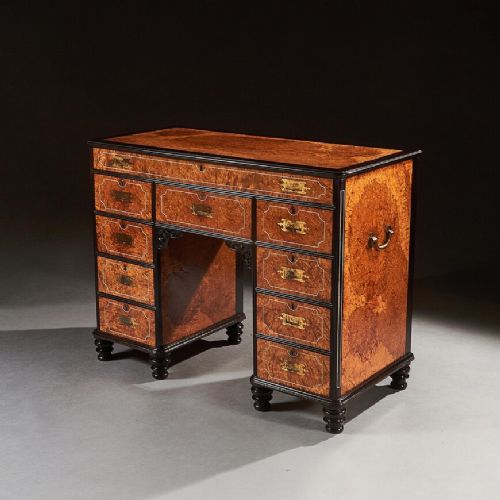
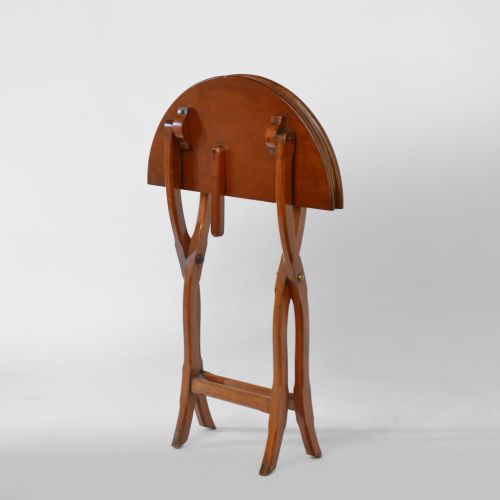
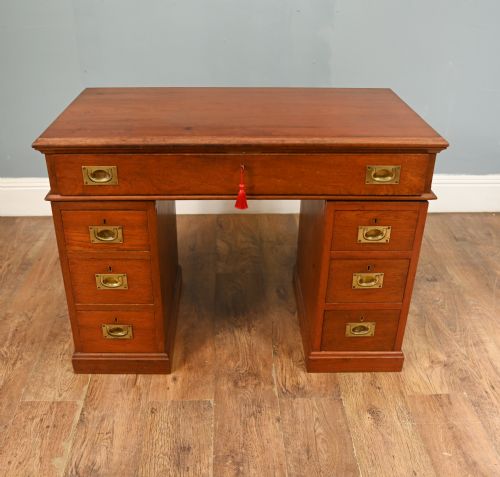
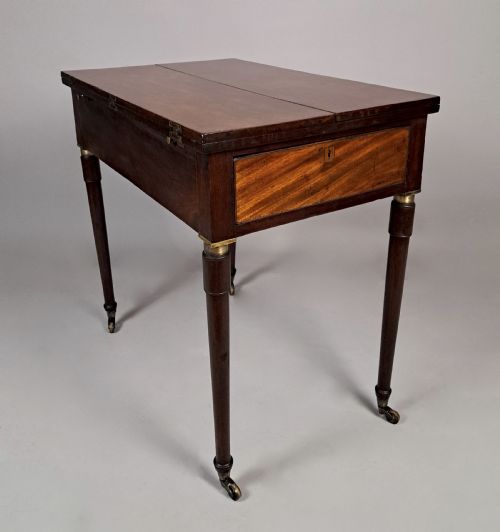
An antique military table encompasses folding campaign desks, coffee tables, and dining tables designed for officers on the move during the Georgian, Victorian, and Edwardian eras. The folding mechanisms, recessed brass handles, and solid timbers built for transport define the category.
Mahogany, camphor wood, and teak appear frequently across tables, desks, and trunks, reflecting the global movement of military forces. Buyers will encounter both pieces intended for field use and later pieces built in a campaign style.
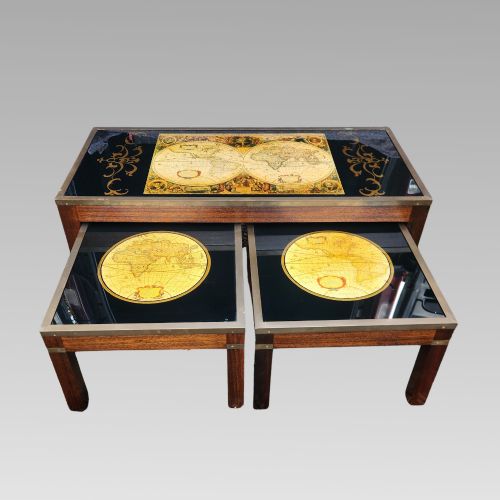
The selection ranges from late eighteenth-century folding tables to twentieth-century console and coffee tables. These surfaces combine functional utility with historical craftsmanship.
How they were made
Cabinet makers utilised dense, durable timbers such as mahogany, teak, and camphor wood to withstand tropical climates and rough transport. Brass binding reinforced corners and edges to prevent splitting during long journeys.
Clever engineering allowed legs to fold flat, drawers to lock securely, and sections to dismantle into compact travel chests. Flush-fitting hardware ensured items packed tightly without snagging.
Antique Military Table Retail Price Guide 2026
Typical asking prices for military table among the pieces listed under this phrase on Sellingantiques today, from the lower quarter to the upper quarter. They describe what is for sale here now, not the wider market.
Listings feature mahogany, camphor wood, oak, and teak across eighteenth and nineteenth-century periods.
What varies in quality
The precision of the folding mechanism separates standard items from superior pieces. Original brass fittings, well-fitted hinges, and smooth joints indicate skilled workshop production.
The choice of timber and the retention of original patinated finishes determine the standing of an individual table. Finer examples display carefully selected mahogany or figured camphor wood paired with robust, unblemished brass work.
Gillows
The Antique Military Table Glossary
- Campaign furniture
- Portable items designed to dismantle or fold for officers on military campaigns. These pieces often feature brass corners and recessed handles.
- Recessed brass handle
- A pull handle inset flush into the timber surface so it does not catch during transit. This hardware is typical of campaign chests and desks.
- Camphor wood
- A fragrant timber native to Asia, prized for campaign trunks because its natural oils repel insects. It is common in nineteenth-century military chests.
- Refectory table
- A long, narrow dining table adapted for communal use. Military-associated versions utilise robust oak frames.
Antique Military Table: Frequently Asked Questions
What is an antique military table?
An antique military table is a piece of portable furniture designed for officers during the Georgian and Victorian periods. These items feature collapsible frames, screw-in legs, and protective brass mounts.
Craftsmen built them from durable timbers like mahogany and teak to endure long journeys and field conditions.
How do I spot original campaign furniture?
Original pieces display flush-fitting recessed brass hardware, removable legs, and dismantling sections designed for packing into transit chests. The construction utilises dense hardwoods suited to colonial service.
Look for honest wear to the timber and proper locking mechanisms rather than modern fixed joints.
Were these tables used in actual battles?
Many tables accompanied officers on active campaign, while others served in messes, tents, or colonial quarters. Their modular design allowed rapid packing when regiments relocated.
Over time, the practical format influenced domestic furniture production.
How do I care for camphor wood?
Camphor wood benefits from minimal treatment to preserve its natural oils and distinct aroma. Avoid placing the timber in direct sunlight or near heat sources.
Dust regularly with a dry cloth and apply occasional beeswax if the surface requires nourishment.