




19th Century Campaign Table
A 19th century campaign table brings ingenious portable engineering into a room, offering sturdy folding furniture built for travel.
19th Century Campaign Table
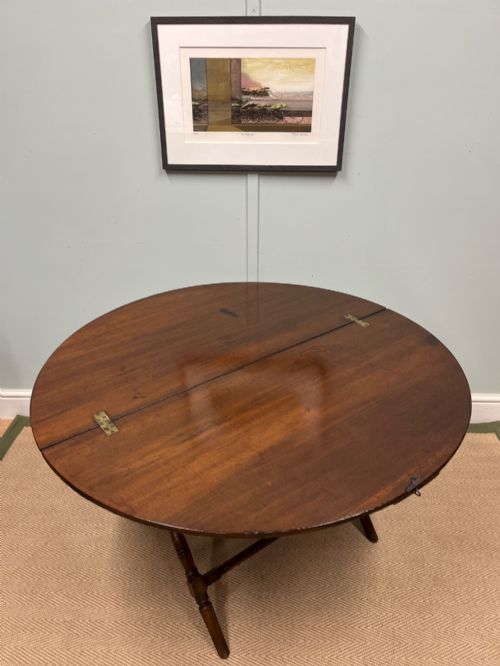
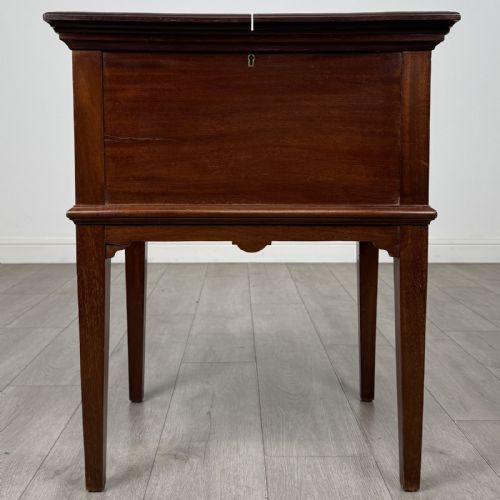
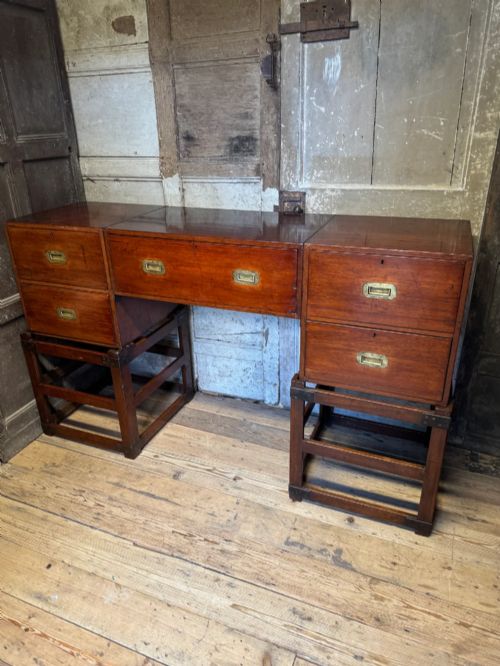
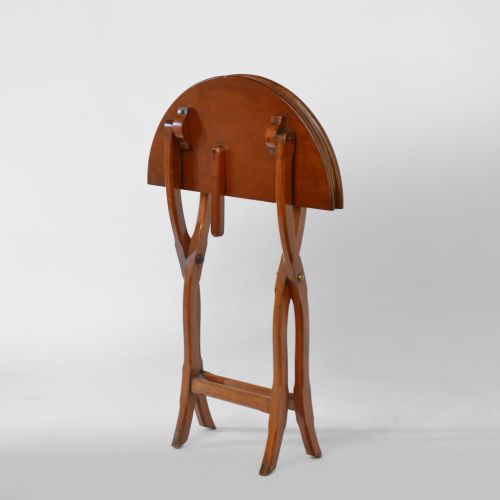
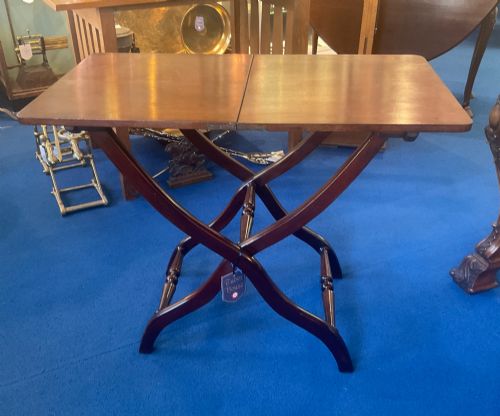
A 19th century campaign table encompasses folding writing desks, butler trays on stands, and occasional tables built for military officers and travellers on the move. These pieces combine rigid surfaces with clever folding mechanisms, removable legs, or collapsible trestles designed to pack flat into trunks.
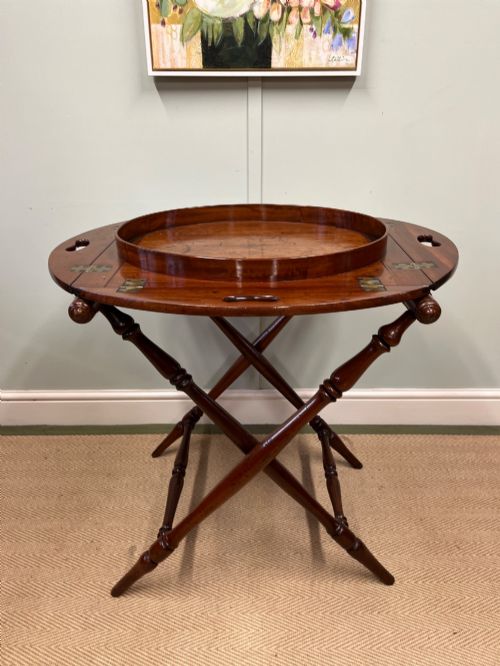
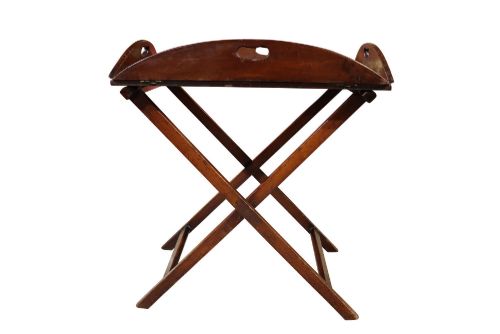
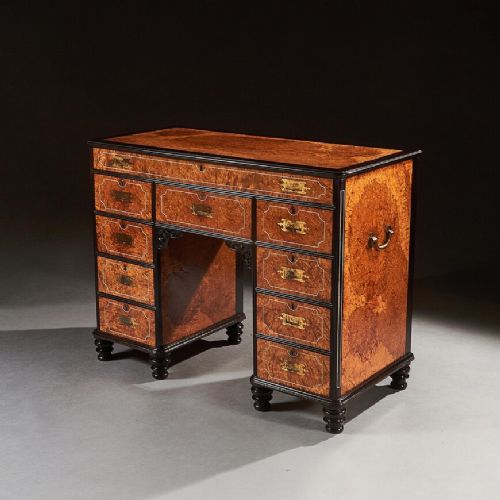
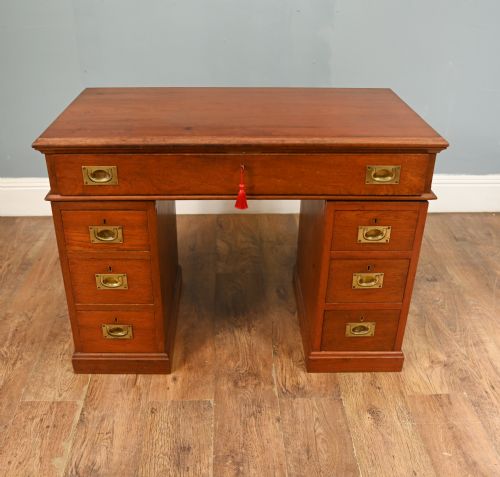
The most common forms on this page include mahogany butler trays on folding stands, alongside occasional tables and desks in walnut, camphor wood, and oak. They range from simple folding coaching tables to elaborate kneehole desks and writing tables bearing the marks of transport.
Originating to serve officers on military campaigns or long sea voyages, these tables suit modern interiors that require flexible furniture with a history. Their compact engineering allows them to function as side tables, coffee tables, or desks without permanent visual weight.
How they were made
Cabinetmakers constructed these pieces from dense timbers such as mahogany, camphor wood, walnut, and oak to withstand the rigours of travel. These woods were chosen for stability and resistance to warping in changing climates.
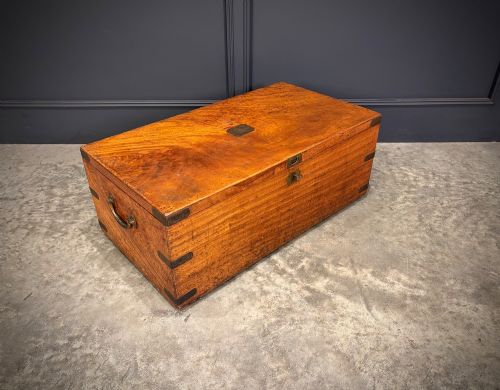
Brass corners, straps, and flush-fitting handles were integrated to protect vulnerable edges and secure joints during transit. Folding hinges and removable components allowed the furniture to pack down compactly without sacrificing structural integrity when assembled.
19th Century Campaign Table Retail Price Guide 2026
Typical asking prices for 19th century campaign table among the pieces listed under this phrase on Sellingantiques today, from the lower quarter to the upper quarter. They describe what is for sale here now, not the wider market.
Some travel trunks still retain their original zinc linings, once intended to keep damp military gear away from dry paperwork.
What varies in quality
Quality rests in the precision of the folding mechanism and the tightness of the joints when assembled. Superior examples demonstrate smooth folding actions, well-fitted brass hardware that sits flush with the timber, and thoughtful secondary woods.
Finer pieces display carefully selected timber grains, such as figured mahogany or amboyna, paired with well-executed carving or turned supports. The integrity of the original hardware and the crispness of any secondary details separate standard utility items from higher-status travel pieces.
Gillows Lancaster
The 19th Century Campaign Table Glossary
- Butler tray
- A shallow wooden tray with hinged or cutout sides, designed to lift off its folding stand for serving. This form formed a staple of portable dining equipment.
- Camphor wood
- A fragrant, durable timber often used for trunks and campaign furniture due to its insect-repellent properties. It protected contents during humid sea voyages.
- Campaign trunk
- A heavy wooden chest reinforced with brass banding and corner pieces, built to carry belongings on military expeditions. Many feature split drawers and recessed carrying handles.
- Kneehole desk
- A compact writing table featuring a central recess flanked by pedestals of drawers. This configuration provided storage while maintaining a manageable footprint for transport.
19th Century Campaign Table: Frequently Asked Questions
How do you fold a campaign table?
Most folding campaign tables rely on X-frame trestles or removable legs secured with wooden pins or brass screws. The top simply lifts off or hinges flat once the locking catches are released.
Care should be taken to support the weight of the timber while operating the folding braces to avoid straining original hinges.
Were campaign tables only used by the military?
While originally commissioned for British officers on military campaigns, these tables were also utilised by colonial administrators, diplomats, and wealthy travellers on extended voyages.
Their practical design made them equally popular for domestic use in tight spaces or gardens once owners returned home.
How do I care for a camphor wood trunk?
Camphor wood benefits from minimal intervention, requiring only an occasional dusting with a dry, soft cloth. Avoid placing the wood in direct sunlight or near heat sources to prevent the natural oils from drying out.
The characteristic scent of the timber naturally refreshes over time and helps keep stored textiles protected.