


Brass Corner Table
These brass corner table designs combine sturdy timber frames with metal mounts to fit snugly into room angles.
Brass Corner Table
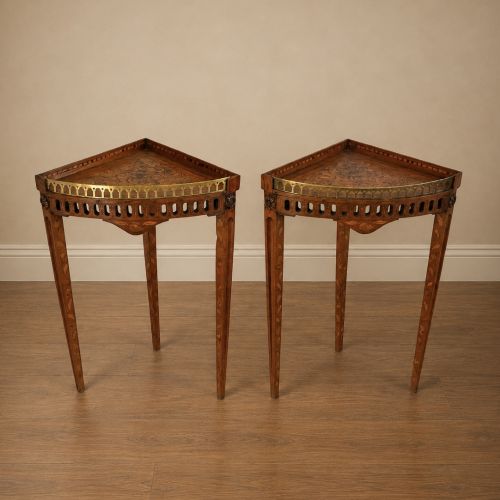
A brass corner table brings functional surface space to neglected room angles, drawing on period forms seen in Georgian and Victorian output. Buyers searching for a brass corner table will encounter items featuring corner placement alongside lamp tables, side tables, and occasional furniture fitted with metal galleries.
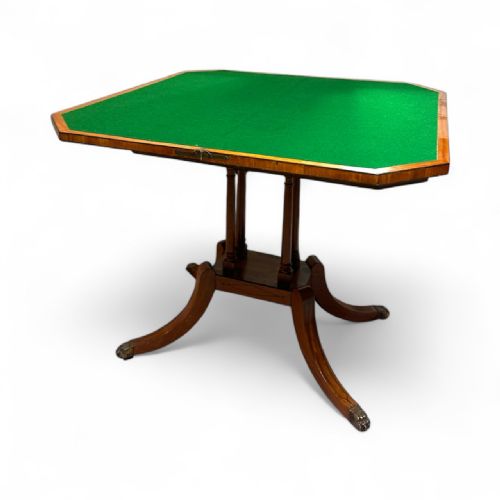
The selection ranges from 18th century marquetry inlaid corner pieces to later campaign styles and occasional tables. These items utilise traditional timber construction adapted to fit domestic corners while offering stable display surfaces.
How they were made
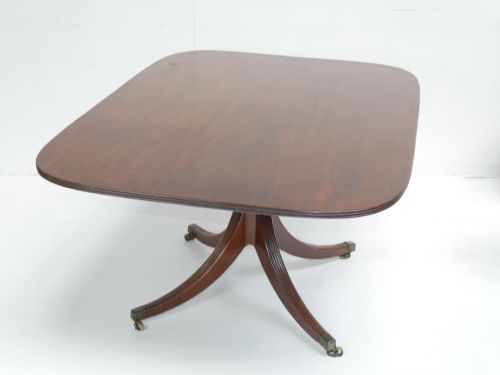
Maker construction relies on timbers such as mahogany, camphor wood, satinwood, walnut, and rosewood paired with brass mounts, hinges, and corner bindings. These materials provide durability for both stationary domestic furniture and portable campaign items.
Joinery techniques include marquetry inlay, parquetry, and brass binding to secure edges and corners. Surface finishes preserve the natural grain of hardwoods while integrating metal details.
Current listings span the 18th, 19th, and 20th centuries, featuring materials such as brass, mahogany, camphor wood, satinwood, leather, walnut, rosewood, and hardwood.
What varies in quality
Quality differences stem from the precision of timber selection, such as figured mahogany or burr walnut, and the crispness of inlay work. Finer examples display meticulous matching of wood grains and securely fitted brass galleries.
Construction robustness, originality of hardware, and the integration of brass mounts define the upper tier of pieces. Lesser examples show simpler timber selection and standard assembly without refined decorative inlays.
The Brass Corner Table Glossary
- Brass gallery
- A low decorative metal rail fitted around the edge of a table top to prevent items from sliding off. These galleries are typical on finer lamp and corner tables.
- Campaign style
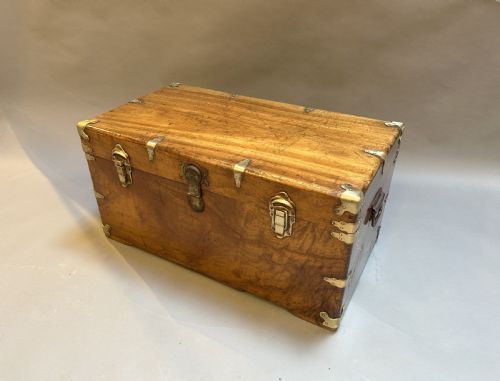
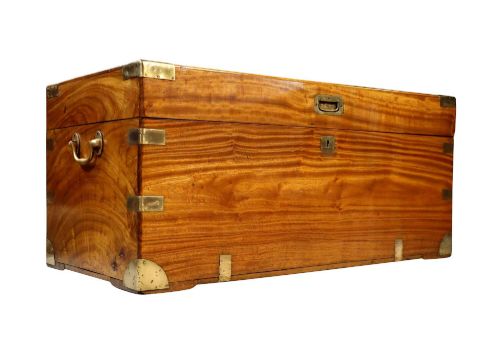
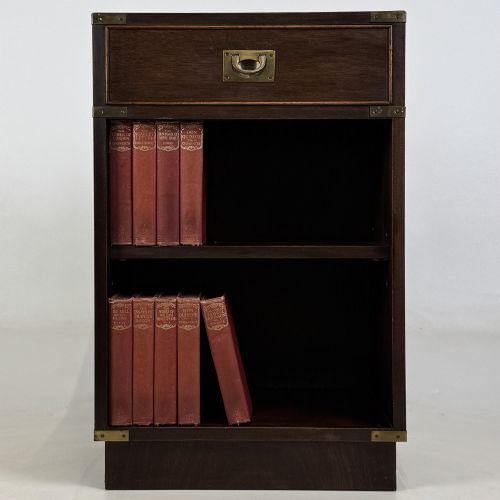
- Furniture designed for military officers on the move, featuring recessed brass handles, corner brackets, and collapsible or portable frames. This style prioritised durability and transport.
- Marquetry
- The art of applying decorative veneer pieces in wood, shell, or metal to a structure to form geometric or pictorial designs. It appears on 18th century corner tables.
- Parquetry
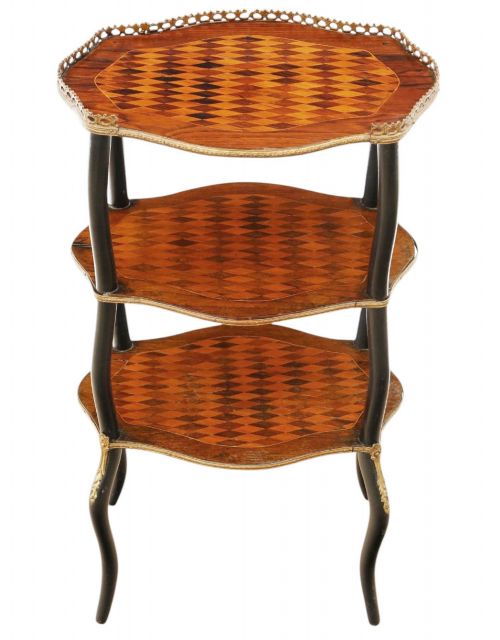
- A geometric mosaic of wood pieces used for surface decoration on tabletops and cabinets. This technique creates patterned surfaces across panels.
- Lowboy
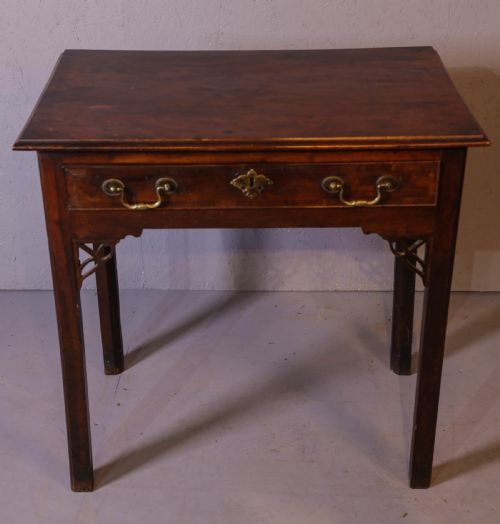
- A small side table with drawers, typically raised on four legs, originating in the Georgian period. These serve as compact storage and display surfaces.
Brass Corner Table: Frequently Asked Questions
Where do I put a corner table?
A brass corner table fits into unused room angles to hold lamps, books, or decorative objects without blocking walkways. They make efficient use of awkward spaces in hallways or living rooms.
Positioning them correctly balances the room layout by adding functional surface area where standard rectangular tables do not fit.
How do I clean brass mounts?
Dust brass fittings regularly with a soft, dry cloth to prevent tarnishing and dirt accumulation. Avoid harsh chemical polishes that can strip the surrounding timber finish.
Gentle cleaning preserves the aged patina on both the metal and the wood grain of the table.
Are campaign tables portable?
Campaign style pieces were originally built for military transport with sturdy frames and protective brass corners. Many retain modular designs or robust construction meant for movement.
Modern placement treats them as stationary furniture, though their durable build reflects travel origins.
What woods were used?
Cabinet makers utilised dense hardwoods like mahogany, camphor wood, walnut, and rosewood for structural stability. Decorative veneers such as satinwood and marquetry added visual contrast.
These timbers ensured the tables endured both domestic use and transport.