




Narrow Gilt Wall Mirror
A narrow gilt wall mirror brings vertical light and architectural focus to a compact space, drawing the eye upward with gilded frame details.
Narrow Gilt Wall Mirror
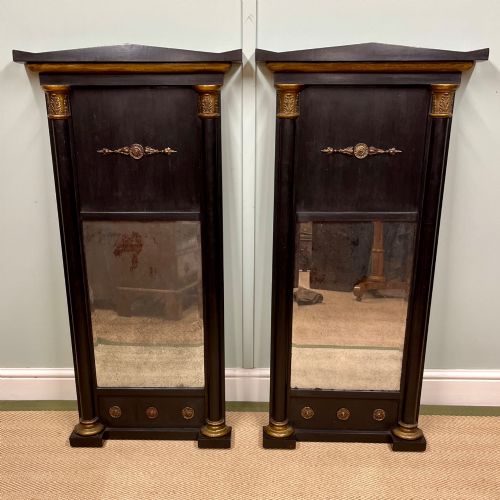
A narrow gilt wall mirror is typically encountered as a pier mirror or tall vertical glass designed to hang between windows or in restricted wall spaces. These pieces span periods from the Georgian era through the Victorian period, Edwardian times, and the early twentieth century.
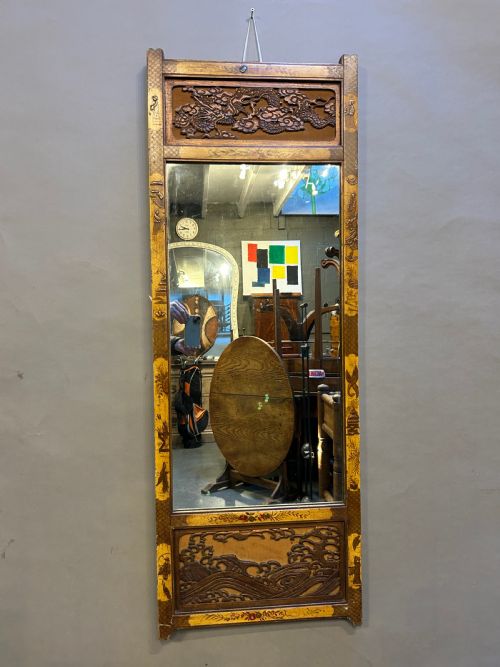
The forms range from classical revival designs to French chateau influences and chinoiserie wall mirrors. Most examples combine a slender proportions profile with traditional wall mirror or pier mirror formats.
Materials and construction
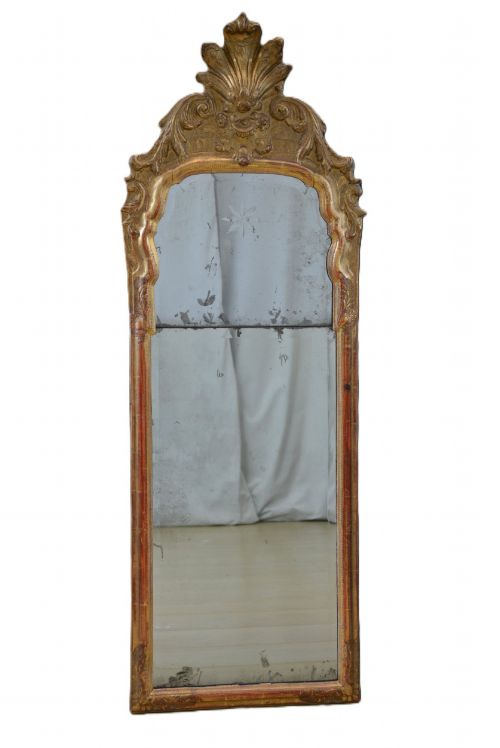
These mirrors are constructed primarily from carved wood, mahogany, or painted wood substrates, often enriched with applied gesso to build up crisp decorative mouldings. The surface is then finished with gold leaf or metallic gilt.
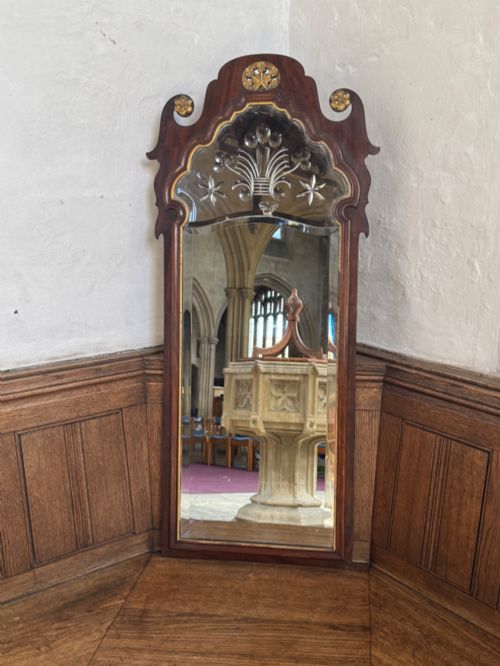
Glass plates are set within the frames, sometimes featuring traditional techniques such as reverse cut plate detailing or panel mirror configurations.
Narrow Gilt Wall Mirror Retail Price Guide 2026
Typical asking prices for narrow gilt wall mirror among the pieces listed under this phrase on Sellingantiques today, from the lower quarter to the upper quarter. They describe what is for sale here now, not the wider market.
Listings span the eighteenth, nineteenth, and early twentieth centuries, incorporating Georgian, Victorian, Edwardian, and Regency periods.
Judging quality
Quality in these mirrors rests upon the crispness of the gesso carving and the depth of the gilding on the wood frame. Finer examples display hand-carved detail and well-balanced proportions rather than heavy, indistinct composition.
The integrity of the glass plate also distinguishes the tier of a piece, with older or specially cut plates retaining distinct visual character that enhances the overall object.
A.J Rowley·John Belchier
The Narrow Gilt Wall Mirror Glossary
- Giltwood
- Wood that has been thinly coated with gold leaf. This finish provides the bright reflective surface characteristic of these frames.
- Gesso
- A plaster-like mixture applied to wood frames and carved before gilding. It allows for intricate relief ornamentation.
- Pier Mirror
- A tall, narrow mirror designed specifically to hang on the wall space between two windows. It frequently matches the width of the pier below it.
- Reverse Cut Plate
- A glass mirror plate featuring decorative cuts made from the back. This technique creates subtle depth within the reflective surface.
- Parcel Gilt
- Partially gilded woodwork where gold leaf highlights specific carved areas while other parts show painted wood or polished grain.
Narrow Gilt Wall Mirror: Frequently Asked Questions
Where should I hang a narrow gilt wall mirror?
These mirrors suit narrow wall spaces, hallways, or the space between windows where standard horizontal mirrors do not fit.
Their vertical proportions help lift the ceiling height visually while reflecting light into darker corners of a room.
How do I date a gilt wall mirror?
Dating relies on stylistic clues such as neoclassical motifs, Georgian proportions, or early twentieth-century revival characteristics.
The underlying construction methods and the composition of the gesso also indicate the period of manufacture.
What is a pier mirror?
A pier mirror is a tall and narrow looking glass traditionally hung on the solid pier of wall between two windows.
Over time, the term has come to describe similar slender vertical wall mirrors regardless of their exact architectural placement.
How do I clean a gilded frame?
Gilded surfaces require gentle dusting with a soft, dry brush to remove particles without disturbing the delicate gold leaf.
Avoid using liquid cleaners or abrasive cloths, which can damage the underlying gesso and the metallic finish.