

Narrow Bedside Drawers
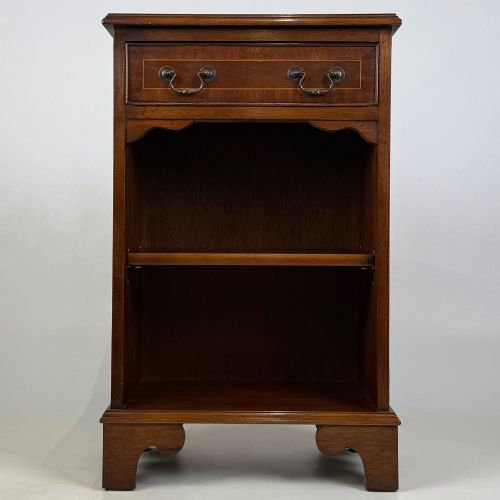
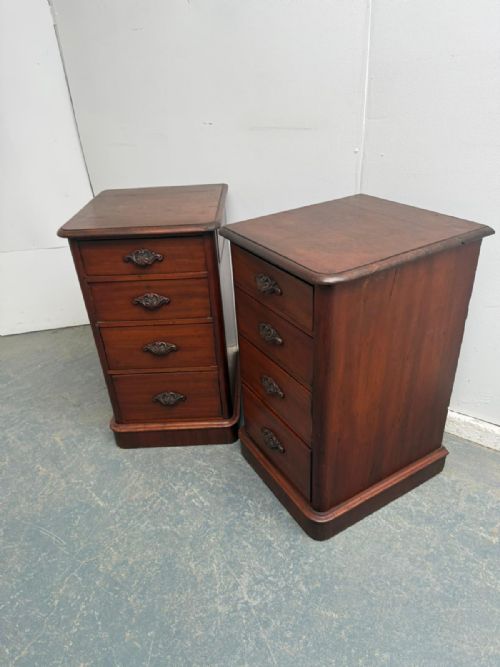
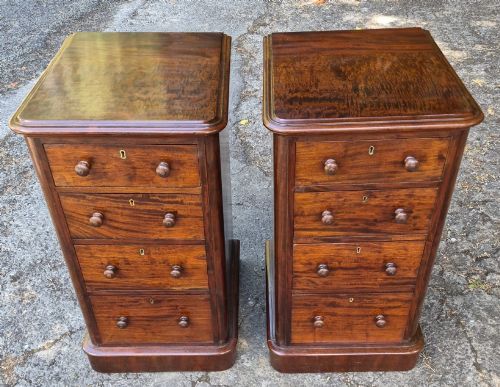
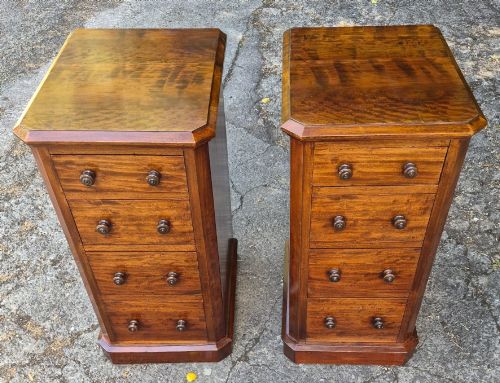
These narrow bedside drawers bring compact timber storage and period character to compact sleeping spaces.
Narrow Bedside Drawers
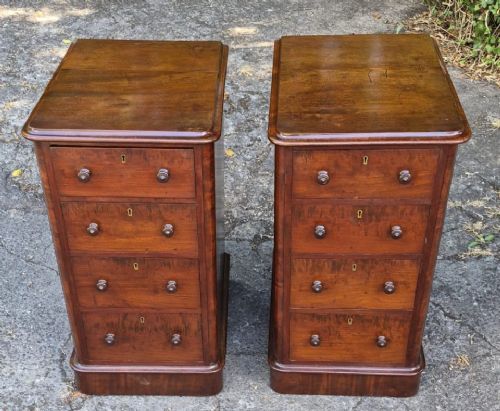
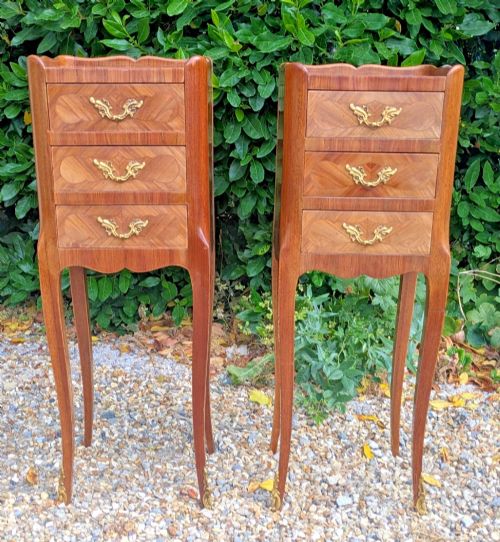
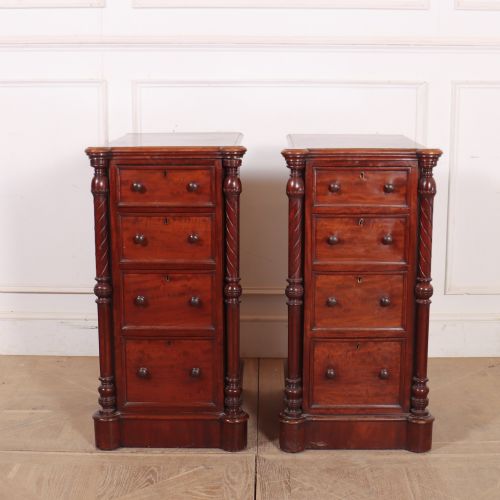
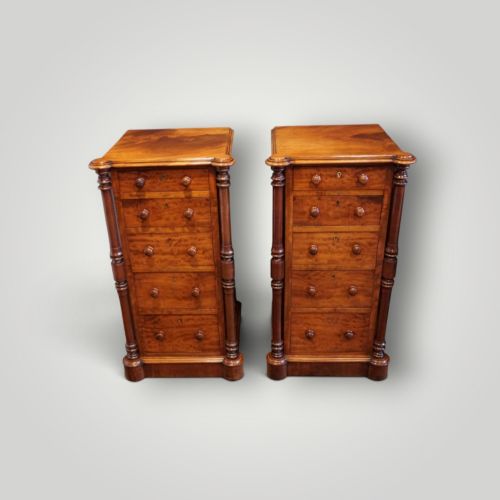
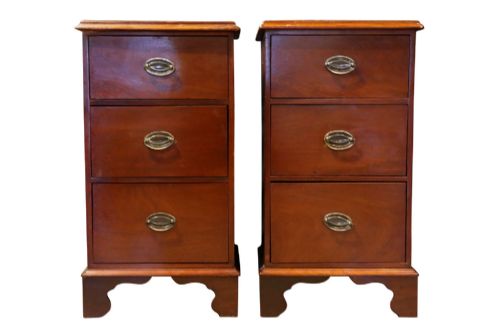
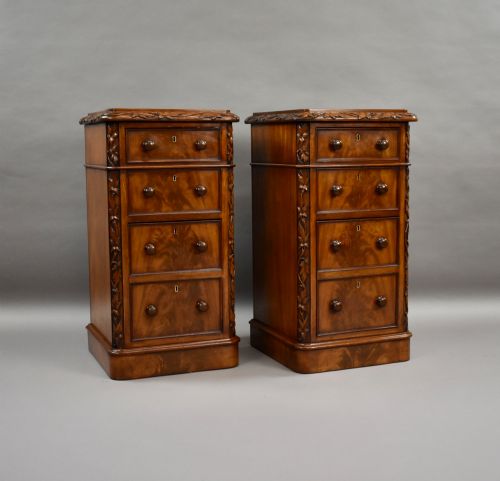
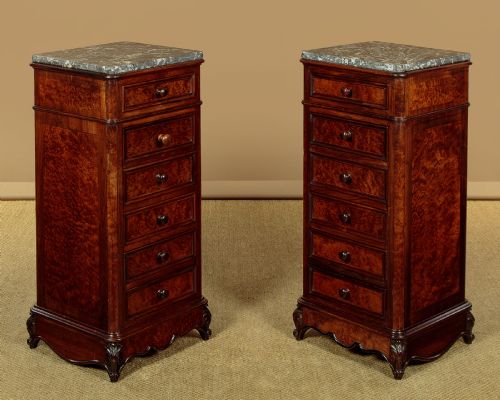
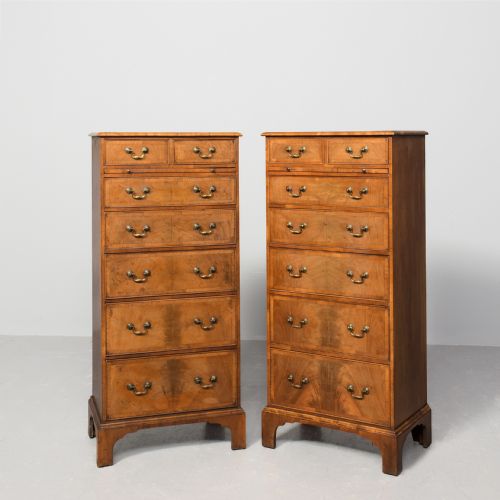
Narrow bedside drawers encompass small chests, bedside cabinets, and compact tables designed to sit beside a bed while holding nighttime necessities. The evidence shows these pieces surface frequently in pairs and span periods from the Victorian era through the Edwardian years and Art Deco decades.
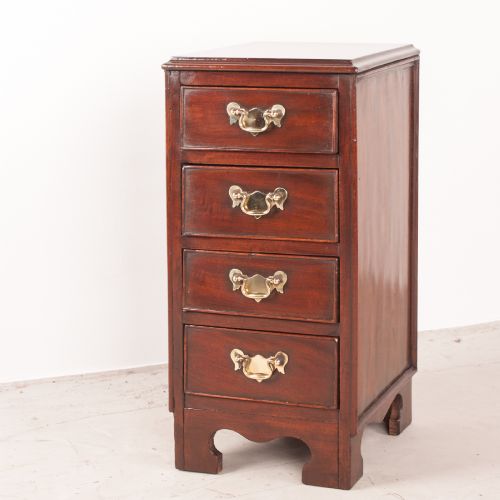
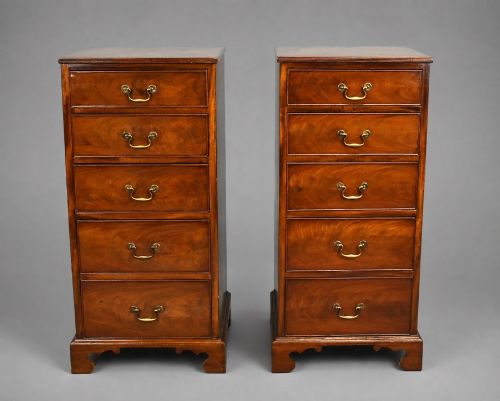
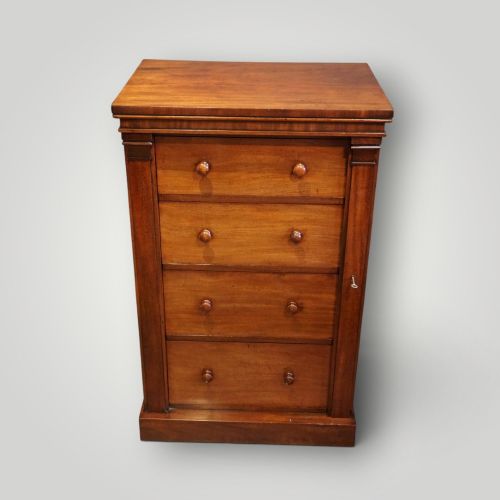
The most common forms on this page are mahogany or walnut bedside chests and lockers with three or four small drawers. They originate largely from nineteenth and early twentieth-century British workshops, often taking the form of scaled-down chests or tall Wellington-type cabinets.
How they were made
Cabinet makers utilised dense hardwoods such as mahogany, walnut, rosewood, and amboyna, alongside softer timbers like pine and oak. These woods were frequently finished with wax, polished, or decorated with marquetry inlay and parquetry veneer.
Construction techniques relied on sturdy joinery appropriate for frequent daily use in domestic bedchambers. Drawers were built into compact frames, occasionally incorporating brass hardware or marble tops for added durability and surface protection.
Narrow Bedside Drawers Retail Price Guide 2026
Typical asking prices for narrow bedside drawers among the pieces listed under this phrase on Sellingantiques today, from the lower quarter to the upper quarter. They describe what is for sale here now, not the wider market.
Some nineteenth-century narrow chests employ side-locking flaps to secure contents, keeping midnight snacks safe from household mice.
What varies in quality
Quality rests in the selection of timber figures, such as burr walnut or flame mahogany, and the precision of the cabinetmaker's joinery. Pieces that retain matching grain patterns across paired items display a higher degree of initial workshop planning.
Subtle details like crisp marquetry, well-fitted drawer linings, and original brass handles separate standard domestic furniture from finer output. Proportions also dictate desirability, particularly in taller, narrow formats designed for tight bedroom layouts.
Warings Liverpool·S and H Jewells of London
The Narrow Bedside Drawers Glossary
- Wellington chest
- A tall, narrow chest of drawers secured by a hinged locking side flap that fastens over the drawer edges. This form originates from the nineteenth century and saves floor space.
- Marquetry
- Decorative patterns formed by fitting together small pieces of contrasting veneer into wooden surfaces. Cabinet makers use this technique to create floral or geometric motifs.
- Parquetry
- A geometric mosaic of wood pieces used for decorative surfacing on tabletops and cabinet fronts. It relies on precise angles and matching timber tones.
- Bedside locker
- An alternative nineteenth-century term for a small enclosed bedside cabinet with a door or drawers. These items kept chamber items out of sight.
Narrow Bedside Drawers: Frequently Asked Questions
What periods do these narrow bedside drawers cover?
The pieces span the Victorian era, the Edwardian period, and into the nineteen thirties. Many reflect earlier Georgian styles through later revivals.
Craftsmen built them across various decades using traditional timbers like mahogany, walnut, and pine.
Are narrow bedside drawers usually found as pairs?
Many of the listed examples appear as matching pairs, which suits symmetrical bedroom layouts. Single pieces also surface frequently among the selections.
Pairs often display identical timber grain and matching hardware configurations.
How were these compact chests used originally?
Bedrooms in earlier centuries required small furniture items to hold nighttime accessories and personal belongings. Tall narrow chests maximised vertical storage without blocking floor space.
Cabinets often concealed chamber items behind small doors or organised them across multiple shallow drawers.
What timber types appear most frequently?
Mahogany and walnut dominate the selections, appearing both as solid wood and decorative veneers. Rosewood, satin birch, and pine also feature in several listings.
These materials determined the colour and finish of each piece within domestic interiors.
How do tall bedside chests differ from standard tables?
Tall chests provide multiple stacked drawers within a narrow footprint, offering considerably more enclosed storage than an open bedside table. Wellington chests and locker variants add specific locking mechanisms or enclosed compartments.
Standard tables prioritize open surfaces or single drawers beneath a tabletop.