


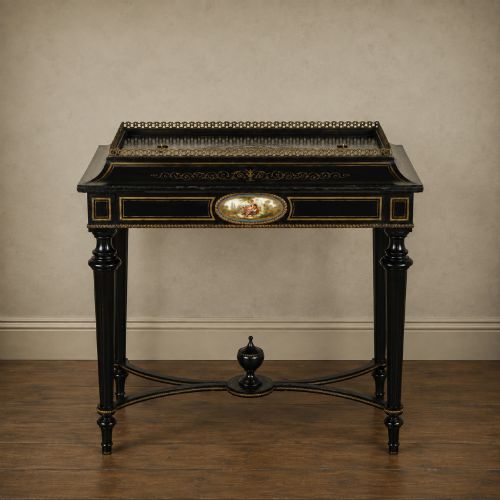
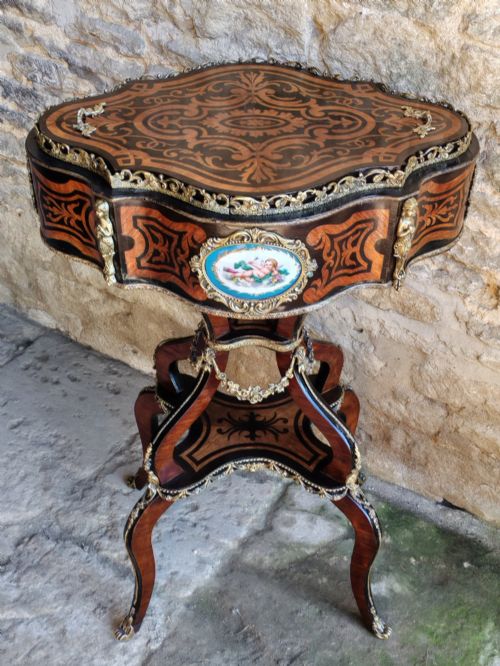


Napoleon III Jardiniere
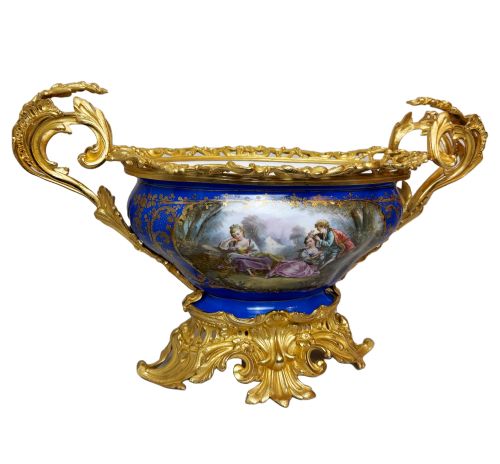
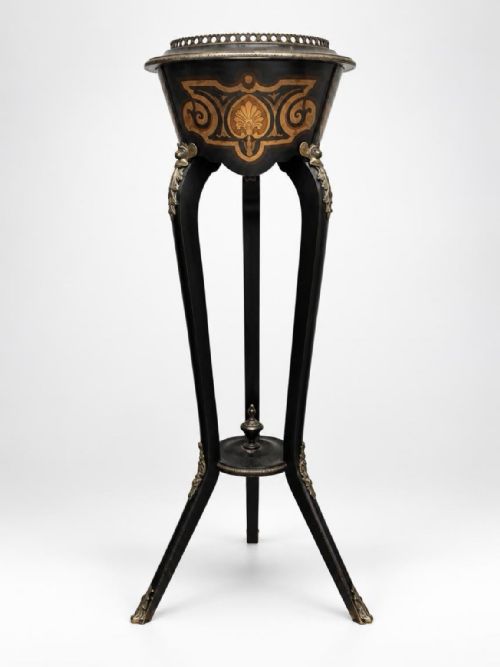
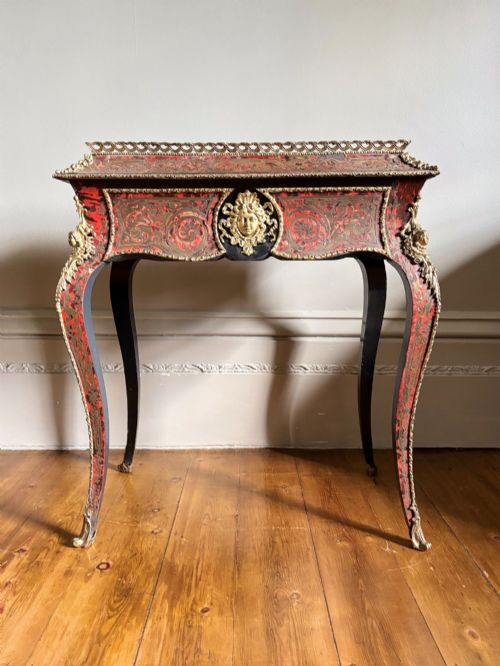
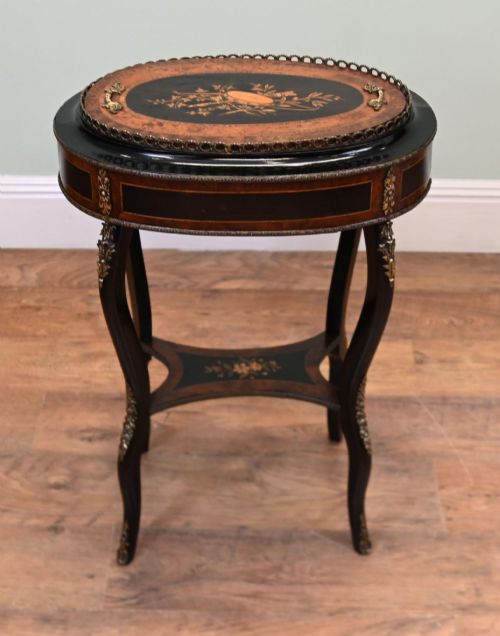
These pieces are Napoleon III jardinieres, ornate plant holders and planters designed to bring botanical display indoors with French decorative flair.
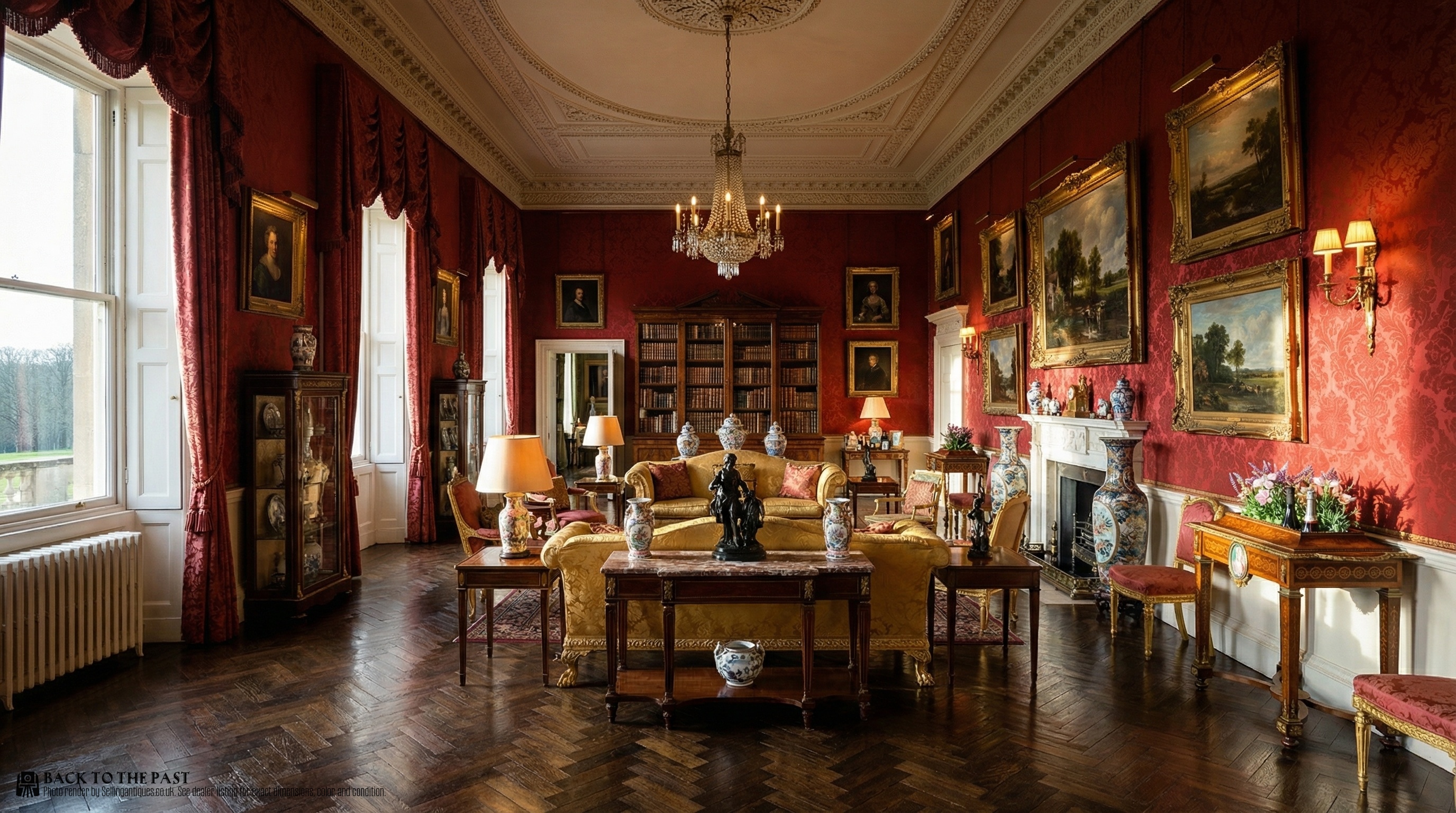
Napoleon III Jardiniere
A Napoleon III jardiniere is an elaborate plant holder or table designed to display indoor foliage within sophisticated nineteenth-century interiors. These pieces typically take the form of standing planters, side tables with integrated bowls, or centrepiece bowls used for flowers or wine cooling.
You are most likely to meet French examples from the nineteenth century featuring rich wood veneers, gilt bronze mounts, or inset porcelain plaques. The forms range from compact tabletop vessels to tall free-standing plant stands and combined side tables.
Makers of the period drew heavily on earlier royal French aesthetics, producing revival pieces styled after Louis XV and Louis XVI alongside distinct Napoleon III designs. Their primary purpose was to combine functional waterproof plant containment with high-status interior decoration.
Materials and construction
Cabinetmakers utilised dense hardwoods such as walnut, kingwood, ebonised wood, and exotic woods decorated with intricate marquetry or floral inlay. These timber structures often incorporate brass stringing and detailed brass or ormolu mounts fitted to corners, legs, and rims.
Metalwork plays a central role, utilising cast bronze, ormolu, and silvered bronze to create decorative handles, feet, and sculptural friezes. Many pieces integrate hand-painted porcelain plaques or Sevres-type ceramic panels set directly into the wooden frames.
Napoleon III Jardiniere Retail Price Guide 2026
Typical asking prices for napoleon iii jardiniere among the pieces listed under this phrase on Sellingantiques today, from the lower quarter to the upper quarter. They describe what is for sale here now, not the wider market.
Materials appearing across these entries include ormolu, porcelain, ebonised wood, brass, kingwood, walnut, marquetry inlay, and metal.
The spectrum of quality
Quality in a Napoleon III jardiniere rests upon the crispness of the bronze or ormolu casting and the precision of the marquetry and timber selection. Finer examples feature deeply chased metal mounts and hand-selected wood grains that align seamlessly across complex curves.
The integration of artistic elements also dictates worth, separating standard production pieces from those featuring high-grade painted porcelain plaques or silvered bronze. Structural integrity in the waterproof liners and the joinery of tall stands further distinguishes superior workshop output.
The Napoleon III Jardiniere Glossary
- Ormolu
- Gilt bronze ornamentation applied to furniture and decorative objects. It involves a process of mercury gilding on cast bronze, giving a rich golden surface.
- Marquetry
- Decorative veneer work where small pieces of wood, shell, or ivory are fitted into a design to ornament furniture surfaces. This technique creates elaborate floral or geometric patterns across tabletops and stands.
- Ebonised wood
- Timber treated to resemble ebony, usually through a staining and polishing process. It provides a dark, glossy background that highlights applied gilt bronze mounts.
- Kingwood
- A dense, richly figured Brazilian hardwood featuring dark violet-brown tones with lighter streaks. It was frequently used by nineteenth-century cabinetmakers for high-end veneered furniture.
- Boulle
- A form of marquetry utilising brass and tortoiseshell inlaid together in contrasting patterns. It is named after a master cabinetmaker of the French royal court.
Napoleon III Jardiniere: Frequently Asked Questions
How were these jardinieres used originally?
These pieces were placed in drawing rooms and parlours to hold potted plants, cut flowers, or occasionally to cool wine at the dining table. They allowed homeowners to display living greenery safely within sophisticated domestic spaces.
Some versions stood on tall legs as dedicated plant pedestals, while others sat on tables or functioned as central decorative bowls.
What materials are typical for these pieces?
Typical materials include exotic hardwoods like kingwood and walnut, alongside ebonised wood and intricate marquetry inlay. Metal elements in ormolu, bronze, and silvered bronze provide structural mounts and decorative trims.
Additionally, many feature painted porcelain plaques or ceramic panels incorporated directly into the wooden framework.
How do you distinguish revival styles in them?
Revival styles draw on earlier French monarchical aesthetics, primarily Louis XV and Louis XVI motifs, adapted during the nineteenth century. Louis XV influences appear in asymmetric curves and naturalistic floral details, while Louis XVI styles favour neoclassical symmetry and straight tapered legs.
Napoleon III pieces blend these historical revivals with eclectic nineteenth-century luxury and heavier ornamentation.
Can these antique planters still hold water?
Many antique jardinieres rely on removable metal liners or inserts to contain soil and moisture safely without damaging the wooden structure. Without a proper liner, modern use usually requires placing potted plants inside secondary waterproof pots rather than filling the wooden vessel directly.