


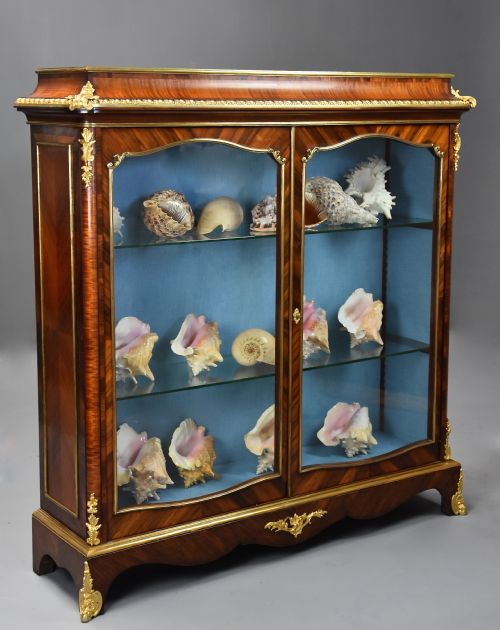
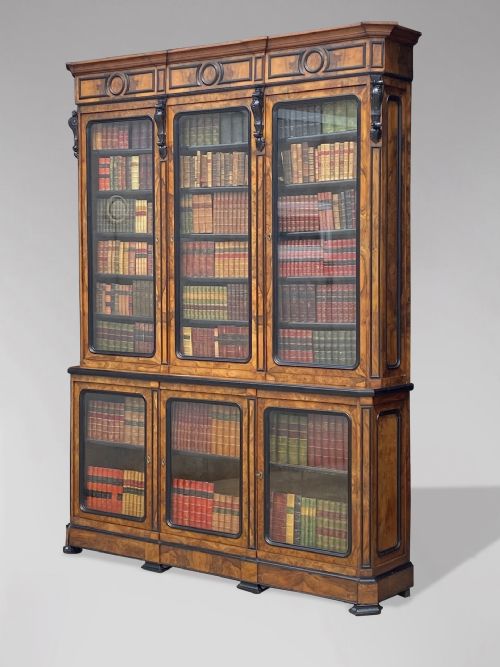
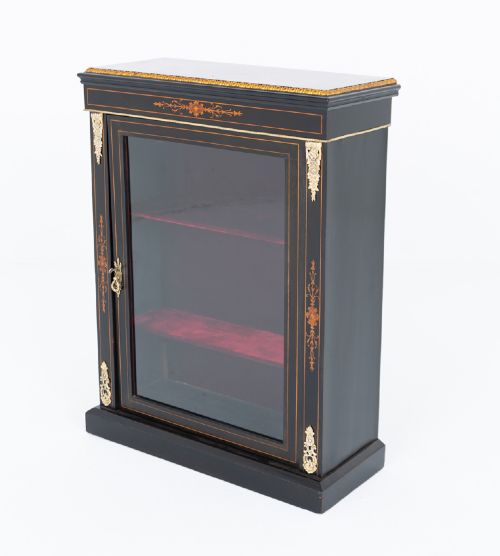
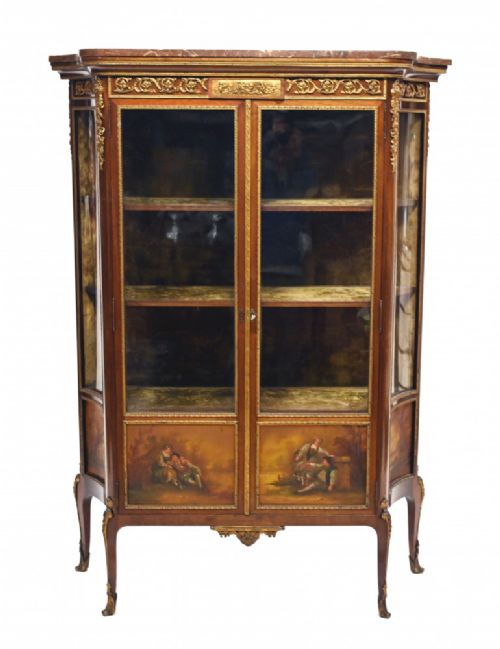


Napoleon III Glazed Cabinet
A napoleon iii glazed cabinet brings French decorative ambition into a room, offering glazed display space framed in polished brass and dark wood.
Napoleon III Glazed Cabinet
When you search for a napoleon iii glazed cabinet, you encounter nineteenth century French furniture made for display and storage, ranging from compact pier cabinets to large credenzas and bookcases. The pieces appearing here date predominantly from the decades between eighteen fifty and nineteen hundred, reflecting the revival of earlier monarchical styles under the Second Empire.
You meet ebonised wood finishes set with brass inlay, alongside warm kingwood and walnut carcasses topped with marble. These cabinets often incorporate glazed doors for exhibiting porcelain or books, frequently accompanied by open shelf sections or enclosed lower cupboards.
The forms span narrow single door pier cabinets designed for tight spaces to substantial multi door credenzas intended for principal reception rooms. French revival idioms such as Louis XV and Rococo motifs dominate the decorative vocabulary of these furnishings.
Materials and construction
Cabinet makers constructed carcasses from timbers such as walnut, mahogany, and ebonised wood, frequently veneered with figured kingwood or rosewood. Surfaces received intricate marquetry and tortoiseshell inlay combined with engraved brass work known as Boulle technique.
Gilt bronze or ormolu mounts were cast and chased to edge doors, frame panels, and cap corners, adding structural definition and metallic contrast. Marble slabs were fitted to the upper surfaces of credenzas and pier cabinets to provide durable, decorative tops.
Glazing was secured within timber framing to protect interior contents while allowing maximum visibility for displayed items such as Sevres porcelain plaques. Workshops utilised traditional joinery methods to stabilise complex veneered surfaces and heavy stone tops.
Some diminutive pier cabinets were built specifically sized for children's nurseries during the height of the nineteenth century.
Variations in quality
Quality depends on the precision of the brass inlay and the crispness of the cast ormolu mounts applied to the carcass. Finer examples display meticulous hand chiselling on the bronze elements and seamless matching of timber veneers across doors and panels.
The inclusion of painted panels, such as Vernis Martin work, or authentic porcelain plaques elevates the character of a piece. Interior detailing, including mirrored backs and shelved arrangements, reflects the original tier of commission.
Proportion and scale distinguish standard production from exhibition grade furniture. Pieces bearing maker attributions or provenance demonstrate superior joinery and more ambitious decorative programmes.
The Napoleon III Glazed Cabinet Glossary
- Boulle
- Marquetry technique utilising brass and tortoiseshell inlay developed in France and revived during the nineteenth century. It creates contrasting metallic and dark patterns across cabinet doors and panels.
- Ormolu
- Gilt bronze mounts applied to furniture edges and corners for decorative effect. The metal is cast and finished to provide a bright gold coloured accent against ebonised wood.
- Credenza
- A low cabinet piece featuring doors, often flanked by curved side sections or glass panels. These items serve for both surface display and interior storage.
- Vitrine
- A glass fronted display cabinet designed specifically for showing porcelain and small collectibles. The glazing covers the front and sometimes the sides to admit maximum light.
- Pier cabinet
- A narrow cabinet built to fit the wall space between windows. These upright pieces make efficient use of restricted floor areas while offering display shelving.
Napoleon III Glazed Cabinet: Frequently Asked Questions
What is a napoleon iii glazed cabinet?
A napoleon iii glazed cabinet is a nineteenth century French display piece featuring glass doors, dark wood surfaces, and ornate metallic mounts. These furnishings were built during the Second Empire period to exhibit treasured objects and books.
They combine architectural timber construction with decorative arts like brass inlay and ormolu framing. The style draws heavily on earlier French monarchical designs interpreted with Victorian manufacturing precision.
How were these cabinets used originally?
Original owners used these cabinets in drawing rooms and libraries to store and display imported porcelain, decorative bronzes, and leather bound volumes. The glazed doors protected delicate items from dust while keeping them visible to guests.
Marble topped versions provided a sturdy surface for lamps or sculptural ornaments. Lower enclosed cupboards offered concealed storage for household papers or dining accessories.
How do I style one in a modern home?
Place a narrow pier cabinet in a hallway or alcove to utilise vertical space without crowding the room. Use the interior shelves to display collections of ceramics or glassware where interior lighting can highlight them.
Pair the dark ebonised wood and brass details against neutral wall colours to let the marquetry stand out. The marble top serves as a practical shelf for small art objects or plants.
How can I tell the period?
Examine the timber construction, interior secondary woods, and hardware fixings for nineteenth century manufacturing characteristics. The presence of ebonised finishes paired with Boulle brass inlay points directly to the Second Empire revival era.
Stylistic cues such as Louis XV curves combined with heavy cast ormolu mounts help differentiate these pieces from later twentieth century reproductions. Look for period lock mechanisms and hand cut screws.