
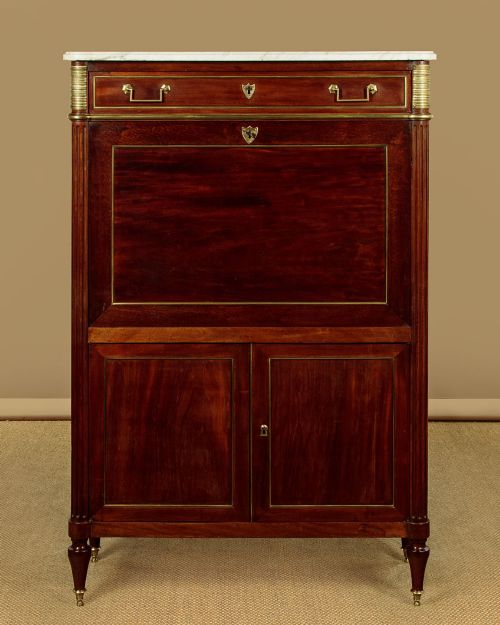
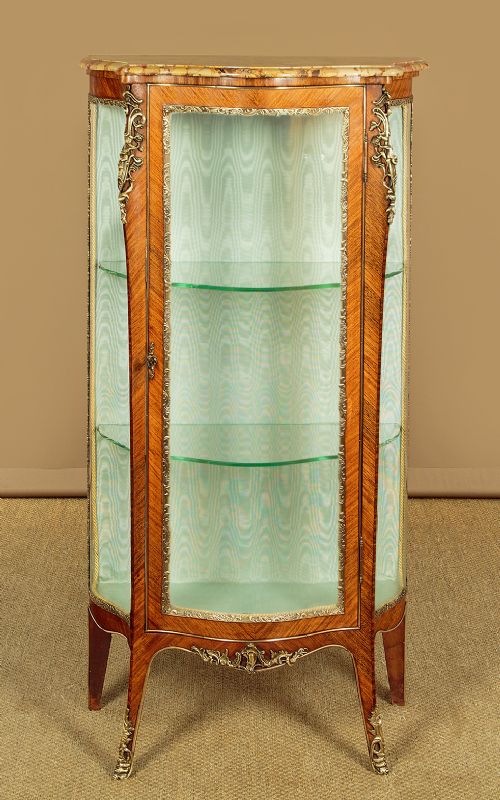
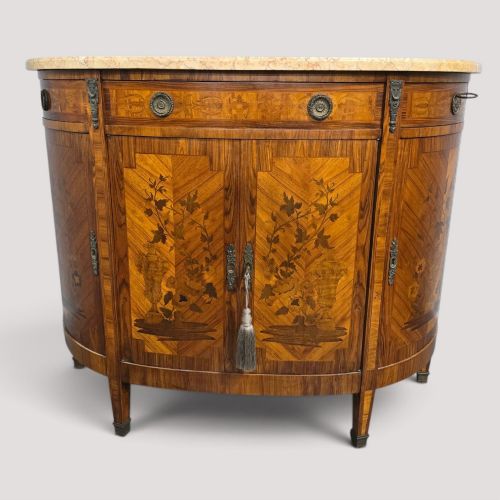
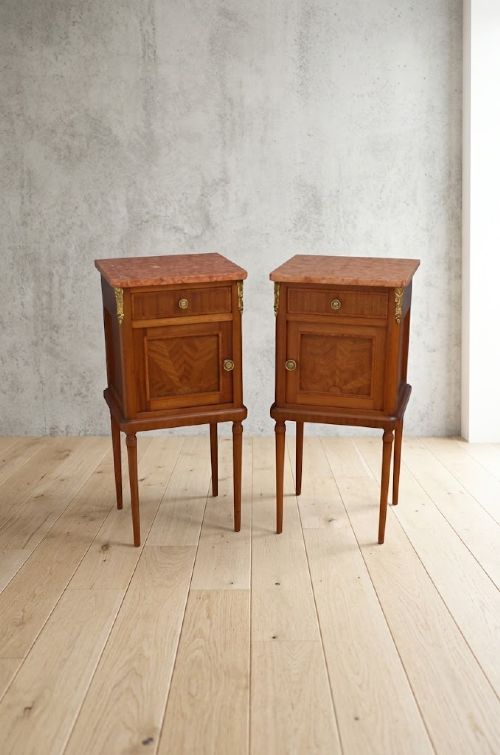


French Marble Topped Cabinet
A french marble topped cabinet brings a cold stone slab and warm timber together in a single piece.
French Marble Topped Cabinet
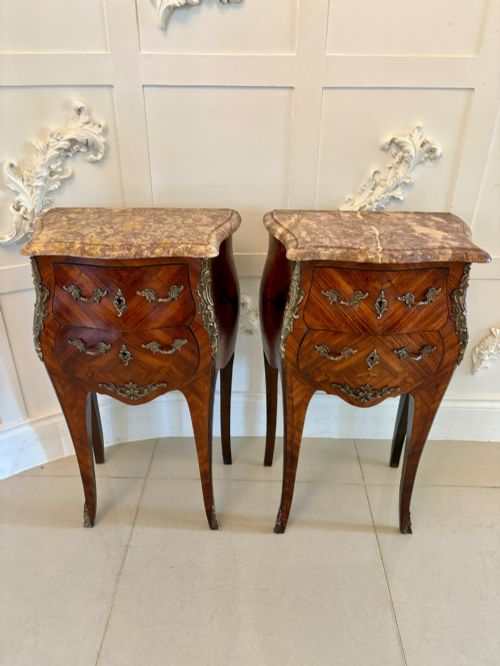
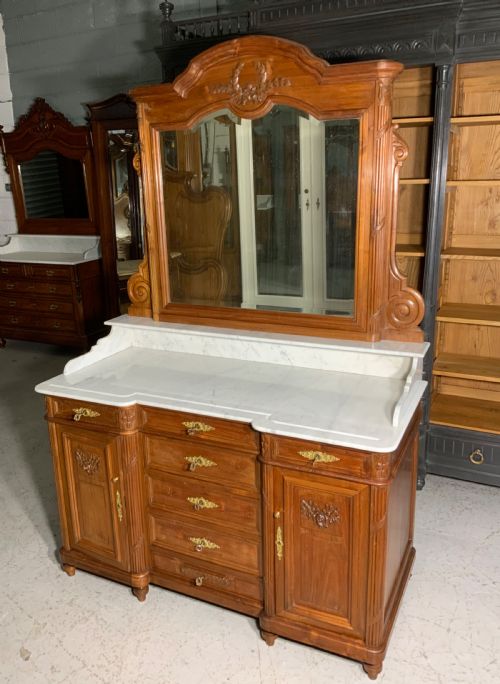
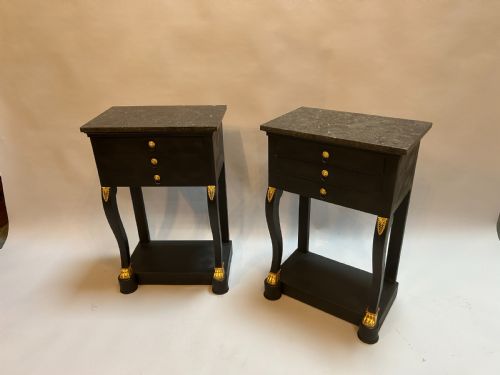
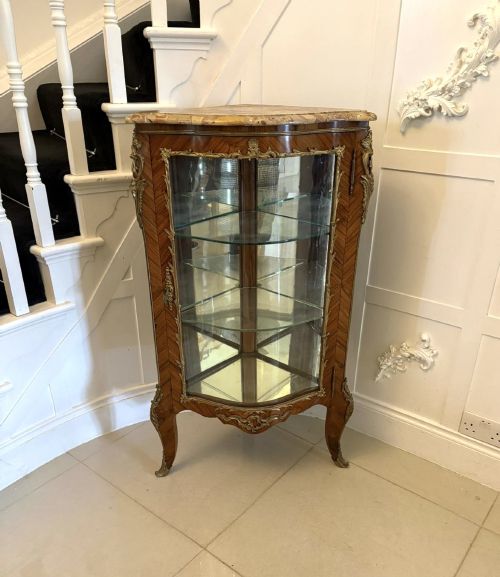
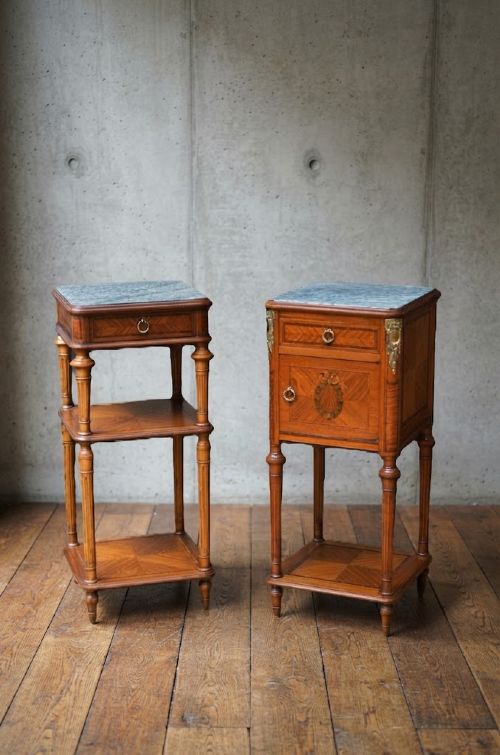
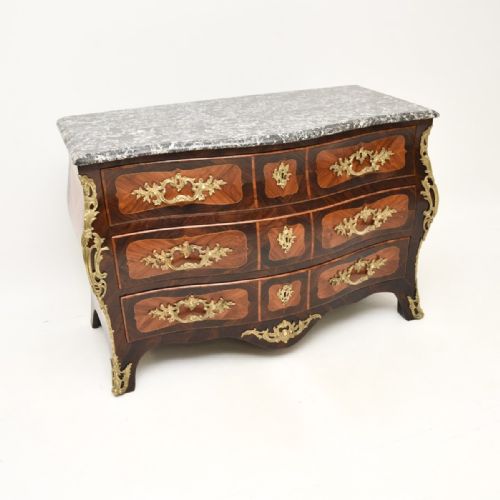
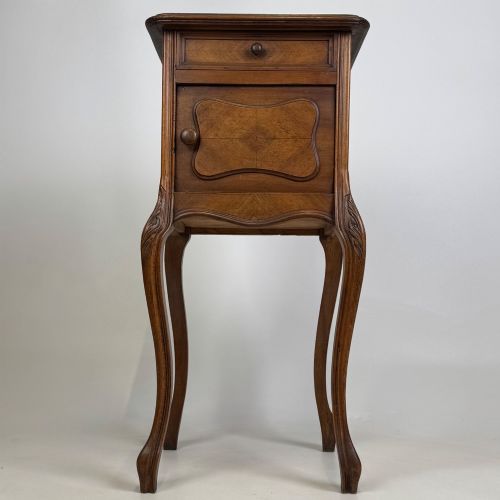
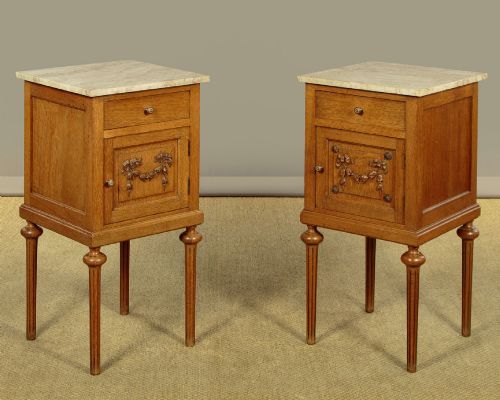
A french marble topped cabinet covers a wide spread of domestic furniture, from modest bedside units to large commodes and display vitrines. You will most frequently encounter pairs of bedside cabinets and commodes originating from the nineteenth and early twentieth centuries.
The form unites a sturdy wooden carcass with a fitted stone slab, serving utilitarian roles in bedrooms and principal reception rooms alike. Makers shaped these pieces within revival styles, drawing heavily on Louis XV and Louis XVI traditions alongside later Art Deco designs.
How they were made
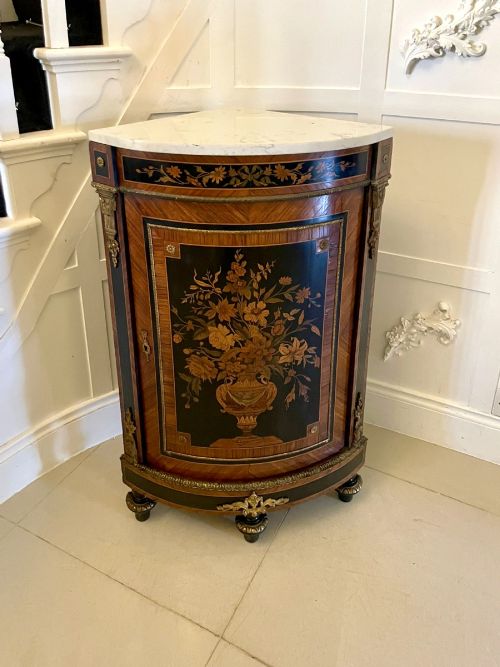
Carpenters built the carcasses using native and exotic timbers like walnut, mahogany, oak, kingwood and rosewood, often applying intricate marquetry or parquetry veneers across the surfaces. Heavy stone slabs, including white, grey, rouge and rose varieties, were precisely cut to follow the serpentine or straight contours of the cabinet tops.
Cabinetmakers finished these works with cast or chased ormolu, gilt bronze mounts, and brass handles that framed doors, drawers and corners. Vernis Martin finishes and fine inlays appeared on select examples, adding painted decorative scenes or geometric patterns to the timber panels.
Faux-bamboo bird's-eye maple washstands let nineteenth-century owners scrub up while pretending to live in a bamboo grove.
What varies in quality
The standard of timber selection and the complexity of the veneer work dictate much of the worth, with quarter-matched grain and detailed floral marquetry sitting well above plain boarded construction. The weight, thickness and mineral figuring of the marble top also set master-built pieces apart from standard workshop production.
Fine craftsmanship shows in the crispness of the gilt bronze or ormolu mounts and the smooth, hand-cut dovetailing of the internal drawer construction. Signed pieces by recorded makers retain an entirely different level of finish in their interior mechanics and bronze chasing.
Jacques Bircklé·François Linke·Henry Dasson·Weisweiler
The French Marble Topped Cabinet Glossary
- Ormolu
- Gilded bronze mounts applied to furniture corners, feet and drawer fronts. This technique involved mercury amalgamation in older periods to achieve a rich golden sheen.
- Marquetry
- Decorative patterns created by fitting thin pieces of wood veneer onto a structural carcass. Craftsmen used contrasting timbers like kingwood, mahogany and walnut to form pictorial or geometric designs.
- Commode
- A low chest of drawers standing on legs, typically fitted with a heavy stone slab on top. It served as a principal storage item in French drawing rooms and bedrooms.
- Secretaire Abattant
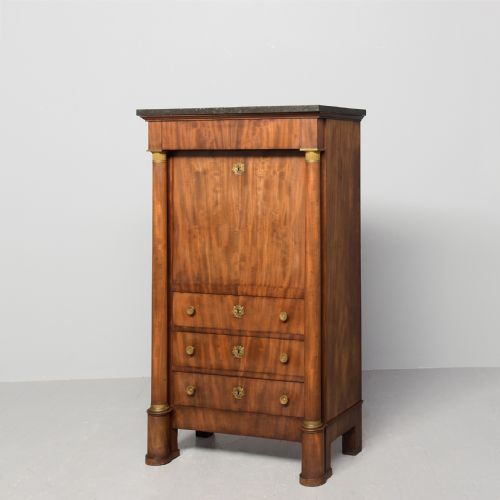
- A tall upright cabinet featuring a fall-front writing flap that conceals small drawers and pigeonholes inside. These often combine secret compartments with marble tops.
- Parquetry
- Geometric wood inlay forming repeating patterns such as cubes or chevrons across the cabinet doors or top. It relies on precise cutting of multiple timber species.
French Marble Topped Cabinet: Frequently Asked Questions
What are bedside cabinets used for?
These small bedside units provided enclosed storage next to a bed for night-time essentials, keeping chamber items hidden behind panelled doors.
The stone top offered a durable, water-resistant surface that easily tolerated a water jug, glass or candle without staining the polished wood below.
How do I care for the marble top?
Wipe the stone surface regularly with a soft cloth and warm soapy water, avoiding harsh acidic cleaners that can etch the polished finish.
Apply a neutral stone wax occasionally to protect the marble from moisture rings and everyday wear.
Are the marble slabs original?
Most pieces retain their heavy fitted stone tops, shaped precisely to match the serpentine or rectilinear contours of the wooden carcass underneath.
Slight variations in edge profiling and mineral veining help distinguish period stones from later replacements.
How do I tell Louis styles apart?
Louis XV pieces feature sweeping cabriole legs, asymmetrical curves and delicate floral ormolu mounts that suggest organic movement.
Louis XVI design shifts toward straight tapered legs, neoclassical symmetry, fluted columns and restrained geometric bronze framing.