
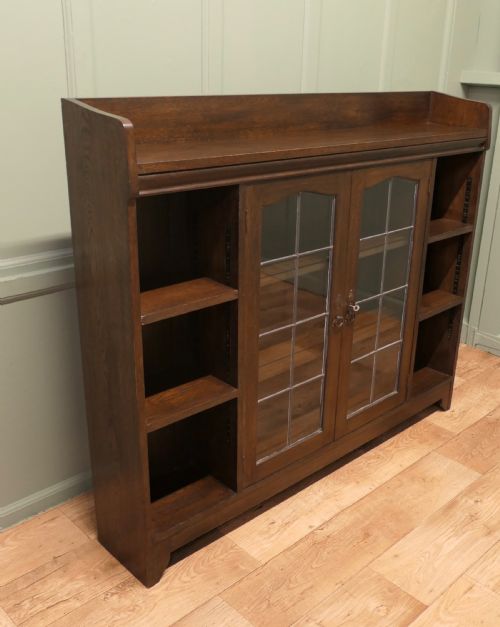
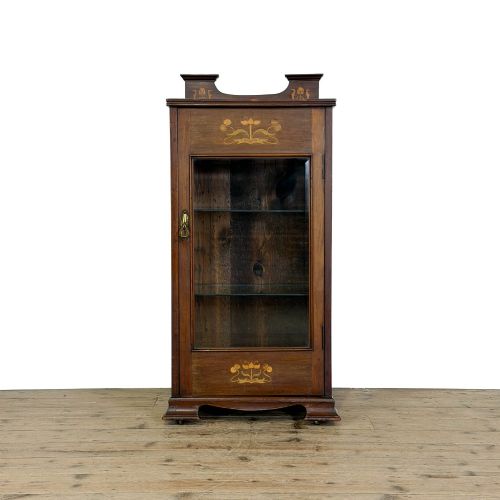
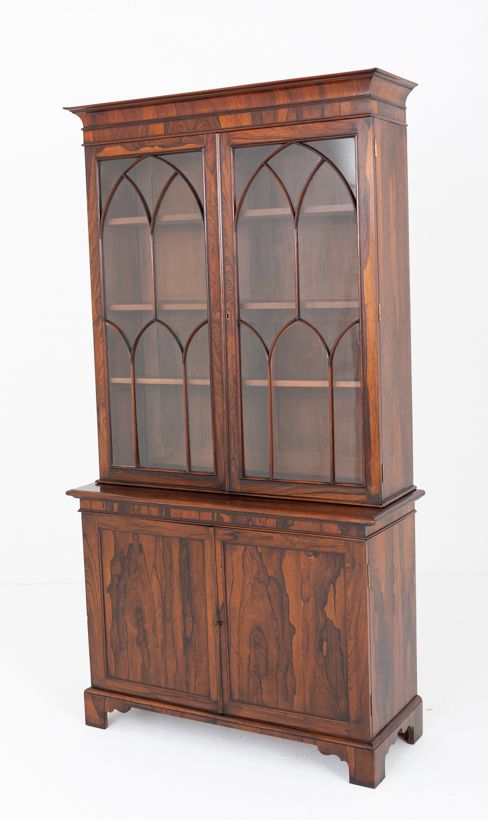
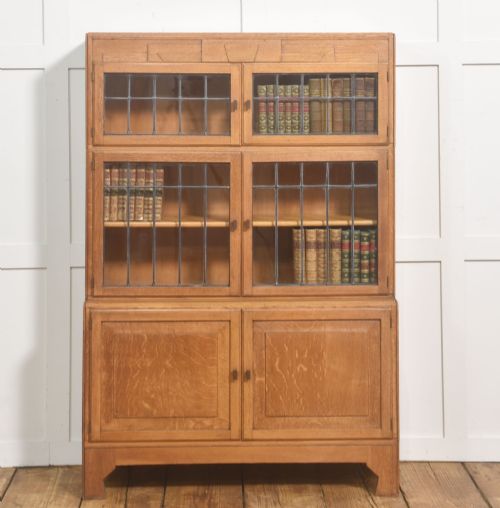
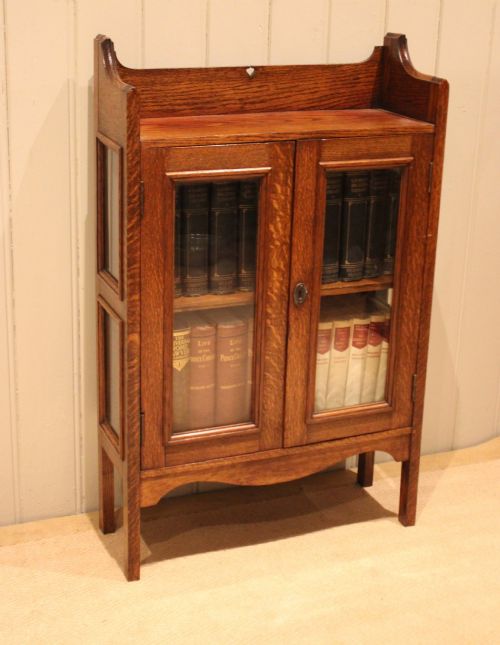
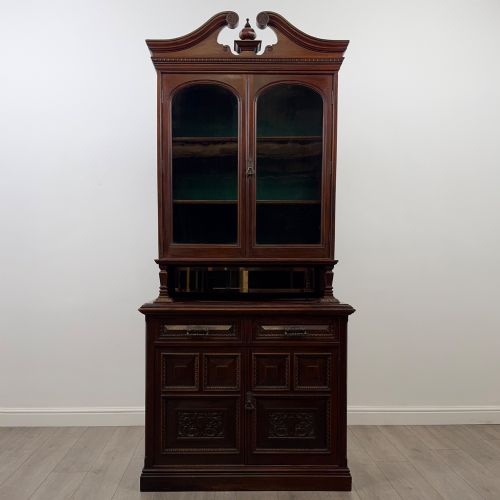
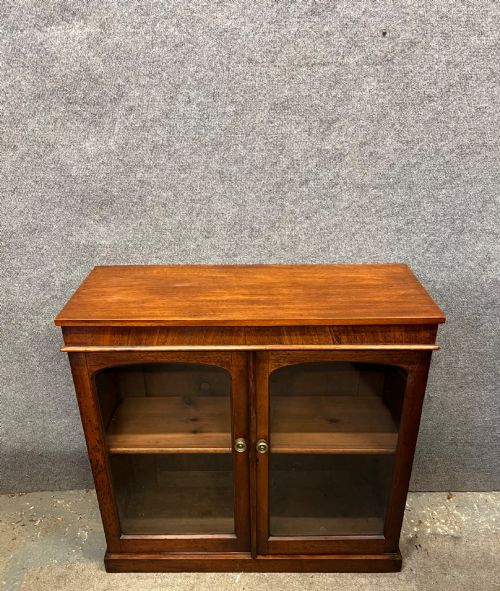
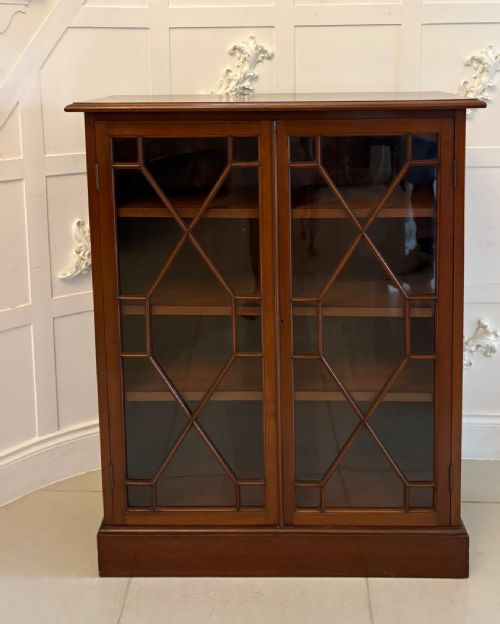
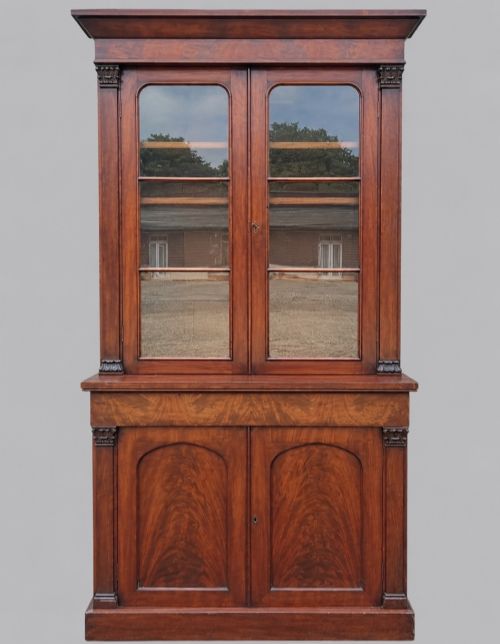
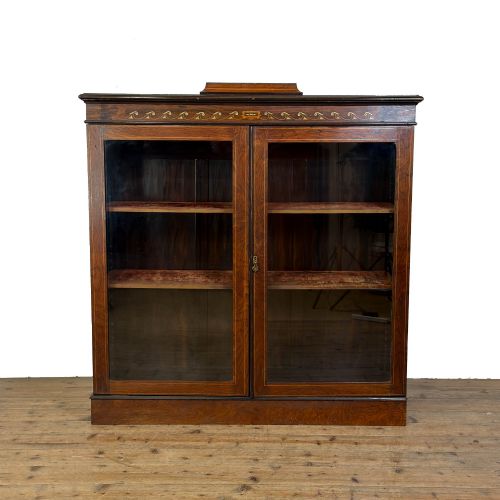
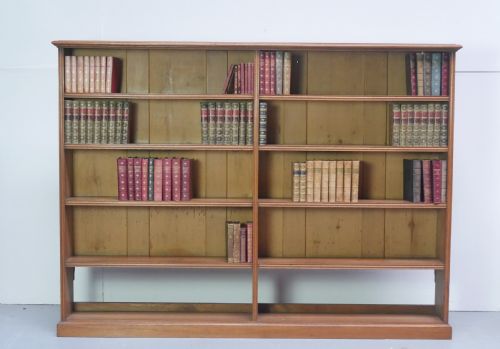

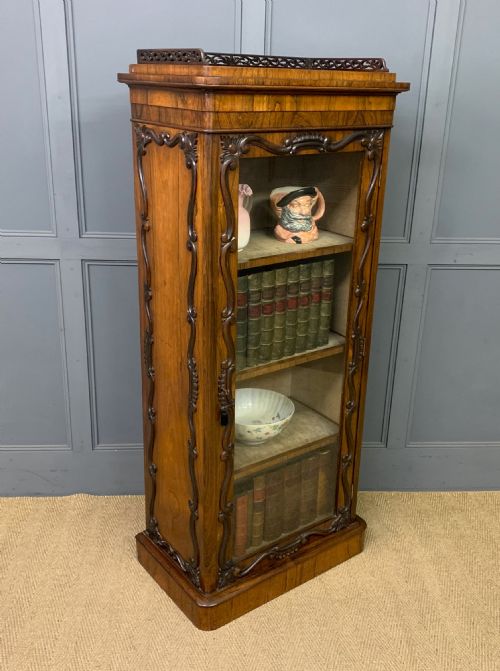

Antique Book Case Cabinet
When you search for an antique book case cabinet, you are looking at substantial storage furniture built to hold libraries and display prized volumes behind glass.
Antique Book Case Cabinet
An antique book case cabinet combines open or glazed shelving with enclosed lower cupboards, forming a dual-purpose piece found in libraries, drawing rooms, and studies.
The versions most common on this page stem from the Victorian and Edwardian eras, rendered in useful proportions ranging from narrow two-door formats to large breakfront library editions.
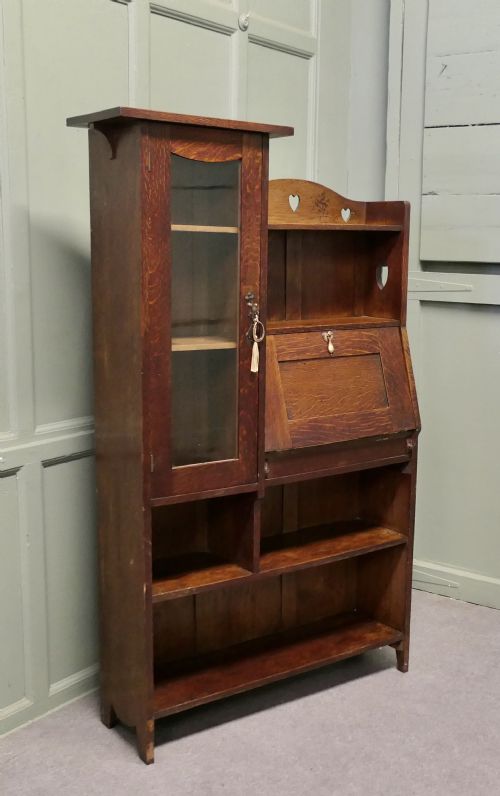
Makers across the nineteenth and early twentieth centuries built these pieces to organise growing personal collections, incorporating desks, bureaus, and leaded glass doors into the design.
Materials and Construction
Cabinet makers relied primarily on timbers such as mahogany, oak, and walnut, often selecting figured veneers, burr walnut, and satinwood for visible exterior surfaces.
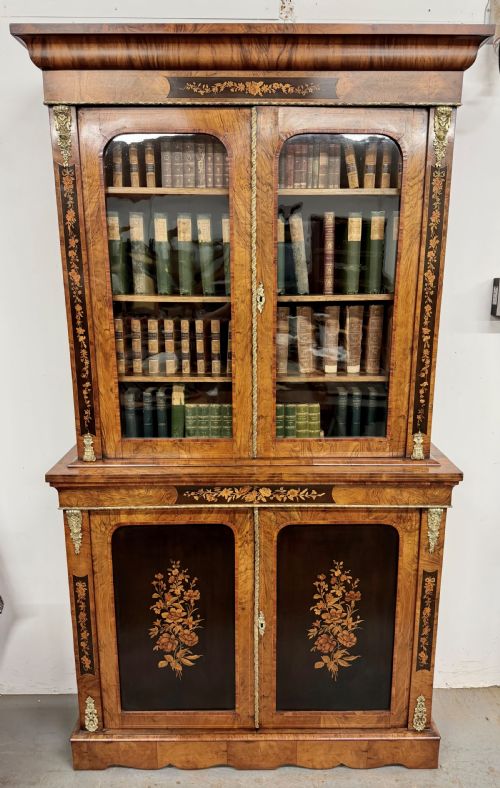
Glazing techniques included standard flat glass, astragal bars, and leaded panes, whilst brass hardware, ormolu mounts, and marquetry inlay provided decorative contrast.
Internal construction featured adjustable wooden shelving supported by robust side panels, allowing owners to accommodate volumes of varying heights.
Listings feature woods including mahogany, oak, walnut, rosewood, burr walnut, and satinwood across Victorian, Edwardian, and Arts and Crafts periods.
Quality Variations
The standard of timber selection and veneer matching defines the visual weight of the piece, separating standard utility furniture from high-status library examples.
Precision in the joinery of the glazed doors, the integration of carved mouldings, and the presence of original brass fixtures dictate the overall integrity and period accuracy.
James Winter·T. Inglesant and Sons·Heals of London·The Bath Cabinet Makers
The Antique Book Case Cabinet Glossary
- Astragal glazed
- A method of dividing glass panes using narrow wooden or metal bars arranged in geometric or curved patterns. These bars create a lighter, more decorative grid across the door.
- Breakfront
- A cabinet design where the central section projects forward from the flanking wings. This configuration adds architectural depth and presence to large library pieces.
- Marquetry
- The art of applying decorative veneer pieces in various woods, ivory, or shell to form pictorial or geometric designs. It appears on high-status Victorian walnut surfaces.
- Vitrine
- A glass-fronted display cabinet originally designed to show porcelain or curiosities rather than books. They often feature delicate legs and satinwood painted finishes.
- Bureau bookcase
- A hybrid form combining a sloping writing flap that opens to reveal pigeonholes with a shelving unit above. These pieces served as compact workstation cabinets.
Antique Book Case Cabinet: Frequently Asked Questions
What is an antique book case cabinet used for?
These pieces were designed to store, protect, and display private library collections while keeping reference volumes free from dust behind glass doors. The lower cabinet sections provided concealed storage for ledgers, papers, and larger folios.
Over time, homeowners utilised them in drawing rooms and studies as multi-functional display furniture that combined open reading access with secure cabinet storage.
How do I tell Victorian from Edwardian cabinets?
Victorian examples generally employ heavier timbers like mahogany, dark oak, or burr walnut, often featuring rich carving, deep cornices, and formal architectural proportions. Marquetry inlay and ormolu mounts are frequently associated with this period.
Edwardian cabinets tend to be lighter in appearance, frequently using inlaid mahogany, satinwood, or lighter oak. The inlay work often displays classical revival motifs with a more restrained aesthetic.
Are the shelves adjustable?
Many period library cabinets feature adjustable wooden shelving systems supported by wooden pegs, rammel strips, or brass notches. This allowed nineteenth-century owners to reconfigure the interior space for books of varying heights.
Fixed shelving is more commonly found in simpler provincial pieces or specific bureau formats where structural rigidity required permanent partitions.
How do I care for a walnut cabinet?
Polished walnut and burr walnut surfaces require stable indoor humidity away from direct sunlight and heat sources to prevent the fine veneers from drying or splitting. Regular dusting with a soft, dry cloth preserves the original polish.
Occasional application of appropriate wax polish helps maintain the lustre of the timber without building up heavy residue on the carved details or marquetry work.