



Music Storage Bench
These music storage bench options are sturdy places to sit whilst keeping sheet music organised near the piano.
Music Storage Bench
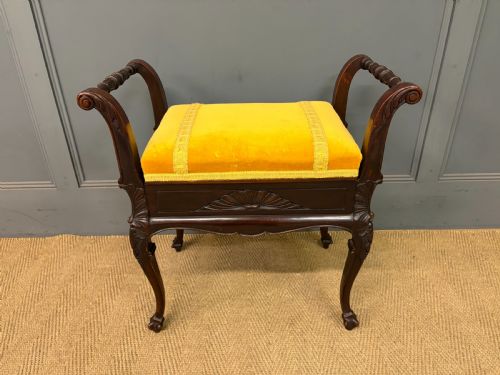
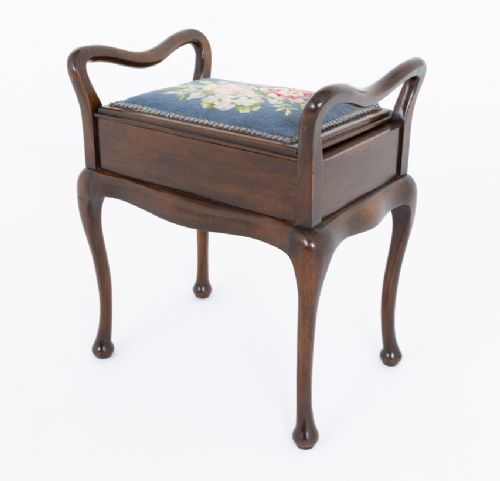
When you search for a music storage bench, you are looking at piano stools designed to hold collections of sheet music inside the seat compartment. Most examples on this page date from the Edwardian period and the late nineteenth century, taking the form of single or duet seats with lifting or falling fronts.
The selection ranges from Victorian walnut designs to Edwardian mahogany pieces featuring boxwood inlay and upholstered pads. Alongside these traditional forms, you will occasionally encounter Art Deco walnut versions dating to the nineteen thirties.
These items served a practical domestic purpose in Victorian and Edwardian parlours, keeping scores tidy while providing a seat for the pianist. Their proportions remain useful today, fitting easily beside modern upright and grand pianos.
How they were made
Carpenters built these music storage bench frames primarily in mahogany and walnut, occasionally utilising oak for sturdier Revival styles. Boxwood inlay added subtle geometric or floral decoration to Edwardian cabinetwork.
Seats incorporated functional mechanisms such as hinged lids and fall fronts to access the internal storage compartments. Upholstery fabrics and velvet provided cushioned seating surfaces, secured over internal padding.
Music Storage Bench Retail Price Guide 2026
Typical asking prices for music storage bench among the pieces listed under this phrase on Sellingantiques today, from the lower quarter to the upper quarter. They describe what is for sale here now, not the wider market.
The listings on this site span the Victorian, Edwardian and Art Deco periods, utilising mahogany, walnut and oak.
What varies in quality
The refinement of the timber and the crispness of the boxwood inlay distinguish standard production from finer cabinetwork. Edwardian Sheraton Revival pieces often display more intricate stringing and better timber selection than simpler utilitarian stools.
Mechanism operation defines the daily experience of the piece, where smoothly balanced hinges and tight-fitting fall fronts demonstrate superior initial construction. The choice of covering material, from plain fabric to rich velvet, also reflects the original tier of the commission.
The Music Storage Bench Glossary
- Duet stool
- A wider piano seat designed to accommodate two players side by side. These versions usually feature larger internal storage compartments beneath the hinged lid.
- Fall front
- A hinged panel that drops forward to reveal interior shelving or storage space for sheet music. This mechanism allows access without requiring the seated person to stand.
- Boxwood inlay
- Contrasting pale wood inserted into the darker mahogany surface to create decorative borders and motifs. It is typical of Edwardian Sheraton Revival furniture.
- Upholstery fabric
- The textile covering applied over padding on the seat top. Many examples use modern replacement textiles while retaining the original timber frame.
Music Storage Bench: Frequently Asked Questions
What is a music storage bench used for?
These pieces serve a dual purpose as both a functional seat at the piano and a discreet cabinet for holding sheet music. The internal compartment keeps scores flat and organised.
They sit neatly beside keyboards in living rooms and music studios, combining traditional furniture craftsmanship with everyday storage utility.
How do I date a music storage bench?
Dating relies on identifying the prevailing styles and timber choices visible in the construction. Edwardian pieces frequently showcase mahogany with boxwood inlay, whilst Victorian examples tend towards heavier walnut frames and simpler lines.
Art Deco versions from the nineteen thirties introduce streamlined geometric shapes and distinct walnut veneers that mark a clear departure from earlier Revival aesthetics.
Are these benches comfortable for long practices?
Most pieces feature padded tops upholstered in fabric or velvet to provide adequate support during playing sessions. Duet versions offer extra width for comfortable shifting of position.
Because original padding materials degrade over decades, many surviving examples have been re-upholstered to ensure proper support for daily use.
How do I care for the wood and upholstery?
Regular dusting with a dry cloth keeps the mahogany and walnut surfaces clean without building up residue. Avoid placing wooden frames near direct heat sources to prevent timber shrinkage.
Upholstered sections benefit from gentle vacuuming using a soft brush attachment to protect the fabric or velvet pile from dust accumulation.